

Restaurant Kitchen Operation Flow Chart




Try Before you Buy Download Free Sample Product
 Impress Your
 Audience
 100%
100% Editable
 Save Hours
 of Time


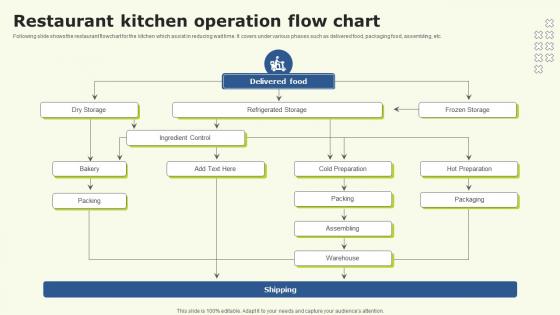
Following slide shows the restaurant flowchart for the kitchen which assist in reducing wait time. It covers under various phases such as delivered food, packaging food, assembling, etc.
People who downloaded this PowerPoint presentation also viewed the following :
Restaurant Kitchen Operation Flow Chart with all 6 slides:
Use our Restaurant Kitchen Operation Flow Chart to effectively help you save your valuable time. They are readymade to fit into any presentation structure.





FAQs for Restaurant Kitchen
Honestly, it breaks down into prep, cooking, plating, and service. Start with all your chopping and sauce prep when it's quiet - trust me on this one. Once orders start flying in, that's when the real cooking begins. Plating is where kitchens either look like pros or complete chaos (coordination is everything here). Then service happens and dishes get rushed out to tables. The trick is making sure each step flows smoothly without any weird bottlenecks. Map out your timing and actually stick to it - I can't stress that enough.
Dude, watch how your team moves around first - that's where you start. Then build your layout around that instead of making everyone adjust to some weird setup. Prep, cooking, and plating should flow naturally so people aren't bumping into each other constantly. Hot and cold stuff needs to stay separated obviously. During rush hours especially, you'll notice the difference when everything's in the right spot. Keep your most-used tools right where people can grab them without thinking about it. Honestly, it's like organizing your own kitchen but way more intense.
POS systems that sync with kitchen displays are clutch - orders just flow straight through without anyone having to re-enter stuff. Get inventory software that tracks everything automatically, plus prep scheduling apps. Oh, and temperature monitoring will literally save your sanity at 2am when you're wondering if someone checked the walk-in. Kitchen timers and expediting apps help juggle multiple orders too. Honestly though, the biggest thing is finding systems that actually work together instead of having like five random apps that don't talk to each other. Start with one solid platform first, then add on. Don't go crazy trying to implement everything at once.
Dude, communication literally makes or breaks your kitchen flow. When everyone's calling out ticket times and yelling about low ingredients, the whole team stays in sync. You don't want to be that guy scrambling for garnish while food dies under the heat lamps - been there, it sucks. Plus you'll catch mistakes before they hit tables. Honestly, most kitchen disasters happen because someone didn't speak up about something. Set up regular check-ins during service and come up with clear signals for common stuff. Trust me, it saves your ass during those crazy rush periods when everything's on fire.
Dude, the pass is where everything goes to die - orders just sit there waiting for garnish while everything gets cold. Your mise prep is make-or-break too. When one fryer breaks down (and it will), your whole night's screwed. Honestly, the worst thing though? Communication falling apart between front and back during rush. Servers mumble modifications, tickets don't get called right. Cross-train everyone so they can bounce between stations. Oh and your expediter better be on point or you're toast. Always have backup plans for key equipment - learned that the hard way.
Dude, inventory is seriously make-or-break for your kitchen. When you don't have your counts right, cooks are scrambling mid-rush looking for stuff that isn't there. You'll be 86ing dishes left and right. Plus you end up buying way too much of something that just sits there and goes bad - I've thrown out so much produce it's not even funny. Daily counts are kind of annoying but they save your ass. Set your par levels and stick to them. Your line guys will actually be able to cook instead of playing hide-and-seek with ingredients.
Your menu design is basically the backbone of kitchen efficiency. Group dishes that use similar ingredients and cooking methods - it cuts down prep time like crazy. I learned this the hard way when we had this ridiculously complicated garnish system that nobody ordered anyway. Map out which items hit which stations and their cook times first. You'll spot places to streamline without killing quality. The trick is finding that sweet spot between what customers actually want and what your kitchen can realistically handle during rush. Don't stock ingredients that'll just sit there going bad.
Your team needs solid training - that's what keeps everything running smoothly. Everyone follows the same steps, hits the same quality marks, and knows how dishes should time out. Cross-training is huge too since people can cover different stations when things get crazy. Oh, and don't make it a one-and-done thing - keep training ongoing. I'd start by writing down your main processes, then pair new people with your best cooks during real shifts. That's honestly where they'll learn the most. Rush periods will teach them more than any manual ever could.
Dude, prep everything first and I mean EVERYTHING. Get your station set up with ingredients in the order you'll actually use them - tools within arm's reach, everything labeled. Trust me on this one. You don't want to be scrambling for some random spice when it gets crazy busy. Batch your prep work too - like dice all the onions at once instead of jumping around between different stuff. Map out your most popular dishes first, then arrange everything around those. You should basically be able to work with your eyes closed if you do it right.
Look, ingredient flow is everything for speed. When your sauté guy has to sprint across the kitchen for garnishes, you're losing seconds on every single plate. Map out your most-used stuff closest to where it actually gets plated - that's your money move right there. Good mise en place near each station? It's like magic when everything clicks. I've seen kitchens where one backed-up station kills the whole pass because nothing flows right. Honestly, some places overthink this, but it really comes down to reducing those unnecessary steps. Get your setup tight and watch those ticket times drop fast.
Here's what's worked for me - start with color-coded boards and utensils for different proteins. Game changer right there. Put sanitizer buckets wherever your team naturally stops between tasks, not where you think they should. Timers you're already using for cooking? Use those same ones for temp checks. The handwashing thing is tricky but works if you put stations where people transition anyway. I'd honestly pick just one thing first though, otherwise nothing sticks. Oh and don't frame it as "extra safety rules" - your team will tune out. Make it part of the flow they already know.
So this real-time kitchen software gives you a live view of everything - order timing, prep status, inventory, how your staff's doing. You can catch problems before they blow up. Tracks ticket times, coordinates stations, even predicts when you'll run low on ingredients based on current orders. Pretty neat stuff actually. Your cooks can just focus on cooking instead of constantly wondering what's coming next. Honestly? I'd roll it out during your craziest dinner rush first - that's where you'll really feel the difference. It's like having superpowers for your kitchen operations.
Dude, cross-training is a total game changer. You know how stressful it gets when someone calls out and you're scrambling? Train your prep guy to work the grill, teach your dishwasher how to do salads - suddenly you're covered. During rush hours, you can actually move people where you need them most. Your staff won't get bored doing the exact same thing every single day either. Oh and pair people up during slow periods so they can shadow each other without the crazy pressure. Trust me on this one - it'll save your sanity.
Dude, peak service is honestly insane - you'll need like double or triple the staff you normally have. Everyone gets assigned specific roles so they're not crashing into each other constantly. All your prep work has to be done way ahead of time because once orders start flying, there's literally zero time for anything else. Cross-training is huge too, people need to jump between stations when someone gets slammed. Oh and mise en place better be perfect or you're screwed. It's basically going from a chill walk to an all-out sprint, but somehow making it look coordinated.
Honestly, mise en place and portion control will save your ass here. Get your line cooks measuring proteins consistently - no more eyeballing it. FIFO is crucial too because throwing out expensive stuff just sucks. When you're planning menus, try using the same ingredients across multiple dishes so nothing goes to waste if one plate isn't selling. Track your waste for like a week straight and you'll catch patterns you totally missed before. Cross-utilizing ingredients is clutch. Then adjust portions based on real numbers, not just guessing what seems right.
-
The team is highly dedicated and professional. They deliver their work on time and with perfection.
-
“Detailed and great to save your time.”