

Restaurant Operation Flow Chart For Dinning Orders




Try Before you Buy Download Free Sample Product
 Impress Your
 Audience
 100%
100% Editable
 Save Hours
 of Time


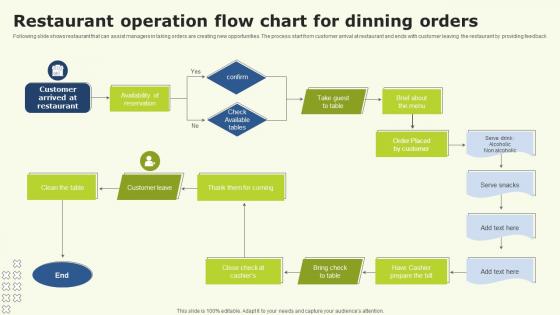
Following slide shows restaurant that can assist managers in taking orders are creating new opportunities. The process start from customer arrival at restaurant and ends with customer leaving the restaurant by providing feedback
People who downloaded this PowerPoint presentation also viewed the following :
Restaurant Operation Flow Chart For Dinning Orders with all 6 slides:
Use our Restaurant Operation Flow Chart For Dinning Orders to effectively help you save your valuable time. They are readymade to fit into any presentation structure.





FAQs for Restaurant Operation Flow Chart
Honestly, inventory management is where most places bleed money without even realizing it. Staff scheduling comes next - you'll go crazy trying to cover shifts if you don't have a system. Cost control's the third big one. Get a decent POS system that actually talks to your other software, trust me on this. Cross-train everyone so you're not totally screwed when people call out sick. Also, prep processes - streamline the hell out of those. Oh and do this: spend a week tracking where you're wasting the most time and money, then fix those problems first. Everything else can wait.
Honestly, start with a solid POS system that connects to inventory tracking - it'll automatically flag when you're running low on stuff. Mobile ordering is a game changer for reducing wait times too. Those kitchen display screens are way better than paper tickets (such a mess). Staff scheduling apps help you avoid overstaffing during slow periods, which saves money. Oh, and don't just buy random tech because it looks cool. Figure out what's actually driving you crazy first - maybe it's order mix-ups or running out of ingredients mid-rush. Then find tech that fixes that specific problem.
Honestly, start with communication - just tell people what you expect instead of making them guess. Flexible scheduling is a game changer too, like actually working around their other stuff when you can. I swear most managers underestimate how much a quick "nice work tonight" matters. Cross-training helps because people feel more useful when they're not stuck doing one thing forever. Oh and regular feedback is clutch - nobody wants to wonder if they're screwing up. Pick one thing to focus on this week, maybe the communication part? You don't have to fix everything at once.
Dude, inventory tracking literally saves your ass. Poor stock management kills 5-10% of revenue - I've watched it happen. You're either tying up cash in overstock or running out mid-rush (customers hate that). Food spoilage is money in the trash. Here's what actually works: track your 10 most expensive ingredients weekly. That's it. Shows you exactly where cash is bleeding out. Order just enough to hit demand without waste sitting around going bad. Honestly, most places wing it and wonder why margins suck. Get this right first.
Honestly, customer feedback is like having a crystal ball for your restaurant. Set up different ways for people to complain - comment cards, online reviews, social media, whatever. The negative stuff? That's where you'll find the real problems before they blow up. I always tell people to look for patterns though, not just random one-off complaints from cranky customers. Positive reviews show you what's actually working too. Read through everything weekly and use it to tweak your menu, fix staffing issues, or speed up service. It's way better than guessing what customers want from behind the counter.
Dude, start calling your suppliers now - you'll want those commitments locked in 6-8 weeks before things get crazy. Last year's holiday rush was a complete disaster for me, learned that lesson the hard way. Get cozy with at least 2-3 vendors so you're not totally screwed when one runs out of stuff. Bump up your safety stock 25-30% for anything popular. Weekly check-ins are clutch during busy periods. Oh, and have backup menu ideas ready because something will definitely go wrong. Trust me on this one - being overprepared beats the alternative every single time.
Honestly, keep it simple - group stuff that uses the same ingredients or cooking methods together. Your kitchen will thank you later. Don't go crazy with options either, like 6-8 items per section tops. People get overwhelmed scrolling through massive menus anyway. Make descriptions clear so your servers aren't constantly running back to ask the kitchen questions. Oh, and definitely highlight your money-makers with boxes or whatever - subtle but it works. Before you add anything new though, run it by your actual kitchen crew first. They'll straight up tell you if something's gonna kill them during dinner rush.
Dude, your POS system is already collecting tons of useful stuff - sales numbers, what people order, how much you're spending on labor each shift. Just start actually checking it regularly. Tuesday always dead? Cut some staff. That fancy salmon dish taking forever to move? Time to ditch it or figure out what's wrong. Honestly, most restaurants have no clue which menu items actually make money. Pick one thing that's bleeding cash - maybe food waste or too many servers standing around - and focus there first. You'll spot patterns pretty quickly once you're paying attention.
Ugh, capacity limits are gonna crush your revenue potential. Health regulations change every five minutes - I swear they're just making stuff up at this point. Staff shortages hit hard when people get sick or have to quarantine. Your suppliers will randomly run out of basics, so you're scrambling for backups constantly. PPE and cleaning costs eat into margins while you're training new hires who don't know a sauté pan from a stockpot. Build flexibility into everything. Have backup suppliers, backup staff schedules, backup plans for your backup plans. It's exhausting but necessary.
Yeah, training definitely helps! Your staff will actually know what they're doing with handwashing, temps, and keeping raw stuff away from ready-to-eat foods. I've seen places where people just wing it - not pretty. Regular practice makes it second nature, you know? Don't just do the one-time new hire thing though. People get sloppy over time (guilty as charged). Weekly 15-minute huddles work great for staying on top of basics. Your team starts spotting problems before they blow up, and health inspectors love seeing fewer violations. It's honestly a win-win situation.
Track everything you're tossing for a week - seriously, the numbers will blow your mind. Start with portion control using smaller plates and train your kitchen crew to stay consistent. Get smart about using ingredients in multiple dishes instead of letting them rot. Better forecasting is huge too, like actually planning your prep instead of winging it. Donate extra food when you can, compost the rest. Honestly the tracking part is annoying but you'll spot the biggest problems immediately. Oh and measuring waste daily becomes second nature pretty quick once you start.
Start with staff training - get them good at handling multiple tasks from day one. Smart scheduling is huge too. Use your sales data to figure out when you'll be slammed so you're not guessing. Most restaurants either over-staff and tank their profits or under-staff and piss off customers - it's crazy how common this is. Good POS systems and kitchen tech will speed things up without hiring more people. Keep your menu tight with stuff your kitchen can actually nail every time. Track your labor costs weekly and shoot for 28-32% of revenue.
Honestly, get a reservation system - it'll save your sanity. No more guessing how many people will show up or scrambling to find staff. Your customers won't have to awkwardly hover by the door either, which everyone hates. Wait times drop, you can flip tables more efficiently, and you'll actually collect customer info for future marketing stuff. I mean, even regulars appreciate knowing their spot is locked in. OpenTable's pretty solid to start with, or just throw a simple booking thing on your website.
Look, your layout is literally everything - it's what makes or breaks your operation. Map out the workflow first: how food moves, where staff walk, potential crash zones. I've watched servers play bumper cars because nobody thought about traffic flow, and it's painful. Kitchen efficiency matters obviously, but don't forget front-of-house affects turnover rates too. Cramped dining rooms make people feel rushed and they won't stick around. Design around reality, not Instagram - pretty doesn't pay the bills if your team can't actually work in the space.
Honestly, just pick 2-3 things to start with or you'll burn out your team. Composting food scraps is super easy, and donating leftovers to shelters feels good too. When your old equipment inevitably dies (always at the worst time, ugh), replace it with LED lights and energy-efficient stuff. Local ingredients are where it's at - less shipping, supports nearby farms, and customers love that story. Oh, and low-flow fixtures save more water than you'd think. Don't try to revolutionize everything overnight though. Baby steps actually stick.
-
Great designs, really helpful.
-
I looked at their huge selection of themes and designs. They appeared to be ideal for my profession. I'm sure I'll grab a few of them.