


Food Company Delivery Process Flow Chart




Try Before you Buy Download Free Sample Product
 Impress Your
 Audience
 100%
100% Editable
 Save Hours
 of Time


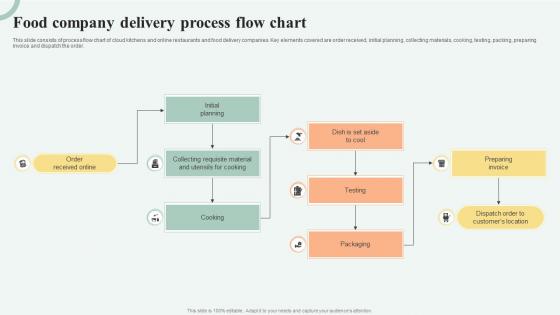
This slide consists of process flow chart of cloud kitchens and online restaurants and food delivery companies. Key elements covered are order received, initial planning, collecting materials, cooking, testing, packing, preparing invoice and dispatch the order.
People who downloaded this PowerPoint presentation also viewed the following :
Food Company Delivery Process Flow Chart with all 6 slides:
Use our Food Company Delivery Process Flow Chart to effectively help you save your valuable time. They are readymade to fit into any presentation structure.





FAQs for Food Company Delivery
So basically you order through the app, restaurant gets it and confirms. They start making your food while the app finds a driver. Driver grabs it when ready and heads your way - though honestly this part's always a gamble with traffic and drivers who can't read GPS. You'll get updates as they go. Usually takes 30-45 minutes depending how far you are and if the place is slammed. Oh and definitely check your address twice before ordering because I swear that's what screws up most deliveries.
Honestly, third-party delivery usually tanks customer satisfaction. You lose all control - food sits around getting cold, drivers don't give a damn about your brand, and customers still blame YOU when DoorDash messes up. It's the worst. In-house costs more upfront but you can actually train your drivers and keep quality consistent. I mean, timing matters so much with food delivery. If you do go third-party anyway, just watch those ratings like a hawk and have some kind of backup plan ready because things will go wrong eventually.
Apps handle the ordering and payments automatically. GPS finds the best routes, and customers can track everything in real-time instead of blowing up your phone every five minutes (seriously, game changer). Orders get sent straight to restaurants, inventory updates itself, and drivers get coordinated without you lifting a finger. AI even predicts busy times and suggests faster routes. Honestly, the manual coordination stuff just vanishes. You'll spend way less time on logistics and more on making sure the food doesn't suck when it arrives.
So food safety rules control basically everything with perishables. Cold stuff has to stay under 40°F, frozen at 0°F the whole time - no exceptions. Timing matters too (cold sushi is gross). You'll need insulated packaging and sometimes those digital temp monitors. Honestly, the tracking requirements can be a pain but you have to do it. Build this stuff into your system right away though. Trying to add compliance later? Way more headache and costs way more. Trust me on that one.
Ugh, peak hours are brutal for delivery apps. You've got way too many orders flooding in at once, so kitchens can't keep up. Plus there's never enough drivers when you actually need them - kinda defeats the whole point, right? Traffic gets insane and routes turn into a total mess. Instead of 30 minutes, people wait over an hour and get pissed. Restaurants that seemed fine suddenly crumble under pressure. Your best bet? Jack up prices during rushes, schedule extra drivers ahead of time, and only work with places that won't completely fall apart when things get crazy.
Honestly, just keep people posted about their food - it's that simple. Send updates when you get the order, while you're making it, and when the driver leaves. Trust me, nobody wants to sit there wondering if their tacos got lost somewhere. Give actual time windows too, not just "sometime this century." When stuff goes wrong (and it will), tell them right away with a real estimate. I've waited way too long for delayed orders because places were scared to admit they were behind. Being upfront before customers start texting you angry messages? That's the sweet spot.
Dude, prep your popular stuff ahead of time - that's huge. Multiple delivery apps will get you more drivers instead of waiting around for one to show up. Start cooking orders right when they come in, don't wait for the driver to arrive first. That trick alone saves like 10-15 minutes, no joke. Keep your delivery zones tight so drivers aren't driving across town and back. Oh, and track everything in real-time so you can spot where things are getting stuck. Your kitchen setup matters too - organize stations so people aren't bumping into each other constantly.
Dude, packaging can totally make or break your delivery game. Hot food stays hot, cold stuff doesn't leak everywhere - you know the drill. Your customers are gonna judge you the second they open that bag, so don't cheap out on containers. I've seen too many places serve great food that arrives as a soggy mess because they used crappy packaging. Match your containers to what you're serving - crispy stuff needs to breathe, soups need tight lids. Trust me, spending a bit more upfront beats dealing with angry customers later. Bad reviews stick around forever.
Track delivery times first - that's your bread and butter metric. Customer satisfaction scores are huge too since repeat customers keep you alive. Driver efficiency matters: orders per hour, route optimization, all that stuff. Order accuracy is critical because angry customers will roast you online if they get the wrong food. I learned that the hard way at my last gig. Food quality on arrival counts just as much as speed - nobody wants soggy fries. Start with these basics, then add more detailed tracking later once you've got everything running smooth.
Dude, your menu lives or dies by what people actually order. Restaurants are constantly digging through their data to see what's flying off the virtual shelves and what's just sitting there. Popular stuff gets pushed to the top, flops vanish quietly - it's pretty cutthroat honestly. Delivery crowds want different things too. Nobody orders a delicate salad for delivery, you know? Comfort food, rice bowls, anything that won't turn into mush in a bag. Keep an eye on your numbers and pivot before your competition figures out the same trends.
Packaging waste is probably your biggest headache - all those plastic containers and random utensils nobody asks for. Delivery emissions are rough too, especially when drivers are zigzagging around town or sitting in traffic with engines running. Food waste happens when orders get cancelled or sit too long in transit. I'd focus on better route planning first since that's usually the easiest fix. Eco-friendly packaging helps, though it's pricier. Oh, and maybe give people discounts for skipping the plastic forks? Most folks eating at home don't need them anyway.
Dude, COVID totally changed the game with food delivery. What used to be like a Friday night thing became how people survived. Order values shot up, frequency went crazy, and suddenly your grandma's using DoorDash weekly. Here's the wild part - even when restaurants opened back up, people kept ordering in. The customer base exploded too, especially older folks who'd never touched these apps before. Everyone's still obsessed with contactless delivery and safety stuff. Honestly, if you're not thinking delivery-first at this point, you're leaving money on the table. This shift isn't going anywhere.
Honestly, multiple checkpoints are a game changer - check orders when they come in, during prep, then before drivers head out. Special instructions are where you'll get burned the most, especially allergies. Kitchen staff need to actually READ the tickets too (sounds obvious but you'd be surprised). Short bursts work better than long checks. Have drivers snap quick pics of orders before leaving - helps you track down what went wrong later. Oh and make sure your order tickets aren't some tiny font nightmare. You'll start seeing patterns in your mistakes pretty fast once you get this system down.
Oh man, those apps are basically data machines! They're tracking everything - what you order, how long deliveries take, which routes drivers use. Pretty wild how they coordinate all that stuff. Your location helps them figure out the fastest routes, and they position drivers based on when people usually order. Honestly, the demand-based pricing thing is kind of annoying though. But I have to admit, their delivery time estimates are scary accurate these days. Next time you're waiting for food, just think about all the algorithms working to get it to you - it's actually pretty cool when you think about it.
Dude, customer feedback is gold for figuring out what's actually broken in your delivery game. Cold food complaints? Your insulation's trash or routes are way too long. When people rave about specific drivers, you know what training actually works vs what's just fluff. It's literally like having unpaid consultants spell out exactly where you're screwing up and crushing it. The trick is spotting the patterns - don't just hoard all that feedback. Use it to tweak your operations, fix training gaps, maybe even switch vendors if needed. Way too many places collect reviews but never actually do anything with them.
-
“Easy to use. I always wanted to have a quick search for products and SlideTeam has helped me have it.”
-
SlideTeam, Please don’t stop sharing discount coupons! I love your occasional discounts and tend to buy your products around that corner.