


Restaurant Food Ordering Operation Flow Chart




Try Before you Buy Download Free Sample Product
 Impress Your
 Audience
 100%
100% Editable
 Save Hours
 of Time


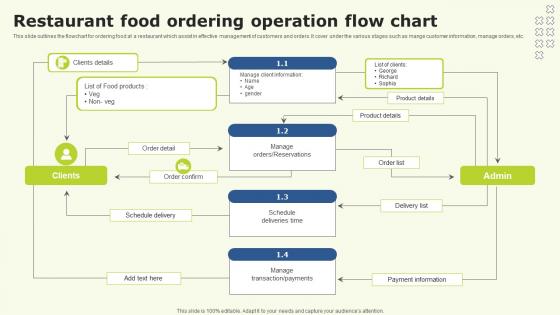
This slide outlines the flowchart for ordering food at a restaurant which assist in effective management of customers and orders. It cover under the various stages such as mange customer information, manage orders, etc.
People who downloaded this PowerPoint presentation also viewed the following :
Restaurant Food Ordering Operation Flow Chart with all 6 slides:
Use our Restaurant Food Ordering Operation Flow Chart to effectively help you save your valuable time. They are readymade to fit into any presentation structure.





FAQs for Restaurant Food Ordering
Plan your menu first and guess how much you'll need - way better than panicking later. Order from suppliers but give yourself enough time for delivery. When stuff shows up, check everything against what you ordered. Honestly, a basic spreadsheet saves your sanity for tracking all this. Put things away properly right when they arrive and use older stock first. The real game changer though? Finding suppliers who actually talk to you when problems come up. Makes everything so much easier.
Your platform choice is honestly everything. Clunky apps or crashing websites? Customers bounce before they even place an order - I mean, nobody's got time for that mess. Good platforms have decent search features, accurate menus, and tracking that actually works. Makes people feel like they know what's happening with their food. Plus customizing orders and using promos becomes way easier when the interface isn't fighting you. Go with platforms that have solid reputations for user experience. Oh, and test them yourself regularly - you'd be surprised how often things break.
Dude, mobile usability will literally make or break your food app. People are hangry when they're ordering - worst possible time for a glitchy interface. Your buttons need to be big enough for thumbs, text readable without squinting. The whole flow from browsing to checkout should feel smooth. I actually test apps when I'm starving because that's when you notice every annoying friction point. Fast loading times are huge too. If someone can't customize their order easily or payment takes forever, they'll just switch to DoorDash or whatever. Make it feel effortless and you're golden.
Get your systems locked down before the chaos starts. Digital tickets need to flow straight to kitchen stations, but don't skip verbal confirmation between front and back - saved my ass so many times. Cross-train everyone so they can jump around when things get crazy. The places that crush it are basically prep nerds, honestly. Have someone double-checking orders before they leave, especially takeout. Your POS should catch common screwups and modifications. Oh, and do a quick team huddle before rush hits to cover specials or whatever might trip people up.
Honestly, the AI ordering stuff is pretty wild - just tell your phone what you want and boom, ordered. QR menus are everywhere now since COVID, though I actually don't mind them. The scary part? Apps that somehow predict your usual order before you even open them. Real-time delivery tracking is getting super precise too, like down to the exact minute your driver will show up. Oh, and all those ghost kitchens running out of random strip malls are changing how restaurants work behind the scenes. If this is for your job, I'd just focus on making things smoother for customers and cutting out annoying steps.
Dude, loyalty programs are crazy effective - people literally order 2-3x more when they're in one. It's all about that points addiction, you know? You start chasing those rewards and trying to hit the next tier. Honestly, it's kinda genius how they hook you with the whole "I'm saving money by spending more" mindset. Free delivery kicks in, exclusive discounts pop up, and boom - you're ordering way more than you normally would. Oh, and that little dopamine rush when points add up? *Chef's kiss.* If you're building one, make those first rewards super easy to hit so people get hooked fast.
Dude, always double-check your order before hitting submit - seems obvious but I mess this up constantly. Peak hours are brutal if you're actually hungry, like I waited forever for pizza once during Sunday football. Also those delivery fees sneak up on you fast. Check if the place is even open first (learned this on Memorial Day lol). Wrong address is another classic screw-up. Oh and read reviews - some places look good but are totally sketchy. Basically just scan everything once before ordering, saves you from that hangry regret later when your food's wrong or takes two hours.
Yeah, definitely dig into that customer feedback! Post-order surveys are clutch - ask them straight up if checkout was weird, if the menu was slow, payment options sucked, whatever. Support tickets are gold too since people basically vent all their ordering frustrations there. Look for the stuff that keeps coming up, not random one-offs. Multiple people saying your mobile site is trash or they can't figure out customizations? There's your answer. I'd honestly just tackle whatever gets mentioned most first - low-hanging fruit and all that.
Dude, menu design is straight-up psychology in action. Put your best stuff in the top-right corner - people order from there twice as much for some reason. Descriptive language works too, like "slow-roasted" instead of just "chicken." I'd highlight your money-makers with boxes or bold text. Photos help but don't go crazy - too many pics actually confuse people. Colors matter more than you'd think. The whole thing's basically steering what people want without them realizing it. Pretty sneaky when you think about it.
So seasonal promos basically mess with your normal checkout flow - you've got all this extra validation happening for codes and discounts before payment goes through. The system's gotta check if the promo's still live, customer qualifies, cart hits minimums, all that stuff. Honestly? Most order failures during busy seasons trace back to this exact thing. Processing takes longer too since the backend's doing price calculations and handling inventory differently for promo items. Oh and definitely keep an eye on those validation errors - they go crazy during holiday traffic spikes when everyone's trying to use codes at once.
Dude, analytics will totally change how you handle orders. Start with basic tracking first - see which dishes slow you down during busy periods or what ingredients you're always scrambling for. The forecasting stuff is honestly where it gets interesting though. You can predict demand patterns and optimize your prep schedule instead of just winging it every day. Plus tracking delivery times and what customers actually want helps improve service. Real-time data beats guessing every time. Once you're comfortable with the basics, add more advanced tools gradually.
Start with one API layer that connects all the delivery apps - saves you so much headache later. Your POS needs to sync inventory live or you'll be that place selling ghost items (trust me, angry customers aren't fun). Route orders straight to your kitchen screens automatically. Oh and build in error handling because stuff breaks at the worst times. Test everything during slow hours first - like Tuesday afternoons or whatever. The commission thing is huge though - negotiate those rates upfront and actually track which platforms make you money. Some of these apps are total profit killers.
Oh dude, so basically when you dine-in you just sit down, order with your server, eat right when it comes out, then pay after. Super straightforward. Delivery's backwards though - you gotta pay upfront online or whatever, then sit around starving for like 45 minutes waiting for it to show up. Also you can't really change your mind once you've ordered, unlike having a server who can fix stuff. That's burned me before lol. Just make sure your address is right and double-check everything before you submit!
Dude, this stuff is super important - like legally required in most places now. Common allergens (nuts, dairy, gluten) have to be clearly marked, plus calorie counts are mandatory too. The rules honestly just keep getting tighter every year, which is probably good but also stressful for restaurants. If someone with a severe allergy gets sick because you didn't warn them? That's massive liability right there. I'd definitely over-communicate rather than risk it. Make sure your whole team knows how to handle allergy questions properly - it's worth the extra training.
Honestly, just automate the basic stuff first - SMS or email updates when orders come in, when you're making them, and when they're ready. Most POS systems do this automatically now which is huge. Put realistic wait times on your ordering page too, and actually update them if you get slammed. The biggest thing though? Train your people to tell customers about delays before they have to ask. Nobody likes chasing you down for info. I swear this alone will cut your customer service calls in half. Being upfront about timing makes such a difference.
-
Easily Editable.
-
Exclusive and extensive collection of templates. Really helped me create a professional presentation in just no time.