Hourly timeline of business operation tasks

Hourly timeline of business operation tasks
Slide 1 of 2
Favourites Favourites

Try Before you Buy Download Free Sample Product

Audience Impress Your
Audience
Editable 100%
Editable
Time Save Hours
of Time
The Biggest Sale is ending soon in
0
0
:
0
0
:
0
0
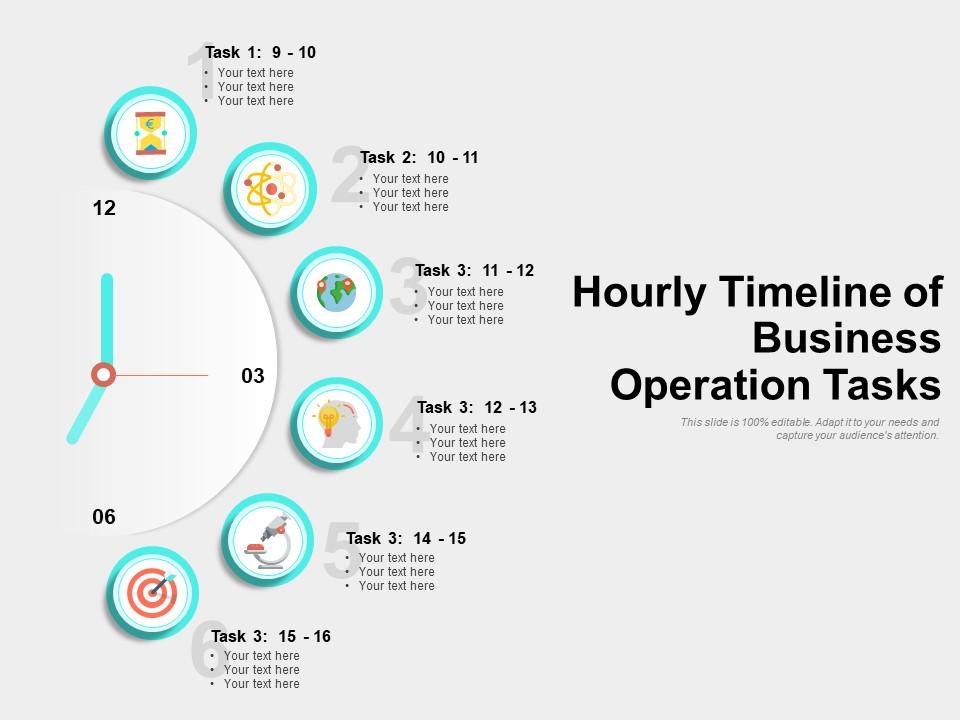
Presenting this set of slides with name Hourly Timeline Of Business Operation Tasks. This is a six stage process. The stages in this process are Hourly Timeline Of Business Operation Tasks. This is a completely editable PowerPoint presentation and is available for immediate download. Download now and impress your audience.

People who downloaded this PowerPoint presentation also viewed the following :

FAQs for Hourly timeline of

So there's basically four phases every business goes through - planning where you build your foundation and processes, then launch which is honestly just pure chaos while you figure out how to actually serve customers. Growth comes next when you're scrambling to scale everything up to meet demand. Finally there's optimization where you fine-tune operations for efficiency. Most companies actually cycle through these multiple times as they grow though. I'd figure out which phase you're in right now so you know what to focus on first.

Honestly, I'd go with something visual like Gantt charts or even just a basic roadmap - whatever clicks for you. Monday.com and Asana are solid picks if you want something collaborative. Break everything down into phases with actual dates, then hunt for bottlenecks before they screw you over. Color-coding different teams helps a ton when you're trying to spot conflicts quickly. Oh, and don't go crazy at first - just focus on your next quarter's big stuff. You can always get fancier later once you've got the hang of it.

Oh man, so many options! Asana's probably your best bet - super clean for timelines and tracking stuff. Monday.com and ClickUp are solid too. Honestly though? Sometimes I just throw together a Gantt chart in Google Sheets because I'm lazy and it's free. Notion's been my obsession lately - you can build pretty much anything in there if you don't mind the learning curve. Microsoft Project's overkill unless you're running like a construction site or something. I'd just start with whatever your team's already comfortable with and see how it goes.

Honestly, a solid operations timeline is like having GPS for your project - no more "wait, what's happening next?" chaos. You can actually see where things might get stuck before they blow up your whole schedule. Makes resource planning way less of a headache too since you know exactly when you'll need people or equipment. Your stakeholders will thank you for having real dates they can count on (trust me, those status meetings become bearable). Oh, and pro tip - start with your big milestones first, then fill in all the smaller stuff working backwards. Way easier than trying to build it chronologically.

Ugh, timeline estimation is the worst - I'm terrible at it too. You'll think something takes 2 hours and suddenly it's been 6. Dependencies are sneaky killers, plus there's always some random thing that breaks. Here's what actually helps: tack on like 25% extra time to whatever you think it'll take. Sounds excessive but trust me. Talk to anyone who's done similar stuff before because they'll warn you about the weird gotchas. Oh, and start writing down how long things really took vs your guess - you'll spot patterns in your overconfidence pretty quick.

Look at it monthly if you can, quarterly at minimum. Seriously though, I learned this the hard way - timelines become total garbage if you ignore them too long. Set a calendar reminder or you'll forget completely. Industries move crazy fast now, so what made sense three months ago might be completely off track. During reviews, figure out what's actually happening vs what you planned. Some stuff will be behind, new projects will pop up out of nowhere. Don't let it turn into one of those documents everyone pretends exists but never opens.

Honestly, timelines are a game changer. No more confusion about who's doing what or when things are due. Your team can actually see the whole project laid out, which helps everyone plan better. The best part? You catch problems early instead of scrambling later - I learned this the hard way on my last big project. Everyone stays on the same page about priorities too. Short sentences work. Longer ones help you explain the bigger benefits like avoiding those panicked "oh crap, this was due yesterday" moments. Just try it once and you'll see what I mean.

Honestly, just assume everything's gonna take way longer when everyone's remote. Can't pop over to someone's cube anymore for quick approvals, so I usually tack on like 25% more time for anything that involves other people. Switch up your check-ins too - daily standups are kinda pointless now, but those twice-weekly deep dives actually work better. Document everything since people are scattered across time zones. Oh, and break your big milestones into smaller chunks. Trust me, it's easier to catch problems early when you're not seeing faces every day.

Ok so definitely focus on cycle times, throughput, and how much you're actually using your resources. Order-to-delivery time is huge - that one always tells the real story. Production output per hour and equipment downtime will show you exactly where things are getting stuck. Don't sleep on quality stuff either - defect rates and rework can totally mess up any efficiency wins you're getting elsewhere. Customer satisfaction scores matter too since that's what all this operational stuff is supposed to improve anyway. Honestly I'd just pick like 3-5 metrics that hit your biggest headaches first, then add more later.

So manufacturing is way more predictable - you've got set production cycles and supply chains you can map out months ahead. Service businesses though? Complete chaos. Client demands change, project scopes shift, and you're constantly firefighting. I learned this the hard way at my last job. Manufacturing companies plan product launches 6-12 months out while consulting firms can flip their entire quarter in two weeks. Physical constraints actually help manufacturing stay structured. Services have flexibility which sounds great but honestly becomes a nightmare when you're trying to forecast anything. Start by figuring out your industry's typical patterns first.

You definitely want stakeholder input before locking in any timeline - trust me on this one. They'll spot stuff you missed like dependencies, resource issues, or random external factors that could mess everything up. I learned this the hard way watching projects implode because nobody asked the right people early enough. Get feedback from everyone who touches your work - customers, vendors, your own team, management. The whole point is catching problems during planning instead of... well, instead of promising dates you can't actually deliver on. Way better to have those awkward conversations upfront.

Don't treat risk assessment like some boring thing you do at the end - weave it into every step of your timeline from day one. During planning, figure out what could go sideways. Then set up regular check-ins to actually look at these risks (honestly, most people just forget about this part). Build in extra time for the stuff that'll probably bite you. Weather check before a road trip, right? Sounds basic but everyone skips it. Get someone to own monitoring these risks - can't just hope for the best. Make it as normal as your Monday meetings so you catch problems early instead of scrambling later.

Honestly, Amazon's the obvious one here - they've got supply chain timing down to a science, tracking every step from warehouse to your doorstep. Toyota basically invented just-in-time manufacturing back in the day, and car companies still rip off their playbook. McDonald's? Those guys have kitchen operations timed to the second (which explains why your order's always the same, I guess). Starbucks does it too - everything from roasting schedules to how long it takes to open a store. The key thing is how they chop up big complicated processes into chunks they can actually measure and tweak.

Honestly, timelines are game-changers because you can actually see how your daily stuff connects to the big picture. Map out when major milestones need to happen, then work backwards - you'll spot gaps where you're spinning your wheels on things that don't matter. No more of that "we're crazy busy but going nowhere" feeling, you know? Resource planning becomes so much easier too since bottlenecks become obvious. I always tell people to start with deadlines first, then fill in what needs to happen to hit them. Sounds simple but most teams skip this step entirely.

Honestly, Gantt charts are game-changers for project management. You can spot bottlenecks before they wreck your timeline, which is clutch. They're perfect for showing stakeholders what's actually happening - way better than trying to explain it verbally. The visual layout makes it obvious when someone's drowning in work while others are twiddling their thumbs. When stuff goes sideways (and it always does), you can quickly shuffle deadlines around. I swear project managers must've been pulling their hair out before these existed. Start simple with Excel or check out Asana if you need team collaboration.

Ratings and Reviews

0% of 100
Review Form
Write a review
Most Relevant Reviews

No Reviews