


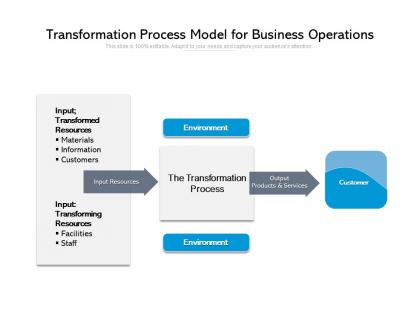
Transformation process model for business operations




Try Before you Buy Download Free Sample Product
 Impress Your
 Audience
 100%
100% Editable
 Save Hours
 of Time


Get the aces in your hand with our Transformation Process Model For Business Operations. They will deal you the best cards.
People who downloaded this PowerPoint presentation also viewed the following :
Transformation process model for business operations with all 5 slides:
With our Transformation Process Model For Business Operations growth becomes a given. They give it no other choice.


FAQs for Transformation process model
So basically you need vision, leadership buy-in, good communication, and actual change processes. Leaders have to practice what they preach - can't just talk about it. Two-way communication is huge throughout the whole company. Most frameworks include stakeholder stuff, training, and ways to track progress. Though honestly? The tracking part is where things usually go sideways. Whether you're doing Kotter's model or ADKAR or whatever, these same pieces keep showing up. I'd map out what's missing in your current setup first - that's probably where you'll find the real issues. Makes sense to start there anyway.
First thing - figure out your baseline before changing anything, otherwise you're flying blind. Track stuff that actually matters to your goals: customer satisfaction, revenue, how efficiently things run, employee happiness levels. Don't get sucked into measuring random metrics just because they look impressive on dashboards (learned that one the hard way). You want both the quick wins - like how fast people adopt new processes - and the bigger picture outcomes. Check in monthly or quarterly, but honestly? Make sure you're comparing similar timeframes and conditions. Otherwise you'll think something's working when it's really just seasonal fluctuations or whatever.
Look, you basically can't pull off real organizational change anymore without solid tech backing it up. It's what lets you make decisions based on actual data instead of just guessing. Cloud platforms, analytics tools, collaboration software - that's your bread and butter for tracking progress and scaling things across teams. Automation helps too, obviously. Your employees will straight up think you're living in 2005 if you don't have decent tech solutions in place. I'd honestly start by figuring out what tech gaps are currently blocking your transformation goals. Once you know that, you can prioritize what to fix first.
Honestly, culture is huge for any transformation - like, way bigger than most people realize. Your brilliant strategy means nothing if it goes against how your company actually works. Does your team hate change? Are they super hierarchical? Do they take forever to make decisions? You've gotta figure that stuff out first. Some places adapt quickly, others need months to warm up to new ideas (and that's totally fine, just different). I've seen so many good plans fail because nobody thought about whether it actually fit the culture. Read the room first, then build around what you find.
Honestly, the worst mistake is trying to change everything at once. Your team will burn out and nothing gets done properly. Pick one thing and crush it first. Also - and I can't stress this enough - don't ignore the people side of things. I've watched so many companies nail the tech part but completely bomb because nobody actually wanted to use the new system. It's painful to see. Set up good ways to measure success early (real metrics, not just stuff that sounds impressive). Oh, and build in feedback loops right away because trust me, you'll need to pivot when things get weird.
So basically you gotta take those standard transformation frameworks and bend them to fit what actually matters in your field. Healthcare? All about compliance and not killing patients - pretty high stakes there. Retail focuses more on customer experience and getting stuff delivered fast. Manufacturing's obsessed with efficiency and quality control. Each industry has its own priorities, you know? The trick is keeping those universal principles like change management but speaking your industry's language. Figure out what "winning" looks like in your sector first, then build everything around those specific metrics. Way more effective than trying to force some generic model.
Start with the why - people get lost if you jump straight into what's changing. Simple language beats corporate speak every day. One big meeting? Nah, that never works. You'll need multiple touchpoints to actually reach everyone. Break it down by who it affects and how - different groups care about different things. Oh, and create ways for people to push back or ask questions. Nobody likes feeling steamrolled. Hit up your biggest influencers first, then let the message spread from there. Timing matters too - don't dump everything at once.
Honestly? Leadership buy-in is make-or-break for any transformation. Without executives actually backing you, good luck getting budget or dealing with pushback from other teams. Short sentences hit hard here - leaders basically tell everyone whether this matters or it's just another passing trend. The momentum thing is huge too. When stuff gets messy (and trust me, it always does), you need someone with real authority fighting for the project. I've seen so many initiatives die because they started before getting solid commitment from the top. Sounds boring, but don't even begin until leadership's truly on board. Saves tons of headaches later.
Definitely mix your transformation model with other stuff - Kotter's 8-step change management is solid, plus agile for rolling things out in chunks. Balanced scorecards help track progress across different areas. OKRs are great too for keeping everyone on the same page with goals. The real magic happens when you combine approaches instead of just using one. But here's the thing - don't go crazy trying every framework you see. Pick maybe 2-3 that actually make sense for your company culture and stick with those. I've seen teams burn out trying to juggle too many methodologies at once.
Honestly, you need to check four main things before diving in. Leadership buy-in is huge - are they actually committed or just talking a good game? Then look at your company culture and whether people are open to change. Also figure out what skills you're missing and if you have the budget. Oh, and definitely check how past changes went at your company. That usually tells you everything you need to know about what you're up against. Don't sugarcoat the weak spots either - being realistic upfront saves you tons of headaches later. Once you know where you actually stand, you can map out what needs fixing first.
Honestly, stakeholder feedback is like your sanity check for any big changes you're planning. It shows you the blind spots you totally missed and helps you figure out where people might push back before everything goes sideways. The weird thing is, people actually support changes way more when they feel heard - go figure, right? You'll catch implementation problems early, spot resource gaps, and get realistic timelines instead of your overly optimistic ones. But here's the trick: ask specific stuff about roadblocks and challenges, not just "thoughts?" Otherwise you get useless generic responses that don't help anyone.
Track both the early warning stuff and the results that come later. Employee engagement, training completion, new process adoption - those show you what's headed your way. Then you've got your actual outcomes like financials, customer satisfaction, productivity. Most companies just stare at revenue numbers and completely miss the red flags. Change readiness surveys are clutch too because if people aren't buying in, you're basically screwed regardless of strategy. Oh, and don't go crazy with metrics - pick like 5-7 max that you'll actually use to make real decisions.
Okay so first thing - figure out where your team's at emotionally before you do anything else. Most people resist change because they're scared, not because the idea actually sucks. When you're mapping out the plan, think about how folks will *feel* about these changes and build in some support systems. Your change leaders better have decent people skills too, honestly. During rollout, pay attention to the vibe in meetings and adjust how you're communicating based on what you're seeing. Oh, and don't just track your usual metrics - you'll want to measure the emotional stuff too if you actually want to know how it's going.
Netflix is the classic example everyone talks about - they dumped DVDs for streaming way before Blockbuster saw it coming. Smart move. Microsoft did something similar when they went all-in on Azure and cloud services instead of just selling software licenses, though that was messy internally from what I've heard. Oh, and GE tried repositioning themselves as this "digital industrial company" under Immelt. The pattern here? These companies didn't wait until they were dying to change. They transformed while still making money, which is way easier than scrambling during a crisis.
So agile is basically how you actually *do* the transformation work day-to-day. Your transformation model shows the big picture stages, but agile gives you the tactics - sprints, standups, retros, all that stuff. It's like having a roadmap vs. actually driving the car, you know? The cool part is agile's feedback loops mean you don't have to wait forever to see if something's bombing. You can pivot quickly instead of being stuck with a bad plan for months. I'd start by figuring out how your current agile stuff maps to whatever transformation phases you're dealing with.
No Reviews