


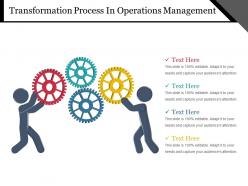
Transformation process in operations management powerpoint slide





Try Before you Buy Download Free Sample Product
 Impress Your
 Audience
 100%
100% Editable
 Save Hours
 of Time


Ensure happy endings with our Transformation Process In Operations Management Powerpoint Slide. Fulfill every commitment you have.
People who downloaded this PowerPoint presentation also viewed the following :
Transformation process in operations management powerpoint slide with all 5 slides:
Discredit artificial attempts with our Transformation Process In Operations Management Powerpoint Slide. Expose any hollow effort.


FAQs for Transformation process in operations
Honestly, start with figuring out where you actually are vs where you want to be - sounds boring but it'll save you later. Get everyone on board first, then roll things out bit by bit instead of doing everything at once. Here's the thing though - most people nail the planning but totally bomb the follow-up part. You've got to check in constantly and actually change course when stuff isn't working. I learned this the hard way on a project last year. Set up those regular reviews from the beginning and don't get stubborn about pivoting early if needed.
Start with the "why" first - show them what happens if nothing changes vs what they could gain. Honestly, people tune out generic corporate speak, so use real examples and numbers that actually matter to each group. Don't just do one big announcement (that never works). Mix it up with town halls, small workshops, casual chats. Let people ask questions and complain a bit - make it actually two-way. Be upfront about the rough parts and how long it'll take. Oh, and start these conversations way earlier than you think you need to. Mid-transformation is already too late.
Dude, your leaders are everything here. They've gotta paint the big picture and explain why you're doing this whole thing in the first place. When stuff gets weird (and it will), someone needs to make the hard calls about money and people. Here's the thing though - transformation is messy as hell in the middle. I've seen it tank so many times when leadership just... disappears. Your execs need to actually walk the walk, not just send emails about it. Regular updates help too. Oh, and dealing with pushback? That's non-negotiable. Without visible commitment from the top, you're basically dead in the water.
Look, you've gotta measure the obvious stuff first - revenue, costs, customer satisfaction, all that. But here's the thing: those numbers are backwards-looking. What really matters is checking employee engagement and seeing if people are actually using your new processes. I always tell people to get baseline numbers before you change anything, then review quarterly. Honestly though? Skip the spreadsheet obsession and just walk around talking to your team. They'll tell you what's really happening way faster than any dashboard will.
Honestly, people hate change - that's your biggest hurdle right there. If your team doesn't get why you're doing this transformation, they'll dig in their heels. Communication breaks down fast when leadership assumes everyone's on board. Oh, and don't try changing everything at once (learned that one the hard way). Resources get stretched thin, priorities clash, and suddenly timelines go out the window. Quick wins help though. Get some early victories to show progress, then your key people will actually start believing in it. Over-explaining the vision beats under-explaining every time.
Culture is huge here - it'll either speed up your transformation or totally kill it. Top-heavy companies need formal sign-offs and executive buy-in. Collaborative places? Go grassroots with cross-team involvement. Risk-averse orgs will crawl through changes (honestly, it's painful to watch), but innovative cultures might sprint ahead without thinking it through. Global companies have regional quirks to deal with too. My advice? Map out your cultural reality first. Then work WITH those existing behaviors instead of trying to change them - way easier than swimming upstream.
Look, communication is everything here. People hate change when they don't get why it's happening, so explain the reasoning behind it - not just what you're doing. Get them involved somehow, even if it's just asking when they think would be the best time to roll things out. Update them constantly too. I know it feels like overkill, but trust me - when people don't hear anything, they start making stuff up and panicking. Deal with pushback right when it comes up, don't let it fester. Oh, and find those unofficial influencers on your team first. You know the ones everyone actually listens to? Get them excited about it early.
Honestly, tech is like having a really good assistant during big changes. Automation handles the boring stuff so your team can focus on the important moves. Analytics show you what's actually happening instead of just guessing - which is huge. Cloud stuff makes pivoting way less painful when you need to change direction fast. And collaboration tools? Total lifesaver for keeping everyone on the same page when everything's crazy. But here's the thing - don't just grab whatever's trending. Figure out where you're struggling most, then find tools that fix those exact problems. Way more effective than just buying shiny new software.
Definitely go with Kotter's 8-Step Model first - it's battle-tested and walks you through everything from building urgency to making changes stick. ADKAR's solid too, especially if you're dealing with resistance since it focuses on the people side (awareness, desire, knowledge, ability, reinforcement). Look, I've watched too many teams spend weeks debating which framework is "right" when literally any structured approach beats just improvising. Lean Change Management's worth considering if you need something more flexible and iterative. Bottom line? Choose whichever clicks with how your team actually works, then commit to it. Don't framework-hop.
Ok so first thing - you gotta celebrate the tiny wins, like constantly. Don't just wait for the big milestones. Schedule regular check-ins where teams can actually share what they've done, even small stuff. The "why" behind changes? Keep repeating that because people forget. Also rotate your team members around so nobody burns out completely (learned this the hard way once). Create ways for people to give feedback - they need to feel heard or they'll just mentally check out. And honestly, if your timeline sucks, just adjust it instead of killing everyone with impossible deadlines.
Customer feedback is your reality check - don't skip it. I've watched so many transformations crash because teams assumed they knew what users wanted instead of actually asking. You'll catch blind spots you'd never see otherwise. Plus it helps you figure out what's genuinely broken vs what you just think needs fixing. Build those feedback loops early though, not after you've already started building stuff. Oh and prioritize based on what customers say will make the biggest difference - sometimes it's not what you'd expect. Start collecting input now before you get too far down the rabbit hole.
Market shifts basically force companies to change or die. Customer expectations evolve, new tech pops up, competitors shake things up - you can't just ignore it all. Blockbuster's the perfect example (though honestly, everyone uses that one). They saw Netflix coming but didn't act fast enough. Regulatory changes hit hard too. Supply chain issues, economic downturns - all that stuff demands quick pivots. The smart companies watch for these signals early. That way they're not frantically playing catch-up later when everything's already shifted under their feet.
Netflix ditched DVDs for streaming and basically changed everything. Microsoft went cloud-first when Nadella took over - total game changer. Toyota's lean manufacturing? That spread everywhere in auto. Oh, and Kaiser Permanente built their whole healthcare system around tech integration, which is pretty impressive when you think about how slow healthcare usually moves. Even Walmart managed to build serious e-commerce to fight Amazon. The thing they all did right was starting with what customers actually wanted, not just fixing their own internal mess. I'd pick whichever industry matches yours and really dig into how they pulled it off.
Honestly, you need "quick wins" that actually connect to your big goals - not just random short-term stuff that'll bite you later. Find projects showing real results in 3-6 months while building your long-term foundation. It's like renovating while you're living there (total chaos but whatever). Make sure stakeholders get both timelines upfront. Here's the thing though - when quarterly pressure hits, most companies panic and ditch their transformation plan. That's literally where they fail. Don't be those guys. Stick to the roadmap even when things get stressful.
Honestly, transparency is huge here - people can smell BS from a mile away. Get everyone involved in the actual decisions instead of just telling them what's happening after the fact. Nobody wants change forced on them, you know? Map out who gets affected first, then figure out your ethical framework from there. Job impacts, workload shifts, culture changes - all that stuff matters way more than leadership usually thinks. Don't oversell what you can actually deliver either (learned that one the hard way). Oh, and if you're switching systems, definitely consider the privacy angle. Short version: include people in the process or watch it blow up.
-
Nice and innovative design.
-
Easily Understandable slides.