

Operational Process PowerPoint Presentation Slides





Try Before you Buy Download Free Sample Product
 Impress Your
 Audience
 100%
100% Editable
 Save Hours
 of Time


Let Operational Process PowerPoint Slides help you produce a product or service. Get an organized set of activities or tasks that will guide to go through a complete process of developing a new product. Use professionally designed operational process PPT templates to transform inputs like raw materials, equipment, labour, etc into outputs like products or services. Incorporate business operational process PPT slides to work on the primary activities which will eventually help in the business process execution. Put together inputs, outputs and sequential activities to manage and improve business process with the help of business operational process PowerPoint slides. This content-ready operational process presentation deck consists of designs like operational process showing operational planning, maintaining, supplying, securing, building, operational process for a product or process design, operational process layout, and more. Get your hands on this professionally designed operational process PPT templates to bring out new products in the market. Your explanation will be immediately accepted due to our Operational Process Powerpoint Presentation Slides. Convince folks in a jiffy.
People who downloaded this PowerPoint presentation also viewed the following :
Content of this Powerpoint Presentation
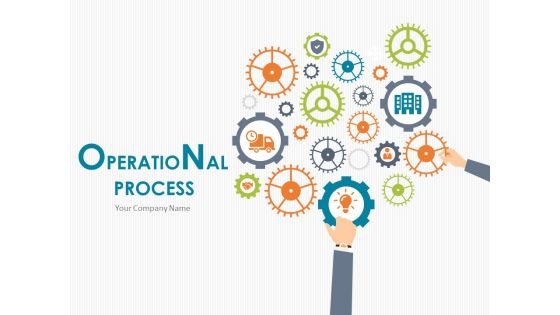
Slide 1: This slide introduces Operational Process. State the name of your company and begin.
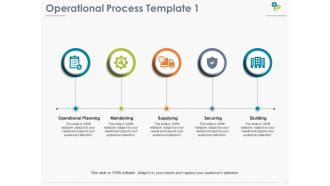
Slide 2: This slide shows first Operational Process Template with the following steps- Operational Planning, Maintaining, Supplying, Securing, Building.
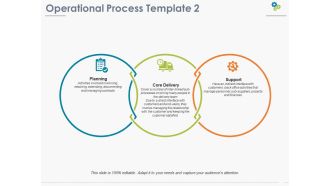
Slide 3: This slide shows the second Operational Process Template containing these three steps- Planning, Core Delivery, Support.
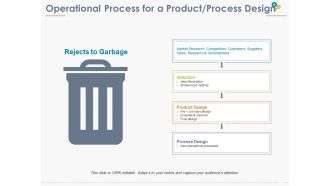
Slide 4: This slide shows Operational Process for a Product/Process Design with imagery and the following points- Market Research, Competitors, Customers, Suppliers, Sales, Research & Development, Selection, Product Design, Process Design.
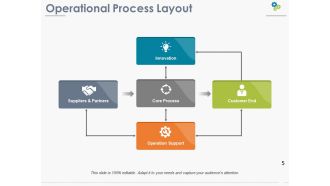
Slide 5: This slide presents Operational Process Layout with- Operation Support, Innovation, Core Process, Suppliers & Partners, Customer End.
Slide 6: This slide presents Operational Process of Digital Marketing with- Operating Processes and Supporting Processes divided into: Acquisition, Conversion Process, Customer Retention.
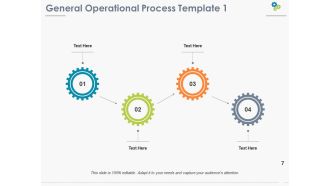
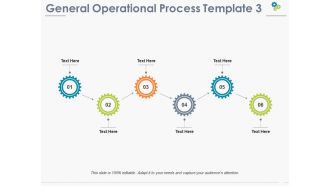
Slide 7: This slide presents the first General Operational Process Template.
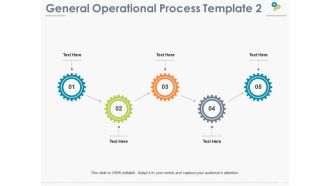
Slide 8: This slide presents the second General Operational Process Template.
Slide 9: This slide presents the third General Operational Process Template.
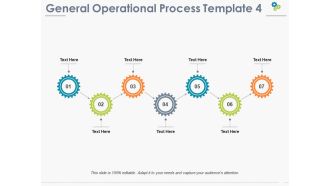
Slide 10: This slide shows the fourth General Operational Process Template.
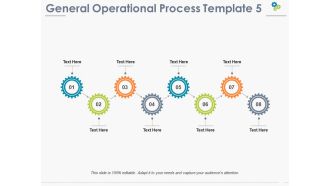
Slide 11: This slide shows the fifth General Operational Process Template.
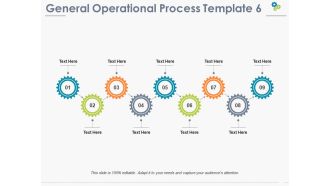
Slide 12: This slide shows the sixth General Operational Process Template.
Slide 13: This slide presents the seventh General Operational Process Template.
Slide 14: This is a Green Tea image slide to halt. You can change the slide content as per requirement.
Slide 15: This slide is titled Graphs and Charts to move forward. You can change the slide content as per requirement.
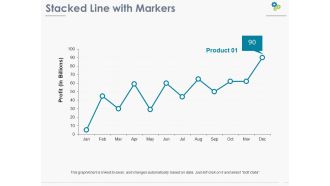
Slide 16: This is a Stacked Line With Marker slide to show product/ entity comparison, specifications etc.
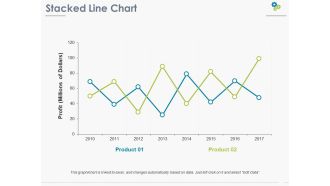
Slide 17: This is a Stacked Line Chart slide to show product/ entity comparison, specifications etc.
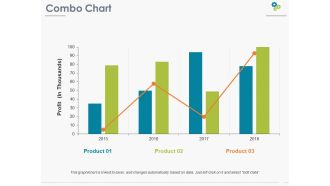
Slide 18: This is a Combo Chart slide to show information, comparison specifications etc.
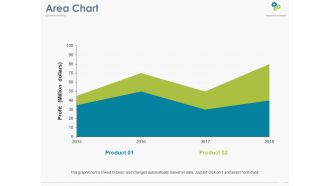
Slide 19: This is an Area Chart slide to show product/ entity growth, comparison, specifications etc.
Slide 20: This slide is titled Additional Slides to move forward. You can change the slide content as per need.
Slide 21: This is Our Vision slide with text boxes. State your vision, mission and goals here.
Slide 22: This is an About Us slide. Provide a brief introduction about company/ team here.
Slide 23: This is a Thank You image slide with Address, Email and Contact number.
Operational Process PowerPoint Presentation Slides with all 23 slides:
Enhance glocal capability with our Operational Process Powerpoint Presentation Slides. Your teams will be in constant communication






FAQs for Operational Process
You'll want clear inputs and who's doing what at each step. Map out your current process first - seriously, draw it out or whatever works for you. Then spot where things get stuck or confusing. Build in checkpoints along the way, not just at the end. Feedback loops are clutch for catching problems early. Make sure there's an escalation plan when stuff inevitably goes wrong. Each step needs triggers to start it and someone actually responsible. Document everything so anyone can jump in if needed. The visual mapping part might seem tedious but it'll show you exactly where the mess is happening.
Start by mapping out how work actually moves through your team - and I mean literally draw it out. Don't guess from your desk; talk to people doing the daily grind because they see bottlenecks you'll miss completely. Red flags are pretty obvious once you look: endless handoffs, stuff sitting around forever, constant do-overs. Track your cycle times and error rates too. Honestly, most managers skip this step and wonder why nothing improves. Compare what's happening now to what decent performance looks like, then tackle the worst problems first. You can't fix everything at once anyway.
Tech is basically your efficiency booster for getting stuff done faster. Automate the boring repetitive tasks and you'll see bottlenecks way clearer with real-time data. AI's pretty crazy good at predicting when things might break before they actually do. Plus machine learning optimizes workflows without you having to babysit everything. I swear, once you automate the mundane stuff, you get so much time back it's ridiculous. Don't just buy random tools though - figure out what's actually driving you nuts first, then find tech that fixes those specific problems.
Look, your processes are literally what make or break your business performance. Smooth operations mean faster delivery, lower costs, and happy customers. Messy ones? That's where you start bleeding money through delays and mistakes. I've seen companies with amazing products fail because their operations were a disaster, while mediocre ones succeed just by running tight processes. Map out what you're doing now first - sounds boring but trust me on this. Find your biggest bottlenecks and fix those first. That's where you'll actually see results instead of spinning your wheels on random improvements.
Focus on four main things: efficiency (time/cost), quality (error rates, customer happiness), throughput, and how well you're using resources. Honestly, don't try tracking everything - you'll just get overwhelmed by all the numbers. Pick maybe 3-5 metrics that actually matter for your goals. Mix it up with leading indicators like cycle time and lagging ones like complaints. Set up some dashboards so you can spot problems early instead of playing catch-up later. Oh, and definitely get your baseline measurements first, then work on improving from there.
Start by mapping out one process - seriously, you'll be shocked at the weird inefficiencies hiding in plain sight. Track some basic metrics like how long things take and where errors pop up. That gives you a baseline to work from. Then run tiny experiments using those PDCA cycles (Plan-Do-Check-Act stuff) before changing everything at once. Lean and Six Sigma are solid frameworks, but honestly? Just picking one messy process this week and documenting how it actually works versus what you think happens is huge. The trick is making this regular, not some big one-off project that dies after a month.
Honestly? People just hate change - that's your biggest headache right there. They'll fight you because they're comfortable with how things work now, or they literally don't get why you're switching things up. Training becomes this weird mess where everyone knows WHAT they should do but can't figure out HOW to actually do it well. Budget and time constraints will kill you too - there's never enough of either. Oh, and communication breakdowns everywhere. My take? Spam them with the reasoning behind everything and get some influential people on your side early. Makes a huge difference when they're selling it for you.
Look, good training cuts down on mistakes and gets tasks done faster. Your team won't be stumbling around wondering what to do next. People start catching problems early instead of letting them blow up later - which honestly saves you so much headache. Short sentences work. When everyone understands how their job connects to everyone else's, departments actually work together instead of against each other. Oh, and less rework means less wasted time. I'd focus on whatever's causing you the biggest pain points right now and train around those first. You'll see the difference pretty quickly.
Dude, you NEED to get your departments talking to each other. Silos are project killers - I've watched so many trainwrecks happen because marketing, ops, and IT were doing their own thing. You'll catch problems way earlier when teams actually communicate. Plus no more duplicate work (which honestly drives me crazy). The handoffs get smoother, decisions happen faster, and people finally see how their work connects to everything else. Oh, and set up regular check-ins between the teams that overlap on your main processes. Trust me, it'll save you massive headaches down the road.
Look, customer feedback is basically your cheat sheet for what's actually screwed up in your processes. When people bitch about waiting forever or having to explain their problem three times, that's your smoking gun right there. We get so buried in our own systems that we miss the obvious stuff - like, I've seen companies spend months optimizing the wrong thing entirely. Track the patterns in what people complain about most. Then trace those complaints back to specific steps in your process. Here's the thing though - you've gotta actually fix the problems AND tell customers you did it because of them.
Honestly, you'll save so much time it's ridiculous. No more typos in spreadsheets or forgetting to follow up with clients - automation just handles that stuff consistently. Your team can focus on the actually interesting work instead of mind-numbing data entry. The systems run constantly too, which is pretty sweet. I'd say start with whatever manual process annoys you most right now. You'll see cost savings pile up fast, especially if you're doing high-volume stuff. Plus everything gets tracked automatically so you actually know what's happening in your workflows for once.
First thing - map out each process step by step. Get the actual people doing the work involved, not just their managers (trust me, there's always a disconnect there). Document who handles what and when, but keep it simple. Visual flowcharts work great because nobody wants to read a wall of text. Don't forget decision points and where work gets passed between teams. Put everything in one searchable spot and assign someone to keep it current. Oh, and definitely test it by having a newbie walk through your documentation - you'll catch gaps you never noticed.
Start by mapping what you're already doing - sounds boring but you'll thank me later. Documentation and regular audits will catch problems before they blow up. Automated monitoring is a lifesaver, trust me on this one. Your team needs to actually get WHY compliance matters, not just memorize checkboxes. Solid approval workflows are key, plus you need detailed logs of every change. Don't skip version control (yeah, I know, snooze fest). Do risk assessments every quarter. Oh, and figure out your biggest blind spots first - that's where you'll get burned.
Look, it really depends on what industry you're in. Manufacturing companies are obsessed with efficiency and quality control. Healthcare? They're all about patient safety and following regulations to the letter. Tech companies do that whole agile thing - constantly iterating and moving fast. Banking is the complete opposite honestly, super focused on managing risk and staying compliant. You've got to figure out what you're optimizing for first. Speed or accuracy? Innovation or playing it safe? I'd check out how the big players in your space handle their operations, then just adapt whatever makes sense for your situation.
Honestly, your leaders make or break the whole thing. They've got to actually pay attention to what's working and what's totally falling apart, then have the guts to change course. The good ones don't just sit in meetings all day - they're out there seeing where things get stuck. You want people who won't shut down ideas from the team, because those folks on the ground usually know exactly what's broken. Here's the thing though: if leadership won't give you time and resources to actually fix processes, you're just spinning your wheels. Look for the managers who regularly walk around and talk to people.
-
Great product with highly impressive and engaging designs.
-
Unique design & color.