

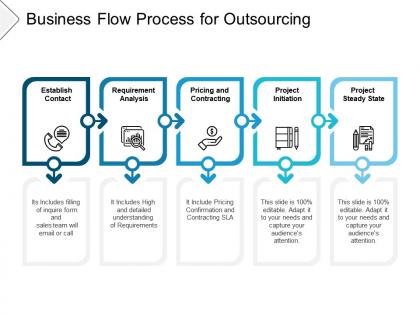
Business flow process for outsourcing




Try Before you Buy Download Free Sample Product
 Impress Your
 Audience
 100%
100% Editable
 Save Hours
 of Time


Count on full effort from our Business Flow Process For Outsourcing. They will do the very best they can.
People who downloaded this PowerPoint presentation also viewed the following :
Business flow process for outsourcing with all 5 slides:
Ensure efficiency with our Business Flow Process For Outsourcing. Get greater output from your thoughts.




FAQs for Business flow
Honestly, the money you'll save is huge - like 20-40% on operational costs. But what I really love is getting access to experts you could never afford to hire full-time. Your team can actually focus on the stuff that makes you money instead of getting bogged down in admin tasks. These outsourcing companies already have all the processes and tech figured out, so you don't have to build it from scratch (which would cost a fortune). Scaling becomes way easier too - need more help during busy season? Done. Business slows down? No problem firing people. Just start small with something that won't kill your business if it goes wrong.
Dude, cultural stuff can totally derail your outsourcing if you're not careful. Direct vs indirect communication styles? That's where most projects go sideways - like when you think you're being clear but they're reading between lines that don't exist. Time zones are annoying enough, but throw in different attitudes about hierarchy and deadlines and it gets messy fast. I learned this the hard way on a project last year. Get both teams some cultural training upfront. Set super explicit communication rules too. Don't assume everyone thinks about work the same way you do.
Honestly, track record matters most - find someone who's actually done work in your space before. Cost's obviously important but don't just go cheapest. Security stuff is non-negotiable, trust me on that one. Time zones can be a real pain if you need quick turnarounds, so think about that. Their tech needs to play nice with yours too. Oh and definitely call their past clients yourself - those glossy testimonials mean nothing. Can they grow with you if things take off? That's been huge for us. Communication style matters more than you'd think.
Honestly, tech can totally transform how you handle outsourced work. Automation tools cut out all those annoying manual handoffs between teams. APIs let your systems talk directly to your vendor's - no more data entry headaches. Dashboards give you real-time updates so you're not constantly asking "where are we on this?" Cloud platforms are clutch because everyone works from the same source. No more version nightmares. AI handles the boring stuff while chatbots deal with basic questions. Just make sure your tools actually integrate - otherwise you'll create more problems. Map out your current process first, then tackle the biggest pain points.
Honestly, communication breakdowns are probably gonna be your worst nightmare - different time zones make everything harder. Your team might get defensive about being "replaced" too. Quality control becomes tricky when you can't just walk over and check on things. Oh, and those cultural differences? They cause way more misunderstandings than people think. Knowledge transfer is always messy. Hidden costs will pop up that weren't in the original deal, plus you risk becoming too dependent on them. Security's another headache with sensitive data. Start with something non-critical first and definitely have backup plans ready.
First thing - get a solid contract with specific data security requirements and encryption standards. Your vendor needs certifications like SOC 2 or ISO 27001. I can't stress this enough because I've watched companies cut corners here and pay for it big time. Set up regular security audits and restricted access protocols. Honestly, treat them like they're part of your actual team - same security standards you'd use internally. Oh, and negotiate audit rights so you can check their security practices yourself if needed.
Track the obvious stuff first - cost savings, quality scores, SLA compliance. Customer satisfaction is massive though. If they're killing your NPS scores, you've got problems. Check turnaround times and error rates too. Communication responsiveness is honestly underrated - slow responses drive me crazy. Don't forget process improvements they might suggest. Oh, and set up a monthly scorecard with maybe 5-7 key metrics. Review it religiously with your vendor or you'll lose track fast.
Yeah, outsourcing can mess with morale big time if you handle it wrong. People start freaking out about job security or think their work doesn't matter anymore. I've seen it totally kill company culture, especially when they outsource the customer service folks who were basically the face of the brand. But here's the thing - I've also watched companies do it really well. You just gotta be upfront from day one about why you're doing it. Tell your team how it'll let them focus on the more interesting stuff instead of the boring tasks. Actually involve them in planning the transition too, and make their new roles super clear. Nobody wants to feel like they're getting pushed aside, you know?
Honestly, communication will make or break your whole outsourcing thing. You've gotta be super clear about what you want upfront - like, spell it out more than you think you need to. Set up regular check-ins and make sure everyone's reporting back on progress. I've watched so many of these deals go sideways because people just assumed the other team understood everything perfectly. They didn't. Weekly calls are your friend, especially at the start. Document stuff too. Trust me, overcommunicating beats dealing with missed deadlines and everyone being pissed off later.
Honestly, vendor selection is where most people mess up. Check their financials and security certs first - boring but crucial. Contract-wise, get solid SLAs and make sure there's an exit strategy (learned this the hard way). Don't outsource anything that's core to your business, and definitely spread the risk across multiple vendors. Performance reviews should happen regularly, plus you need backup plans. Oh, and pilot projects are your friend - test things out small before committing big. The legal stuff might seem tedious, but it'll save your butt later.
Data protection laws are your biggest headache - GDPR for EU stuff, plus whatever your vendor's country requires. Contract disputes get messy across borders, so figure out which country's courts handle problems before you sign. Don't let them walk off with your IP or customer info either. Industry compliance rules still apply too, obviously. Honestly, the jurisdiction thing trips up way more companies than you'd think. Get an international outsourcing lawyer to look it over first - trust me on this one.
Honestly, outsourcing is kinda hit or miss for customer satisfaction - depends who you go with. The upside? You get specialized people and round-the-clock coverage without hiring a massive team. But here's the thing - you're giving up control over how customers experience your brand. Takes time for outsourced folks to really "get" your company's vibe too. I'd probably test it out with something low-stakes first. Maybe handle basic inquiries or whatever, then see how it goes. Once they nail your tone and processes, you can hand over bigger stuff.
Healthcare, finance, and tech companies get the most out of outsourcing. Makes sense when you think about it - they're buried in repetitive stuff like claims processing and data entry. Customer support too. These industries have crazy compliance rules, so outsourcing partners who specialize in that regulatory nightmare often do it way better than trying to figure it out yourself. Manufacturing and retail see huge benefits for supply chain work. Honestly? It's pretty amazing how much you can get done when your team isn't stuck doing the boring operational tasks. If your workflows are predictable and rule-based, you should totally look into what you could outsource.
Honestly, most people mess this up by not staying on top of things. Set your SLAs and KPIs from day one, then actually check them regularly - weekly at first. Quality scorecards help a ton. I'd set up some kind of automated dashboard if you can swing it, catches problems before they blow up. The companies that just hand stuff off and disappear? They always regret it later. Make sure you've got a clear escalation process too, because something will eventually go wrong. Oh, and build in feedback loops with whoever you're outsourcing to. Being proactive beats scrambling to fix disasters.
Dude, you've gotta keep an eye on AI automation - it's everywhere now. Companies are ditching the old hourly billing for outcome-based pricing, which honestly makes way more sense. Nearshoring's beating out traditional offshoring too. Cloud-first isn't optional anymore, it's just expected. The 24/7 "follow the sun" thing has gotten so much better with all these new collaboration tools. Oh, and everyone wants specialists now instead of those jack-of-all-trades providers. Sustainability's become this huge deal - clients actually care about carbon-neutral operations. My take? Don't wait to check if your current providers are keeping up with this stuff.
No Reviews