


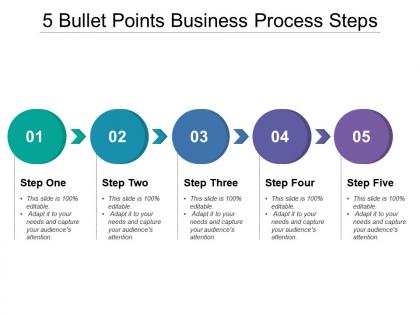
5 bullet points business process steps




Try Before you Buy Download Free Sample Product
 Impress Your
 Audience
 100%
100% Editable
 Save Hours
 of Time


Get them functioning together with our 5 Bullet Points Business Process Steps. They help create convergence.
People who downloaded this PowerPoint presentation also viewed the following :
5 bullet points business process steps with all 5 slides:
Awareness gets a big boost with our 5 Bullet Points Business Process Steps. Expose folks to extra dimensions.



FAQs for 5 bullet points
First figure out what problem you're actually solving and who's in charge of it. Then map every single step - seriously, even those janky workarounds Karen does because "that's how we've always done it." You'll want to nail down your inputs, outputs, and where decisions get made. Who's responsible for what? Write that down too so people can't play dumb later. Oh, and set some actual numbers you can measure against - otherwise you're just guessing if anything's working. Honestly, most people skip the "how does this mess actually work right now" part, but that's where the gold is.
Map out your whole process first - seriously, just draw it out. Then track where stuff gets stuck or moves super slow. Usually it's obvious once you see it on paper. Check for steps that always take forever, or where work just sits waiting for someone's approval. Ask your team too - they know exactly where things suck. One person or system probably handles way more than they should (that's your bottleneck right there). Time each step if you can. Start fixing the slowest ones first. Sometimes the handoffs between departments are what's really killing you.
Look, you absolutely need stakeholder feedback if you want real process improvement. Front-line workers, customers, managers - they all see different problems you'd totally miss from up high. The best ideas honestly come from people stuck doing the tedious work every day thinking "ugh, why do we even do it this way?" Without their input you're just throwing darts blindfolded. Oh and collect feedback during the whole process, not after you've already built something. Way easier to fix things early than completely redo them later when everyone's already frustrated.
Honestly, just start with the stuff that makes everyone want to scream - like data entry or those endless email chains. Automation tools can handle the boring repetitive work while workflow software keeps track of where everything's at. The real game-changer though? Getting your systems to actually talk to each other so info moves around without someone having to manually copy-paste it everywhere. Cloud stuff is solid because everyone can jump in from wherever. Don't go crazy trying to automate everything at once - pick one nightmare process first, fix that, then tackle the next one. Way less overwhelming that way.
Focus on cycle time first - it's super easy to track and shows you right away where things are slow. Then add throughput, error rates, and cost per transaction. Honestly, don't go crazy with more than 3-4 metrics or you'll drown in spreadsheets. Bottlenecks are where the magic happens though - that's where work gets stuck and shows you the biggest wins. I learned this the hard way after tracking like 12 different things once. Just pick what actually matters to whoever's breathing down your neck about results.
Start by figuring out what kicks off the whole thing, then just follow it step by step. Write down who's responsible for each part and what they need to do it. I'm kind of a control freak about this stuff, but seriously - mark where decisions get made and where things usually get stuck. Also note what happens when stuff breaks (because it will). Keep the language simple, maybe throw in some flowcharts if you're feeling fancy. Nobody wants to translate corporate BS when they're already stressed. Oh, and have someone else test your instructions by actually following them - you'll be shocked what you missed.
Don't go too broad or get lost in tiny details - both ways wreck the whole thing. Map what's really happening, not the pretty version you wish existed. You've gotta involve the people actually doing the work, otherwise you'll miss half the steps. I learned this the hard way trying to map solo once - total disaster. Ask why each step exists too, makes finding fixes way easier later. Oh and validate everything with the process owners before you wrap up, saves you from looking dumb when something's totally wrong.
Honestly? Once a year is the absolute minimum, but that's kinda lazy if we're being real. Fast-moving industries need quarterly check-ins at least. Don't wait around if you're seeing bottlenecks or angry customers - fix it now. New tech rollouts are also prime time for process reviews. Here's the thing though: your team doing the actual work will catch problems way before you do, so ask them first. I'd set those calendar reminders because otherwise you'll totally forget. Oh, and regulatory stuff changes constantly, so stay on top of that mess too.
Honestly, yes - they're game changers. Reading through paragraphs of procedures is torture, but a simple flowchart? You can spot problems instantly. We used to have so many mix-ups because everyone interpreted the written steps differently. Now with visual maps, there's no confusion about who does what or when handoffs happen. The crazy part is how obvious the redundancies become once you see everything laid out. Like, why were we doing step 6 twice? Don't overthink the tools though - even a basic flowchart drawn in PowerPoint works. Visual beats walls of text every time.
Oh man, I've been through this so many times! Hands-on workshops are your best bet - people actually retain stuff when they're doing it themselves. Pair newbies with your solid employees too, that mentoring thing really works. Documentation's obviously necessary but honestly? Most people won't read it unless they're stuck. Video tutorials are great for the visual folks on your team. Role-playing sounds cheesy but it lets people screw up without consequences first. Oh, and definitely ask for feedback during training - you'll catch issues early and people feel heard. Trust me on this one.
Look, having clear processes is a game-changer for keeping customers happy. Your team will deliver consistent quality instead of that annoying "depends who helps you" experience everyone hates. You can actually give realistic timelines too, which customers love way more than vague promises. Honestly, I've seen so many businesses wing it and wonder why people get frustrated. Document what you're doing now - even if it's a hot mess. You'll spot the problems that slow things down before they tick off your customers. Once you see the whole picture, you can fix the parts that suck.
Dude, automation is everywhere right now and for good reason. It handles all the boring stuff - like processing invoices or setting up new customers - so your team can actually think strategically. Plus no more stupid human mistakes slowing things down. I swear, companies still doing everything manually are getting crushed by competitors who figured this out already. The best part? You can grow without hiring a ton of people. Just pick your most annoying time-waster tasks first and automate those.
Honestly, getting different departments to actually work together is a game-changer. It kills those stupid silos that make everything take forever. You'll catch inefficiencies that nobody would've spotted working alone - like, marketing might see why the handoff from sales is always messy, you know? Regular check-ins help, but the real magic happens when people understand how their stuff connects to everyone else's work. Different teams bring totally different perspectives that can fix workflows in ways you'd never expect. I swear, once teams start talking, bottlenecks just disappear and processes actually make sense for once.
Honestly, you've gotta loop people in from day one - none of that top-down surprise announcement stuff. Talk to them constantly, even when you think you're overcommunicating. Find some allies on each team who actually buy into this change, they'll do half your convincing for you. Skip the boring corporate training sessions and make it super relevant to what they actually do every day. Oh, and definitely celebrate the small stuff as you go - keeps everyone motivated. Start with whoever's getting hit hardest by the changes first, then work outward from there.
Dude, you've gotta bake compliance right into your processes from day one. Seriously, don't try adding it later - I watched my last company basically implode trying that approach. Map out all your regs first, then build your workflows around them. Documentation, approvals, audit trails, quality checks - whatever your industry needs. It's way easier to design processes that naturally hit compliance requirements than retrofitting everything afterward. Oh, and start early in the design phase or you'll hate yourself later. Trust me on this one.
-
Editable templates with innovative design and color combination.
-
Understandable and informative presentation.