


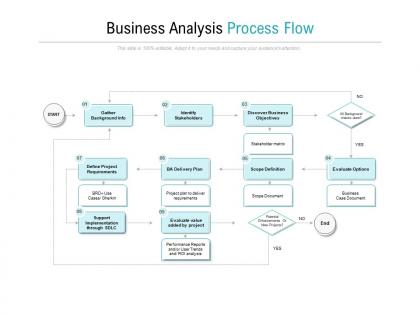
Business analysis process flow





Try Before you Buy Download Free Sample Product
 Impress Your
 Audience
 100%
100% Editable
 Save Hours
 of Time


Our Business Analysis Process Flow fulfill all the criteria. It is guaranteed to be impressive from every angle.
People who downloaded this PowerPoint presentation also viewed the following :
Business analysis process flow with all 5 slides:
Be the chased after handyman with our Business Analysis Process Flow. Establish your ability as a jack of all trades.
FAQs for Business
Honestly, most people skip the most basic step - actually figuring out what problem you're solving. I've seen so many projects go sideways because of this! Start there, then dig into who your stakeholders are and map out how things work now vs. how they should work. You'll want both the functional stuff and the technical requirements too. Oh, and don't forget to test your ideas early - build prototypes, get feedback, all that. My take? Pick one piece and nail it before moving on. Way less overwhelming than trying to do everything at once.
Honestly, data analytics just stops you from making decisions blind. Instead of guessing what customers want, you can actually see the patterns. Track what's really working (not what you *think* is working - big difference). Short sentences hit different sometimes. You'll catch problems before they blow up too. I know it sounds all fancy and complicated, but start super small - pick one thing you decide on regularly and look at whatever data you've got sitting around. Seriously, you'll be shocked how much clearer everything gets once you stop going purely on gut feelings.
Honestly, stakeholder engagement can totally make or break your whole project. First thing - map out everyone who actually cares about this stuff and figure out their level of influence. Some people just need updates, others you'll want in every meeting (trust me on this one). If you skip this step, you're gonna miss half the requirements and probably have to redo everything later. I learned that the hard way! Get regular check-ins scheduled with your main players. Always run your findings by them before you move to the next phase. Different stakeholders need different communication styles too - executives want the high-level view, technical folks want details.
Honestly, interviews are your best bet - sit down one-on-one and really dig into what people need. Workshops can be clutch too, especially when stakeholders have different opinions and need to hash things out together. Surveys work if you want broader input without scheduling a million meetings. Oh, and don't sleep on just watching people do their actual jobs - you'd be surprised what you catch. I'd probably start with interviews first since they help you build rapport, then maybe do a workshop to get everyone aligned on what you heard.
SWOT's honestly pretty solid - just list out your strengths, weaknesses, opportunities and threats before making big calls. Sounds super basic, I know, but it actually works. What makes it useful is when you start seeing connections, like how your strengths can help you grab opportunities, or how threats might hit your weak spots. I've seen teams get way too fancy with strategy frameworks when this simple grid does the trick. The real value comes when you're having those priority conversations - suddenly everyone's looking at the same picture instead of arguing past each other.
Google Analytics is your best starting point for website data, then grab social media insights from your platforms. SurveyMonkey works great for getting real customer feedback - way better than guessing what people want. SWOT analysis sounds boring but it actually helps organize your thoughts. For checking out competitors, SEMrush shows their keywords and traffic (kinda creepy but useful). Just use Excel or Sheets to keep everything organized. Pick maybe 3 tools max though. I made the mistake of trying like 8 different platforms once and ended up more confused than when I started.
So you know how you're drowning in all that inefficient workflow stuff at work? Business process modeling is basically drawing out how everything actually happens - and trust me, you'll be shocked at the ridiculous redundancies you find. Like why does Jim approve something that Sarah already signed off on? Once you map it visually, all the waste jumps out at you. Plus your boss will actually listen when you show them a diagram instead of just complaining. Honestly, I'd start with whatever process makes you want to bang your head against your desk most. That's usually where the biggest wins are hiding.
So basically, qualitative is all the descriptive stuff - interviews, observations, that kind of thing. It tells you *why* people do what they do. Quantitative is your numbers and stats that you can actually measure and prove. Honestly, I think qualitative gives you way better insights most of the time, but whatever. Numbers show you patterns and trends, while the descriptive research explains what's actually driving those patterns. Oh, and definitely use both together if you can - like, spot the trend with your data first, then figure out the reasoning behind it.
Know your audience - execs want the big picture and bottom line impact, tech folks need the nitty-gritty details. Always start with "here's why this matters to YOU specifically." Honestly, visuals are everything. Dashboards and simple charts beat boring reports every time. Lead with your conclusions first, then back it up with data. You'll need to get good at translating geek-speak into business language they actually care about. Oh, and this is crucial - end every presentation with who's doing what by when. Otherwise your brilliant work just disappears into the void.
Honestly, I'd focus on the money stuff first - revenue growth, profit margins, cash flow. Those are non-negotiable. Customer acquisition cost and lifetime value are huge too, especially if you're spending on marketing (which gets expensive fast). Don't sleep on customer satisfaction scores either - angry customers bail quickly. Pick maybe 5-6 metrics max that actually relate to your business. I've seen people track like 20 different things and it becomes useless noise. Set up some basic dashboard you can check monthly. Employee productivity matters too if you've got a team.
Honestly, change management is what stops your analysis from collecting dust on someone's desk. Super frustrating when you nail the data but nobody acts on it, right? The trick is getting stakeholders involved from day one - not just dumping your conclusions on them later. Map out who matters early and figure out what they actually care about. Also, present your findings in ways they can actually understand (some executives still hate spreadsheets, weird I know). It's really about the people side of things. Getting buy-in upfront saves you tons of headaches down the road.
So scenario planning is basically playing "what if" games with your business, but like, actually useful ones. You're not just thinking about the obvious stuff that'll probably happen - you're diving into the messy possibilities. What if your biggest supplier suddenly disappears? New regulations tank your industry? That sort of thing. Honestly, most people skip this part and just wing it. The cool thing is you end up with backup plans ready to go instead of panicking when everything goes sideways. It's like having a fire escape plan - you hope you won't need it, but you'll be glad it's there.
So business analysis is basically your game plan for going digital. It helps you figure out what you're doing now, spot the gaps, and map out what "success" actually means. You're documenting stakeholder needs and translating all that "we need to modernize" talk into real steps IT can work with. Honestly, half the job is just being a translator between departments. BA also helps you pick which processes to tackle first - don't just throw technology at everything at once. Plus you can actually measure if this whole transformation thing is working. Map your current processes first though, before you get excited about shiny new tools.
Pick 3-5 main competitors first and check out their pricing, features, how they position themselves. Google alerts are honestly a lifesaver for tracking their website updates and social media stuff. Customer reviews tell you a lot too. Here's what most people miss though - look at their old changes to figure out patterns. Like, what do they usually do before launching something new? I'd set up a monthly team meeting just for competitor stuff. Document everything because you'll forget otherwise. Way better than randomly stalking their websites whenever you remember to. The historical data thing really works - helped me predict a competitor's price drop last year.
Dude, visualization tools are a game changer for getting stakeholders to actually care about your analysis. Raw spreadsheets? Nobody wants that. But throw your data into a clean dashboard or chart and suddenly everyone's paying attention. I swear, executives will tune out numbers completely but get hooked on a good trend line. Power BI and Tableau are solid options, though honestly Excel works fine too if you're not trying to get fancy. The trick is starting with your biggest insight and building the whole visual around that story. Makes your recommendations way more convincing.
No Reviews