


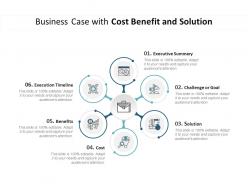
Business case with cost benefit and solution





Try Before you Buy Download Free Sample Product
 Impress Your
 Audience
 100%
100% Editable
 Save Hours
 of Time


Dynamic Business Case With Cost Benefit And Solution design help you show your work in your best light. Make sure that your next presentation is a success.
People who downloaded this PowerPoint presentation also viewed the following :
Business case with cost benefit and solution with all 5 slides:
Even the best ideas need to be presented well to succeed. Choose from thousands of Business Case With Cost Benefit And Solution to put yours in the best possible light.


FAQs for Business case with cost
Okay so for a solid business case you'll want five main things. First, nail down what problem you're actually fixing - people mess this up more than you'd think. Then map out 2-3 realistic solutions with proper cost-benefit breakdowns and ROI numbers. Risk assessment comes next, plus how you'd handle those risks if they hit. Don't forget a realistic timeline for rolling everything out. Honestly, the trick is being detailed without drowning them in info - execs want clear, data-backed recommendations they can move on fast.
Look, projections are basically what turn your business idea from "trust me bro" into something people actually take seriously. You're forcing yourself to back up all those assumptions with real numbers - revenue forecasts, costs, ROI stuff. Decision-makers love concrete data they can sink their teeth into. Just don't go crazy optimistic with your numbers (I've seen that blow up so many times). Keep them conservative and do your homework first. Nobody's impressed by wildly unrealistic projections - they'll just think you don't know what you're talking about.
Honestly, weighted scoring works really well for this stuff. Just list out what matters most - cost, timeline, risk, whatever - then give each factor a weight. Score your options against those criteria. Cost-benefit analysis is solid too, though the benefits part can get pretty hand-wavy depending on what you're dealing with. If you only have like 3-4 options, forced ranking or pairwise comparison might be easier than getting fancy with spreadsheets. Really depends on how complex your decision is and who you're trying to convince.
Start by mapping out everyone who'll be affected - not just the obvious people, but anyone who might push back later. Hit up the key players first with one-on-ones, then do surveys for the bigger groups. Finance people always have the trickiest questions (learned that the hard way), so definitely prep for those meetings. I use interview guides to stay focused but still leave space for random insights that pop up. Write everything down right after each conversation or you'll totally forget the important details. Oh, and make sure people actually feel heard - it makes a huge difference in getting useful feedback for your analysis.
Risk assessment is your business case's reality check - basically figuring out what could blow up and how bad it'd be. Map out stuff like market shifts, tech failures, budget disasters. Then guess how likely each one is and what damage it might cause. Here's the thing though - most people are way too optimistic about this part, which is why their cases fall apart later. Throw in some "what if" scenarios and build contingencies around them. Your stakeholders will actually respect that you've thought beyond the sunny-day version. Don't let your case crumble when things inevitably get messy.
Honestly, SWOT analysis is clutch for making your business case actually believable. Shows you've done the work on strengths, weaknesses, opportunities, threats - not just cherry-picked the good stuff. Executives eat that up because it proves you get the full picture. Plus you can head off pushback before it happens, which saves everyone time. I'd drop it right in your deck after the opportunity section but before numbers. Works way better than just winging it and hoping nobody asks the hard questions. Trust me on this one.
Don't be too rosy with your numbers - I learned that one the hard way. Back up everything with real data, not wishful thinking. Keep the language simple too because execs hate wading through technical stuff. Oh, and definitely talk about what could go wrong plus other options you considered. Makes you look way more prepared. One thing that always gets people - ask for what you actually need resource-wise, not some lowball estimate. Trust me on that. Have someone totally outside your project read it over first. They'll catch stuff you missed.
Market research is what makes your business case actually believable. You can't just walk in saying "customers probably want this" - you need surveys, focus groups, competitor data, whatever proves demand is real. Think of it like showing receipts when someone questions your story. Way harder to argue with solid numbers. Use it to nail down your target audience, back up your pricing, figure out market size. Oh and spot red flags early - that's huge. Honestly, stakeholders eat this stuff up. Start with the data, then build everything else around what it tells you.
Track the big stuff that ties back to your original pitch - ROI, payback period, whether you're actually hitting those cost savings you promised. Then add operational metrics like process improvements, customer satisfaction, employee productivity. Monthly reviews work best for the first year. Honestly, I'd stick to maybe 5-7 key indicators on a simple dashboard - any more and you'll drown in data. Skip the vanity metrics that look impressive but don't prove real value. You need solid numbers to show stakeholders this thing actually worked.
Look, quantitative data shows you *what's* happening - like that 15% revenue bump. But qualitative stuff? That's your "why." Customer interviews and employee feedback tell you if that growth is actually real or if you're about to crash into some massive wall you didn't see coming. I've watched so many business cases tank because the spreadsheets looked amazing but completely missed things like market mood or operational disasters waiting to happen. Honestly, it's kind of wild how often this happens. Mix both types and you'll dodge most objections before they even come up.
Ok so first thing - hit them with the money/benefit right away, don't bury the lead. Keep it to 3 main points because people zone out fast (I learned this the hard way). Real numbers work way better than fuzzy stuff like "we'll see growth" - say "15% revenue boost" instead. Practice your transitions between slides or you'll look lost up there. Oh and think about what pushback you might get and tackle it before they even ask. I always prep for the skeptics in the room. End with actual next steps and dates, not that awkward "questions?" moment where everyone just stares at you.
Honestly, visuals are a game-changer for business cases. Nobody wants to stare at endless rows of data - charts and graphs help people actually *see* the story you're telling. Revenue trends over time? Way clearer in a line graph. Department cost breakdowns? Perfect for pie charts. Your executives will thank you because they can spot the key insights without digging through spreadsheets. I learned this the hard way after watching eyes glaze over during my first all-text presentation. Now I always throw in 2-3 visuals minimum. It's the difference between confusion and those satisfying "oh, I get it!" moments.
Look, executives are drowning in proposals all day, so your executive summary needs to grab them fast. Start with the financial impact and timeline right upfront - that's what they actually care about. Make it scannable because honestly, they're probably skimming anyway. But here's the thing: you can't just dump numbers on them. Frame the problem so your solution feels like the obvious choice. Include the risks too so they know you've thought it through. I always tell people to write it compelling enough that they'll want to read your full analysis instead of just tossing it aside.
Look, you've gotta know who you're fighting against before you claim your idea will work. Check out their pricing, features, market share - the whole deal. Your business case needs to beat whatever's already out there, not just sound good in a boardroom. I mean, having a solid internal idea is nice and all, but if competitors are crushing it with better stuff, you're screwed. What barriers will you hit? How will this actually help you compete? Without understanding the battlefield, you're basically just crossing your fingers and hoping for the best.
Honestly? Resource constraints will hit you first. Budget cuts happen, key people bounce, and suddenly that time you thought you had vanishes. But the real killer is change resistance - those stakeholders who nodded enthusiastically in meetings will absolutely ghost you when it's time to actually do things differently. It's wild how fast "yes, great idea!" becomes "well, maybe later." Build in extra time for scope creep because it's coming whether you want it or not. Oh, and keep bugging people throughout the whole process - silence usually means they're already mentally checked out.
No Reviews