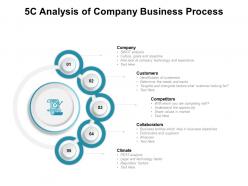
5c analysis of company business process
Try Before you Buy Download Free Sample Product
Audience
Editable
of Time
Create equal chances for all with our 5C Analysis Of Company Business Process. It helps bring discrimination to an end.
People who downloaded this PowerPoint presentation also viewed the following :
5c analysis of company business process with all 2 slides:
Handle discrimination with our 5C Analysis Of Company Business Process. Ensure an equal chance is given to all.
FAQs for 5c analysis of
So the 5 C's break down like this: Company (your internal stuff), Customers (who you're selling to), Competitors (honestly the most interesting part imo), Collaborators (suppliers, partners, etc.), and Context (bigger picture things like regulations and economic trends). I'd actually start with whatever feels most confusing right now. That's usually where you'll find the biggest gaps. Like if you're not totally sure who your real competition is, start there. The Company analysis is pretty straightforward - just your strengths and weaknesses. Context can get overwhelming though, so maybe save that for last unless there's some major regulation or trend that's obviously affecting you.
So the 5C Analysis basically looks at five things at once - your Company, Customers, Competitors, Collaborators, and Context. Way better than those tired SWOT charts everyone still uses. You get the full picture instead of just "here are my competitors." Like, you'll actually understand how they position themselves, what customers really want, plus all the external stuff - regulations, economic trends, whatever. Honestly it's pretty eye-opening. You can spot where competitors are screwing up, find partnership opportunities you missed, and catch market shifts before they hit you. Perfect for when you're trying to figure out your next move or find that edge everyone's looking for.
Okay so customer analysis is literally the backbone of the whole 5C thing. You're digging into who these people actually are - their demographics, what drives them, how they buy stuff, what pisses them off. Most companies think they know but they're just guessing, which is wild to me. This research shapes everything else - how you stack up against competitors, what skills your company needs, who you should partner with. Honestly? Skip the spreadsheets first and actually talk to customers. I know it sounds basic but you'll learn things that'll blow your mind. The data comes after.
Environmental factors basically touch everything in your 5C analysis - they're the backdrop for all your strategic moves. Regulations and economic shifts hit your Company directly. Customer behavior changes with social trends and green concerns. Competitors face the same external pressures you do, which is kinda obvious when you think about it. Your Collaborators might pivot their priorities too. And honestly? The Context section literally IS analyzing your environment. You'll want to keep scanning for political, economic, social, tech, and environmental changes since they ripple through all five areas and mess with your strategy.
Honestly, the worst thing you can do is analyze each C separately - they're all connected. Like, your customers totally shape how you should position against competitors. Also don't use stale data (been there, done that!). Surface-level competitor research is pretty useless too. Actually dig into what they're doing strategy-wise. Oh, and here's the brutal part - be real about your company's weak spots. Internal bias will screw you over every time. Get people from different departments involved, not just the marketing team's take on everything.
So for core competencies, dive into the Company part of your 5C analysis. Audit what you're actually good at - resources, capabilities, all that stuff. Here's the thing though: be super honest because lying to yourself gets you nowhere! Then check if those strengths actually matter to customers and beat your competition. If they don't tick both boxes, they're not really core competencies. I'd focus on finding maybe 2-3 things you genuinely excel at that competitors can't easily copy and that customers actually care about. That's where the magic happens.
Look, context is huge for 5C Analysis - like, make-or-break huge. Startups obsess over Collaborators and partnerships while Fortune 500s zero in on Competitors and market share. Same framework, totally different focus. Industry speed matters too - tech changes overnight, manufacturing... not so much. Your geographic market, economic conditions, business cycles - all of it shapes what you should actually dig into. I swear, half the analyses I see are just copy-paste jobs that miss the point entirely. Customize your depth based on what'll actually drive your decisions, not some textbook template.
Company perspective is all about what YOU bring to the table - your skills, resources, what you're trying to accomplish. Customer perspective? Total opposite. You're looking at what they actually need and value. So company side asks "what are we good at?" Customer side is more like "what do they even care about?" Honestly, these don't line up as often as you'd expect. The customer view makes you question your assumptions about what actually matters to people. You want both perspectives though. That's how you find where your strengths actually fix real problems they have.
Honestly, I'd combine 5C Analysis with SWOT - it's a killer combo. The 5Cs show you what's happening in your market while SWOT digs into your own strengths and weaknesses. Porter's Five Forces works great too since it looks at competition from totally different angles. Customer personas are clutch if you really want to get granular with that Customer piece. Oh, and value chain analysis can beef up your Company assessment. Don't go crazy though - pick one extra tool and do it right rather than half-assing three different frameworks. You'll actually learn something useful that way.
Try the 5C framework - it's actually pretty solid for finding real gaps. Look at your customers first and dig into what's genuinely bugging them, not just age/income stuff. Competitors are obvious but don't forget the weird indirect ones. Collaborators matter way more than people think since you'll need partners to actually grow. Context is your market trends and regulations that could totally screw you over. Honestly, most founders skip the collaborators part and regret it later. Use this to find white space opportunities before you blow through all your cash.
Yeah, the 5C framework works great for digital stuff! Start with **Company** - what are your actual digital skills and resources? **Customers** gets way more interesting online since you can see exactly how people behave (honestly, the data we get now is kind of scary compared to old-school marketing). For **Competitors**, stalk their social media, check their search rankings, see what ads they're running. **Collaborators** means thinking about influencers, affiliate partners, even how platform algorithms work with you. **Context** is all the digital trends and platform changes happening constantly. I'd begin by just looking at your current online presence through each of these angles.
Pick your top 3-5 direct competitors first - makes the whole thing way more manageable. Look at their market share, pricing, product quality, and how they distribute stuff. Their marketing spend matters too, plus financial performance and customer satisfaction. Brand strength is huge but honestly kind of hard to measure sometimes. Don't go down every rabbit hole though, you'll be there forever. The real point is spotting their strengths and weak spots so you can find gaps they're missing. I'd gather this data systematically - saves you from scrambling around later.
Honestly, twice a year is the sweet spot for a full 5C Analysis - I wouldn't go longer than that. Markets move way too fast these days, especially after all the pandemic craziness we've been through. For context and climate stuff though? Check those quarterly since external factors change overnight it seems. The collaborators part can wait longer unless you're actively building new partnerships or whatever. I'd just throw it on your calendar every six months and treat it like any other strategic review. Don't overthink it - consistency matters more than perfect timing.
Honestly, tons of companies do this well. Apple's always studying their users (people who want premium stuff), checking what Samsung and Google are doing, working with app developers, and staying on top of privacy trends. Netflix is probably the best example though - they track what we watch, compete with Disney+, partner with creators, and use those scary-good recommendation algorithms. Even my local coffee shop does a basic version by watching customer habits and keeping tabs on competitor prices. Oh and they switched suppliers last year when rent went up in the neighborhood. Pick one area to focus on each week - makes it way less overwhelming.
So basically the 5C Analysis covers Company, Customers, Competitors, Collaborators, and Climate - it's like your strategic reality check. I can't tell you how many times I've watched teams crash because they only focused on their own stuff and ignored the market. Short sentences work. The framework forces you to look at your internal capabilities AND what's happening externally with competition and partnerships. What I love about it is how everything connects - your customer insights might reveal a competitor weakness, you know? Use it as your go-to checklist so you don't miss obvious blind spots before making major moves.
No Reviews