


Processus de recrutement des ressources humaines





Try Before you Buy Download Free Sample Product
 Impress Your
 Audience
 100%
100% Editable
 Save Hours
 of Time


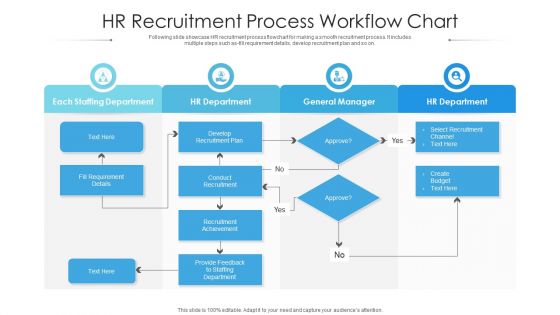
Voici le processus de recrutement RH sous forme de schéma : Remplir les détails du poste, développer un plan de recrutement, etc.
People who downloaded this PowerPoint presentation also viewed the following :
Contenu de cette présentation Powerpoint
Embaucher et retenir les meilleurs talents dans une organisation est une tâche importante que le service des ressources humaines accomplit. Chaque entreprise veut embaucher un candidat qui peut l'aider à atteindre de nouveaux sommets dans les affaires. Alors, quelle est la solution ? La réponse est le modèle de diagramme de flux de processus de recrutement humain de SlideTeam, qui résout le chaos de l'embauche.
Voulez-vous embaucher un talent de premier ordre pour votre entreprise mais vous ne connaissez pas le processus complet ? Cliquez ici pour en savoir plus.
Tracer le cours de l'acquisition des talents
Ce cadre PowerPoint est la boussole pour les services des ressources humaines. Il les aide dès le début du processus de recrutement jusqu'à l'embauche du candidat idéal.
Cliquez ici pour comprendre le processus complet des ressources humaines dans le modèle d'une page.
Concevoir un parcours de recrutement collaboratif
Ce modèle PowerPoint offre des composants personnalisables, comme changer le logo, la couleur et le contenu selon les besoins. Les experts de l'industrie chez SlideTeam connaissent les fonctionnalités qui aideront à répondre aux exigences uniques de chaque phase de recrutement. Chaque étape d'embauche vitale est présentée afin que vous obteniez tous les points de contrôle importants. Sa clarté esthétique et son flux logique simplifient le processus et améliorent la collaboration entre les services, assurant une stratégie de recrutement aussi efficace que transparente.
Modèle 1 : Processus de recrutement RH
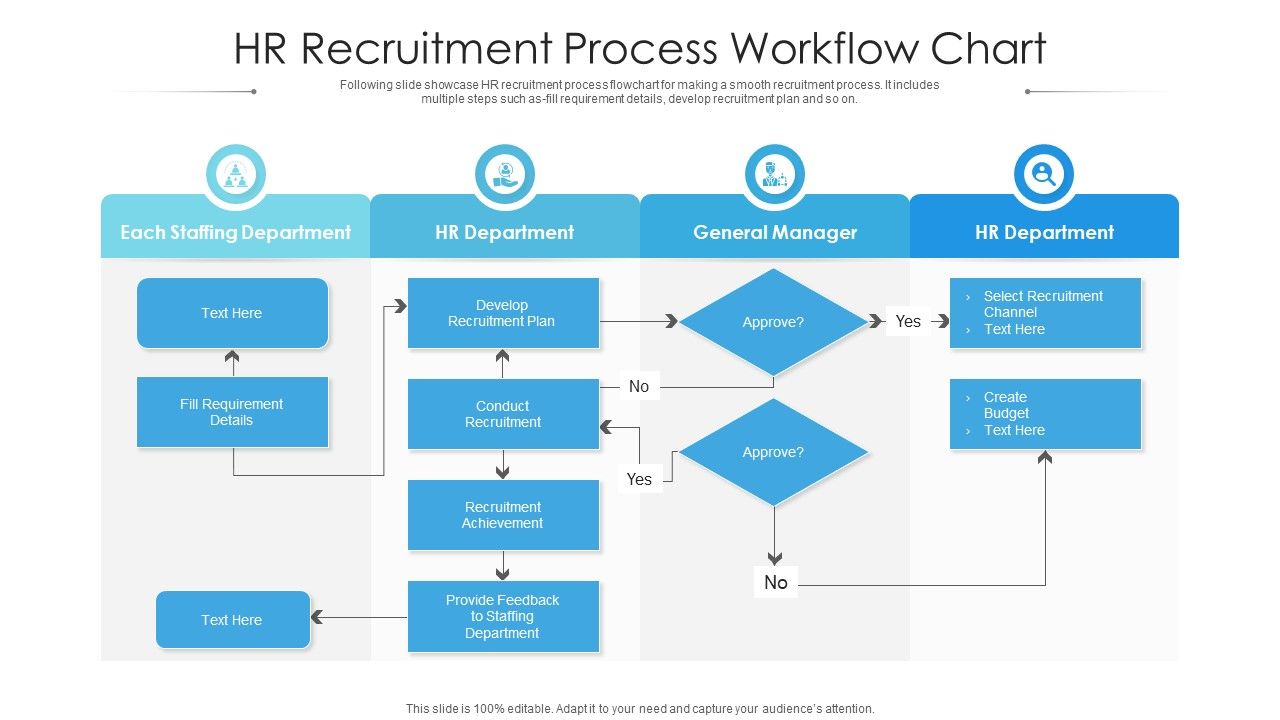
Rationalisez votre processus de recrutement RH avec notre modèle PowerPoint. Il aidera votre équipe de recrutement à embaucher efficacement en fournissant un diagramme de flux de travail complet pour vous guider à travers chaque étape du processus de recrutement. Mettez en évidence les détails initiaux des besoins du service du personnel jusqu'à la création finale du budget pour correspondre aux procédures d'embauche uniques de votre entreprise.
Embauchez les meilleurs talents
Utilisez notre modèle PPT RH pour aligner les services vers l'objectif commun d'une embauche d'excellence.
Découvrez le processus RH étape par étape en utilisant notre cadre PowerPoint.
Processus de recrutement RH - Organigramme du flux de travail Slide 1 : - Définition du besoin - Rédaction de l'annonce - Diffusion de l'annonce - Réception des candidatures - Présélection des candidats Slide 2 : - Entretiens de sélection - Vérification des références - Décision finale - Offre d'emploi - Intégration du nouveau collaborateur
Utilisez notre organigramme du processus de recrutement RH pour vous aider à gagner un temps précieux. Ils sont prêts à s'intégrer dans n'importe quelle structure de présentation.
FAQs for Hr recruitment
So the main stages are job analysis, sourcing, screening, interviews, and onboarding. Honestly, being crystal clear about what you want upfront saves so much headache later. Automate the tedious resume stuff if you can. Use structured interviews with the same questions for everyone - way more fair that way. Speed is everything though. Good people disappear fast, so give feedback quickly and don't make candidates jump through five interview hoops. Nobody has time for that. Oh and candidate experience matters more than most companies think. They'll definitely tell people about how you treated them, good or bad!
You'll want to expand where you're posting jobs - hit up diverse job boards and partner with organizations that actually serve underrepresented communities. Job descriptions matter too, so ditch language that might accidentally turn people away. Honestly, check your company's photos and messaging - those generic stock photos with zero diversity aren't convincing anyone. Your interview panels need diverse voices since candidates notice when they can't see themselves reflected. Oh, and don't just wait around hoping it'll magically happen. You've got to be super intentional about sourcing, not just throwing posts on the usual sites.
Dude, employer branding is huge. Good reputation means top people actually come to you instead of the other way around - saves so much time honestly. Bad Glassdoor reviews? Candidates will bail before you even meet them. Your brand affects everything from how many people apply to whether they'll take your offer. I learned this the hard way at my last company. Get your current employees posting about work on social media. Show off your culture authentically, not some fake corporate BS. When people hear good things through their network, half your recruiting work is already done.
Honestly, get yourself an ATS first - Workday or Greenhouse are solid picks. They'll handle your candidate pipeline and do initial screening automatically, which is huge when you're drowning in applications. Video interviews through HireVue cut out so much scheduling BS. LinkedIn Recruiter is a no-brainer for finding people. AI resume screening filters candidates fast based on what you actually need. Oh, and Calendly saves you from that endless "what time works for you" email chain - I swear that alone is worth it. Start with the ATS though, that's where you'll see the biggest difference right away.
Honestly, AI is pretty solid for this stuff. You can have it scan resumes for keywords and skills way faster than doing it manually - saves tons of time on high-volume positions. The bias thing is huge too since algorithms don't care about names or where someone went to school, just their actual qualifications. Machine learning gets better over time by learning which hires actually work out well at your company. There are chatbots for basic candidate questions and even video tools that supposedly read soft skills, though I'm still skeptical about that last part. I'd start simple - maybe just automate the resume filtering first and see how it goes.
Honestly? Just write like you're talking to an actual person instead of using all that "rockstar" garbage that makes people cringe. Be super specific about what the job actually involves and what skills you need - none of that vague stuff. Salary range is huge if you can swing it, saves everyone from awkward conversations later. Break everything into bullet points since most people are scrolling on their phones anyway. Oh, and here's the thing - make sure you're describing the real job, not some fantasy version that'll just disappoint whoever you hire.
Honestly, you've gotta strip out the guesswork with structured processes. Blind resume reviews are huge - plus standardized questions and diverse panels to spot your blind spots. Trust me, we're all guilty of weird biases (I once judged someone for having a Yahoo email... embarrassing). Score people using set criteria beforehand. Take solid notes during interviews so you can actually defend your choices later. Oh, and always get a second pair of eyes on your shortlist before moving forward. The trick is making this stuff automatic, not something you remember halfway through.
Behavioral questions work really well for this - ask about their ideal work environment or how they've handled conflict before. Panel interviews are clutch because you get different team perspectives. Reference checks are honestly where the gold is though - former colleagues will straight up tell you if someone's actually collaborative or just good at interviews. Working sessions help too, you can see how they actually interact when there's pressure. Oh, and make sure you're assessing fit with your real culture, not whatever's written on your company website. That's where most people mess up.
Honestly, candidate experience can make or break your employer brand. Even people you reject will talk about how you treated them - and trust me, word spreads fast in most industries. I've watched companies blow it with amazing candidates just because their process was chaotic or rude. Map out your current hiring flow first and spot the worst pain points. Then focus on clear communication, realistic timelines, and making interviews feel more like conversations. Oh, and feedback helps tons when you can swing it. Basically treat people like actual humans instead of just another application in your pile. Small changes make a huge difference.
So tracking your recruitment channels is huge - you'll see which ones actually bring quality people vs just warm bodies. I'd start by looking at where your best hires came from, what made them stick around, maybe even which interview questions actually meant something (spoiler: most don't). Time-to-hire stuff matters too. The predictive analytics thing sounds fancy but honestly just means using data to screen resumes better and cut down on unconscious bias. Don't go crazy though - just track your next few hires and see what jumps out. The patterns are pretty wild once you spot them.
First thing - don't ask about age, race, religion, marriage stuff, or disabilities in interviews. That's lawsuit territory. ADA means you gotta accommodate candidates who need it too. Job postings should be inclusive, obviously. Background checks and drug tests? Those rules are honestly a mess and vary by state. Stick to job-related questions only during interviews. Document everything the same way for each person - like, literally use the same process. Oh, and definitely have a lawyer review your standard questions first. Trust me, way cheaper than dealing with problems later.
Honestly, just stay in touch with the good candidates who didn't work out this time around. I do quarterly check-ins - sometimes it's job updates, sometimes just industry stuff. Sounds annoying when you're already buried, but trust me, it beats recruiting from zero every single time. Oh, and don't sleep on university connections or networking events. Employee referrals work great too if you make the incentives actually worth it. Having warm leads sitting in your back pocket is a total game-changer when you need someone fast.
Dude, with passive candidates you can't just slide into their DMs with a pitch - they'll ghost you instantly. Start building relationships way before you need them. Hit them up on LinkedIn with something personal about their actual work, not some generic template. Share cool industry stuff, maybe invite them to events. Honestly, most recruiters are too impatient for this approach but whatever. Keep dropping value without asking for anything back. The whole point is being top-of-mind when they finally decide to jump ship. Way easier than scrambling when you're desperate later.
Start showing them what their first few months will actually look like during interviews - who they'll work with, what training's involved, the whole deal. Gets them pumped instead of blindsided. Way too many places oversell everything then new hires show up to... well, disaster basically. Set up a buddy system before they even start. Send welcome stuff early. Have their desk ready - sounds obvious but you'd be shocked how often this doesn't happen. The goal? Make jumping from candidate to employee feel smooth instead of like they're free-falling into complete chaos on day one.
So honestly, most companies get way too caught up in meaningless metrics. Focus on the stuff that actually tells you something - like how long it takes to fill roles, what you're spending per hire, and whether people you hire are actually good (check their reviews and if they stick around). Track which sources work best too - some job boards are total money pits. Oh and definitely watch your offer acceptance rates. If people keep saying no, that's usually about pay or your interview process being awful. Start with maybe 3-4 of these instead of trying to measure everything. You'll go crazy otherwise.
-
Great product with effective design. Helped a lot in our corporate presentations. Easy to edit and stunning visuals.
-
Out of the box and creative design.