


Hr strategic initiatives ppt diagrams





Try Before you Buy Download Free Sample Product
 Impress Your
 Audience
 100%
100% Editable
 Save Hours
 of Time


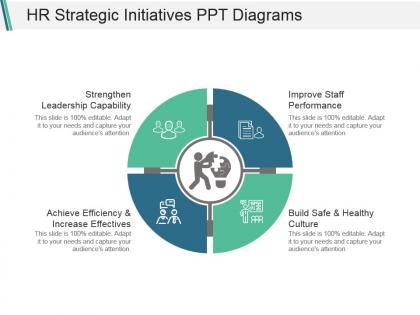
Struggling to conceptualize an idea of human resource strategy into an impactful PowerPoint presentation? Do not worry! SlideTeam has come up with a predesigned HR Strategic Initiatives PowerPoint template diagrams designed by highly skillful PowerPoint designers. Download this human resource planning presentation template to leave an impactful impression on the audience or the management. This circular HR strategic PPT template diagram covers four stages which improve staff performance, build a safe and healthy culture, achieve efficiency and increase effectiveness, strengthen leadership capability. This four stages circular HR planning diagram consists of different icons such as leadership, performance, safe and healthy environment, efficiency, idea bulb and a member which will help you explain your points more clearly. You can utilize this human resource strategic initiative template slide for creating a presentation on human resource management, HR cycle, strategic planning in HR, managing employee payroll, benefits, and compensation, human capital management, employee benefits administration and so on. Download editable Hr Strategic Initiatives PowerPoint template diagrams today. Give your absolute best with our Hr Strategic Initiatives Ppt Diagrams. Bring a halt to half hearted attempts.
People who downloaded this PowerPoint presentation also viewed the following :
Hr strategic initiatives ppt diagrams with all 5 slides:
Cultivate green habits with our Hr Strategic Initiatives Ppt Diagrams. They will benefit our ecosystem.
FAQs for Hr strategic
Look, three things matter most: does it actually help the business, can you measure if it's working, and who's gonna own it? Don't fall into that trap of doing generic HR fluff just because it looks good. Pick someone specific to drive each initiative forward and get leadership on board early - honestly, without their buy-in you're dead in the water. Set real timelines too, not some wishy-washy "we'll get to it eventually" nonsense. Those always crash and burn. Before designing anything, just ask yourself: how's this gonna help us actually win?
Honestly, talk to leadership first and figure out their top 3 priorities. Then build your HR stuff around those - don't just do random programs because they seem nice. Growth company? Focus on hiring and keeping good people. Cutting costs? Look at workforce planning or maybe restructuring benefits. I've watched so many HR teams spin their wheels on projects that don't actually move the needle for the business. Every initiative should tie back to something the company actually cares about, otherwise you're just wasting time and budget.
Honestly, data analytics is like having a crystal ball for HR decisions. Instead of just guessing why people quit or what motivates your team, you're working with actual patterns - turnover trends, engagement drivers, performance data, all that stuff. It helps you predict when you'll need to hire before you're in panic mode. The messy human side of work suddenly makes sense when you can see compensation gaps and retention risks clearly. My advice? Don't overthink it at first. Just pick one thing you're curious about and start digging into that data.
Pick metrics that actually matter to your business goals - retention rates, time-to-hire, engagement scores, stuff like that. Don't get sucked into vanity metrics just because they make pretty dashboards (guilty as charged there). Mix leading indicators like training completions with lagging ones like turnover. Honestly, the before/after comparison is what'll save your butt when leadership asks about ROI. Set up regular check-ins to review everything. If the numbers aren't moving the right way, pivot. The whole point is connecting HR work to real business outcomes, not just collecting data for data's sake.
Ugh, the biggest pain is definitely getting people on board - employees hate change and leadership always wants to see results yesterday. Plus everything becomes a priority battle, you know? Resource constraints will kill you, especially when you're juggling like five programs at once. Communication falls apart constantly (classic office stuff), and proving success is nearly impossible since HR changes take forever to actually show up in numbers. Oh, and honestly? Some executives just don't get why investing in people matters. Start small though - grab a few quick wins first, then use those to push for the bigger stuff you actually want to do.
So basically, when HR stuff actually matches what your people want, they stick around longer. Survey your team first - that's huge. Find out what they actually care about. Career development usually wins big. Flexible schedules, real recognition (not just pizza parties), mentorship programs. The trick is connecting it all back to business results so leadership sees the value. Skills training shows you're investing in them as people, not just worker bees. Oh, and clear advancement paths - people need to see where they're headed. Start small with whatever your survey says matters most to your specific group.
First thing - connect your HR stuff directly to what the business actually needs. Don't just wing it though, dig into the data to see where you're bleeding talent or whatever. Honestly? Most HR teams spread themselves way too thin trying to fix everything. Pick like 2-3 big things max. Get people from other departments involved early - they'll tell you what's really broken. Oh, and set up metrics from day one so you can prove it's working later. Way better to nail a few initiatives than half-ass ten of them.
External stuff is always messing with your HR plans - economic changes, new regulations, labor market shifts. When the economy tanks, you're stuck with hiring freezes. Growth periods? Time to expand and boost pay packages. The tricky part is building flexibility right into your strategy from day one. Set quarterly check-ins to see what's changed and pivot fast. Honestly, sometimes I think HR folks don't get enough credit for juggling all this chaos. It's like constantly adjusting your game plan mid-play.
Dude, HR tech is everywhere now and honestly? It's pretty wild. AI handles recruiting, predictive analytics can spot who's about to quit, and automation takes care of all that boring paperwork stuff. The data insights are actually incredible for planning and keeping employees happy. Sometimes I feel like we're living in the future or something! But don't just grab every new tool that pops up - that's expensive and messy. Figure out what's driving you crazy first. Is it finding good candidates? Scheduling? Whatever your biggest headache is, find tech that fixes THAT specific problem. Way better than trying random shiny platforms.
Honestly, don't make D&I this separate thing sitting off to the side. Weave it into everything - recruiting, how you develop leaders, even performance reviews. The companies crushing it? They make diversity everyone's problem, not just something HR owns. Pick specific goals first though - maybe diversifying who's in your pipeline or training managers to actually be inclusive. Oh, and definitely audit where you're at right now because you might be surprised. Then just focus on one area to start. You can't fix everything at once, and measuring progress regularly will show you what's actually working versus what sounds good on paper.
Start with workforce analytics - look at your current headcount, skill gaps, and who's leaving. Scenario planning is clutch too. Map out different growth paths and figure out what talent you'd need for each. Competency mapping shows the gap between what skills you have now versus what you actually need (honestly this one's my favorite). Talk to your department heads though - they always know stuff the data doesn't capture. Pick whichever method matches your current data situation and expand from there. Don't try to do everything at once.
Okay so basically you want feedback loops everywhere - pulse surveys, cross-functional teams, that whole thing. Tie people's development goals to fixing processes, not just hitting their own numbers. Make it systematic because waiting for people to spontaneously improve stuff is... optimistic at best. When teams actually solve problems, celebrate it hard. People need proof this isn't just busywork. Oh and start with one pilot program first - test what works before you roll it out company-wide. Way easier than trying to change everything at once.
Hit people through different channels - town halls, team meetings, emails, casual chats. Stay consistent with your message or you'll confuse everyone (trust me on this one). Don't just tell them what's happening, explain why it matters. Stories work way better than bullet points, honestly. Different departments need different examples that actually make sense to them. But here's what really matters - make it two-way. Run quick surveys, hold office hours, ask questions. People need to feel like they can actually shape what's happening, not just receive orders from above.
Honestly, you've got a huge advantage over big companies - you can move fast while they're stuck in endless meetings. Survey your team first to see what they actually want (might surprise you). Then pick 1-2 changes and just do them. Remote work flexibility or training budgets often beat fancy office perks anyway. Big corporations can't compete with the personal relationships you can build - there's like 50 layers between their CEO and regular employees. Your biggest weapon is speed. While they're forming committees to discuss forming committees, you'll already have happier employees.
Remote work's here to stay, so you gotta nail distributed team stuff and digital employee experiences. AI is changing jobs crazy fast - honestly caught me off guard how quick it's moving. Reskilling programs are basically mandatory now. Employee wellbeing and DEI are huge priorities too, plus everyone wants data behind their decisions. Oh, and the gig economy keeps growing, which makes workforce management messy. My advice? Pick whichever trend hits your biggest pain point first. Don't try tackling everything at once - that's a recipe for burnout.
-
It saves your time and decrease your efforts in half.
-
Easily Understandable slides.