

Slides de apresentação em Powerpoint de tecnologia de RH






Try Before you Buy Download Free Sample Product
 Impress Your
Audience
 100%
Editable
 Save Hours
of Time


Nossos slides de apresentação em Powerpoint de tecnologia de RH são projetados topicamente para fornecer um pano de fundo atraente para qualquer assunto. Use-os para se parecer com um profissional de apresentação.
People who downloaded this PowerPoint presentation also viewed the following :
Conteúdo desta apresentação em PowerPoint
Slide 1 : Este slide apresenta a Tecnologia de RH. Indique o nome da sua empresa e comece.
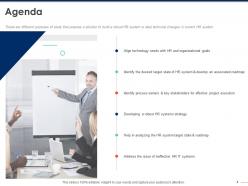
Slide 2 : Este slide exibe a Agenda.
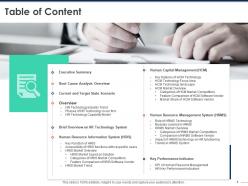
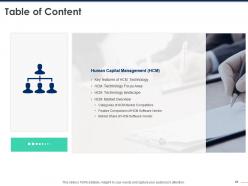
Slide 3 : Este slide representa o Índice da apresentação.
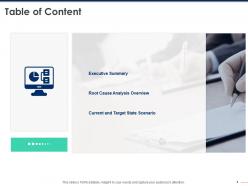
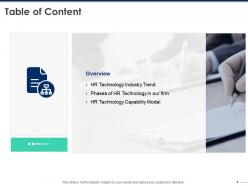
Slide 4 : Este slide exibe o índice da apresentação.
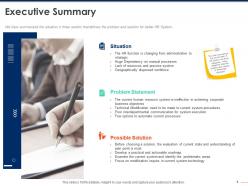
Slide 5 : O slide resume o estado atual do sistema de RH em três categorias. Essas categorias descrevem o problema e a solução da interrupção da tecnologia.
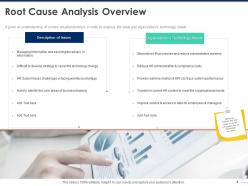
Slide 6 : Este slide fornece uma compreensão da situação / problema atual para analisar o problema e as necessidades de tecnologia da organização.
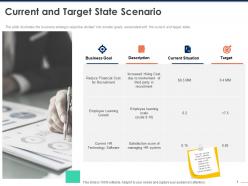
Slide 7 : O slide ilustra o objetivo estratégico do negócio dividido em metas menores, associadas ao estado atual e ao estado-alvo.
Slide 8 : Este slide exibe o índice.
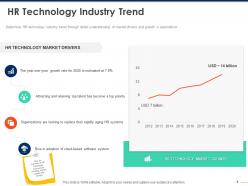
Slide 9 : Este slide destaca a tendência da indústria de tecnologia de RH. Determinar a tendência da indústria de tecnologia de RH por meio da compreensão detalhada dos motivadores do mercado e do crescimento das despesas
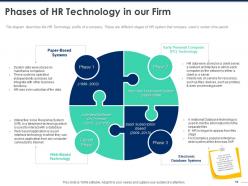
Slide 10 : Este slide mostra as fases da tecnologia de RH em nossa empresa. O diagrama descreve o perfil de Tecnologia de RH de uma empresa. Estas são diferentes fases do sistema de RH que a empresa utilizou em determinado período de tempo
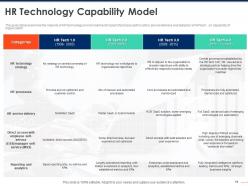
Slide 11 : A tabela do slide examina a maturidade do ambiente de tecnologia de RH e o impacto da otimização de processos, entrega de serviços e adoção de tecnologia de RH na capacidade da organização
Slide 12 : Este slide exibe o índice.
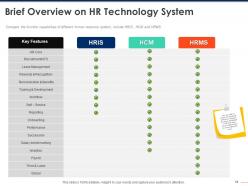
Slide 13 : Este slide mostra a diferença funcional entre os três departamentos de RH e quais funcionalidades devem ser associadas a cada um.
Slide 14 : Este slide mostra o Índice.
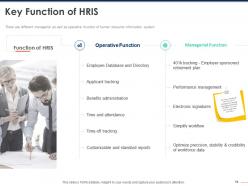
Slide 15 : Este slide mencionou a lista de atividades gerenciais e operacionais do HRIS. Você pode editar ou adicionar mais atividades.
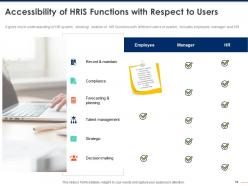
Slide 16 : Este slide mostra a acessibilidade das funções HRIS com respeito aos usuários.
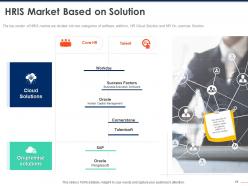
Slide 17 : Este slide mostra o mercado de HRIS com base na solução.
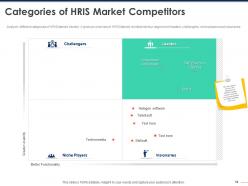
Slide 18 : Este slide analisa diferentes categorias de HRIS Market Vendor. Ele dá uma visão geral do mercado de HRIS, dividido em quatro segmentos de líderes, desafiadores, participantes de nicho e visionários
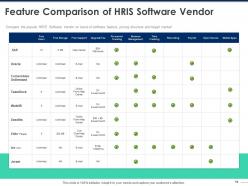
Slide 19 : Este slide mostra a comparação de recursos do fornecedor de software HRIS
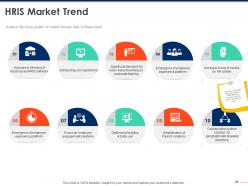
Slide 20 : Este slide mostra a tendência de mercado de HRIS. Mencionamos algumas tendências de mercado de Sistema de Software HRIS. Você pode adicioná-los ou editá-los conforme necessário.
Slide 21 : Este slide mostra o Índice.
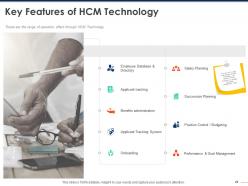
Slide 22 : Este slide descreve os principais recursos da tecnologia HCM.
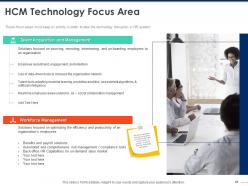
Slide 23 : Este slide mostra a área de foco da tecnologia HCM. Mencionamos as poucas áreas de foco no sistema HCM que precisam trabalhar com prioridade, a fim de lidar com a interrupção da tecnologia.
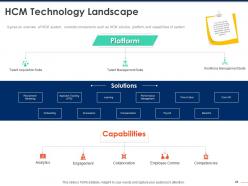
Slide 24 : Este slide descreve o cenário de tecnologia HCM. Dá uma visão geral do sistema HCM, consiste em componentes como solução HCM, plataforma e recursos do sistema
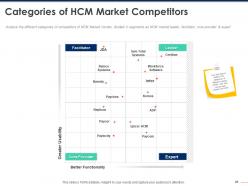
Slide 25 : Este slide mostra as categorias de concorrentes do mercado de HCM. Use este slide para analisar as categorias de diferentes fornecedores de mercado e quem oferece a melhor solução para HCM
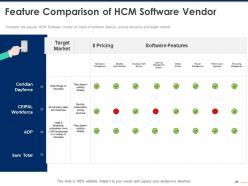
Slide 26 : Este slide mostra a comparação de recursos do fornecedor de software HCM. Compare o fornecedor de software HCM popular com base no recurso de software, estrutura de preços e mercado-alvo
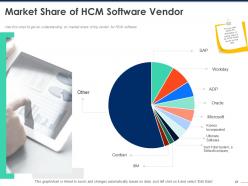
Slide 27 : Este slide mostra a participação de mercado do fornecedor de software HCM. Use este gráfico para obter uma compreensão da participação de mercado dos principais fornecedores de software HCM
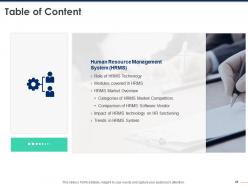
Slide 28 : Este slide mostra o Índice
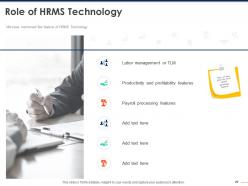
Slide 29 : Este slide mostra o papel da tecnologia HRMS.
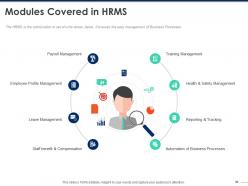
Slide 30 : Este slide destaca os Módulos Cobertos em HRMS
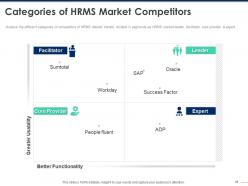
Slide 31 : Este slide mostra as categorias de concorrentes do mercado de HRMS.
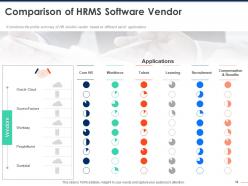
Slide 32 : Este slide mostra a comparação de fornecedores de software HRMS.
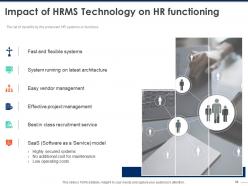
Slide 33 : Este slide mostra o impacto da tecnologia HRMS no funcionamento de RH
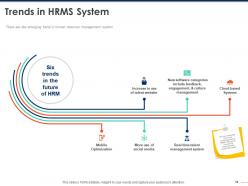
Slide 34 : Este slide mostra Tendências no Sistema HRMS. Mencionamos, poucas tendências de tecnologia recentes em HRMS, que podem ser consideradas para melhoria no sistema de RH atual
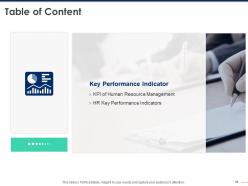
Slide 35 : Este slide mostra o Índice.
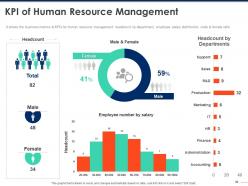
Slide 36 : Este slide mostra KPI de Gestão de Recursos Humanos. Ele mostra as métricas de negócios e KPIs para gestão de recursos humanos: número de funcionários por departamento, distribuição de salários de funcionários, proporção de homens e mulheres
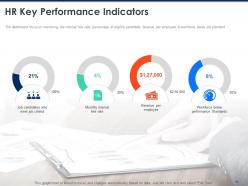
Slide 37 : Este slide destaca os principais indicadores de desempenho de RH. O painel enfoca o monitoramento da taxa de contratação interna, porcentagem de candidatos elegíveis, receita por funcionário e força de trabalho abaixo do padrão de trabalho
Slide 38 : Este é o slide de ícones de tecnologia de RH.
Slide 39 : Este slide é intitulado como Slides adicionais para avançar.
Slide 40 : Este slide mostra o modelo de roteiro 3
Slide 41 : Este slide mostra o modelo de roteiro 4.
Slide 42 : Este slide representa o Modelo de Roteiro 5
Slide 43 : Este slide mostra o modelo de roteiro 6.
Slide 44 : Este slide mostra o Modelo de Roteiro 7
Slide 45 : Este é o slide 30 do Plano de 60 90 dias.
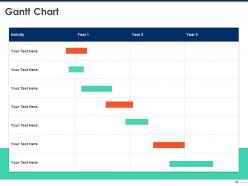
Slide 46 : Este slide representa o Gráfico de Gantt.
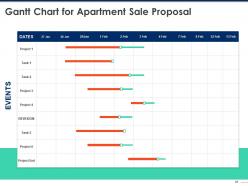
Slide 47 : Este slide mostra o Gráfico de Gantt para a Proposta de Venda de Apartamento
Slide 48 : Este slide mostra notas importantes.
Slide 49 : Este slide mostra o Mapa Mental para representar entidades.
Slide 50 : Este é o slide de quebra-cabeça.
Slide 51 : Este slide mostra Nossa meta
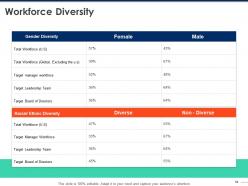
Slide 52 : Este slide mostra a Diversidade da Força de Trabalho.
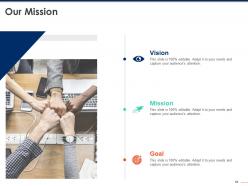
Slide 53 : Este slide mostra Nossa Missão, Visão e Metas.
Slide 54 : Este é o slide da nossa equipe com nomes e designações.
Slide 55 : Este slide descreve o processo da linha do tempo.
Slide 56 : Este é o slide Sobre nós para mostrar as especificações da empresa.
Slide 57 : Este é o slide de agradecimento com detalhes do contato.
Tecnologia de RH Slides de apresentação em PowerPoint com todos os 57 slides:
Use nossos slides de apresentação em Powerpoint de tecnologia de RH para ajudá-lo a economizar seu valioso tempo. Eles estão prontos para caber em qualquer estrutura de apresentação.

FAQs for HR Technology
Honestly, AI recruiting tools are everywhere now - they're pretty good at screening resumes. People analytics is the big buzzword though, where companies try predicting who'll quit or get promoted based on data patterns. Mobile-first everything since nobody wants to log into a desktop for HR stuff anymore. Most places ditched annual reviews for those continuous feedback apps too, which is way better IMO. Oh and integration between different HR platforms actually works now instead of being a nightmare. If you're thinking about upgrading, I'd figure out what manual tasks are killing your team's time first - that's usually where you'll see the biggest wins.
Honestly, start by figuring out what manual stuff is driving your team crazy - that's where you'll see the biggest wins. Real-time feedback tools are game-changers, and the personalized learning platforms actually work pretty well. You can spot who's about to quit before it happens with the data analytics (which is kind of scary but useful). Mobile apps make everything way more accessible, and when people can easily grab their benefits or request PTO without jumping through hoops, they're just happier. The automated workflows free you up to actually talk to people instead of drowning in paperwork. Communication channels get so much better too.
Dude, AI is everywhere in HR now and honestly? It's saving people's sanity. Resume screening happens automatically, interviews get scheduled without the back-and-forth emails, and there are even tools doing first-round candidate assessments. The predictive stuff is wild too - like figuring out who might quit or spotting skill gaps you didn't notice. Oh, and chatbots handle all those repetitive employee questions that used to eat up your day. You actually get to do the interesting human parts of the job instead of drowning in admin work. Whatever's eating most of your time right now, there's probably something that can help.
Honestly, data analytics is a game-changer for HR stuff. You stop guessing and start actually knowing what's going on. Like, you can see who's about to quit before they even know it themselves. Pretty wild, right? Figure out which benefits people actually care about instead of wasting money on random perks. Also catches if your hiring process is accidentally screwing over certain groups. Rather than sitting there wondering why everyone seems miserable, the data shows you exactly which teams or managers are the problem. My advice? Start simple - pick something like how long hiring takes and see what story the numbers tell you.
Honestly, the worst part is usually getting everyone on board - people are so stubborn about learning new systems. Data migration is another beast entirely, and don't get me started on making it play nice with your payroll and benefits platforms. Budget-wise? Yeah, plan for it to cost way more than quoted. Training drags on forever too. Oh, and clean up your data first - trust me on this one. I'd definitely run a pilot with like 20 people before rolling it out company-wide. Integration nightmares are real if you don't map everything out properly beforehand.
Honestly, HR tech is a game changer for D&I stuff. AI recruiting tools can strip out bias when writing job posts and screening people - way more objective than doing it manually. Analytics help you track diversity numbers for hiring, promotions, pay gaps, all that. There are even platforms with built-in bias alerts which is pretty neat. Oh, and don't sleep on employee resource group tools and pulse surveys - you get real feedback on how inclusive people actually feel. Just focus on tools that measure actual impact, not vanity metrics. I'd start with recruiting first since that's where you'll see quick wins.
Start with the basics - payroll, benefits, time tracking, employee portals. Integration is super important because having data scattered everywhere becomes a total headache later. Make sure it has good reporting, works on mobile, and can grow with you. Honestly, user experience is underrated - if the interface sucks, nobody will use it right. Check compliance stuff for your industry too. Here's what I'd do: demo 2-3 systems with your actual team members, not just the bosses. They're the ones who'll be stuck using it daily.
Dude, integration can totally make or break your HR tech setup. If your new system doesn't play well with payroll, email, all that stuff - you're screwed. Data gets trapped everywhere, people end up doing everything twice, and suddenly your "amazing" new platform is just expensive frustration. Seriously, I watched one company waste months trying to sync basic employee data. What a mess. You gotta map out what systems you're already using first, then make integration a dealbreaker when you're talking to vendors. Don't let them sweet-talk you into "we'll figure it out later" because you won't.
Skip the boring PowerPoint stuff - nobody learns that way. Get people actually using the system hands-on instead. Find your tech people first and turn them into helpers for everyone else. Break training into smaller chunks over a few weeks (trust me, information overload is real). Give them realistic scenarios with actual data to mess around with. Record everything so they can watch again later when they inevitably forget. Oh, and make a simple cheat sheet with just the daily tasks they'll actually need. Way more useful than some massive manual nobody reads.
Dude, HR tech is seriously worth it. Most of these platforms let you blast job postings everywhere at once instead of doing each site individually. The resume screening thing with AI actually works pretty well - saves you from reading through tons of obviously unqualified people. Interview scheduling tools are clutch too, no more endless email chains trying to find a time that works. Oh, and digital onboarding is huge - new hires can fill out all their paperwork ahead of time. I was skeptical at first but honestly? It freed up like 15 hours a week for me. Just pick whatever your biggest pain point is and start there.
Oh man, HR tech is sketchy with data honestly. They're hoarding everything - your salary, performance reviews, health records, background checks. Breaches happen constantly since hackers love targeting this stuff. Most employees have no clue what's being collected either, especially with those creepy AI tools monitoring your emails and productivity. GDPR and state laws make compliance a nightmare too. You really need to audit what data these systems actually require - like, do they really need ALL that info? Set up proper access controls because this isn't something you want to mess around with.
Honestly, just start with something like BambooHR or Gusto - they're cheap and bundle payroll with basic HR stuff. Google Workspace can actually handle a ton if you're willing to get creative with it. I'd focus on whatever's eating up most of your time first (usually payroll and time tracking, those are the worst). Most platforms let you start small and add features later anyway. Skip all the bells and whistles for now. My friend made that mistake and spent way too much upfront. Just get something that saves you a few hours each week and build from there.
Dude, mobile tech totally flipped HR on its head. Employees can do pretty much everything from their phones now - time off, pay stubs, benefits updates, all that stuff. It's crazy how we used to be glued to our desks for basic HR tasks. The thing is, people expect that smooth app experience everywhere now. If your HR platform sucks on mobile, you're basically annoying everyone daily. I'd check what works on mobile right now and fix the stuff employees use most. Oh, and the speed difference is insane - what took days before happens instantly now.
Honestly, remote work has companies scrambling to digitize everything HR-wise. Paper forms are dead - everyone's moving to cloud-based systems and digital onboarding now. Video interviews used to feel super awkward but they're totally normal. Self-service portals are huge too since employees don't want to call HR for every little thing. Companies are throwing money at employee engagement platforms and collaboration tools that actually work remotely. Performance management had to go digital fast. If your HR tech is still stuck in 2019, you're definitely playing catch-up at this point.
Look at metrics that actually matter for business results - time-to-hire, engagement scores, retention, cost-per-hire. That stuff shows if your tech is working or just sitting there looking pretty. User adoption is huge too because what's the point of expensive software if everyone hates using it? I'd probably start with maybe 3-4 metrics tied to your biggest headaches right now. Oh, and definitely track how much admin time you're saving your HR team - that's where you'll see quick wins. You can always add more metrics later once you get the hang of it.
-
Informative presentations that are easily editable.
-
Really like the color and design of the presentation.
-
Great quality slides in rapid time.
-
Great designs, really helpful.