


Human Resource SWOT Analysis On Employee Compensation




Try Before you Buy Download Free Sample Product
 Impress Your
 Audience
 100%
100% Editable
 Save Hours
 of Time


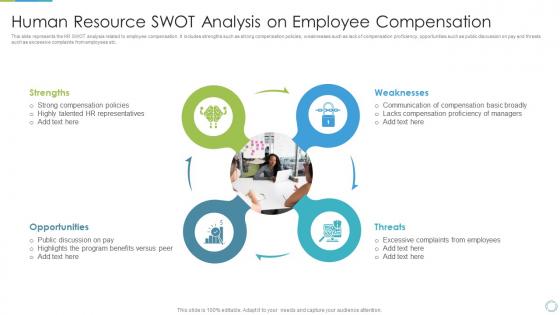
This slide represents the HR SWOT analysis related to employee compensation. It includes strengths such as strong compensation policies, weaknesses such as lack of compensation proficiency, opportunities such as public discussion on pay and threats such as excessive complaints from employees etc.
People who downloaded this PowerPoint presentation also viewed the following :
Human Resource SWOT Analysis On Employee Compensation with all 6 slides:
Use our Human Resource SWOT Analysis On Employee Compensation to effectively help you save your valuable time. They are readymade to fit into any presentation structure.





FAQs for Human Resource SWOT Analysis
Look, base salary is just the starting point. Health insurance is non-negotiable obviously - medical, dental, vision. PTO matters way more than people think, especially post-pandemic. Everyone's obsessed with work-life balance now. 401k matching is pretty standard too. Bonuses can sweeten the deal, plus stock options if you're that type of company. Oh, and don't sleep on professional development stuff - people eat that up. Flexible work arrangements are basically expected at this point. Honestly? Just see what competitors are doing salary-wise and match the big stuff. Everything else is gravy.
Oh man, compensation is literally make-or-break for retention. People will bolt so fast if they feel underpaid. Base salary matters, but honestly everyone cares about the whole package now - benefits, PTO, bonuses, maybe some equity if you've got it. I'd definitely check what you're paying against market rates, especially if you keep losing good people. Sometimes even bumping things up a little can stop the exodus. My last company ignored this for way too long and just kept hemorrhaging talent.
So basically you gotta research what other people are paying for the same jobs. Check out Glassdoor, PayScale, those HR salary surveys - they'll give you real numbers. Just make sure you're comparing the right stuff, like same job level and company size in your area. I mean, nobody wants to lowball someone amazing or waste budget (though let's be real, overpaying isn't usually the issue). Use all that data to set your salary ranges. Oh and location matters way more than people think - what works in NYC definitely won't fly in smaller markets.
Don't wait for people to come asking - get ahead of it. Document your pay bands clearly, explain how raises actually work, and what goes into compensation decisions. All-hands meetings are good for the big picture stuff, but honestly? People mostly care about their own situation. That's where manager one-on-ones become super important for talking through individual career paths and earning potential. You could also share anonymous compensation ranges for different roles - that helps a lot. The biggest thing though is making sure all your managers are saying the same stuff. Mixed messages will bite you in the ass every time.
Honestly, tying pay to results usually gets people working harder - there's just something about your paycheck depending on actual performance that makes folks step up. Fixed salaries are nice for peace of mind, but I've seen way too many people coast when they know the money's coming either way. Most companies do a mix now - decent base pay so people aren't stressed about rent, then bonuses on top when they crush their goals. Really depends on what kind of work your team does though. You don't want to create weird competition if they need to collaborate, you know?
Honestly, remote work is making companies completely flip their compensation game. Skills matter way more than location now since you can hire anyone from anywhere. Some places are actually cutting pay if you move somewhere cheaper - which feels pretty unfair to me tbh. Others keep everyone at the same rate to avoid losing talent. Now you've got to think about home office stipends and tech allowances too. That stuff adds up fast! I'd start by asking your current remote people what they're actually spending money on to work from home. You'll probably be surprised.
Honestly, compensation stuff gets tricky fast with all the legal requirements. You've got to hit minimum wage and overtime rules under FLSA, plus equal pay laws. Anti-discrimination is huge too - pay gaps based on gender, race, or other protected stuff will absolutely destroy you in court. California's always extra about everything, so definitely check your state laws since they're often stricter than federal. Oh, and document how you're calculating everything! Seriously, get legal or HR to review before you launch anything. Way better to catch issues early than deal with lawsuits later.
Pay audits are your starting point - just compare salaries across similar roles and experience levels to catch any weird gaps. Set up clear job levels and salary bands so people aren't guessing where they fit. Honestly, the transparency thing is huge for promotion criteria too. Don't wing it when deciding raises. A compensation committee reviewing big pay decisions helps cut down on bias (though committees can be slow sometimes). The whole trick is staying ahead of problems instead of scrambling when someone's already upset about unfair pay.
Yeah, compensation is getting wild right now. Even regular mid-size companies are throwing around stock options like they're startups. Flexible benefits are huge too - you can basically pick what actually matters to you instead of getting stuck with whatever. Skills-based pay is catching on where you get raises for learning new stuff rather than just waiting around for promotions. Performance bonuses are shifting toward company-wide goals, which honestly makes more sense than the old individual metrics thing. Oh, and different industries move at totally different speeds with this stuff, so definitely check what's happening in your specific field.
Dude, benefits are way more valuable than people realize - we're talking like 20-30% of your base salary when you actually crunch the numbers. Health insurance alone can be worth thousands. Then you've got 401k matching, PTO, remote work options, training budgets, gym memberships... even those fancy office snacks add up I guess lol. Don't just look at the salary when you're job hunting. Always ask for the complete benefits breakdown so you can compare the real total compensation. I learned this the hard way - almost took a "higher paying" job that would've cost me money overall.
Do salary surveys at least once a year - Radford and Mercer put out solid industry reports. Glassdoor's actually way more accurate than people think, I check it constantly. Google alerts help you catch compensation trends before they blow up. HR networks are gold for getting real numbers (not the BS corporate line). Also track competitor job postings religiously. Oh, and make this stuff routine instead of scrambling when someone quits. Pick one good benchmarking source first. Then review your key roles every quarter or so.
Honestly, flexible benefits are your best bet here. Childcare help, student loan assistance, elder care support - stuff that actually matches people's real situations. Do pay equity audits too (sounds boring but it's crucial). Signing bonuses can remove barriers for underrepresented folks who might not otherwise apply. Survey your current team about what benefits would actually help them. One-size-fits-all doesn't work when you've got people celebrating different holidays or dealing with completely different life challenges. Oh, and flexible PTO that respects various cultural holidays makes a huge difference too.
Honestly, pay transparency usually helps with morale because people stop wondering if they're getting screwed over. Employees feel way more trust when they can see the salary ranges instead of playing guessing games. Yeah, you'll probably get some complaints at first - especially from folks who realize they're underpaid (awkward). But it actually strengthens your culture long-term since you're forced to have real pay equity and clear paths for advancement. Just make sure your compensation structure isn't a total mess before going transparent, or you'll create way bigger headaches for yourself.
Honestly? Start with turnover rates - that's your biggest red flag if people are bailing. Compare what you're paying against market surveys too. I always tell people to watch engagement scores and whether you can actually hang onto your star players. Oh, and recruiting struggles are super telling. If candidates keep turning you down or you're losing finalists to other companies, your comp probably sucks. Pick maybe 2-3 metrics that actually matter for your company and check them every quarter. The whole point is keeping good people while hitting your business goals anyway.
First, get solid market data and decide how often you'll do this - once a year minimum, but maybe quarterly for roles that change fast. Check internal pay equity too because finding out teammates make way more is devastating. I'd document everything and prep talking points before having conversations. Be upfront about how you decided everything. Total comp matters more than just base salary - benefits, equity, all of it. Then schedule individual meetings to walk through what you found. Honestly, the transparency piece is what makes or breaks these reviews.
-
Great product, helpful indeed!
-
Every time I ask for something out-of-the-box from them and they never fail in delivering that. No words for their excellence!