


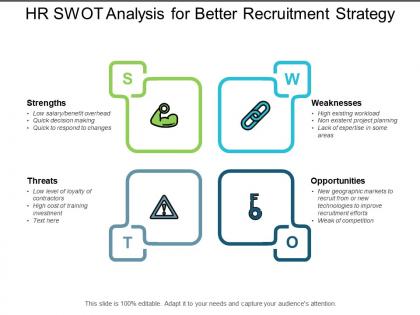
Hr swot analysis for better recruitment strategy




Try Before you Buy Download Free Sample Product
 Impress Your
 Audience
 100%
100% Editable
 Save Hours
 of Time


Get it first hand from our Hr Swot Analysis For Better Recruitment Strategy. Authenticity of the gen is guaranteed.
People who downloaded this PowerPoint presentation also viewed the following :
Hr swot analysis for better recruitment strategy with all 5 slides:
Get to the crux with our Hr Swot Analysis For Better Recruitment Strategy. Solve problems with clarity and speed.



FAQs for Hr swot analysis for
Honestly, your HR team's probably crushing it in talent acquisition and employee development - that stuff directly drives growth. Compliance and policy work might sound boring, but you're likely solid there too (which is huge since most companies totally mess that up). Conflict resolution is another big win, plus keeping people happy so they don't quit every five minutes. The communication bridge thing between leadership and staff is super valuable. For your SWOT analysis, I'd write all this down clearly first, then brainstorm ways to use these strengths more strategically. Maybe focus on the areas that save the most money?
Start with what's actually working - check which recruiting channels get you good hires and what retention stuff employees care about. Honestly, a basic spreadsheet works fine for tracking this. Look at what competitors are missing too, like remote flexibility or skills-based hiring. Here's the thing though - if your company culture isn't toxic like everyone else's, that's huge for both hiring and keeping people. I'd focus there first since culture fixes are way harder than perks. Connect these pieces and build around your real advantages, not what sounds good on paper.
Honestly, start with an anonymous survey - people will tell you exactly what's driving them crazy. Communication breakdowns are huge. Slow feedback loops too. Your promotion process might be confusing as hell, or maybe there's zero growth opportunities (happens literally everywhere). Performance reviews probably feel like a joke instead of actually helping anyone. Oh, and don't overlook the daily stuff. Crappy tech systems make people want to scream. I'd pick the top 2-3 complaints from your survey and fix those first - you can't solve everything at once anyway.
Honestly, tech talent shortages are brutal right now - that's your biggest headache. Budget cuts during economic downturns will freeze hiring fast. New compliance rules can totally catch you off guard if you're not paying attention. Companies are getting super aggressive pouring people too, which is annoying but real. Remote work changed everything about what people expect from benefits and flexibility. Maybe do a quarterly check on this stuff? Oh, and definitely have backup plans ready for keeping your good people and handling regulatory curveballs.
Look, your company culture is basically the make-or-break factor for HR. Open, transparent cultures? HR can actually solve problems and get real feedback. But those rigid, top-down places make everything harder - good luck getting honest exit interviews when people don't trust anyone, you know? Short sentences work better sometimes. When you're doing your SWOT analysis, figure out where your culture helps HR versus where it's blocking them. Then spot the changes that'd actually make a difference. Honestly, most companies underestimate how much culture impacts this stuff.
Honestly, start with an applicant tracking system - it'll save you so many headaches during hiring. HRIS platforms are game-changers too, way better than those messy spreadsheets for payroll and benefits stuff. AI analytics can actually spot who's about to quit or where you're missing skills before it becomes a crisis (which is pretty cool). Video interviews and digital training platforms help you reach more people without the travel costs. Oh, and performance management tools automate all that tedious review paperwork. Just pick whatever manual process is eating up most of your time right now and automate that first.
Look at your metrics first - how fast do you hire compared to others? What's your turnover like? Employee satisfaction scores? Maybe you've got better tech tools or benefits that actually matter to people. Sometimes it's the culture thing - honestly, most places are terrible at keeping good people these days. Could be your employer brand is just stronger, so top talent comes to you instead of competitors. Once you figure out what you're genuinely better at, double down on it. Use those wins to pull in more candidates and clients.
D&I stuff actually fits into all four parts of a SWOT. Your strengths could be existing programs or culture metrics you're already tracking. Weaknesses? Representation gaps, biased hiring practices, maybe leadership that needs training. Here's what I find cool about the opportunities piece - diverse teams help you reach new markets and attract talent that actually cares about inclusive workplaces. Plus innovation just works better with different perspectives. Threats might be competitors killing it with their D&I game or new regulations coming down the pipeline. I'd start by looking at your current data first though.
Dude, the job market is wild right now. Candidates have all the power - they're being super picky about culture, remote options, pay, the whole thing. Gone are the days when you'd post something and get flooded with apps. You've gotta work way harder on your employer brand now and probably shell out more money too. The whole "quiet quitting" thing is actually your biggest chance though - people want work that matters and better balance. I'd start by looking at what benefits you're offering beyond just salary. Even small stuff can make a difference when everyone's competing for the same talent pool.
Honestly, start with whatever your company's top priorities are this year - like maybe 3-5 big ones. Then literally draw lines between those and your HR stuff. Revenue growth the main thing? Cool, your hiring and training better connect to that somehow. I've seen so many HR teams just doing their own thing in a bubble (guilty of this myself tbh). Make a simple chart showing how everything links up. The gaps will smack you in the face immediately. Oh, and check back every few months because priorities change constantly.
Start by figuring out what skills your team's missing, then match those gaps with training that actually fits your budget. LinkedIn Learning and Coursera are solid for tech stuff. Internal job shadowing works really well too - honestly, people learn faster when they can see someone doing the work right next to them. Don't skip the soft skills training either. Communication workshops usually pay off big time. Create individual development plans for each person, but maybe test things out with a smaller group first? That way you're not blowing your whole budget on something that might flop with your particular team culture.
Your pulse surveys and exit interviews are doing some work, but there's definitely room to tighten things up. Right now you're catching retention problems through quarterly surveys and using that data to tweak benefits. Exit interview patterns help with onboarding stuff too. The performance reviews show where training's needed - that's useful for L&D planning. But honestly? That 2-3 month delay between feedback and action is killing you. Employees give input and then... crickets. Try monthly leadership reviews of all this feedback data. Makes you way more responsive and people actually see their voices matter.
Okay so first thing - make actual action plans for your biggest risks. Don't let that SWOT analysis just die in some presentation file (we've all been there). Assign real people to own each problem with actual deadlines. Talent shortage? Build better hiring processes and figure out why people are leaving. Skills gaps? Training or new hires, whatever makes sense. The thing is, you gotta review this stuff every quarter because everything changes so fast. Track real numbers too - hoping problems fix themselves is basically useless. Quick wins help build momentum.
Honestly, working with other departments is a game changer for HR stuff. You'll get way better intel on what teams actually need - like hiring gaps or skill issues that never make it into those boring formal reports. Department heads become your allies too, which makes rolling out new policies way less painful. I learned this the hard way lol. Regular check-ins with key leaders really help build those relationships. Oh, and you'll catch opportunities to tie HR goals to business stuff more naturally. Trust me, having them on your side first makes everything smoother.
Ugh, compliance stuff is such a headache but you've gotta bake flexibility into your HR setup from day one. I'd do quarterly audits and set up some kind of alert system for new regulations - seriously, they change constantly and it's impossible to track manually. Good HR software that auto-updates compliance rules is worth the investment, trust me. Also get friendly with employment lawyers or HR consultants in your field. They catch stuff you'll miss. Actually, start with a quick audit this week to see where your biggest gaps are. That'll give you a roadmap for what to tackle first.
No Reviews