


Human Resource SWOT Analysis For Talent Management




Try Before you Buy Download Free Sample Product
 Impress Your
 Audience
 100%
100% Editable
 Save Hours
 of Time


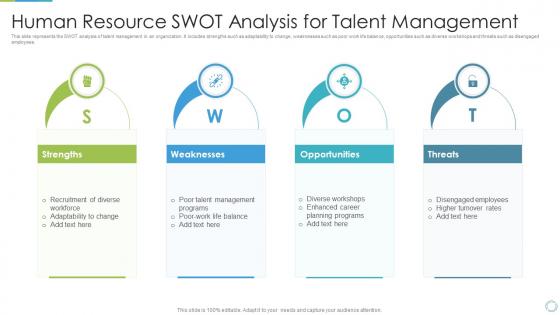
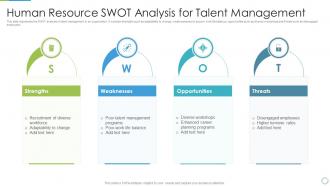
This slide represents the SWOT analysis of talent management in an organization. It includes strengths such as adaptability to change, weaknesses such as poor work life balance, opportunities such as diverse workshops and threats such as disengaged employees.
People who downloaded this PowerPoint presentation also viewed the following :
Human Resource SWOT Analysis For Talent Management with all 6 slides:
Use our Human Resource SWOT Analysis For Talent Management to effectively help you save your valuable time. They are readymade to fit into any presentation structure.





FAQs for Human Resource SWOT Analysis
So you'll want to focus on talent acquisition, development, performance management, succession planning, and retention strategies. Picture it like a pipeline - attract good people, grow their skills, track performance, prep future leaders. Compensation and benefits are obviously critical too (nobody works for free lol). Most companies totally mess up the development part though, which is frustrating to watch. You should regularly check how all these pieces connect because honestly, your talent strategy affects literally every stage of someone's time at your company. Short bursts work better than trying to overhaul everything at once.
Look for people who actually volunteer for the tough projects and handle change without losing their minds. Performance reviews help, but honestly? Watch who consistently crushes their goals while others are still figuring things out. Those are your stars. 360 feedback's great too - peers know who's really leadership material. Set up individual development plans with mentoring and cross-functional work. Don't get stuck only thinking about technical skills though. Emotional intelligence matters way more than people realize. Pick 2-3 team members right now and sketch out some real growth opportunities for them this quarter.
Honestly, tech has completely changed how we handle talent stuff at work. Instead of drowning in spreadsheets, you can automate recruiting and performance reviews. AI screens candidates way faster than doing it manually - though those predictive analytics about who's gonna quit are weirdly spot-on and slightly unsettling. Learning platforms help upskill people without the usual training headaches. What I love most? You're making decisions based on actual data instead of just winging it. My advice: don't try to overhaul everything at once. Pick whatever process is making you want to scream and tackle that first.
Look, first figure out what your company's actually trying to accomplish - growth, better customer service, whatever. Then build your hiring and training around those specific goals. So if you're expanding fast, focus on filling key roles and planning who takes over critical positions. Most companies (and I've seen this everywhere) treat HR like it's totally separate from the business side, which is insane. The whole point is making sure your talent stuff actually helps hit those bigger objectives. Otherwise you're just hiring bodies and hoping for the best, you know?
Talk to your people regularly - like actually talk, not just those boring status meetings. Most managers suck at this, honestly. Ask about their goals and what's bugging them. Give feedback when it matters, not just during annual reviews. Public recognition goes a long way too. Here's the thing though - you've got to match learning opportunities with where they want to go career-wise, not just what you need from them. Consistency beats doing some big flashy thing once a year. Small regular check-ins work way better.
Honestly, reviews are like GPS for figuring out where your people are going. You can spot who's crushing it and needs bigger challenges, plus catch skill gaps before they become problems. I've found quarterly check-ins work way better than those dreaded annual sit-downs - less awkward, more useful. Make sure it goes both ways though. Let them talk about what they actually want to do career-wise. The whole thing becomes less "here's what you suck at" and more actual coaching. Trust me, you'll catch development stuff so much earlier this way instead of waiting a whole year.
Honestly, start with retention rates and how fast you're filling open positions - those hit you in the face pretty quickly if something's wrong. Internal promotions are huge too, plus engagement scores from surveys. I'd track training ROI because that stuff gets expensive fast. Exit interviews tell you what the numbers can't, so don't skip those. Oh, and succession planning readiness - basically whether you'd be screwed if key people left tomorrow. Pick maybe 3-4 that match your biggest headaches and stick with them. Consistency beats trying to measure everything at once.
Honestly, you can't just slap D&I onto your existing process and call it a day. Build it into everything from the start - job descriptions, hiring panels, the whole thing. Your promotion data will probably shock you when you break it down by demographics (mine sure did). Development programs need a hard look too since they're usually biased without anyone realizing it. Connect your diverse talent with actual decision-makers through mentorship - not just random coffee chats. Oh, and track everything obsessively. You'll spot patterns that would otherwise tank people's careers before they even know what hit them.
Honestly? Most people bail because of three big things - dead-end jobs, terrible bosses, and getting underpaid. Burnout's huge too, especially after covid showed everyone what actually matters. Here's what actually works: have real conversations about where people want to go career-wise. Train your managers - seriously, so many companies skip this and wonder why people hate their jobs. Check your pay against competitors at least once a year. Oh, and don't just do exit interviews when someone's already walking out the door. Ask people what they need while they're still there. Way more effective, trust me.
Honestly, you've got to start way before you actually need people to step up - like 1-3 years out. Map your critical roles first, then figure out who could realistically handle them. Create development plans with stretch assignments and mentoring (cross-functional stuff works great too). Here's the thing though - you have to be brutally honest about readiness levels. Some people just aren't cut out for it yet, and that's totally fine. Do regular talent reviews to see how everyone's progressing. Oh, and don't be secretive about it! Tell your potential successors what you're doing so they'll actually stick around.
Honestly, employer branding is a game changer for hiring. Good candidates will literally come to you instead of the other way around - saves so much time. Your current people stick around longer too because they're actually proud of where they work. Here's the thing though - you can compete for great talent even when your salary isn't the highest. I've seen it happen. Just don't post generic stock photos and call it authentic culture (ugh). Be real about what it's actually like to work there. That's what people respond to.
Honestly, L&D programs are what make or break your whole talent strategy. You're showing people clear growth paths, which keeps your best performers from jumping ship. Plus you're filling skill gaps before they bite you in the ass. Good development programs basically turn decent hires into future leaders - that's your pipeline right there. Skip this step and you're just recruiting constantly and praying people stick around ($$$ gets crazy). Start by figuring out your critical roles first. Then map what skills those people actually need. Way more straightforward than it sounds.
Honestly, regular 1:1s are a game changer - way more than I expected when I started managing remote teams. You've gotta be super clear about deadlines and what you actually want delivered. Those virtual coffee chats sound cheesy but they really do help people feel connected. Don't track hours, track results. Give everyone flexibility to work however they're most productive. Oh, and here's something I learned the hard way - remote people get overlooked for promotions constantly, so you'll need to actively think about their career growth, not just current projects.
Honestly, engagement is like the secret sauce for talent management. Your best programs will flop if people aren't actually invested. Think about it - would you bother with mentoring or development stuff at a job you hate? Engaged employees jump at stretch assignments and even help spot other strong performers. The numbers don't lie either. Companies with engaged teams see way better retention rates and more internal promotions. I always tell people to check engagement first when their talent initiatives aren't working. It's usually the missing piece, though leadership doesn't always want to hear that.
Focus on digital literacy first - it's basically table stakes now. Emotional intelligence is huge too, especially with everyone working remotely (some people are still disasters at virtual meetings, honestly). Your team needs critical thinking and data analysis skills since we're all supposed to be "data-driven" these days. Adaptability matters more than ever. Creative problem-solving is essential because AI's taking over the boring stuff anyway. Don't sleep on collaboration either - cross-functional communication can make or break projects. I'd start by figuring out where your team sucks the most and build training around those gaps.
-
SlideTeam is the way to go when you are in a time crunch. Their templates have saved me many times in the past three months.
-
I am so thankful for all of the templates I've found on your site. They have saved me hours every week and helped make my presentations come alive. Keep up with these amazing product releases!