


Hydroponics Powerpoint Ppt Template Bundles





Try Before you Buy Download Free Sample Product
 Impress Your
 Audience
 100%
100% Editable
 Save Hours
 of Time


Our Hydroponics Powerpoint Ppt Template Bundles are topically designed to provide an attractive backdrop to any subject. Use them to look like a presentation pro.
People who downloaded this PowerPoint presentation also viewed the following :
Content of this Powerpoint Presentation
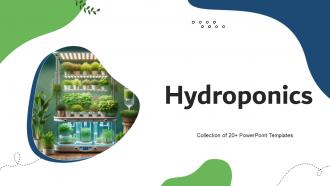
Slide 1: This slide introduces Hydroponics. State your company name and begin.
Slide 2: The purpose of this slide is to help stakeholders in strategic planning related to investments, partnerships etc. within hydroponics industry. It includes elements such as companies, services offered, headquarters, establishment year and market revenue.
Slide 3: The purpose of this slide is to highlight projected growth rate and market size from 2022 to 2030 to understand potential within hydroponics industry. It includes market growth drivers such as expansion of vertical farming across urban areas, growing awareness of sustainable agricultural practices, etc.
Slide 4: The purpose of this slide is to inform stakeholders about evolving landscape of hydroponics and potential implications for businesses. It includes trends such as space-saving and high yield farming, meal kits, homegrown foods and automation technology.
Slide 5: The purpose of this slide is to evaluate success of vertical hydroponics farming by monitoring key performance indicators (KPIs) over time. It includes KPIs such as crop yield, nutrient uptake, labor productivity and energy consumption, what these metrics measures, etc.
Slide 6: The purpose of this slide is to highlight dashboard facilitating decision-making and driving performance improvement in farm operations. It includes elements such as monthly orders, customers churn, available segments, saving plan, available space, etc.
Slide 7: The purpose of this slide is to showcase key tasks and checkpoints involved in developing comprehensive business plan for hydroponics equipment. It covers checkpoints such as market research, business concept, product development, etc.
Slide 8: The purpose of this slide is to serve as roadmap for marketing team, stakeholders and potential investors to plan activities for driving growth and market presence in hydroponic farming industry. It covers elements such as products, target audience, goals, marketing strategy and status.
Slide 9: The purpose of this slide is to showcase practices that can be implemented in hydroponic farming to improve profitability and greater economic returns. It covers strategies such as expanding product lines, integrating technology, value-added services,
Slide 10: The purpose of this slide is to highlight actionable solutions to mitigate challenges, thereby improving efficiency and success rate of hydroponic gardening. It covers challenges such as seedling problems, infestation issues, nutrient deficiencies, gaps
Slide 11: The purpose of this slide is to give audience understanding of how each technology contributes to efficiency and effectiveness of hydroponic systems. It covers key technologies such as data loggers, climate controllers and automated control systems, etc.
Slide 12: The purpose of this slide is to highlight various use cases of hydroponics systems in agriculture and impacts they have on food production, sustainability, and innovation. It includes use cases such as urban farming, controlled environment agriculture, vertical farming, etc.
Slide 13: The purpose of this slide is to showcase regional share analysis of hydroponics market is to visually represent distribution of different geographic regions highest, medium and low market share holders. It includes key insights such as increase in demand for fresh vegetables and fruits, etc.
Slide 14: The purpose of this slide is to provide clear overview of anticipated progress in hydroponics. It covers elements including technological advancements, sustainability considerations, integration with traditional agriculture, and expansion into new applications.
Slide 15: The purpose of this slide is to serve as comprehensive guide for farmers looking to optimize their organic hydroponic farming practices. It covers best practices such as quality seed selection, lightning optimization and temperature and humidity control.
Slide 16: The purpose of this slide is to provide clear and actionable guidance on managing and optimizing nutrient solutions in hydroponic systems. It covers techniques such as electrical conductivity management, nutrient solution temperature, use of organic nutrients, etc.
Slide 17: The purpose of this slide is to present comparison between hydroponic farming and traditional soil-based farming including factors such as land, water, energy and crop yields to facilitate decision-making processes related to agricultural practices.
Slide 18: The purpose of this slide is to visually represent flowchart for hydroponic indoor farming system for successful cultivation of plants in soilless environment. It covers key insights such as mixing nutrients and maintaining proper pH levels, etc.
Slide 19: The purpose of this slide is to provide guidance on how to efficiently install and optimize system for automated hydroponic farming. It includes various steps such as installing Rasberry Pi operating system, installing Mycodo, port forwarding, configuring Mycodo, etc.
Slide 20: The purpose of this slide is to showcase key components and functions of hydroponic systems providing clear understanding of how they operate. It including elements such as sunlight/ grow lights, growing tray, reservoir, submersible pump, nutrient
Slide 21: The purpose of this slide is to assist farmers or enthusiasts in making informed decisions based on various features such as size, hydroponic method, lighting system, and number of plants each system can accommodate for vertical hydroponics
Slide 22: This slide shows Automated hydroponics farming system icon.
Slide 23: This slide presents Automated hydroponics farming system icon.
Slide 24: This slide displays Automated hydroponics farming system icon.
Slide 25: This is a Thank You slide with address, contact numbers and email address.
Hydroponics Powerpoint Ppt Template Bundles with all 33 slides:
Use our Hydroponics Powerpoint Ppt Template Bundles to effectively help you save your valuable time. They are readymade to fit into any presentation structure.










FAQs for Hydroponics Powerpoint
Honestly, the speed difference is wild - plants grow like 25-50% faster because they're getting nutrients delivered directly instead of searching through dirt for food. You'll save tons of water too, which seems weird but it just keeps recycling instead of disappearing into the ground. No bugs, no weeds, no weather disasters ruining everything. Plus you can grow stuff year-round indoors which is pretty sweet. The control over nutrients is probably my favorite part though - you decide exactly what your plants get. Start with lettuce if you're new to this, it's super forgiving while you figure out the whole nutrient mixing thing.
So basically you're mixing nutrients straight into water instead of using soil. Get yourself nitrogen, phosphorus, potassium - all that good stuff - and dissolve it into your water reservoir. Pumps and drip lines circulate everything to the roots, which honestly looks pretty cool once you get it running. Different setups like DWC work slightly different but same concept. Oh and definitely grab a TDS meter to test your nutrient levels every week or so - learned that one the hard way when my first batch of lettuce looked terrible. Your plants will thank you for keeping those numbers in check.
So the three big ones are NFT, deep water culture, and drip systems. NFT's got this thin film of nutrients flowing past the roots constantly - gives you solid control without breaking the bank. Deep water culture is perfect for leafy stuff since roots just chill in oxygenated solution. Honestly though? I'd go with drip systems if you're starting out. Way more forgiving when you mess up your nutrient mix (and trust me, you will at first). Plus they work great for bigger plants like tomatoes. NFT looks cool but can be finicky.
You can totally get great nutrition and flavor with hydroponic crops if you do it right. The cool thing is you control exactly what nutrients go to your plants - way more precise than soil. People complain hydroponic tomatoes taste bland but that's usually because growers pick crappy commercial varieties for shipping, not flavor. Choose heirloom seeds and get your nutrient mix dialed in properly, you'll be shocked how good they taste. Oh and the nutrition can actually be better than soil-grown stuff. I'd start with leafy greens though - they're super forgiving and taste incredible.
Okay so pH is huge in hydroponics - your plants literally can't absorb nutrients if it's off, even when everything else looks perfect. Most plants want it between 5.5-6.5. I learned this the hard way lol. Get a digital pH meter (way better than strips) and test daily at first. Use pH up or down solutions but go slow with adjustments. Honestly the first few weeks you'll feel like you're obsessing over it, but once you figure out your system's pattern you can test every other day. Small changes are key though - don't go crazy trying to fix it all at once.
Dude, hydroponics is seriously cool - you use like 90% less water since everything gets recycled instead of just running off. No pesticides needed either, which is awesome. You can stack plants vertically so it takes way less space than regular farming. The best part? Weather doesn't matter at all, so you get food year-round regardless of if your soil sucks or not. Honestly it's pretty amazing for food security. Oh and check out local hydroponic setups if you can - some of them are running on solar now which is just *chef's kiss*.
Honestly, the startup costs are kinda all over the place - maybe $3-5K for a small setup, but commercial stuff hits $100K+ easy. Lights and climate control will eat your budget alive (and don't get me started on the electric bills). Systems and nutrients add up too. But here's what's cool - you'll get way better yields, like 30-50% more than regular farming, and everything grows faster. Most people break even in about a year, maybe 18 months. Water costs drop though, which is nice. I'd definitely start small first, see how it goes before dumping serious money into it.
Honestly, start with lettuce or basil - they're basically impossible to kill and you'll have fresh greens in like 3 weeks. Leafy stuff in general is perfect for hydroponic setups since they don't need crazy deep roots. Spinach and kale work great too. You could try tomatoes or peppers later, but they're way more high-maintenance with all the support structures and constant pH checking. Not worth the headache when you're figuring things out. Trust me, even if you totally screw up the nutrients at first (which happens), herbs are super forgiving. Plus there's something satisfying about cutting fresh basil for dinner when it's snowing outside.
Dude, climate control is make-or-break for hydroponics. Your plants get super stressed when temps go crazy - too hot or cold messes with how they absorb nutrients. Keep it between 65-75°F if you can. Humidity's tricky too. Too high and you'll deal with gross fungal problems, but too low means your plants are constantly fighting dehydration. Sweet spot is around 50-70%. Honestly, good climate control systems aren't cheap but they pay for themselves when you see the difference in your yields. Way better than watching your plants struggle against whatever weather you've got going on outside.
Smart sensors are totally changing the game - they'll auto-adjust your pH and nutrients without you babysitting everything. LED tech keeps getting better too, some can actually shift light spectrums as plants grow (kinda blew my mind first time I saw it). Vertical setups are way more space-efficient now. Oh and automated nutrient monitoring is probably your best first upgrade if you're looking to improve things. Saves so much time and you won't accidentally fry your plants like I did last year. The AI stuff honestly makes hydroponics feel less intimidating.
So you can totally do hydroponic setups in cities - think vertical farms in old warehouses, rooftop gardens, maybe community growing spots in neighborhoods. The water savings are insane, like 90% less than regular farming. Plus you get year-round crops no matter what the weather's doing. Honestly, I'd start small with pilot programs in food deserts or partner with schools. Focus on stuff that grows fast and sells well - leafy greens, herbs, that kind of thing. Oh, and it cuts down on shipping costs since you're growing right where people actually live.
Dude, the main problems you'll deal with are pH going crazy, nutrient issues, and root rot. Honestly feels like babysitting plants sometimes lol. Check your pH daily and get decent buffers - that helps a ton. Start nutrients way lower than what the bottle says, then bump up slowly. Root rot happens when water sits still or gets nasty, so keep it flowing and change it out regularly. Oh and definitely get a good pH meter, not the cheap strips. Keep notes on everything too - I learned that one the hard way when trying to figure out what went wrong.
Dude, hydroponics is actually pretty cool for local stuff. Creates jobs year-round and keeps money in your area instead of going to some mega farm hundreds of miles away. Water usage is insane too - like 90% less than regular farming, which honestly blew my mind when I first heard it. You get way better yields in tiny spaces, so cities can actually grow their own food nearby. Oh and obviously way less trucking around, so that's good for emissions and whatever. If you're thinking about it, maybe just start by buying from local hydroponic places or look into small setups for your business. Worth checking out at least.
So automation takes care of all that boring stuff - monitoring pH, nutrients, water temp, lighting. The system just fixes things automatically when they get off track. Honestly, I wish I'd started with it sooner because my plants were constantly stressed from my inconsistent watering schedule. Your yields will be way better since everything stays stable 24/7. No more crop disasters from forgetting to check something important. I'd say just start with pH and nutrient sensors first. You can always add more gadgets later once you've figured out how everything works together.
Honestly, just go with a deep water culture setup first - it's like a bucket with an air pump and net pots. Hardware store plus Amazon and you're looking at maybe 30 bucks. Lettuce and spinach won't hate you if you mess up, unlike tomatoes (trust me on that one lol). You'll need a pH test kit and some nutrients - I like General Hydroponics but whatever. Stick it by a window or get a cheap LED light. Oh and don't go crazy at first, maybe 2-3 plants max. Once you figure out what you're doing you can always add more.
-
The quality of PowerPoint templates I found here is unique and unbeatable. Keep up the good work and continue providing us with the best slides!
-
They had the topic I was looking for in a readymade presentation…helped me meet my deadline.