


Hydro Power Plant IT Powerpoint PPT Template Bundles




Try Before you Buy Download Free Sample Product
 Impress Your
 Audience
 100%
100% Editable
 Save Hours
 of Time


Our Hydro Power Plant IT Powerpoint PPT Template Bundles are topically designed to provide an attractive backdrop to any subject. Use them to look like a presentation pro.
People who downloaded this PowerPoint presentation also viewed the following :
Content of this Powerpoint Presentation
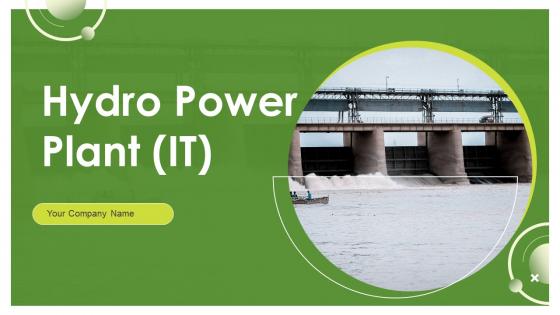
Slide 1: This slide introduces the Hydro Power Plant (IT). Begin by stating Your Company Name.
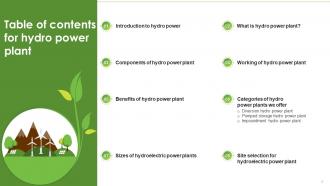
Slide 2: This slide incorporates the Table of contents.
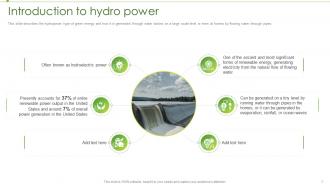
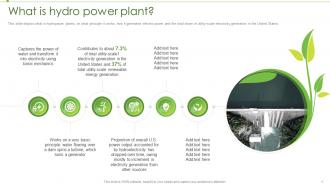
Slide 3: This slide gives an Introduction to hydro power.
Slide 4: This slide explains the hydro power plant.
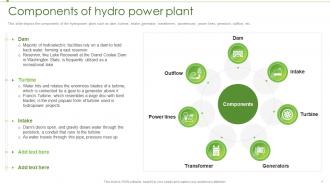
Slide 5: This slide depicts the Components of the hydropower plant.
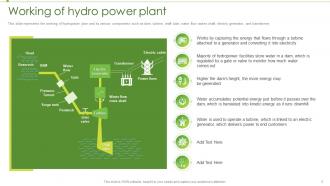
Slide 6: This slide represents the Working of the hydropower plant.
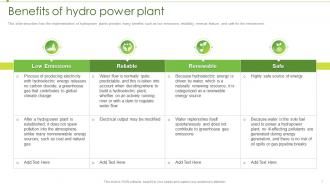
Slide 7: This slide showcases the Benefits of hydro power plant.
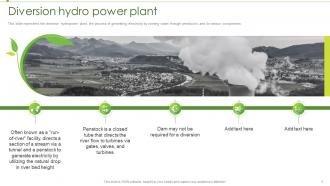
Slide 8: This slide represents the Diversion hydropower plant.
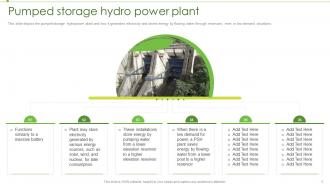
Slide 9: This slide displays the pumped-storage hydropower plant.
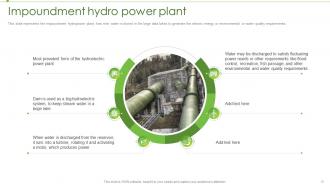
Slide 10: This slide represents the Impoundment hydropower plant.
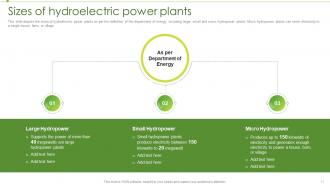
Slide 11: This slide depicts the sizes of hydroelectric power plants.
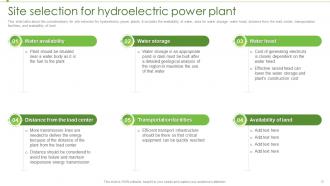
Slide 12: This slide deals with the Site selection for hydroelectric power plant.
Slide 13: This is the Thank You slide for acknowledgement.
Hydro Power Plant IT Powerpoint PPT Template Bundles with all 18 slides:
Use our Hydro Power Plant IT Powerpoint PPT Template Bundles to effectively help you save your valuable time. They are readymade to fit into any presentation structure.






FAQs for Hydro Power Plant IT Powerpoint
So basically you've got four main pieces - the dam, turbine, generator, and transmission lines. Dam holds back water and controls the flow. That flowing water hits the turbine (think massive water wheel but way cooler) which spins and creates mechanical energy. Generator converts that spinning motion into actual electricity. Then transmission lines carry the power wherever it needs to go. There's also control systems managing everything. Oh, and here's the key thing - water flow rate is everything when it comes to efficiency, so that's what you'd want to focus on if you're ever designing one of these things.
Hydro's pretty solid tbh - runs constantly unlike solar/wind that depend on weather. You're looking at 40-60% capacity vs like 25-35% for wind. Infrastructure lasts decades too. But here's the thing - you need the right location and damming rivers can mess up ecosystems pretty badly. Solar and wind are way cheaper to build these days though, and you can get them up faster. Honestly if I were you I'd check what water resources you've got first since that'll make or break whether hydro even works for your area.
Dams mess with river ecosystems pretty badly. You get habitat disruption upstream and downstream. Fish can't migrate anymore - salmon get totally screwed because they can't reach their spawning areas. Flow patterns change completely, sediment piles up behind the dam, and less flows downstream so riverbanks get unstable. It's kind of a domino effect once you block a river. Modern projects have to do environmental assessments first though, which helps with planning workarounds. Still pretty brutal for wildlife overall.
Dude, hydro is honestly perfect for this stuff. You can ramp those plants up or down instantly - way faster than coal or gas. It's basically like having a giant battery where water sits behind the dam until you need power, then gravity does the work. They use them for peak hours when everyone's cranking AC, plus they help smooth out grid wobbles. Oh and pumped storage is wild - they literally pump water uphill when demand's low, then let it flow back down for extra power later. If you're looking at solar or wind integration, pairing it with pumped hydro is probably your best bet.
Dude, policies literally control everything with hydro projects. Environmental reviews, water rights, permits - it's all government red tape that takes forever. The permitting stuff is honestly brutal, like years of waiting sometimes. But here's the thing - they also throw money at these projects through tax breaks and subsidies, which can totally make or break your budget. Every country does it differently too, which is... fun to navigate. My advice? Figure out all the regulatory BS upfront before you get too deep into planning. Trust me, it'll save you so much stress later.
So there's basically three types you'll run into. Run-of-river ones just use whatever water's flowing naturally - no huge dams, but they're kinda at the mercy of dry seasons. Then you've got storage plants with massive dams and reservoirs, which give you way more control over when to crank out power. Pumped-storage is honestly pretty genius - they literally pump water uphill when nobody needs electricity, then let it rip back down during peak hours. What you pick really comes down to your landscape, how much water you've got, and whether you need steady power or just something for those crazy demand spikes.
Honestly, modern turbines make a huge difference - the efficiency jump from old units is wild. Keep your blades clean and aligned, that maintenance stuff really matters. Water flow optimization helps too, like better intake design and cutting penstock friction. Oh and don't forget the electrical side - new transformers can slash your losses. Regular maintenance on generators is key. Maybe start with an audit to see where you're bleeding efficiency? That way you'll know what to tackle first instead of guessing.
Honestly, sediment buildup is gonna be your worst enemy - it slowly chokes your reservoir and clogs turbines until you're stuck paying for expensive dredging. Those massive underwater turbines are a pain to maintain too, and they're constantly breaking down. Climate change makes water flows totally unpredictable, so good luck planning your power output. Plus you'll have to release water for fish migration right when you need it most for electricity. Oh, and definitely get predictive maintenance systems ASAP - they'll save you from catastrophic failures down the road.
Honestly, climate change is messing with hydro plants pretty badly. Droughts are dropping reservoir levels way below where they need to be, while flooding on the flip side damages all the infrastructure. The snowpack that feeds these plants? It's melting way earlier now, which throws off the whole system. Plus higher temps mean more water just evaporates away - super frustrating when you're already running low. Some regions get hit with both problems, which seems unfair tbh. Bottom line: utilities need to plan for way more unpredictable water supplies and probably invest in backup power options.
So hydro plants are actually pretty solid for local economies. You'll get construction jobs upfront, then permanent operations staff after. Energy sales bring in steady revenue that can fund schools and stuff. Tax money is decent too. What I like is the energy independence part - no more getting screwed by crazy gas prices, you know? These things run for 50+ years so it's not like you're rebuilding every decade. Some places even get tourism from the dam itself, which is kinda cool I guess. Definitely check out what happened in similar towns first though.
So basically hydro plants deal with seasonal changes by storing water in reservoirs during high-flow periods - think spring when all that snow melts. Then they release it later when flows drop in summer or winter to keep generating power. Some have this cool pumped storage thing where they actually pump water uphill when they've got extra energy, then let it flow back down later (honestly pretty genius). Run-of-river plants are trickier since they don't have big reservoirs, so utilities just lean harder on other energy sources when water's low. Oh and if you're looking at building one, you'll want like 30+ years of flow data - seasonal patterns can be wild.
So there's actually some pretty neat stuff happening with hydro plants now. Fish ladders help salmon get around dams, and they've got these new turbine designs that don't just chop up fish when they swim through. Run-of-river systems are cool too - no huge reservoirs drowning whole valleys. Smart release systems can copy how rivers naturally flow, which honestly seems obvious but took forever to figure out. The fish-friendly turbines are my favorite though, they're designed so fish can pass through without getting hurt. When you're looking at hydro projects, definitely ask about this stuff first thing.
So fish ladders are like ramps that let salmon swim around your dam to get upstream and spawn. Pretty clever actually. Without them you're basically cutting off their highway - populations crash and the whole ecosystem gets messed up. Environmental regs usually require them now, plus you'll need fish screens and seasonal flow stuff too. Honestly, the retrofit costs are brutal if you don't plan for this upfront. Way cheaper to build it in from the start, trust me on that one.
So basically you need real-time monitoring that talks to your turbines - they can ramp up or down based on what the grid needs. Smart meters predict demand spikes before they happen. Weather forecasting helps too since you can plan reservoir levels ahead of time. The whole system becomes this connected network that balances different renewable sources automatically, which honestly works better than I expected when I first heard about it. You'll want SCADA systems that play nice with everything else. Talk to your utility about their demand response programs - that's where the real integration happens.
Honestly, the biggest thing I've learned from successful hydro projects is you HAVE to get the community on board from the start. Don't try to steamroll over local people - it always backfires. Look at Norway's setup or Brazil's smaller river plants - they did proper environmental studies and actually shared the results openly. Those massive dam failures? Yeah, they skipped this step. Oh, and here's something most people forget - plan for maintenance and train local workers instead of just focusing on building the thing. Seriously, check out how similar projects handled community pushback in your area first. Trust me on this one.
-
Happy to found you SlideTeam. You guys are value for money. Amazing slides.
-
SlideTeam has helped me take my presentation to the next level. Everyone at the office is impressed! I’ll be using their designs for a long-long time.