

Implementation process strategy





Try Before you Buy Download Free Sample Product
 Impress Your
 Audience
 100%
100% Editable
 Save Hours
 of Time


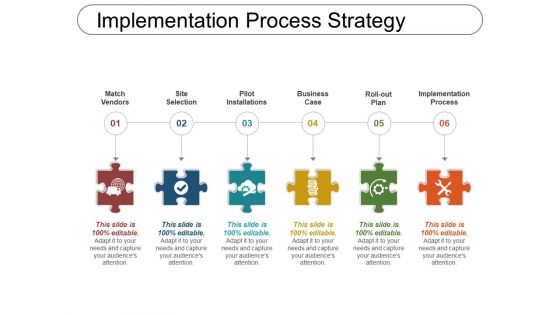
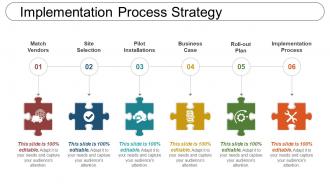
Measure how different components of strategic planning relate to each other with our implementation process strategy PowerPoint presentation slide. This PPT layout of implementation process strategy ensures your strategy evolves from a plan to a strategic implementation and helps you define strategic framework. Use this six steps strategy implementation process PPT layout to define your vision, core values of the business. This process plan implementation theme helps you choose strategy into organizational actions to achieve its goals and objectives. This plan implementation process PPT layout has been designed by our team of professionals to help you monitor the progress of the organization in delivering the strategic objectives. This slide can also be used to builds consensus within the teams and to engage with stakeholders. This presentation slide of project plan strategy help you consider strategy on project implementations, procedural implementations, resource allocation and behavioral implementation. Implement process steps PPT layout help you move from the organization's current state to their vision. Generate action to earn the goodwill of customers with our Implementation Process Strategy. Focus on gaining their favor.
People who downloaded this PowerPoint presentation also viewed the following :
Implementation process strategy with all 5 slides:
Be acknowledged as a good holiday guide with our Implementation Process Strategy. Elaborate on your favorite destinations.

FAQs for
Clear goals and getting everyone on board are huge - but honestly, realistic timelines might be the hardest part. You'll need dedicated people and budget, obviously. Communication plans are clutch too. Risk strategies help when stuff goes wrong (and it will). Strong leadership makes or breaks everything though. Don't forget success metrics so you actually know if it's working. Oh, and build in ways to get feedback and pivot when needed. I'd map these out for your situation first, then figure out where you're struggling most right now.
First thing - do a brutally honest audit of what you actually have right now. People, tech, budget, processes, all of it. Then figure out what's missing for your new strategy. Talk to different departments because they'll catch stuff you won't see from up top. A SWOT analysis helps too (yeah I know, so corporate, but it works). Also check if your team culture can even handle big changes - some places just aren't ready. The whole point is mapping those gaps so you don't set crazy unrealistic timelines later.
Dude, stakeholders are everything when it comes to implementation. Get them involved from the start - they know what actually works in the real world and control the budgets you'll need. I've watched so many good strategies crash because people treated stakeholders like they were just there to rubber-stamp decisions. Wrong move. They spot problems early, give you realistic deadlines, and become your biggest advocates when it's time to roll things out. Map out who has real influence first, then bring them into the planning process. Don't just ask for feedback after - make them part of creating it with you.
Don't make communication an afterthought - build it right into your project phases from the start. Figure out who needs to know what and when. Map those conversations to your big milestones and decision points. Most projects crash because people think communication just happens on its own (spoiler: it doesn't). Set up regular check-ins and feedback loops early. Each stakeholder group needs different messaging at different stages. Your communication timeline should basically match your project timeline. First step? Identify your key audiences and what winning looks like for each one.
You need both types of metrics - the predictive stuff (training completion rates, resource allocation timelines, stakeholder engagement) and the actual results (adoption rates, performance gains, cost savings). But honestly, don't go crazy with tracking everything. Pick maybe 3-5 that actually align with what you're trying to achieve. The biggest mistake I see? People forget to measure where they started. Set your baselines before you begin implementing anything, otherwise you're just shooting in the dark about whether it worked. Track from day one and you'll thank yourself later.
First, sit down with your team and brainstorm everything that could possibly go wrong - tech issues, budget problems, difficult stakeholders, you name it. Plot them on a simple impact vs probability chart (honestly, this saves so much time later). Focus your energy on the high-risk stuff. Build actual backup plans: extra budget, alternative timelines, communication strategies. Don't just write this down and forget it - assign someone to watch each major risk area. The whole point is catching problems early instead of scrambling when everything's on fire. Check your risk indicators regularly and pivot before small issues snowball.
You'll want decent project management software first - Asana or Monday work well for tracking milestones. Communication tools are critical too, like regular check-ins so everyone stays on the same page. Data analytics with real-time dashboards will save your butt when things go sideways (and they will). I've watched solid strategies completely tank because teams couldn't track progress properly. Budget tracking, stakeholder mapping, change management resources - all that stuff matters. My advice? Audit what you've got already, then fill gaps one by one instead of going on a software shopping spree.
Dude, you absolutely need everyone on the same page or you're screwed. I've watched entire projects implode because nobody knew what they were supposed to be doing. People end up doing the same work twice, missing deadlines left and right. It's honestly painful to watch. Before you do anything else, get the team together and hash out who's doing what and when. Yeah, more meetings suck, but trust me - way better than dealing with the mess later when half your team is working toward completely different goals.
Ugh, scope creep is the absolute worst - you'll start adding features halfway through and suddenly your timeline's completely shot. Communication breaks down fast too, especially between different teams. Lock down what you're actually building upfront and stick to it! Regular check-ins help but write stuff down because people forget what was decided. Oh, and testing - start way earlier than feels right. Seriously, like embarrassingly early. I learned this the hard way on my last project. Always have your rollback plan ready because something will definitely go sideways at the worst possible moment.
Dude, feedback loops will save your ass on any project. Check in with users and your team regularly - like weekly pulse checks or quick demos. I can't tell you how many times I've watched projects crash because people just assumed things were fine without asking. Short surveys work great too. You'll spot problems way earlier instead of finding out everything's broken at the end. Plus you get those small wins that keep everyone motivated. The validation thing is huge - turns out half your assumptions are probably wrong anyway. Start basic and build from there.
Honestly, just pick a couple good tools and stick with them. I swear by Monday or Asana for tracking stuff - they'll send reminders so you don't forget deadlines. Dashboards are where it's at though, they pull everything together so you can actually see what's going wrong before it becomes a disaster. Slack keeps everyone in the loop without those awful email threads that go on forever. Don't go crazy with like 10 different apps though. I made that mistake once and spent more time switching between tools than actually getting work done. Two or three max, use them religiously.
Look, engagement has to feel worth it to people, not like another thing they're forced to do. Connect it to what each person actually wants to achieve - show them the personal payoff. Do check-ins way more often than quarterly (seriously, who remembers January by March?). Get some quick wins happening early so people see it's actually working. Don't just hand out assignments from your ivory tower - let people own pieces of this thing. And yeah, celebrate the small stuff too. Even a quick "hey nice job" in your next meeting matters. People stay when they feel heard and see real progress.
Dude, training is huge - like, make-or-break huge. Best strategy ever won't matter if your team's confused and stressed about the changes. People need time to get comfortable with new stuff, you know? I've watched so many rollouts tank because bosses thought everyone would just wing it. Spoiler alert: they don't. Your team needs actual confidence before they can execute properly. Budget real time and money for training upfront. Trust me, it beats dealing with months of "why isn't this working" panic calls later.
Break it into phases with clear deadlines and deliverables for each step. Always document WHY you made decisions, not just what you did - seriously, you'll hate yourself later when your boss questions everything. Map out stakeholders, dependencies, risks, and how you'll measure success. People love visuals way more than walls of text, so throw in some flowcharts or timelines. Oh, and don't treat it like it's set in stone - things change constantly, so keep updating as you go. Start simple with a basic template and add complexity as needed.
Oh man, cultural stuff is everything when you're rolling out changes. I've seen projects crash and burn because teams didn't get this right. Local values matter huge - some places love direct feedback, others think it's rude as hell. Decision-making styles are totally different too. Your training approach that worked in New York? Might be a disaster in Tokyo. Timeline expectations vary wildly between cultures. Honestly, the best thing you can do is get local people involved from day one. They'll spot the landmines before you step on them. Worth the extra effort upfront, trust me.
-
Out of the box and creative design.
-
Out of the box and creative design.