


Improvement Strategy Business Objectives Framework Organization Management





Try Before you Buy Download Free Sample Product
 Impress Your
 Audience
 100%
100% Editable
 Save Hours
 of Time


Our Improvement Strategy Business Objectives Framework Organization Management are topically designed to provide an attractive backdrop to any subject. Use them to look like a presentation pro.
People who downloaded this PowerPoint presentation also viewed the following :
Improvement Strategy Business Objectives Framework Organization Management with all 12 slides:
Use our Improvement Strategy Business Objectives Framework Organization Management to effectively help you save your valuable time. They are readymade to fit into any presentation structure.
-
Improvement Strategy
-
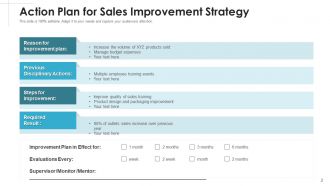
Action Plan for Sales Improvement Strategy
-

Business Improvement Strategy with Key Objectives
-
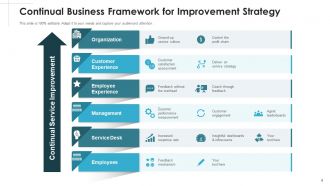
Continual Business Framework for Improvement Strategy
-
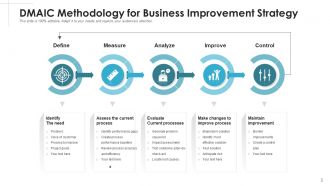
DMAIC Methodology for Business Improvement Strategy
-
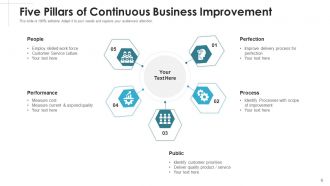
Five Pillars of Continuous Business Improvement
-

Icon illustrating Managers Communicating Improvement Strategy to Employees
-
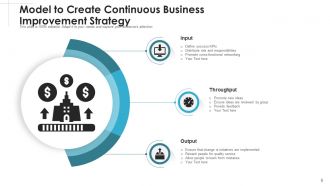
Model to Create Continuous Business Improvement Strategy
-
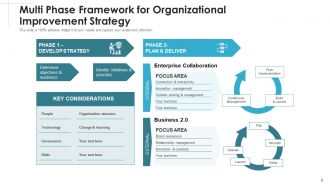
Multi Phase Framework for Organizational Improvement Strategy
-
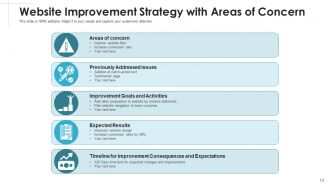
Website Improvement Strategy with Areas of Concern
-
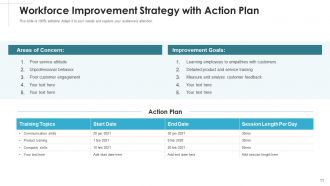
Workforce Improvement Strategy with Action Plan
-

Thank You
FAQs for Improvement Strategy Business Objectives
Honestly, you need four main things sorted out. First - where you're actually trying to go (vision stuff). Second is figuring out what makes you different from everyone else. Know your customers like really well, and set goals you can actually measure with real deadlines. The market research bit is probably more important than people think - you can't just wing strategy in isolation. Your competitors aren't sitting around doing nothing, right? Oh, and this sounds obvious but... make sure your team actually understands the plan. I've watched so many good strategies completely tank because leadership forgot to explain them properly. Quick test: try writing your current strategy on one page. Can't do it? There's your starting point.
Honestly, market trends are everything when you're planning strategy. They show you where customers are going and what competitors might pull next. The trick is catching these shifts early - consumer behavior changes, new tech, regulations, whatever. Then you can actually adjust before you're scrambling to catch up. Companies that missed the mobile wave? Yeah, that didn't end well for most of them. What I'd do is build trend watching into your regular routine. Have your team analyze market data consistently and test your current strategy against what's coming. It's way better than getting blindsided later.
Honestly, competitive analysis is just figuring out what you're walking into before you make any big moves. Map out your top 3-5 competitors first - check their pricing, how they position themselves, what customers actually say about them. It's like prepping for a job interview by stalking the company's LinkedIn (but more useful). Look for what they're screwing up or missing entirely. Those gaps? That's where you can actually win. Don't just copy what everyone else is doing - find the spaces they're ignoring or doing badly. Saves you from launching something nobody wants.
Look, you definitely need both the money stuff and the softer metrics. Revenue growth, profit margins, ROI - those are obvious. But don't sleep on customer satisfaction scores and employee engagement either. Market share's huge too. Honestly, I'd rather have 5-7 solid KPIs that actually connect to your goals than track everything under the sun. Operational efficiency is worth measuring if it matters to your business. Check in quarterly to see how you're doing - and yeah, be ready to change course if things aren't working. It's better than staying stuck with a bad strategy.
Honestly, focus on keeping the customers you already have - way cheaper than chasing new ones all the time. Cut the dead weight from your operations too, like unnecessary expenses that aren't actually helping. Subscriptions or long-term contracts are your friend here instead of those unpredictable one-off sales. When you do make profit, don't blow it on stuff that just looks good on paper. Actually reinvest in things that'll grow your business. Oh, and seriously audit where your money's disappearing to right now. You'd be surprised how much random stuff adds up.
Honestly, take a hard look at what your company is actually like day-to-day - not the BS on your mission statement. What do people really care about? How do they actually work together? Build your strategy around those real behaviors instead of pretending you're something you're not. Like if everyone's super collaborative (which is rare btw), don't create some competitive structure that'll just stress people out. Get your team in on the planning conversations too - they'll catch problems you totally missed. Way better to work with your culture than against it.
Oh man, biggest mistake? Trying to tackle everything at once - you'll burn out fast. Also don't just copy what worked for some other company because honestly, their situation probably isn't yours at all. Skip the research and you're basically guessing about your customers, which never ends well. Make sure you know what "winning" actually looks like too, otherwise you're just wandering around hoping for the best. And please don't let it become one of those fancy documents that just collects dust. Check in regularly and be ready to change course when stuff isn't working.
Tech can totally transform your strategy game. Start with automation for all that boring repetitive stuff - seriously, it'll free up your team for the work that actually matters. Data analytics beats guessing every time when you're trying to figure out what customers want. Cloud platforms are clutch because you can grow fast without dropping crazy money upfront. AI handles personalization at scale, which is honestly pretty wild. And collaboration tools? Essential for keeping everyone on the same page, especially with remote work. Oh, and don't try to fix everything at once - just tackle your biggest bottlenecks first.
You really can't build strategy alone - trust me on this one. Getting buy-in from people who'll actually execute it is everything. I've watched brilliant plans crash and burn because nobody bothered asking the right people what they thought. Your employees see problems you don't, customers know what they actually want (not what you think they want), and investors spot financial red flags early. Map out who matters most first. Then actually listen to them throughout the process. When people help create the plan, they'll fight for it instead of against it.
SWOT analysis is honestly your best bet here. Don't sugarcoat your strengths and weaknesses - that's where everyone screws up. Map out what opportunities and threats are happening in your market too. Here's the cool part: look for connections between all four areas. Maybe a strength you have lines up perfectly with some market opportunity? Or there's a weakness making you sitting duck for competitors. Get other people involved because you're definitely missing stuff on your own. I learned that the hard way lol. Cross-referencing those quadrants is where the good strategic moves come from.
Ugh, market disruption sucks but you've got options. Talk to your current customers first - they'll literally tell you what direction to go. Your core value prop might need a total refresh if people want different stuff now. Product tweaks, new customer segments, even flipping your whole business model. I know it sounds crazy but I've watched companies switch from B2C to B2B and crush it. Partnerships can fast-track you into new areas too. Just don't panic and make stupid moves. Move quickly, sure, but think it through first.
Honestly, going international is like hitting the reset button on your whole business strategy. Different countries = totally different customers, rules, and competitors. What works here might flop there completely. You'll be spreading resources across multiple markets instead of focusing on one. Way riskier too. Most companies need local partners who actually understand the market - going solo is pretty tough. My take? Pick one country and figure it out there first. I've seen too many businesses try to expand everywhere at once and just burn through cash. Get the formula right in one place, then think about scaling up.
Honestly, digital transformation makes you question everything about your business model. Old strategies built around physical stores and predictable customer paths? They're pretty much dead weight now. You can't just plan for five years anymore - tech moves too fast for that approach to work. Instead, you need to pivot constantly and actually use your data to make decisions. Customer needs have to drive everything. Building partnerships becomes more important than just trying to crush competitors directly. I'd start by looking at which strategies assume people still shop offline-first. Those are gonna hurt you the most.
Don't treat innovation like something you'll get to later - bake it right into your planning from the start. Budget for experiments, even knowing some will flop. Cross-functional teams work best here since they can actually move without waiting for seventeen approvals. Leadership has to reward smart risks, not just wins. That's honestly where most companies screw up. Track innovation metrics like you do your other numbers. Pick one area where you can test stuff fast and expand whatever actually works. Oh, and bureaucracy will murder creativity every time.
Look for metrics that actually predict what's coming, not just what already went down. Pick 3-5 max that tie directly to your main goals - like if you're trying to grow, track customer acquisition costs. Revenue's obvious but honestly? Most teams obsess over it while completely ignoring the pipeline stuff that creates revenue in the first place. Monthly reviews work best. Also make sure everyone gets how their day-to-day work actually moves these numbers, otherwise you're just collecting data for no reason.
-
Awesomely designed templates, Easy to understand.
-
Great product with highly impressive and engaging designs.
-
Colors used are bright and distinctive.
-
Thanks for all your great templates they have saved me lots of time and accelerate my presentations. Great product, keep them up!
-
Great product with effective design. Helped a lot in our corporate presentations. Easy to edit and stunning visuals.