


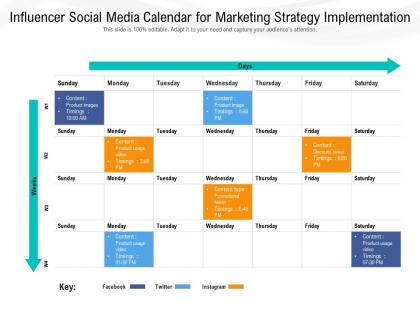
Influencer social media calendar for marketing strategy implementation




Try Before you Buy Download Free Sample Product
 Impress Your
 Audience
 100%
100% Editable
 Save Hours
 of Time


Our Influencer Social Media Calendar For Marketing Strategy Implementation are topically designed to provide an attractive backdrop to any subject. Use them to look like a presentation pro.
People who downloaded this PowerPoint presentation also viewed the following :
Influencer social media calendar for marketing strategy implementation with all 2 slides:
Use our Influencer Social Media Calendar For Marketing Strategy Implementation to effectively help you save your valuable time. They are readymade to fit into any presentation structure.

FAQs for Influencer social media calendar for
So for your influencer calendar, definitely start with campaign dates and posting schedules - that's your backbone. Track which influencers you're working with, what content they're making, and how much you're spending on each campaign. Budget stuff gets messy fast if you don't stay on top of it. Build in extra time for approvals because honestly, that process always drags on way longer than anyone thinks it will. Add your performance goals, hashtags, and any brand messaging they need to hit. Oh, and map out holidays, product drops, or big company announcements you want to tie into. Keep it all in one shared document so everyone knows what's happening when.
Figure out your goals and who you're trying to reach first. Then hunt for influencers whose audience actually matches your customers - don't just chase big follower counts like everyone does. Check their engagement rates and whether their vibe fits your brand. I usually browse through their old sponsored posts to see if they felt genuine or super pushy. Creator.co helps with research, but honestly scrolling through their content manually works too. Their past partnerships tell you everything about how they'll handle yours. Make a shortlist and hit them up with personal messages explaining why you picked them specifically.
Honestly? I'd say 3-5 posts weekly is pretty solid, but it really comes down to your specific audience. Instagram you can get away with daily posts if they're actually good quality. LinkedIn's more like 2-3 times a week - people there aren't scrolling as much. TikTok though... that platform is insane, some creators are posting like 3+ times a day. But here's the thing - being consistent beats posting constantly. Your followers would way rather see you show up reliably twice a week than randomly every day. Start with whatever you can actually stick to, watch how people engage, then tweak it. Don't burn yourself out right off the bat.
Okay so first thing - figure out what you actually want from your brand this year. Then work backwards from there. Map your big marketing goals for each quarter (awareness, launches, sales, whatever) and make sure influencer stuff actually supports that. Honestly, I've watched so many brands just dump cash on popular creators with zero strategy behind it - such a waste. Your influencer calendar needs to match up with your content calendar and campaign dates. Set KPIs that connect to your main goals, brief creators on how their posts fit the bigger picture. Oh and definitely review quarterly because things change fast.
Oh there's a bunch of stuff you can try! AspireIQ and Upfluence are solid if you want something made for influencer work specifically. Honestly though, I've been using Airtable for everything lately and it's pretty amazing for tracking campaigns - way better than I expected. Asana and Monday.com are good too if your team's already using project management tools. Google Sheets works fine when you're starting out, or Trello if you like the card thing. The main thing is just picking whatever your team won't ignore after week one, you know? I'd probably start free with Trello first.
Honestly, start planning 3-4 months out – I learned this the hard way. Pick holidays that actually make sense for your brand though. Like, don't push Valentine's Day if you're selling tax software lol. Work backwards from those dates so you're not scrambling last minute with influencer outreach and content approvals. Give your influencers enough time to make something that doesn't feel forced. Oh, and here's what really works – those weird niche holidays nobody talks about? They usually crush it because everyone else is ignoring them while fighting over Christmas content.
For real, you need to watch engagement rates and click-throughs - those tell you if people actually give a damn about your content. Conversions are obviously huge too (sales, sign-ups, whatever). Brand sentiment is super underrated btw, most people totally skip tracking that. I'd throw follower growth and saves into the mix since they show you're building something lasting. Honestly just make a basic spreadsheet and check these monthly. Makes it way easier to see what's working and which influencers are worth your money.
Honestly, just bake in way more time than you think you need. Start reaching out like 4-6 weeks early - I learned this the hard way watching brands panic at the last minute. Be super clear about deadlines right from your first message and actually ask if they're available. Don't micromanage once they're on board though. Give them loose guidelines instead of word-for-word scripts because rushed content always looks terrible. Check in regularly but keep it chill and collaborative. The whole point is letting them create something that doesn't feel forced, you know?
So your calendar will have product demos, tutorials, behind-the-scenes stuff, user content features, seasonal campaigns - basically everything mixed together. Plus storytelling posts and collabs with other creators. It's honestly a lot at first! But that's kinda the point. You don't want to just spam people with sales posts constantly. The whole thing helps you balance promotional stuff with actually useful content. Oh, and definitely check your calendar every few months to see what's working. Like if tutorials are crushing it but product demos aren't, adjust accordingly. Your metrics will tell the real story.
I'd go with like 70/30 or 80/20 - mostly organic stuff with some sponsored mixed in. People can tell when you're being fake about it, and nobody wants their feed clogged with ads constantly. What works is making the sponsored posts feel like they actually belong there, you know? Same vibe as their regular content. Oh and definitely space them out with real posts in between - that's what keeps people trusting the account. I always check if the sponsored posts are getting way less engagement than normal ones. If they are, you're probably pushing too hard and need to back off a bit.
Honestly, the worst part is when influencers just disappear on you or miss their deadlines completely. Timezone stuff gets messy too, especially with international creators. I always build in like 2-3 extra days before any launch now - learned that the hard way. Tools like Asana help track everything and send those annoying reminder emails so you don't have to. Instead of demanding exact posting times, give them windows. Way less stressful for everyone. Oh, and definitely have backup content ready because people will ghost you. Your contracts should spell out consequences for delays - some creators need that extra push.
Dude, you're sitting on a goldmine with that influencer feedback! They're basically your scouts - they know what their followers actually want vs what bombs completely. When they tell you Tuesday posts hit different or that carousel format was a nightmare to make, write that stuff down. I track everything they say about engagement patterns and content that felt natural to them. Honestly, their audience insights are way more valuable than any analytics dashboard. Build all of that into your next campaign calendar so you're not making the same mistakes twice. It's like having cheat codes for what actually works.
Honestly, timing is huge for influencer posts. Your audience has to actually be online when you drop content - sounds obvious but so many people miss this. Check your analytics first to see peak engagement hours. Instagram crowds usually scroll during lunch, but TikTok hits different in the evenings (seriously, the platform differences are crazy). Don't just post when it's easy for you or the influencer. Sometimes you'll need to schedule stuff at weird times like 6 AM on a random Tuesday. Work backwards from those high-engagement windows and build your whole calendar around them. Demographics and time zones matter way more than you'd think.
Honestly, I'd check your calendar data monthly - weekly just makes you panic over random fluctuations. Pull up your engagement stats and see what's actually working. Maybe your video posts are crushing it while those fancy carousel ads are flopping. Or certain influencers are bringing in real customers instead of just likes (which, let's be real, don't pay the bills). Once you spot these patterns, shift your budget toward whatever's performing. Schedule posts when your audience is actually online. I set a monthly review meeting to dig into this stuff and tweak the strategy accordingly.
Okay so first thing - send super detailed briefs like 2-3 weeks early with ALL the deadlines. I learned this the hard way lol. Follow up after a week to make sure they actually read it because honestly, half the time they don't. "ASAP" is basically meaningless to freelancers btw - everyone interprets it differently. Shared calendars are a lifesaver for keeping everyone on the same page. Always have backup plans too because someone's definitely getting sick or their laptop will crash at the worst possible moment. Oh, and send those gentle reminder texts 2-3 days before deadlines instead of having a meltdown when stuff's late.
-
Use of different colors is good. It's simple and attractive.
-
Good research work and creative work done on every template.
-
Content of slide is easy to understand and edit.
-
Perfect template with attractive color combination.
-
Top Quality presentations that are easily editable.