

Information Technology Governance Powerpoint Presentation Slides




Try Before you Buy Download Free Sample Product
 Impress Your
 Audience
 100%
100% Editable
 Save Hours
 of Time


This PowerPoint presentation gives a brief idea about the business problems and the need for IT governance implementation in the company. In this Information Technology Governance PowerPoint, we have discussed the overview of IT governance by covering its life cycle, risk management, and compliance. In addition, this Information and Communications Technology Governance ICT Governance PPT contains different IT governance frameworks such as COBIT, ITIL, COSO, CMMI, FAIR, and strategic IT governance models. Furthermore, this Corporate Governance of Information Technology CGIT template includes the IT governance framework selection process, its domain such as a framework for the governance of enterprise IT, strategic management, benefits realization, risk optimization, and resource optimization. It also covers the training, budget, and RACI matrix for IT governance implementation. Moreover, this Corporate Governance of Information and Communications Technology PPT caters to effective implementation steps for IT governance in the company and its post implementation impact. Lastly, this Enterprise Governance of Information Technology EGIT deck comprises the 30 60 90 days plan, an implementation roadmap, and a dashboard. Download our 100 percent editable and customizable template, which is also compatible with Google Slides.
People who downloaded this PowerPoint presentation also viewed the following :
Content of this Powerpoint Presentation
Slide 1: This slide introduces IT Governance. State Your Company Name and begin.
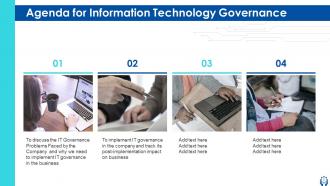
Slide 2: This slide states Agenda of the presentation.
Slide 3: This slide presents Table of Content for the presentation.
Slide 4: This is another slide continuing Table of Content for the presentation.
Slide 5: This slide highlights title for topics that are to be covered next in the template.
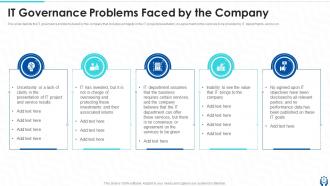
Slide 6: This slide shows IT Governance Problems Faced by the Company.
Slide 7: This slide highlights title for topics that are to be covered next in the template.
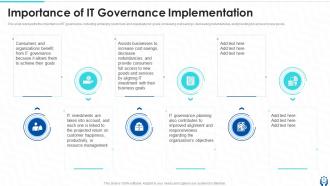
Slide 8: This slide presents Importance of IT Governance Implementation.
Slide 9: This slide describes the benefits of the IT governance framework.
Slide 10: This slide highlights title for topics that are to be covered next in the template.
Slide 11: This slide displays Overview of Information and Technology Governance.
Slide 12: This slide represents Life-Cycle of Information and Technology Governance.
Slide 13: This slide showcases IT Governance, Risk Management, and Compliance.
Slide 14: This slide highlights title for topics that are to be covered next in the template.
Slide 15: This slide describes the IT governance framework that helps define processes.
Slide 16: This slide represents the components of the IT governance framework.
Slide 17: This slide highlights title for topics that are to be covered next in the template.
Slide 18: This slide represents the Control Objectives for Information and Related Technologies.
Slide 19: This slide showcases Principles of COBIT IT Governance Framework.
Slide 20: This slide displays Reference Model for COBIT Framework.
Slide 21: This slide highlights title for topics that are to be covered next in the template.
Slide 22: This slide covers the ITIL IT governance framework by including its five stages.
Slide 23: This slide describes the service strategy stage of the ITIL life cycle.
Slide 24: This slide depicts the overview of ITIL service design.
Slide 25: This slide gives the overview of ITIL service transition.
Slide 26: This slide represents the overview of ITIL service operation.
Slide 27: This slide showcases ITIL Continual Service Improvement Overview.
Slide 28: This slide highlights title for topics that are to be covered next in the template.
Slide 29: This slide depicts the Committee of Sponsoring Organizations IT governance framework.
Slide 30: This slide represents Components of COSO IT Governance Framework.
Slide 31: This slide highlights title for topics that are to be covered next in the template.
Slide 32: This slide depicts the Capability Maturity Model Integrated framework of IT governance.
Slide 33: This slide showcases Levels of Capability Maturity Model Integrated.
Slide 34: This slide highlights title for topics that are to be covered next in the template.
Slide 35: This slide depicts the Factor Analysis of Information Risk framework of IT governance.
Slide 36: This slide shows Components of Factor Analysis of Information Risk Framework.
Slide 37: This slide presents Stages in Factor Analysis of Information Risk Analysis.
Slide 38: This slide highlights title for topics that are to be covered next in the template.
Slide 39: This slide represents the IT governance models framework.
Slide 40: This slide highlights title for topics that are to be covered next in the template.
Slide 41: This slide showcases IT Governance Frameworks Selection Process.
Slide 42: This slide highlights title for topics that are to be covered next in the template.
Slide 43: This slide depicts the domains of IT governance, and it includes a framework for the governance of enterprise IT.
Slide 44: This slide represents the framework for the governance of enterprise IT.
Slide 45: This slide describes the strategic management domain of IT governance.
Slide 46: This slide depicts the benefits realization domain of IT governance.
Slide 47: This slide represents the risk optimization domain of IT governance.
Slide 48: This slide showcases the resource optimization domain of IT governance.
Slide 49: This slide highlights title for topics that are to be covered next in the template.
Slide 50: This slide shows Training for IT Governance Implementation.
Slide 51: This slide presents Budget for IT Governance Implementation.
Slide 52: This slide displays RACI Matrix for Information and Technology Governance.
Slide 53: This slide highlights title for topics that are to be covered next in the template.
Slide 54: This slide represents the get executive sponsorship guideline for IT governance implementation.
Slide 55: This slide depicts the put client resources on the team guideline for IT governance implementation.
Slide 56: This slide shows the understanding of the problem guideline for IT governance implementation.
Slide 57: This slide represents the envision of the solution guideline for IT governance.
Slide 58: This slide describes the picking the right software solutions for the right reasons.
Slide 59: This slide outlines the take small steps guideline for effective IT governance implementation.
Slide 60: This slide represents the include post-implementation activities guideline for IT governance.
Slide 61: This slide highlights title for topics that are to be covered next in the template.
Slide 62: This slide showcases IT Governance Post-implementation Impact.
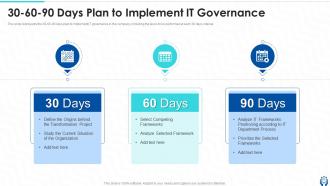
Slide 63: This slide displays 30-60-90 Days Plan to Implement IT Governance.
Slide 64: This slide shows Roadmap to Implement IT Governance.
Slide 65: This slide presents Dashboard for IT Governance Implementation.
Slide 66: This slide is titled as Additional Slides for moving forward.
Slide 67: This slide represents Relationship between IT Governance and other Governances.
Slide 68: This slide describes the workflow of the IT governance process.
Slide 69: This slide represents the structure of IT Governance, including the IT governance board.
Slide 70: This slide displays Icons for IT Governance.
Slide 71: This slide showcases Magnifying Glass to highlight information, specifications, etc.
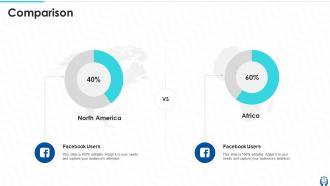
Slide 72: This is a Comparison slide to state comparison between commodities, entities etc.
Slide 73: This slide provides Clustered Bar chart with two products comparison.
Slide 74: This is a Timeline slide. Show data related to time intervals here.
Slide 75: This is Our Mission slide with related imagery and text.
Slide 76: This slide shows Post It Notes. Post your important notes here.
Slide 77: This slide contains Puzzle with related icons and text.
Slide 78: This slide presents Roadmap with additional textboxes.
Slide 79: This is a Thank You slide with address, contact numbers and email address.
Information Technology Governance Powerpoint Presentation Slides with all 79 slides:
Use our Information Technology Governance Powerpoint Presentation Slides to effectively help you save your valuable time. They are readymade to fit into any presentation structure.
-
Information Technology Governance
-
Agenda for Information Technology Governance
-
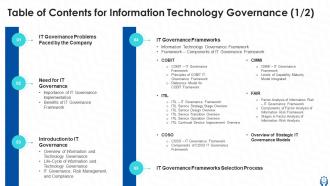
Table of Contents for Information Technology Governance 1 2
-

Table of Contents for Information Technology Governance 2 2
-
Table of Contents for Information Technology Governance
-
IT Governance Problems Faced by the Company
-
Table of Contents for Information Technology Governance
-
Importance of IT Governance Implementation
-
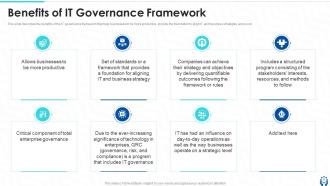
Benefits of IT Governance Framework
-

Table of Contents for Information Technology Governance
-
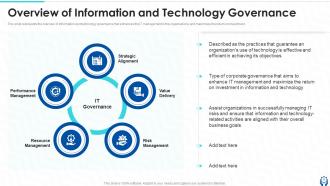
Overview of Information and Technology Governance
-
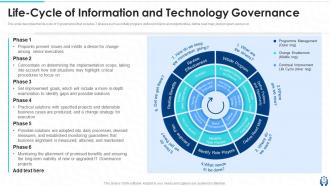
Life Cycle of Information and Technology Governance
-
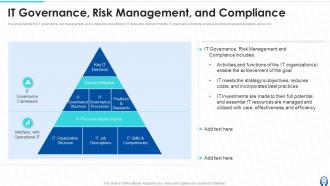
IT Governance Risk Management and Compliance
-
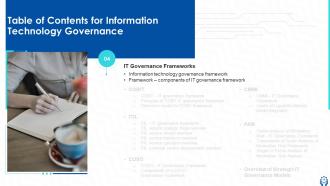
Table of Contents for Information Technology Governance
-
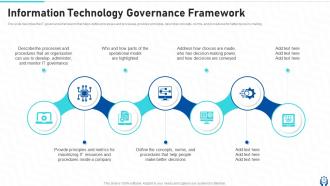
Information Technology Governance Framework
-
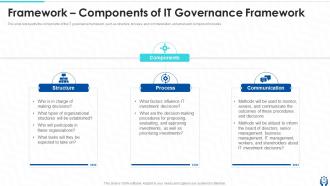
Framework Components of IT Governance Framework
-
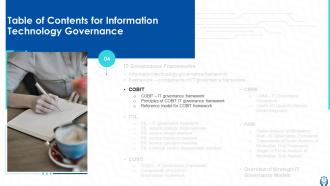
Table of Contents for Information Technology Governance
-
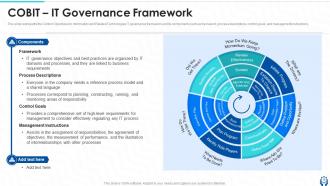
COBIT IT Governance Framework
-

Principles of COBIT IT Governance Framework
-
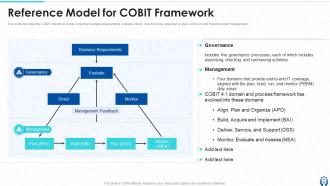
Reference Model for COBIT Framework
-
Table of Contents for Information Technology Governance
-
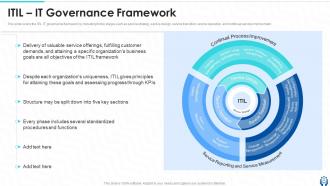
ITIL IT Governance Framework
-
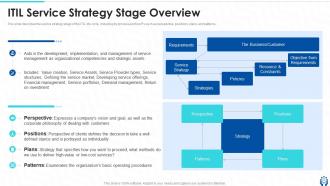
ITIL Service Strategy Stage Overview
-
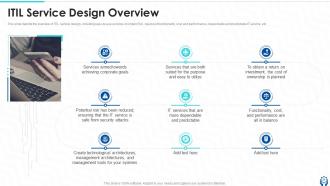
ITIL Service Design Overview
-
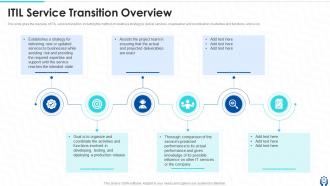
ITIL Service Transition Overview
-
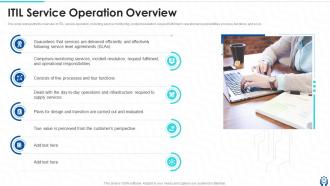
ITIL Service Operation Overview
-
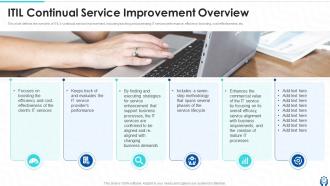
ITIL Continual Service Improvement Overview
-
Table of Contents for Information Technology Governance
-
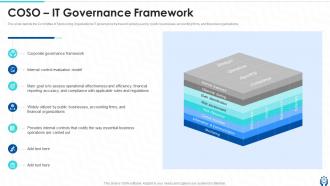
COSO IT Governance Framework
-
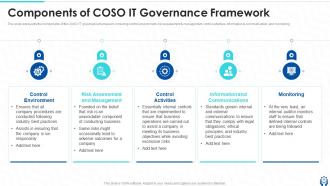
Components of COSO IT Governance Framework
-
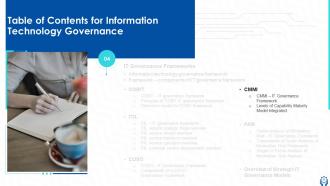
Table of Contents for Information Technology Governance
-
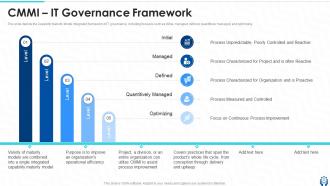
CMMI IT Governance Framework
-
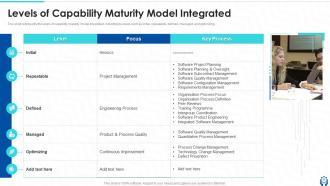
Levels of Capability Maturity Model Integrated
-
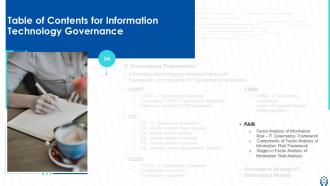
Table of Contents for Information Technology Governance
-
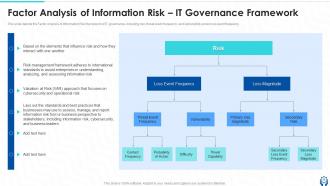
Factor Analysis of Information Risk IT Governance Framework
-
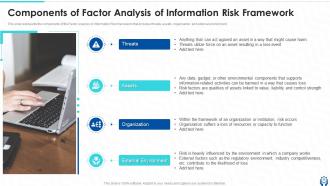
Components of Factor Analysis of Information Risk Framework
-
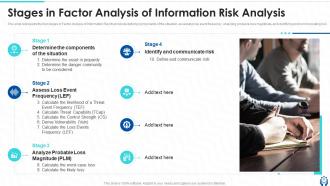
Stages in Factor Analysis of Information Risk Analysis
-
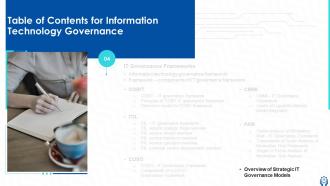
Table of Contents for Information Technology Governance
-
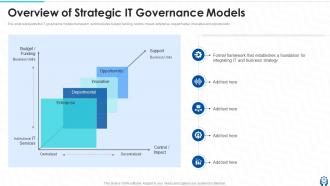
Overview of Strategic IT Governance Models
-
Table of Contents for Information Technology Governance
-
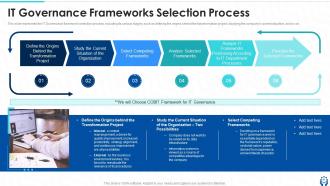
IT Governance Frameworks Selection Process
-
Table of Contents for Information Technology Governance
-
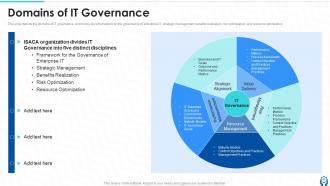
Domains of IT Governance
-

Domains Framework for Governance of Enterprise IT
-
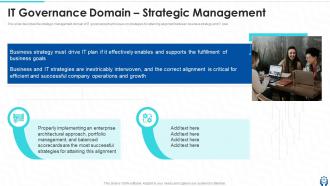
IT Governance Domain Strategic Management
-
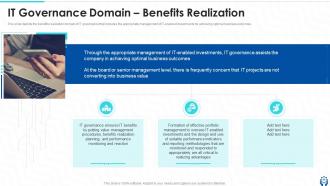
IT Governance Domain Benefits Realization
-
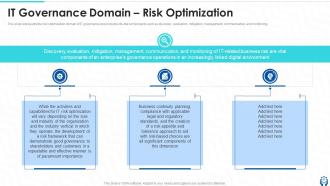
IT Governance Domain Risk Optimization
-
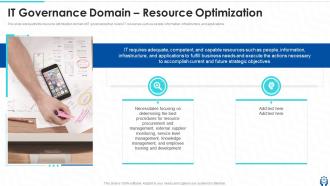
IT Governance Domain Resource Optimization
-
Table of Contents for Information Technology Governance
-
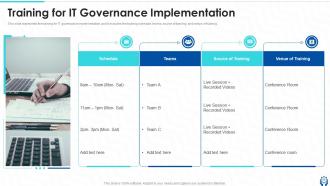
Training for IT Governance Implementation
-
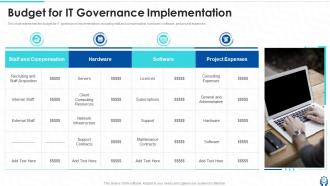
Budget for IT Governance Implementation
-
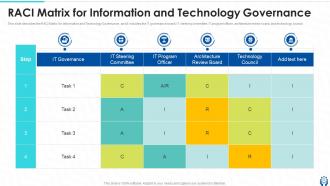
RACI Matrix for Information and Technology Governance
-
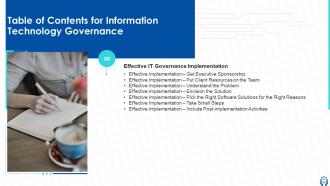
Table of Contents for Information Technology Governance
-
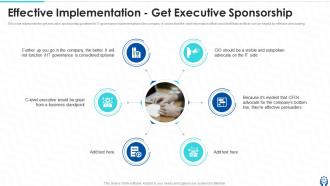
Effective Implementation Get Executive Sponsorship
-
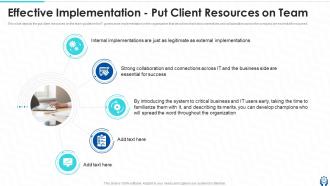
Effective Implementation Put Client Resources on Team
-
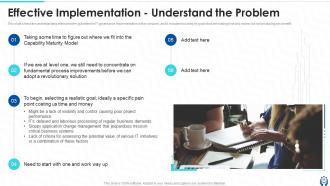
Effective Implementation Understand the Problem
-
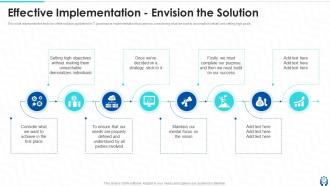
Effective Implementation Envision the Solution
-
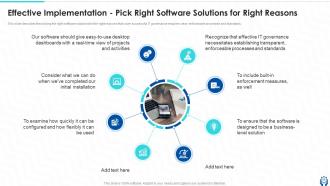
Effective Implementation Pick Right Software Solutions for Right Reasons
-
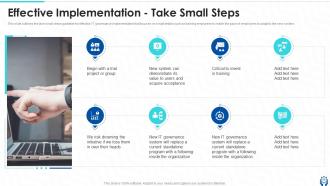
Effective Implementation Take Small Steps
-
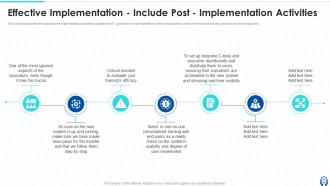
Effective Implementation Include Post Implementation Activities
-
Table of Contents for Information Technology Governance
-
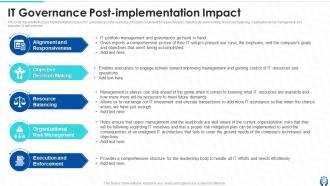
IT Governance Post implementation Impact
-
Information Technology Governance Presentatio
-
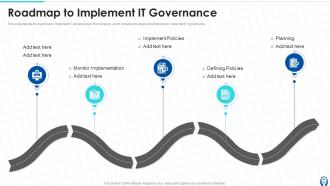
Roadmap to Implement IT Governance
-
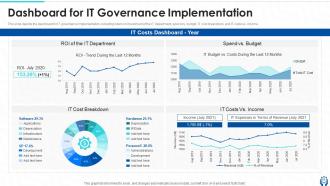
Dashboard for IT Governance Implementation
-

Information Technology Governance Presentatio
-
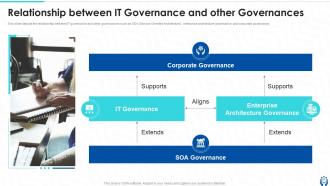
Relationship between IT Governance and other Governances
-
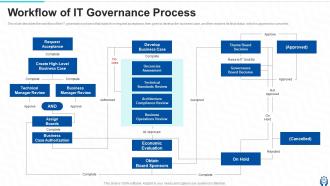
Workflow of IT Governance Process
-
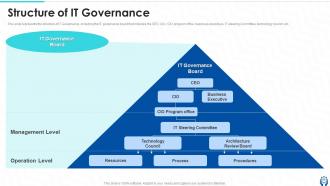
Structure of IT Governance
-
Icons Slide for Information Technology Governance
-
Magnifying Glass
-
Comparison
-
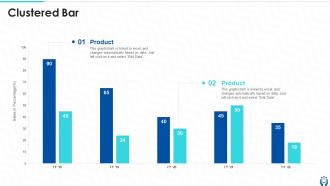
Clustered Bar
-
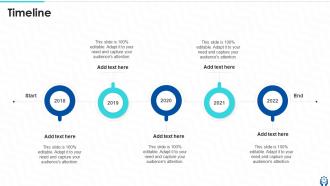
Timeline
-
Our Vision Mission Goal
-
Post it Notes
-
Puzzle
-
Roadmap
-
Thank You for Watching
FAQs for Information Technology Governance
You'll want to nail down strategic alignment, value delivery, risk management, resource stuff, and performance tracking first. Tie your IT choices directly to what the business actually needs. Build solid risk controls and figure out how you'll measure success - honestly, this part gets overlooked way too often. Stakeholder buy-in is huge though. Doesn't matter how perfect your framework looks if leadership thinks it's garbage. Start simple with a steering committee that clearly defines who does what. Then expand based on how mature your org is. The governance structure piece is really where everything else hangs together.
Honestly, measuring IT governance is trickier than it sounds at first. Start with the obvious stuff - project delivery rates, budget compliance, system uptime. Security incidents too, obviously. But here's what most people miss: you've got to survey your stakeholders regularly. Their buy-in makes or breaks everything. Check if your IT spending actually connects to business goals (shocking how often it doesn't). Decision-making should flow smoothly, not get bogged down in committee hell. Pick maybe 4 metrics your leadership actually cares about and stick with tracking those consistently.
So risk management is basically the core of IT governance - you're identifying and dealing with all the tech threats that could mess up your business. Cybersecurity holes, system crashes, compliance issues, vendor problems - the whole mess. Honestly gets pretty overwhelming without a solid framework. Don't treat it like an afterthought though. Build risk assessment right into your regular IT decisions. Map your biggest IT risks against actual business impact first - that way you know where to focus your governance efforts. Trust me, prioritizing makes everything way more manageable.
Think of IT governance as making sure your tech stuff actually helps the business win. Map out what tech projects you've got going and connect them to real business goals - otherwise you're just burning money on fancy gadgets. Short meetings between IT folks and business leaders work wonders here. You'll want clear priorities and ways to measure if things are working. Honestly, most companies skip this step and wonder why their tech budget feels like a black hole. Start simple: just write down how each IT project helps a specific business objective.
Ugh, honestly the worst part is people just hate change - they'll fight you on every new process even when the old way sucks. Plus nobody wants to define who's actually responsible for what, so you get this messy overlap situation. Getting budget approval is like pulling teeth too. Departments love their little silos and don't want to share data or work together on frameworks. Oh, and good luck if leadership isn't backing you up from day one. Start with some easy wins first to prove it works, then show them real business results instead of just "we need this for compliance." Trust me, skip the big rollout approach.
Honestly, you've gotta build compliance into your IT setup right from day one - don't try to bolt it on later. Regular audits are your friend here. Document everything (yeah, it's boring but auditors eat that stuff up). Map your current processes against whatever regs hit your industry and see where you're falling short. Set up clear chains so people actually know who owns what when things go sideways. Oh, and focus on the regulatory stuff specifically in your risk management - that's where most companies mess up. Way better to catch gaps now than scramble when auditors show up at your door.
Honestly, you need both the money stuff and the day-to-day ops metrics. IT spending vs revenue is classic - boards love that one. Track your project delivery rates and SLA hits too. Security incidents are non-negotiable because nobody wants that headache. User satisfaction scores tell you if people actually like working with your team, which matters more than you'd think. Response times to business requests show how agile you are. Mix the hard data with feedback from stakeholders - that combo works. Don't go crazy though. Start with maybe 3-4 key ones instead of building some massive dashboard that'll just stress you out.
Oh totally, you can customize those frameworks however you need. Healthcare orgs go hard on HIPAA and patient data stuff. Financial companies? They're all about SOX compliance and risk controls. Manufacturing gets weird with operational tech security - honestly didn't realize how complex that world was until recently. Start by figuring out what regulations you're actually stuck with, then see where your current setup falls short. Map those gaps to whatever framework you're using. Each industry has its own nightmare compliance requirements, but once you identify yours, it's pretty straightforward to adapt the controls.
Honestly, stakeholder engagement can totally make or break your IT governance. Most IT teams think it's just extra busy work, but getting business leaders and end users involved in decisions changes everything. People actually follow the policies when they understand why they exist - instead of just working around them. Your stakeholders know their processes way better than you do, so they'll spot problems before they blow up. I'd say grab your top 5 stakeholders and set up regular check-ins with them. It sounds simple but it works.
AI governance is getting crazy important right now - most companies are scrambling to figure it out. Cloud stuff is shifting too, especially with all the multi-cloud headaches and where you can actually store data. ESG requirements are sneaking up on IT teams faster than they expected, which is honestly pretty amusing to watch. Zero-trust and cybersecurity governance aren't going anywhere either. Oh, and agile governance models that don't slow down your DevOps teams - that's the tricky part. I'd probably start by looking at where you're most behind and match it to whatever digital transformation goals you've got going.
Dude, start with automating one manual process - compliance monitoring is usually the easiest win. AI's actually pretty solid at catching patterns your team might miss, like spotting security incidents before they blow up. The repetitive stuff like risk assessments and policy checks? Perfect for automation. Your people can finally do strategic work instead of drowning in manual audits. Honestly, I was skeptical at first, but it's like having someone who never gets tired watching your entire infrastructure. Pick something small to test it out - you'll probably be surprised how much time it saves.
So governance is basically the "who gets to decide what" part of your whole security setup. It handles policies, assigns who's responsible for what, and figures out which security stuff gets funding first. Your cybersecurity strategies work inside those boundaries. Without decent governance? You'll have security teams doing random stuff that doesn't match business needs - or even worse, departments with totally conflicting policies. Honestly, I've seen companies waste so much money this way. It's like having an amazing security plan but zero process for actually making it happen. Just make sure both IT and security people are on your governance committees. Otherwise decisions get weird fast.
Honestly, communication can make or break your whole IT governance thing. I've watched so many good frameworks totally crash because leadership never explained the "why" to people. You'll get stakeholders who are confused, teams doing their own thing, and policies everyone ignores. The tricky part? You can't use the same pitch for everyone. C-suite needs different messaging than your dev teams. Map out who needs what message before rolling anything out - saves you tons of headaches later. Trust me on this one.
Do quarterly check-ins with your stakeholders - seriously, this catches so many issues early. Track the basics like compliance rates and how fast you respond to incidents. Most companies think their governance is way better than it actually is, which is honestly kind of hilarious. Document what goes wrong on big projects, then actually update your processes based on that (crazy concept, right?). Don't try to fix everything at once though. Pick one area, show it works, then expand from there. The feedback loops are what make the difference.
Look, IT governance is basically your game plan for making sure digital transformation doesn't turn into a total disaster. You've gotta align tech spending with what the business actually needs and set up clear decision-making - otherwise you'll just have random projects going nowhere. The trick? Build governance that moves quickly but still keeps things under control. Honestly, most companies overthink this part. Start by figuring out where your current setup is failing, then create simple processes that help change happen instead of blocking it. Speed matters here.
-
SlideTeam is the best in the business. Their templates are engaging and customizable. You can rely on them.
-
The ease of modifying templates is just superb! Also, the vast collection offers plenty of options to choose from.