

It Governance Powerpoint Presentation Slides





Try Before you Buy Download Free Sample Product
 Impress Your
 Audience
 100%
100% Editable
 Save Hours
 of Time


Enable efficient use of information technology using these content ready IT Governance PowerPoint Presentation Slides. Take advantage of these corporate governance PPT templates to showcase the components of IT alignment like business strategy, IT strategy, business infrastructure, and IT infrastructure. Take the assistance of these data governance PPT visuals to show the steps of business alignment such as identification of key drivers, cost schedule, etc. Portray the managerial processes including direction setting processes, negotiation processes, monitoring and control processes using these IT performance PPT layouts. Demonstrate the organizational processes like work, behavioral, and change processes with this IT alignment PowerPoint deck. Reveal the gap between the current state and the future state along with the strategy to bridge that gap using these information technology governance PPT slideshow. Download these amazing data governance PPT layout and ensure the integrity and security of your organizational information.
People who downloaded this PowerPoint presentation also viewed the following :
Content of this Powerpoint Presentation
Slide 1: This slide introduces the IT Governance. Add Your Company Name to begin.
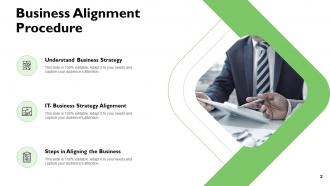
Slide 2: This slide shows the Business Alignment Procedure- Understand Business Strategy, IT- Business Strategy Alignment, Steps in Aligning the Business.
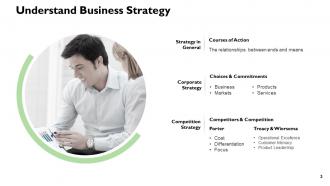
Slide 3: This slide shows how to Understand Business Strategy- Strategy in General, Corporate Strategy, Competition Strategy.
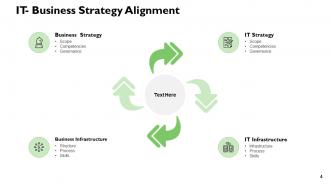
Slide 4: This slide shows the IT- Business Strategy Alignment.
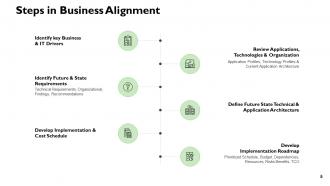
Slide 5: This slide showcases the Steps in Business Alignment- Define Future State Technical & Application Architecture, Develop Implementation Roadmap, Review Applications, Technologies & Organization, Identify key Business & IT Drivers, Identify Future & State Requirements, Develop Implementation & Cost Schedule.
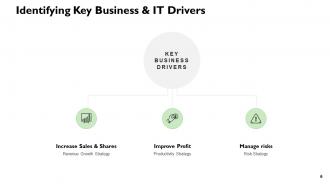
Slide 6: This slide showcases Identifying Key Business & IT Drivers- Increase Sales & Shares, Improve Profit, Manage risks.
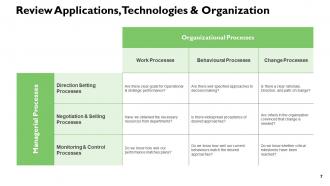
Slide 7: This slide presents Review Applications, Technologies & Organization.
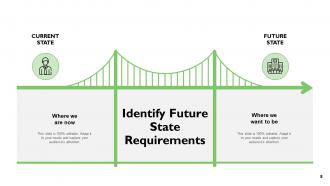
Slide 8: This slide depicts how to Identify Future State Requirements.
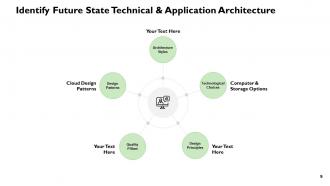
Slide 9: This slide depicts how to Identify Future State Technical & Application Architecture- Computer & Storage Options, Cloud Design Patterns.
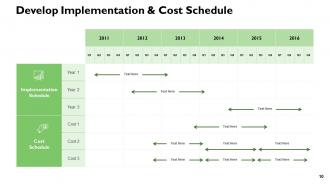
Slide 10: This slide depicts the Develop Implementation & Cost Schedule.
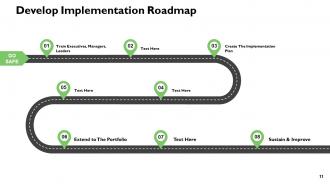
Slide 11: This slide explains the Develop Implementation Roadmap.
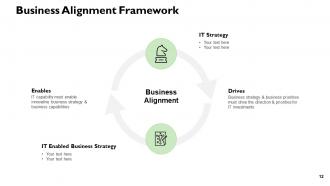
Slide 12: This slide presents the Business Alignment Framework- IT Strategy, Drives, Enables, IT Enabled Business Strategy.
Slide 13: This template contains an IT Governance Icons Slide.
Slide 14: This slide is titled as Additional Slides for moving forward.
Slide 15: This slide presents Our Goal- Communication, Satisfaction, Values.
Slide 16: This slide reveals the names and designation of Our Team members.
Slide 17: This slide shows About Us.
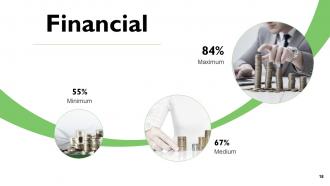
Slide 18: This slide depicts the Financial information.
Slide 19: This slide shows Our Mission.
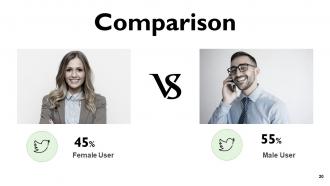
Slide 20: This slide shows a Comparison of Female User and Male User.
Slide 21: This is a Thank You slide consisting of Address, Contact numbers and email Address.
It Governance Powerpoint Presentation Slides with all 21 slides:
Our It Governance Powerpoint Presentation Slides are empirically sound. They are designed after intelligent observation and experiment.






FAQs for It Governance
You'll want to nail down a few core things first. Strategic alignment is huge - make sure your IT choices actually support what the business is trying to do. Then focus on solid value delivery processes and decent risk controls. Resource allocation matters too, obviously. Performance measurement is where a lot of people drop the ball though - you need real metrics, not just feel-good numbers. Don't forget stakeholder buy-in either because governing without input is basically pointless. Map out who's making which decisions and how they tie back to your overall strategy. That's honestly your best starting point for everything else.
Set up steering committees with both IT and business folks - that's your foundation. Map every tech project to actual business goals, not just "this would be cool to build." Quarterly reviews work best (monthly burns everyone out, learned that the hard way). Your decision-making process should rank IT investments by business value. Skip the shiny object syndrome. Regular strategy sessions where business leaders actually show up to IT planning discussions - that's where the magic happens. Without that cross-team participation, you're basically flying blind.
Dude, risk management is what keeps your IT stuff from completely falling apart. You're basically spotting threats - cyber attacks, system crashes, compliance headaches - before they wreck everything. Map out your critical assets first, then figure out what could go wrong with each one. The trick is baking this into your regular governance meetings instead of doing it once and forgetting about it. I know it sounds super dry, but trust me, you'll care real quick when hackers are knocking or servers go down. It drives all your big decisions about budgets and security policies too.
Track your project success rates and budget variance first - that's the meat and potatoes. Security incidents and compliance audit results matter too. But here's what most people miss: stakeholder satisfaction surveys are gold. They'll tell you if you're actually helping or just being a pain in the ass with red tape. Decision-making speed is huge too, plus whether your IT investments hit their ROI targets. I'd honestly start with maybe 3-4 metrics that fit your company and check them every quarter. Don't go crazy with too many at first.
Honestly, the biggest pain points are gonna be people just hating change and executives not backing you up. Nobody wants new processes, especially when they can't see why it matters right away - I've watched teams stall on this for literal months. Then there's the whole mess of figuring out who's responsible for what. Different departments love staying in their bubbles instead of working together, which drives me nuts. Plus you need actual people and time dedicated to this stuff, and that's always tight. Oh, and finding that sweet spot between being too controlling vs too loose? That's tricky. Start with just one area, grab some quick wins to prove it works, then build from there.
Honestly, regulations like SOX and GDPR don't give you much choice - you're basically forced into formal IT governance whether you like it or not. They want documented processes, clear accountability, audits of your systems. Can't just improvise when auditors show up! Everything gets affected: access controls, data retention, how you handle incidents. The weird thing is it actually makes your governance way better in the end. I'd start by mapping which regulations hit which IT processes - shows you exactly where the gaps are. Kind of annoying but makes sense once you see it.
Dude, the whole IT governance thing is getting flipped upside down. AI and cloud tech move so fast that those monthly committee meetings are basically useless now - like watching paint dry while your house burns down. Companies need frameworks that can actually keep up without throwing security out the window. Short answer: build stuff that bends instead of breaks. The smart orgs are creating governance that scales with new tech rather than starting from scratch every time. It's still gotta hit compliance requirements, obviously, but way more flexibility than before.
So IT governance basically gives you solid frameworks to make tech decisions way faster and smarter. Everyone stops flying blind or making random calls because you've got standardized processes and defined roles. Risk assessment gets built right in too. Think of it like guardrails that actually help instead of slowing you down - which honestly feels pretty rare in most companies, right? Better project visibility, clearer accountability, plus real data backing up your choices. The trick is keeping governance lightweight enough that people will actually follow it instead of creating some bureaucratic mess everyone ignores.
Look, getting stakeholders involved in IT governance is huge for actually making things work. You'll get buy-in from people who matter - business leaders, users, IT folks. When they understand why policies exist, they're way more likely to follow them instead of just ignoring everything. Different people catch different problems too. Finance spots budget issues while operations sees workflow mess-ups. Honestly, compliance becomes so much easier when everyone's on board. My advice? Figure out your key people first, then set up regular check-ins. Even monthly works - just stay consistent with it.
Honestly, you need both the day-to-day stuff and the big picture metrics. Track project delivery rates, budget variance, incident response times - that's your bread and butter operations. But don't ignore the strategic side either. IT-business alignment scores and compliance audit results matter too, especially if you're dealing with regulations (ugh). I'd say pick maybe 5-7 metrics max that your executives actually care about. Otherwise you'll just be drowning in spreadsheets nobody looks at. Risk mitigation is probably the most important one though - executives love hearing how you're protecting their butts.
Dude, you gotta pin names to decisions - no more "the team decided" BS. Set up those RACI things where everyone knows their exact role. Dashboards help but honestly? Regular meetings where people explain their calls face-to-face work better. I've seen too many places where accountability just... disappears into committees. Document who owns what first - might be messier than you think. Short version: make consequences real for bad choices. Reward the good ones too. Once people can't hide behind group decisions, everything changes. Oh, and don't let anyone wiggle out with vague explanations.
Honestly, just focus on making your IT docs actually readable - nobody wants to decode corporate jargon when they're trying to fix something. Put everything in one spot where people can find it without going insane. Templates help a ton - include the purpose, who does what, and clear steps. Plain English beats fancy buzzwords every time. Oh, and definitely track your versions because outdated policies will cause more headaches than help. I'd throw in some real examples too since people learn better with concrete scenarios. The key thing? Actually update this stuff regularly or it becomes useless pretty fast.
So basically, IT governance and data governance go hand in hand - you can't really have one without the other. IT governance handles the big picture tech decisions and frameworks. Data governance zeroes in on how you actually manage and protect your data. Picture it like this: IT sets up the rules for the whole game, while data governance makes sure nobody's messing around with the actual data itself. They both deal with risk management and compliance stuff. The tricky part? You need both teams talking regularly or you'll end up with policies that contradict each other, which honestly happens way too often.
COBIT and ITIL are the main ones you'll see everywhere. COBIT handles governance stuff, ITIL does service management. ISO 27001 is big for security compliance - basically required now. NIST frameworks pop up a lot too, especially their cybersecurity one. TOGAF if you're doing enterprise architecture. Honestly, most companies mix and match instead of picking just one. I'd start with COBIT 2019 for governance - way more practical than the older versions and you won't need to spend a fortune on consultants to figure it out. Actually pretty decent guidance you can use.
Honestly, cultural stuff will mess up your IT governance way more than you'd think. Some places love detailed docs and processes (hello Germany), while others just want to shake hands and figure it out as they go - which yeah, makes compliance people lose their minds. Japan's approach to hierarchy is totally different from what you'd see in Brazil. Time zones are annoying but manageable. The real headache? Decision-making styles vary wildly between regions. Build in flexibility from the start and actually listen to your local teams. They know what'll work and what'll get ignored. You can keep your standards without being rigid about how people get there.
No Reviews