


Internet Service Provider ISP Start Up Go To Market Strategy Powerpoint Presentation Slides GTM CD




Try Before you Buy Download Free Sample Product
 Impress Your
 Audience
 100%
100% Editable
 Save Hours
 of Time


Internet Service Provider is a tool that connects people all over the world. Check out our professionally designed Internet Service Provider ISP Startup Go to Market Strategy. This PPT helps in launching and ensures the startup is well equipped to thrive in the dynamic landscape of professional services. Additionally, the Wi Fi PPT begins with an overview of the global ISP market and highlights problems and solutions. It also shows how the startup business will resolve market problems. It then shows an industry overview, including the introduction, products or services offered, value proposition, and target audience. Furthermore, our Online Services Presentation conducts competitor analysis of businesses providing similar solutions and comes with various strategies, including pricing, branding, and positioning. Moreover, our Internet Infrastructure Deck caters to marketing strategy, content marketing strategy, sales strategy, distribution strategy, etc. Lastly, the Internet Infrastructure Deck outlines a timeline for the market entry of the startup business and provides elements like performance metrics, cost and investment, etc. Get access now.
People who downloaded this PowerPoint presentation also viewed the following :
Content of this Powerpoint Presentation
Slide 1: This slide introduces Internet Service Provider (ISP) Start-up - Go To Market Strategy. State Your Company Name and begin.
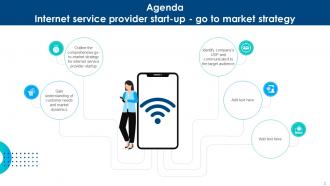
Slide 2: This slide is an Agenda slide. State your agendas here.
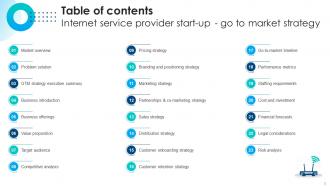
Slide 3: This slide shows a Table of Contents for the presentation.
Slide 4: This slide presents an overview of internet service provider market to gain valuable insights.
Slide 5: This slide showcases various gaps addressed in market along with desired state through the launch of of internet service provider startup.
Slide 6: This slide presents executive summary of go to market strategy of food restaurant startup business.
Slide 7: This slide outlines a business overview of a of internet service provider start-up.
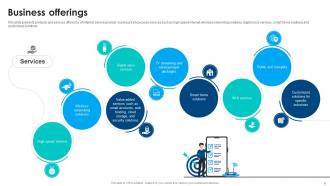
Slide 8: This slide represents products and services offered by of internet service provider business.
Slide 9: This slide denotes various factors that differentiate startup offerings from other businesses offering similar products.
Slide 10: This slide shows the ideal target audience for an internet service provider start-up business.
Slide 11: This slide highlights comparative assessment of internet service provider start-up business.
Slide 12: This slide entails comparative assessment of internet service provider start-up business.
Slide 13: This slide outlines the pricing strategy used by internet service provider start-up business to offer products and services at costs customers are happily willing to pay.
Slide 14: This slide depicts the branding strategy to position internet service provider start-up among the target audience.
Slide 15: This slide denotes various promotional methods to be used by internet service provider start-up business to increase business presence.
Slide 16: This slide describes various partnership & co-marketing strategies to be used by internet service provider start-up business to increase business presence.
Slide 17: This slide highlights various sales strategies to maximize sales and revenue.
Slide 18: This slide portrays distribution strategies for internet service provider start-up business.
Slide 19: This slide outlines onboarding strategy to enhance customer experience.
Slide 20: This slide caters to various strategies to maximize customer retention rate and maximize business profitability.
Slide 21: This slide covers a timeline showing time required for each task for successful market entry of a internet service provider start-up business.
Slide 22: This slide conveys various KPIs to track and measure business operational performance.
Slide 23: This slide marks need and requirements to acquire staff for starting a internet service provider start-up business.
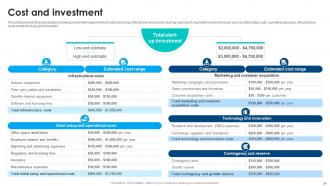
Slide 24: This slide presents financial analysis showing investment requirements to build and set up internet service provider start-up business.
Slide 25: This slide outlines future projections showing the estimated growth of the internet service provider start-up business for five years after launch.
Slide 26: This slide projects considerations of internet service provider start-up business related to legal compliance and insurance requirements.
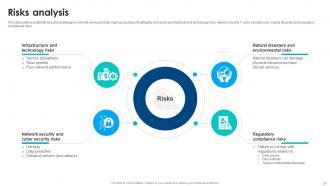
Slide 27: This slide outlines potential risks and challenges in internet service provider start-up business.
Slide 28: This slide shows all the icons included in the presentation.
Slide 29: This slide is titled Additional Slides for moving forward.
Slide 30: This is our Bulb & Idea slide.
Slide 31: This slide depicts a Venn diagram with text boxes.
Slide 32: This slide shows Post-It Notes. Post your important notes here.
Slide 33: This slide provides a 30-60-90-day plan with text boxes.
Slide 34: This slide is a thank-you slide with address, contact numbers, and email address.
Internet Service Provider ISP Start Up Go To Market Strategy Powerpoint Presentation Slides GTM CD with all 42 slides:
Use our Internet Service Provider ISP Start Up Go To Market Strategy Powerpoint Presentation Slides GTM CD to effectively help you save your valuable time. They are readymade to fit into any presentation structure.
-

Internet Service Provider ISP Start up Go To Market Strategy
-
Internet service provider start up go to market strategy
-
Internet service provider start up go to market strategy
-

Market overview
-

Market gap
-

GTM strategy executive summary
-

Business introduction
-
Business offerings
-
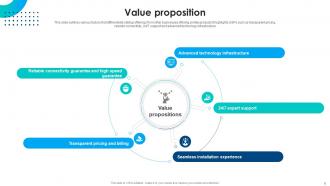
Value proposition
-
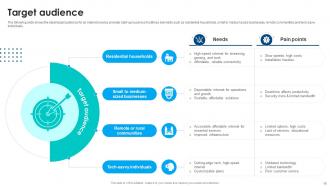
Target audience
-

Competitor analysis
-
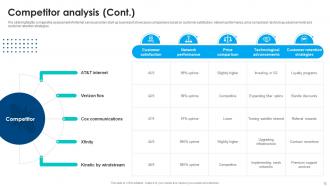
Competitor analysis Cont
-

Pricing strategy
-
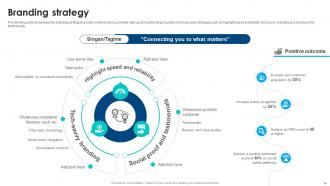
Branding strategy
-
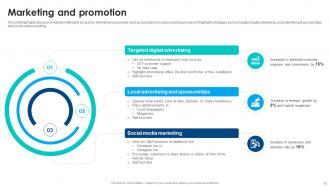
Marketing and promotion
-

Partnerships co marketing strategy
-

Sales strategy
-
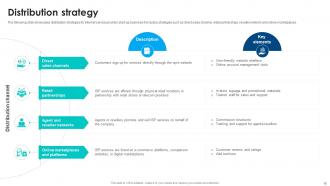
Distribution strategy
-
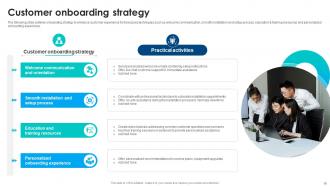
Customer onboarding strategy
-

Customer retention strategy
-

Go to market timeline
-

Performance metrics
-
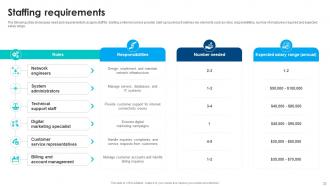
Staffing requirements
-
Cost and investment
-

Financial forecasts
-

Legal considerations
-
Risks analysis
-
Icons slide for internet service provider ISP start up go to market strategy
-

Additional slides
-

Bulb Idea
-

Venn
-

Post it notes
-

30 60 90 days plan
-

Thanks for watching
-

-

-

-

-

-

-

-

FAQs for Internet Service Provider ISP Start Up Go To Market Strategy Powerpoint Presentation
Honestly, the big three are scalability, reliability, and cost structure. Get routers and switches that won't need replacing every year when you grow. Fiber is absolutely the way to go - copper just feels outdated now, though you might need both depending on your area. Redundancy will save your ass because customers will jump ship fast if you're always going down. Peering agreements with other ISPs and content providers? Total game changer for keeping bandwidth costs reasonable. Oh, and map out your service area first - calculate the real per-customer costs including all the installation headaches and maintenance stuff.
Honestly, you can't beat the big guys head-on, so find something they suck at. Maybe focus on areas Comcast ignores or actually answer your phone when people call (revolutionary concept, right?). Some smaller ISPs are killing it with gaming-focused ultra-low latency or flexible plans for remote workers. Transparent pricing without sneaky fees works too. Don't try competing on everything - pick one thing and nail it. I'd start by asking people in your area what pisses them off most about their current provider. That's where you'll find your opening.
Starting an ISP is honestly a bureaucratic nightmare, but here's the deal. Get your business license sorted first, then figure out if you need FCC registration - depends how big you're going. The real pain though? Rights-of-way permits from cities to actually run cables. That process moves slower than molasses. Don't forget data privacy rules and ADA compliance stuff. Oh, and CALEA requirements if law enforcement needs access. Seriously though, hire a telecom lawyer and start permits ASAP. Local governments work on their own timeline, not yours.
Go after areas where the big ISPs suck - bad service, crazy prices. That's where you'll win. Google Ads for "internet near me" searches work great, but honestly don't sleep on old school door-to-door sales. People LOVE to trash their current internet provider, so referral programs are gold. Hit up local businesses and apartment managers who deal with new residents all the time. Oh, and real estate agents too - they're always getting asked about internet options. Your ace in the hole? Actually answering the phone when customers call. The big companies are terrible at this, so make customer service your thing and you'll stand out like crazy.
Look at cost per subscriber for each tech - deployment, maintenance, and operations. Fiber's upfront costs are insane but maintenance stays low, plus you can charge premium rates. DSL's cheap to roll out since copper's already there, though speeds suck and distance from the office matters a lot. Cable needs decent infrastructure investment but gives you solid speeds. Honestly, the biggest thing is figuring out what people will actually pay in your area. Run subscriber lifetime value against your total investment per home passed - that's where you'll see which option makes sense financially.
Dude, customer support will literally make or break your ISP. People lose their minds when internet goes down, so you need 24/7 coverage and reps who actually know their stuff. Multiple contact options help - phone, chat, email, whatever. Response times have to be fast or customers will jump ship in a heartbeat. Oh, and set up monitoring that alerts people about outages before they start calling you pissed off. Honestly, I'd start by checking your current response times and satisfaction scores first, then figure out what's broken from there.
Automate the hell out of everything first - billing, setup, basic support stuff. Labor costs are brutal if you don't. I've watched so many ISPs try to be the cheapest option and just bleed money. Way better to find underserved areas where you can charge decent rates without that price war nonsense. Bundle your services and push those longer contracts with discounts - helps your cash flow big time. Oh, and figure out your real cost per customer (including all the support headaches), then price at least 40% over that. Trust me on this one.
Honestly, think beyond just selling internet - that's where the money is. Partner with Cloudflare for faster speeds, or team up with cybersecurity firms so you can bundle protection services. Netflix deals and gaming partnerships are total game-changers because people eat that stuff up. Don't sleep on local opportunities either - smart home installers, TV stations, even coffee shops wanting community WiFi. Oh, and hardware vendors can hook you up with better router deals. Just figure out what your customers actually want first, then find partners who can deliver it.
Dude, 5G is gonna shake up your ISP idea for sure. Maybe look into becoming a reseller or focus on niche stuff - gaming with crazy low latency, IoT connections, that kind of thing. Traditional broadband's gonna struggle once 5G coverage gets better though, not gonna lie. I'd start talking to 5G carriers about partnerships ASAP. Or find ways to work alongside wireless instead of fighting it? Hybrid setups could work. Fiber's still better in some spots anyway. Areas where wireless sucks, you know? It's all about finding your angle before everyone else does.
Dude, you're gonna underestimate how much infrastructure costs and think people will sign up way faster than they actually do. Cash flow is always more brutal than you expect - building a customer base takes forever. Network goes down once or twice and you're screwed because word travels stupid fast in small towns. Oh, and the regulatory stuff is a total headache. Get your franchise requirements and right-of-way permits figured out early or you'll hate your life. Honestly? Budget at least 50% more time and cash than whatever you're thinking now.
Data analytics can track your network performance and catch outage hotspots before customers start complaining. Pretty neat stuff. You'll predict bandwidth spikes during busy hours and spot which neighborhoods need infrastructure work. Customer churn patterns become obvious too - certain segments always bail at predictable times. Instead of guessing what service packages people want, you can actually base them on real usage data. My advice? Start with basic network monitoring dashboards first. Then add customer behavior tracking later for better retention campaigns. Way more effective than shooting in the dark.
Definitely start with network segmentation - that's where you'll get the most protection for your money. Split up customer traffic from your management stuff and core routing. Honestly saved my ass so many times I can't even count. Get 24/7 monitoring set up with automated threat detection too. Attacks happen at like 3am on weekends, obviously. Your incident response plan needs to be something everyone actually knows, not just sitting in some folder. Oh and keep firmware updated - boring but critical. Network segmentation first though, trust me on that one.
Dude, community stuff is huge when you're starting an ISP. You're basically asking people to ditch their current provider and trust you with their internet - which is like, their lifeline now. Getting in good with local government helps tons with permits and all that bureaucratic nightmare. Word-of-mouth beats expensive ads every time, especially in smaller towns where everyone knows everyone. I'd hit up city council meetings first, then find some local businesses willing to be your guinea pigs. Once you've got a few happy customers, they'll do half your marketing for you.
Honestly, tiered plans work best - base it on speed and data limits. Monthly recurring revenue is where you'll make your money, not those one-time setup fees (though they help with equipment costs I guess). Most successful ISPs I know add stuff like managed Wi-Fi and security packages on top. Business solutions are solid too if you've got commercial customers nearby. Oh, and bundling with content providers can boost revenue streams. Just start simple with basic tiers first. You don't want to overcomplicate pricing right out the gate. Find that sweet spot between staying competitive and actually making profit in your area, then expand services as you grow.
Hit up WISPA or Broadband Now conferences - that's where the real intel is. Equipment vendors love showing off their latest stuff there. Twitter's actually clutch for this too, surprisingly. Follow telecom engineers who'll call out what's legit vs pure marketing BS. Industry forums and publications help, but honestly the conferences are where you get the good gossip. Maybe partner with a local tech university if you're feeling ambitious? I'd start with one conference this year and follow like 10-15 industry people online. The daily updates really add up.
-
Their professional templates are very impressive, even my manager was curious about the source. I am very grateful.
-
Excellent work done on template design and graphics.