

Proceso de certificación ISO 27001 Diapositivas de presentación de PowerPoint




Try Before you Buy Download Free Sample Product
 Impress Your
Audience
 100%
Editable
 Save Hours
of Time


Mantener la información confidencial de la organización, los clientes y los datos personales de los empleados valiosos no es una tarea fácil. Para lograr el propósito mencionado anteriormente, las organizaciones confían en el sistema de gestión de seguridad de la información. Aquí hay una plantilla de proceso de certificación ISO 27001 diseñada profesionalmente que será útil para la organización que desea introducir y administrar el sistema de gestión de seguridad de la información. La organización puede ilustrar sus objetivos futuros a través de la sección nuestros objetivos y metas para hacer crecer el negocio. La organización puede mostrar su viaje para lograr la certificación con la ayuda de la sección cuál será nuestro viaje de certificación. Introducir SGSI dentro de la organización y gestionarlo para obtener la sección de certificación ayudará a la organización a mostrar la incorporación del marco SGSI dentro de su control corporativo. La planificación de la cláusula 6 puede ser cumplida por la organización a través de la declaración de aplicabilidad. El programa y las actividades de auditoría interna del SGSI y los indicadores de desempeño, y las secciones del tablero de evaluación pueden ayudar a la organización a cumplir con la cláusula 9 Evaluación del desempeño. Finalmente, la sección del plan de mitigación para resolver los eventos de riesgo encontrados ayudará a la organización a cumplir con la mejora de la cláusula 10. Personaliza ahora esta plantilla 100 % editable.
People who downloaded this PowerPoint presentation also viewed the following :
Contenido de esta presentación de Powerpoint
Diapositiva 1 : Esta diapositiva presenta el proceso de certificación ISO 27001. Indique el nombre de su empresa y comience.
Diapositiva 2 : Esta diapositiva indica la Agenda de la presentación.
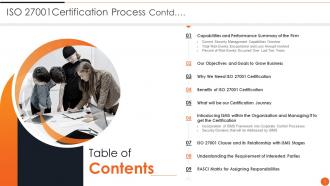
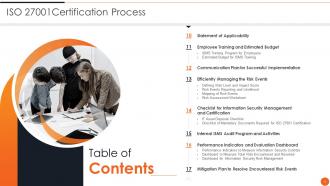
Diapositiva 3 : Esta diapositiva presenta la tabla de contenido de la presentación.
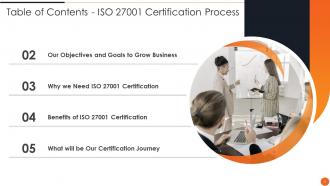
Diapositiva 4 : esta es otra diapositiva que continúa con la tabla de contenido de la presentación.
Diapositiva 5 : esta diapositiva resalta el título de los temas que se cubrirán a continuación en la plantilla.
Diapositiva 6 : Esta diapositiva presenta la descripción general de las capacidades actuales de administración de seguridad.
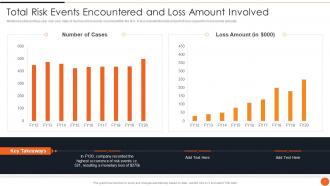
Diapositiva 7 : Esta diapositiva muestra el total de eventos de riesgo encontrados y el monto de la pérdida involucrada.
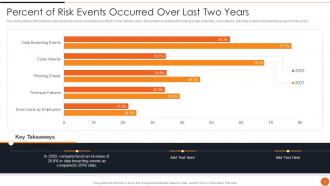
Diapositiva 8 : Esta diapositiva representa el porcentaje de eventos de riesgo ocurridos en los últimos dos años.
Diapositiva 9 : esta diapositiva muestra el título de los temas que se cubrirán a continuación en la plantilla.
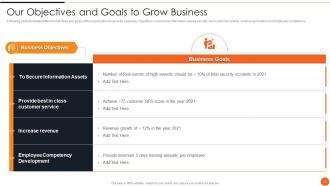
Diapositiva 10 : Esta diapositiva muestra nuestros objetivos y metas para hacer crecer el negocio.
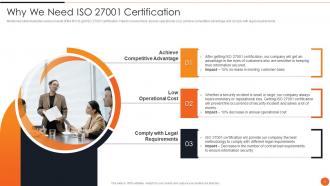
Diapositiva 11 : Esta diapositiva presenta varias necesidades de la empresa para obtener la certificación ISO 27001.
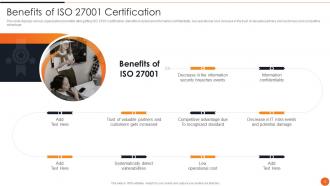
Diapositiva 12 : esta diapositiva muestra varios beneficios organizacionales después de obtener la certificación ISO 27001.
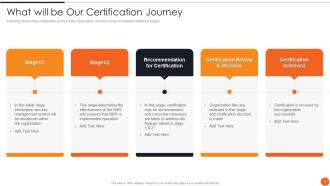
Diapositiva 13 : Esta diapositiva representa el proceso de certificación de la organización.
Diapositiva 14 : esta diapositiva muestra el título de los temas que se cubrirán a continuación en la plantilla.
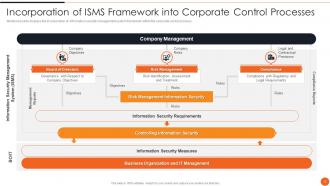
Diapositiva 15 : Esta diapositiva presenta la incorporación del marco ISMS en los procesos de control corporativo.
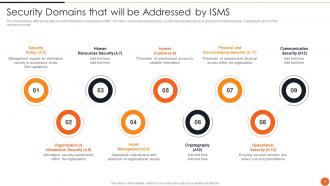
Diapositiva 16 : Esta diapositiva muestra diferentes dominios de seguridad que serán abordados por ISMS.
Diapositiva 17 : esta diapositiva muestra el título de los temas que se cubrirán a continuación en la plantilla.
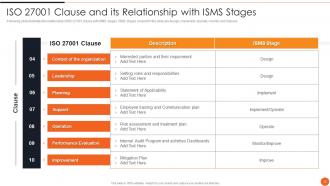
Diapositiva 18 : La siguiente diapositiva ilustra la relación de la cláusula ISO 27001 con las etapas del SGSI.
Diapositiva 19 : esta diapositiva muestra el título de los temas que se cubrirán a continuación en la plantilla.
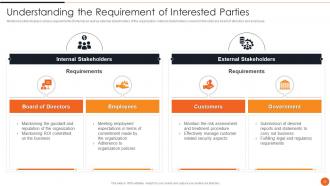
Diapositiva 20 : Esta diapositiva presenta Comprender el requisito de las partes interesadas.
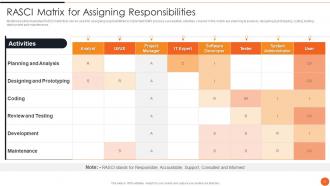
Diapositiva 21 : Esta diapositiva muestra la matriz RASCI que se puede usar para asignar responsabilidades para implementar el proceso SGSI con éxito.
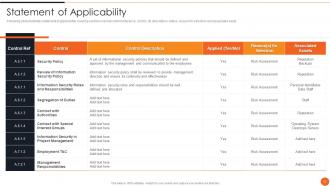
Diapositiva 22 : Esta diapositiva representa la declaración de aplicabilidad que cubre secciones, a saber, referencia de control, control, su descripción, etc.
Diapositiva 23 : esta diapositiva muestra el título de los temas que se cubrirán a continuación en la plantilla.
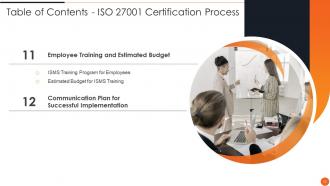
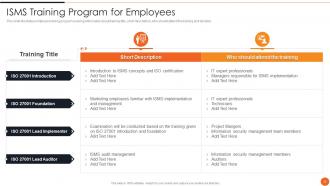
Diapositiva 24 : Esta diapositiva ilustra el programa de capacitación de los empleados que cubre información sobre el título de la capacitación, una breve descripción, etc.
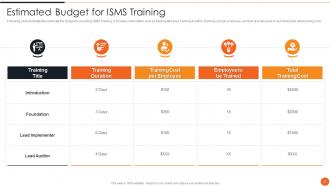
Diapositiva 25 : Esta diapositiva presenta una estimación del presupuesto para brindar capacitación en SGSI.
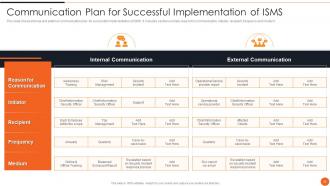
Diapositiva 26 : Esta diapositiva muestra el plan de comunicación interna y externa para la implementación exitosa del SGSI.
Diapositiva 27 : esta diapositiva muestra el título de los temas que se cubrirán a continuación en la plantilla.
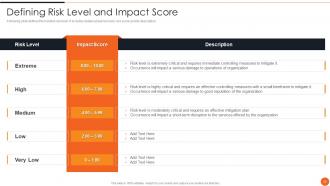
Diapositiva 28 : La siguiente diapositiva define el nivel de riesgo del incidente. Incluye detalles sobre el nivel de riesgo, la puntuación de riesgo y su descripción.
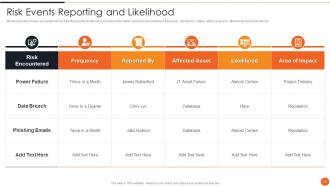
Diapositiva 29 : Esta diapositiva representa la notificación de riesgos encontrados y su probabilidad.
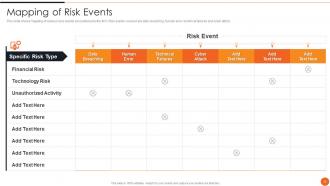
Diapositiva 30 : Esta diapositiva muestra el mapeo de varios eventos de riesgo encontrados por la empresa.
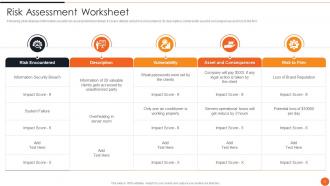
Diapositiva 31 : La siguiente diapositiva muestra la hoja de trabajo de evaluación de riesgos de seguridad de la información.
Diapositiva 32 : esta diapositiva muestra el título de los temas que se cubrirán a continuación en la plantilla.
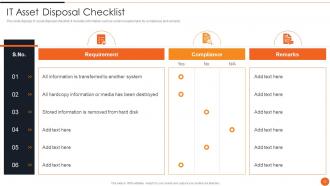
Diapositiva 33 : Esta diapositiva muestra la lista de verificación de eliminación de activos de TI que incluye información como los requisitos del sistema, su cumplimiento y comentarios.
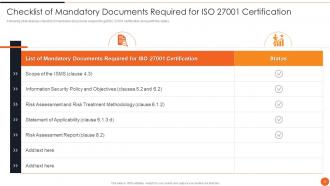
Diapositiva 34 : Esta diapositiva muestra la Lista de verificación de los documentos obligatorios necesarios para la certificación ISO 27001.
Diapositiva 35 : esta diapositiva muestra el título de los temas que se cubrirán a continuación en la plantilla.
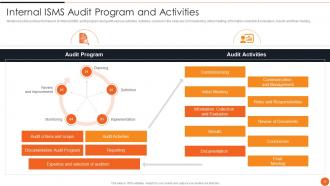
Diapositiva 36 : la diapositiva mencionada describe el marco del programa de auditoría interna del SGSI junto con varias actividades.
Diapositiva 37 : esta diapositiva muestra el título de los temas que se cubrirán a continuación en la plantilla.
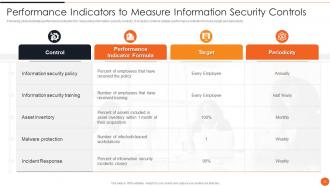
Diapositiva 38 : esta diapositiva muestra indicadores de rendimiento para medir los controles de seguridad de la información.
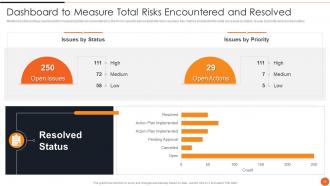
Diapositiva 39 : Esta diapositiva representa el Tablero para medir los riesgos totales encontrados y resueltos.
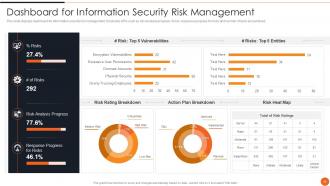
Diapositiva 40 : Esta diapositiva muestra el Tablero para la gestión de riesgos de seguridad de la información.
Diapositiva 41 : esta diapositiva muestra el título de los temas que se cubrirán a continuación en la plantilla.
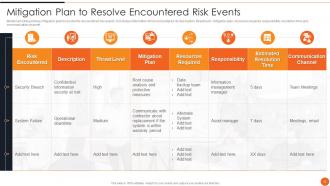
Diapositiva 42 : esta diapositiva muestra el plan de mitigación para resolver los eventos de riesgo encontrados.
Diapositiva 43 : esta diapositiva muestra iconos para el proceso de certificación ISO 27001.
Diapositiva 44 : esta diapositiva se titula Diapositivas adicionales para avanzar.
Diapositiva 45 : Esta diapositiva muestra el proceso de certificación ISO 27001.
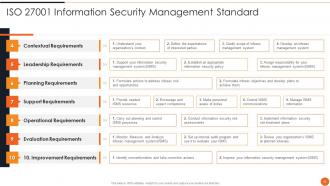
Diapositiva 46 : Esta diapositiva representa el estándar de gestión de seguridad de la información ISO 27001.
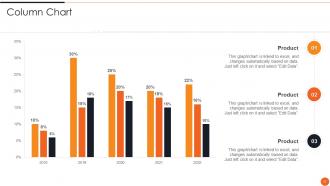
Diapositiva 47 : Esta diapositiva muestra un gráfico de columnas con una comparación de dos productos.
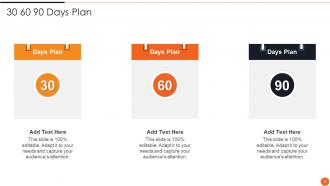
Diapositiva 48 : esta diapositiva proporciona un plan de 30 60 90 días con cuadros de texto.
Diapositiva 49 : Esta es la diapositiva Nuestro objetivo. Indique sus objetivos aquí.
Diapositiva 50 : esta es una diapositiva de la línea de tiempo. Mostrar datos relacionados con los intervalos de tiempo aquí.
Diapositiva 51 : Esta diapositiva contiene Rompecabezas con íconos y texto relacionados.
Diapositiva 52 : Esta diapositiva muestra Post-It Notes. Publique sus notas importantes aquí.
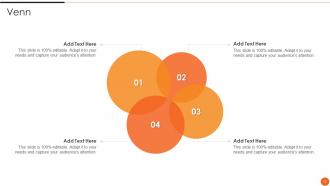
Diapositiva 53 : Esta diapositiva muestra el diagrama de Venn con cuadros de texto.
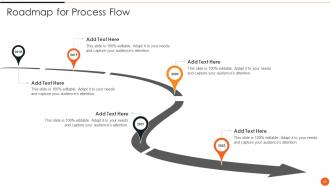
Diapositiva 54 : Esta diapositiva representa la hoja de ruta para el flujo de procesos.
Diapositiva 55 : Esta es una diapositiva de agradecimiento con dirección, números de contacto y dirección de correo electrónico.
Proceso de certificación ISO 27001 Diapositivas de presentación de Powerpoint con las 60 diapositivas:
Utilice nuestras diapositivas de presentación de Powerpoint del proceso de certificación ISO 27001 para ayudarlo a ahorrar su valioso tiempo. Están listos para encajar en cualquier estructura de presentación.










FAQs for ISO 27001 Certification Process
So basically you'll want to set up an ISMS - sounds fancy but it's really just risk assessment, security policies, and controls for your whole org. Three main things to focus on: do a solid risk assessment, implement the right security controls based on what you find, and document absolutely everything (yeah, it's boring but you gotta do it). Management buy-in is huge here. Don't forget employee training and regular internal audits either. Oh, and build in some way to keep improving over time. I'd start by figuring out where you are now security-wise, spot the gaps, then make your plan.
Honestly, start with a gap analysis to see where you stand against ISO 27001 requirements. Document your policies, procedures, and risk assessments - auditors will dig into everything. Your team needs to actually follow what's written down too, since they'll interview people to check. I'd run internal audits first to catch problems early. Oh, and those management review meetings? Yeah, don't skip those. The timeline thing is huge - give yourself 6-12 months minimum. I've watched companies try to rush this and it's painful to see. Short sentences work. But flowing ones help break up the rhythm naturally.
Honestly, the resource crunch hits hardest - management always thinks this'll be way easier than it actually is. Getting people engaged is brutal too, especially when they're already swamped. Risk assessment gets messy quick if you've never done formal risk management before. Documentation pile-up is real, and people burn out fast once audit fatigue kicks in. Oh, and don't even get me started on maintaining momentum halfway through when everyone's over it. My advice? Get a dedicated team from day one and set realistic timelines. Treating this like some side project is a recipe for disaster.
Dude, ISO 27001 basically makes you stop guessing about security risks and actually map them out properly. You'll dig into all your vulnerabilities, figure out what could actually hurt you, then build real controls around them. Most companies are shocked by what they find - I've seen orgs discover they had no idea who had access to what. The whole thing gives you a roadmap for staying on top of threats as they change. Plus clients love seeing that certification. Honestly, just start with a risk assessment first. You'll probably find some scary stuff, but better to know, right?
Oh man, the paperwork is real. First thing - you need an Information Security Policy as your baseline. Risk assessment procedures, incident response docs, and something called a Statement of Applicability (basically just explaining which controls you're using). Training records, audit reports, management reviews - all that proof your system actually functions. The whole thing seems crazy overwhelming initially, but honestly? Most companies are already doing this stuff, just not writing it down. I'd start by figuring out what documentation you already have lying around vs what's actually missing.
Honestly, your ISMS isn't some set-it-and-forget-it thing. Monthly review meetings work way better than quarterly ones - trust me on this. Those internal audits? Actually read them instead of filing them away. Track your security metrics but also listen when employees complain about annoying security stuff (they usually have a point). Don't wait for some massive overhaul either. Small tweaks consistently beat big dramatic changes every time. Keep your team updated on new threats since everything moves so fast these days. Oh, and those surveillance audits aren't just paperwork - they're telling you real problems you need to fix.
Yeah, training is huge for ISO 27001 compliance - auditors always dig into this stuff first. Your team needs to know the security policies, how to handle data correctly, and spot phishing emails. I swear, most data breaches happen because someone clicked the wrong link or left their laptop unlocked at Starbucks. Document everything though - who got trained, when, what topics you covered. A basic spreadsheet works fine if you don't have fancy training software. Just keep it updated when policies change or you'll hear about it during your audit.
Look, don't treat ISO 27001 like some rigid box-checking exercise. It's meant to be flexible - you're supposed to tailor it to your actual business. A tiny SaaS startup doesn't need bank-level physical security, right? Do a real risk assessment first. Figure out what actually threatens your business, then pick controls that make sense for those risks. Honestly, auditors care way more about whether your approach is logical than if you've implemented every single control perfectly. Start with what genuinely protects you - the rest can wait.
Check out GRC platforms like MetricStream or ServiceNow - they're solid for handling ISO 27001 controls and docs. Vanta and Drata are game-changers for automating evidence collection (seriously saves so much headache). You'll need asset management to track your IT stuff, plus vulnerability scanners like Nessus for catching security gaps. SIEM tools are pretty much essential for monitoring and incident response. Oh, and don't try to automate everything at once - that's a recipe for chaos. Map out your priority controls first, then find tools that play nice together.
Okay so technically you're supposed to do it annually, but that's honestly pretty lazy. I'd say quarterly check-ins work way better - just quick reviews of your security stuff, risk assessments, whatever. If something big changes though (new systems, sketchy threats), don't wait around. Review immediately. The yearly one should be your deep dive where you actually look at everything properly. Oh and pro tip - set those calendar reminders now or you'll totally forget. Trust me, I've been there. Those mini-reviews every few months will save you from scrambling during the big annual assessment.
So internal audits are basically your practice run before the real deal - you're catching problems while you can still fix them. ISO 27001 actually requires these at regular intervals, which is smart because nobody wants nasty surprises during certification. You'll check if your security processes are working like they're supposed to and meeting all the requirements. Honestly, I've seen companies skip this step and regret it later. These audits help spot gaps, test how well your controls work, and show auditors you're serious about improving. Just make sure you schedule yours with enough time to tackle whatever issues pop up.
Honestly, you probably already do more security stuff right than you think - just document what's working. Don't try fixing everything at once though, that'll drive you crazy. Do a quick risk assessment first to figure out your biggest weak spots and what assets matter most. Build policies around those instead of downloading some random template online. Getting a consultant for the initial review isn't cheap but it beats screwing up later (learned that one the hard way). Get your team involved from the start too. Oh and write everything down as you go - future you will thank present you.
So ISO 27001 costs are all over the place honestly. Initial certification runs $15K-50K+ - covers gap analysis, controls, docs, the whole audit thing. But the real killer is your internal team's time, nobody warns you about that part. Annual surveillance audits are like $5K-15K after that. Small companies might squeeze by around $20K first year, but big orgs? Easily six figures. Oh and definitely get quotes from multiple certification bodies - prices vary crazy amounts. Also budget at least 20% more time than you think for prep work, trust me on this one.
Oh yeah, ISO 27001 is totally worth it for your rep. Clients see it and immediately think "okay, these guys actually know what they're doing with our data." Big enterprises especially eat that stuff up - half of them won't even talk to vendors without proper certs these days. It really does give you an edge when you're bidding against competitors who don't have it. Trust me, people are so paranoid about security breaches now (can't blame them honestly). Once you get certified, slap that badge everywhere - your website, proposals, email signatures. Makes for great marketing material since it's basically third-party proof you're not gonna mess up their sensitive info.
Here's the thing - most companies bomb ISO 27001 because they think it's just paperwork. Leadership throws it at some poor IT guy without proper resources (been there). Your daily ops have to actually match what you write down, or auditors will call you out instantly. Don't start with everything at once - that documentation load will crush you. Get your executives on board first, then build small. Security has to become part of how people work, not some policy gathering dust. Oh, and nobody should be treating this like it's only one department's problem.
-
Based on my personal experience, I would recommend other people to subscribe to SlideTeam. No one can be disappointed here!
-
Great combination of visuals and information. Glad I purchased your subscription.