


ISO 9001 Quality Management System Certification Powerpoint Presentation Slides
ISO 9001 is used to determine if the Quality Control Program in place is appropriate and efficient, thus pushing the company to recognize and incorporate improvements. Here is an efficiently designed template on ISO 9001 Quality Management System Certification that is useful for the company to create and integrate a quality management system in compliance with the requirements of the new standard and allow an audit carried out by a Certification Body CB or Registrar to assess the performance of the QMS against the current ISO 9001 standard. This template covers the firms current situation, which includes problems in management procedures, causes of financial loss, etc. It also consists of the ISO 9001 implementation process, such as creating an Implementation Programme, appointing MR and establishing a team, and gap assessment. It also includes Registrar Selection Process and Agreement for Quality Management System Registration. In this template, we have also included Business Internal Audits, Management Review and corrective actions, Root Causes to the Problem, and its Solutions. It also covers Process based QMS Structure, Performance or Process View of Systems, and Results after Implementation of ISO 9001 Quality Systems along with Quality Management System Dashboards, ISO 9001 QMS Dashboards, etc. Download it now.
ISO 9001 is used to determine if the Quality Control Program in place is appropriate and efficient, thus pushing the compan..




















-

- Google Slides is a new FREE Presentation software from Google.
- All our content is 100% compatible with Google Slides.
- Just download our designs, and upload them to Google Slides and they will work automatically.
- Amaze your audience with SlideTeam and Google Slides.
-

Want Changes to This PPT Slide? Check out our Presentation Design Services
-

- WideScreen Aspect ratio is becoming a very popular format. When you download this product, the downloaded ZIP will contain this product in both standard and widescreen format.
-

- Some older products that we have may only be in standard format, but they can easily be converted to widescreen.
- To do this, please open the SlideTeam product in Powerpoint, and go to
- Design ( On the top bar) -> Page Setup -> and select "On-screen Show (16:9)” in the drop down for "Slides Sized for".
- The slide or theme will change to widescreen, and all graphics will adjust automatically. You can similarly convert our content to any other desired screen aspect ratio.
Compatible With Google Slides

Get This In WideScreen
You must be logged in to download this presentation.


Do you want to remove this product from your favourites?
PowerPoint presentation slides
Deliver an informational PPT on various topics by using this ISO 9001 Quality Management System Certification Powerpoint Presentation Slides. This deck focuses and implements best industry practices, thus providing a birds eye view of the topic. Encompassed with fifty seven slides, designed using high quality visuals and graphics, this deck is a complete package to use and download. All the slides offered in this deck are subjective to innumerable alterations, thus making you a pro at delivering and educating. You can modify the color of the graphics, background, or anything else as per your needs and requirements. It suits every business vertical because of its adaptable layout.

People who downloaded this PowerPoint presentation also viewed the following :
Content of this Powerpoint Presentation
Slide 1: This slide introduces ISO 9001 Quality Management System Certification. State Your Company Name and begin.
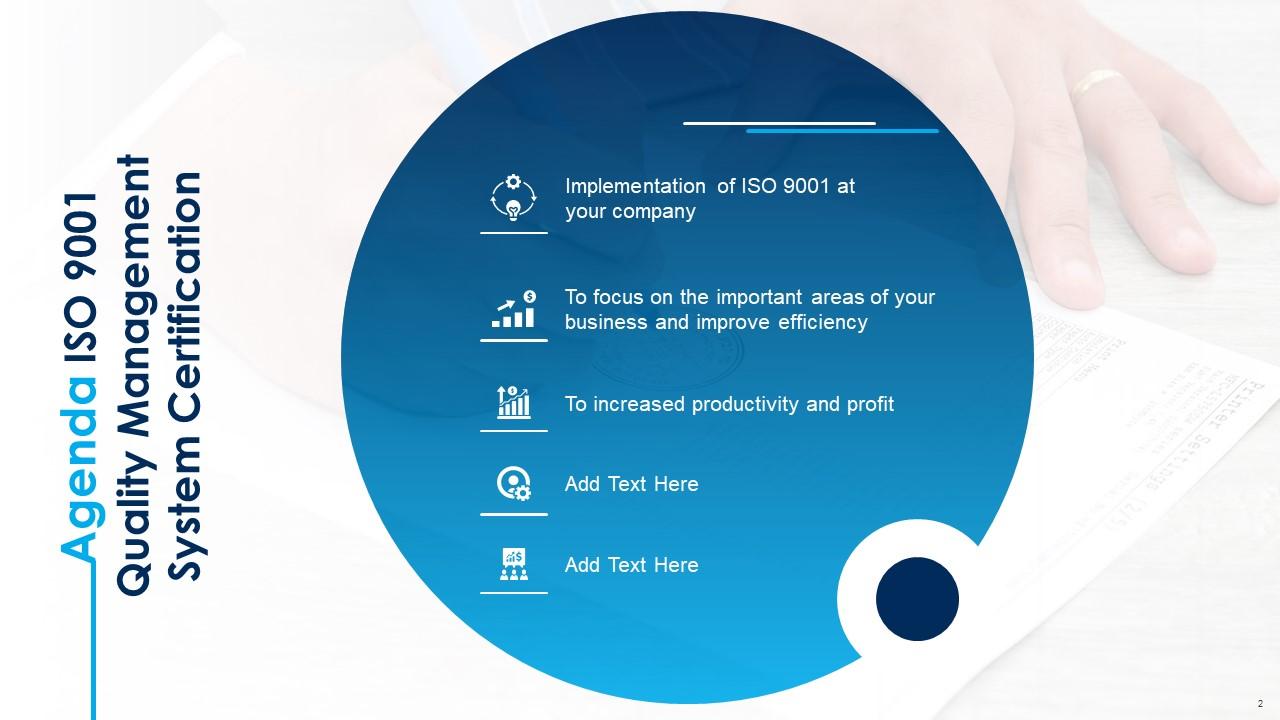
Slide 2: This is an Agenda slide. State your agendas here.
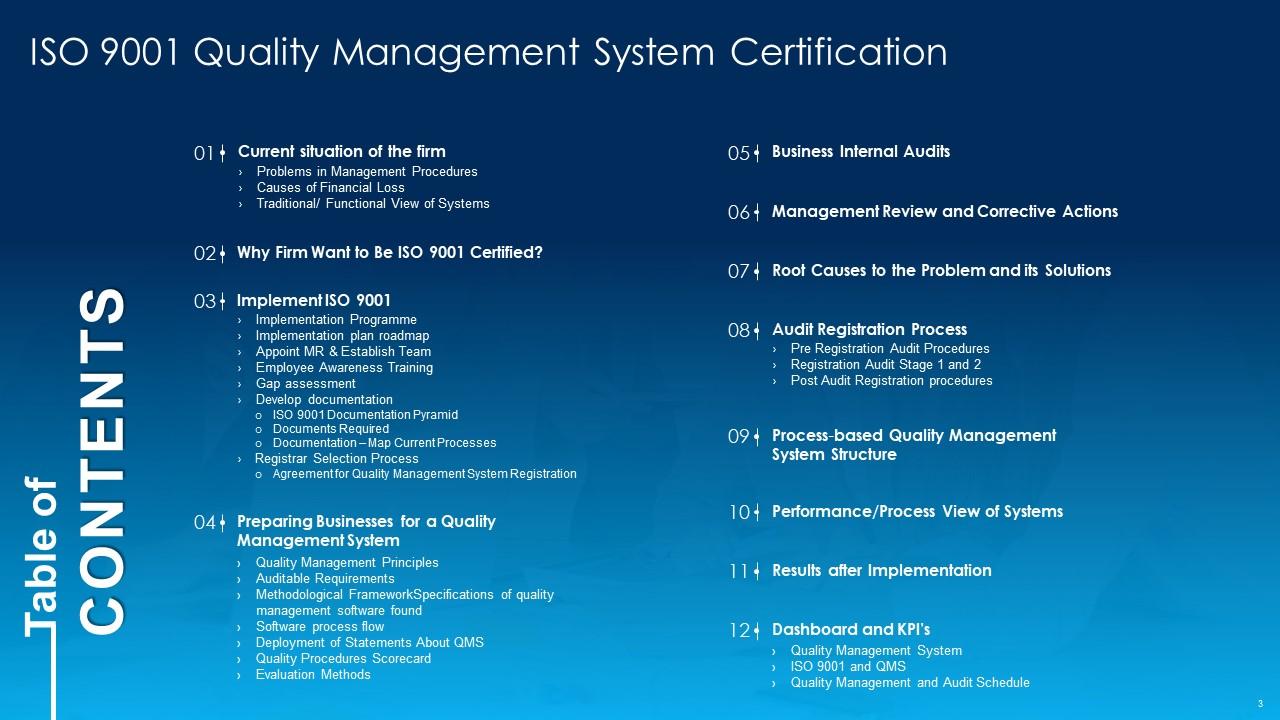
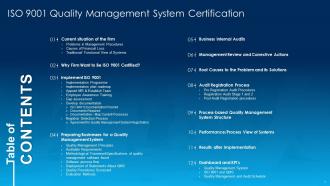
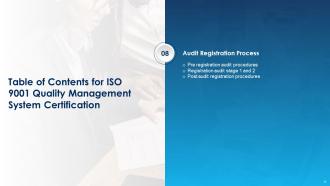
Slide 3: This slide presents Table of Content for the presentation.
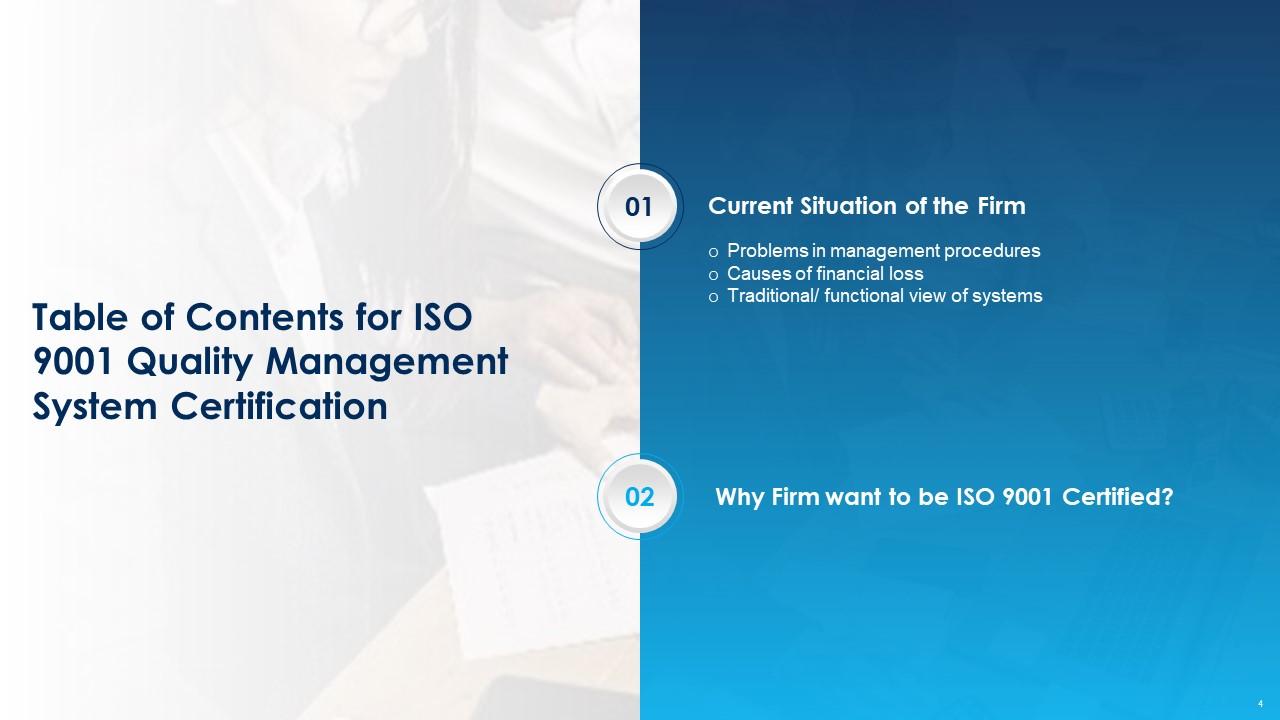
Slide 4: This slide highlights title for topics that are to be covered next in the template.
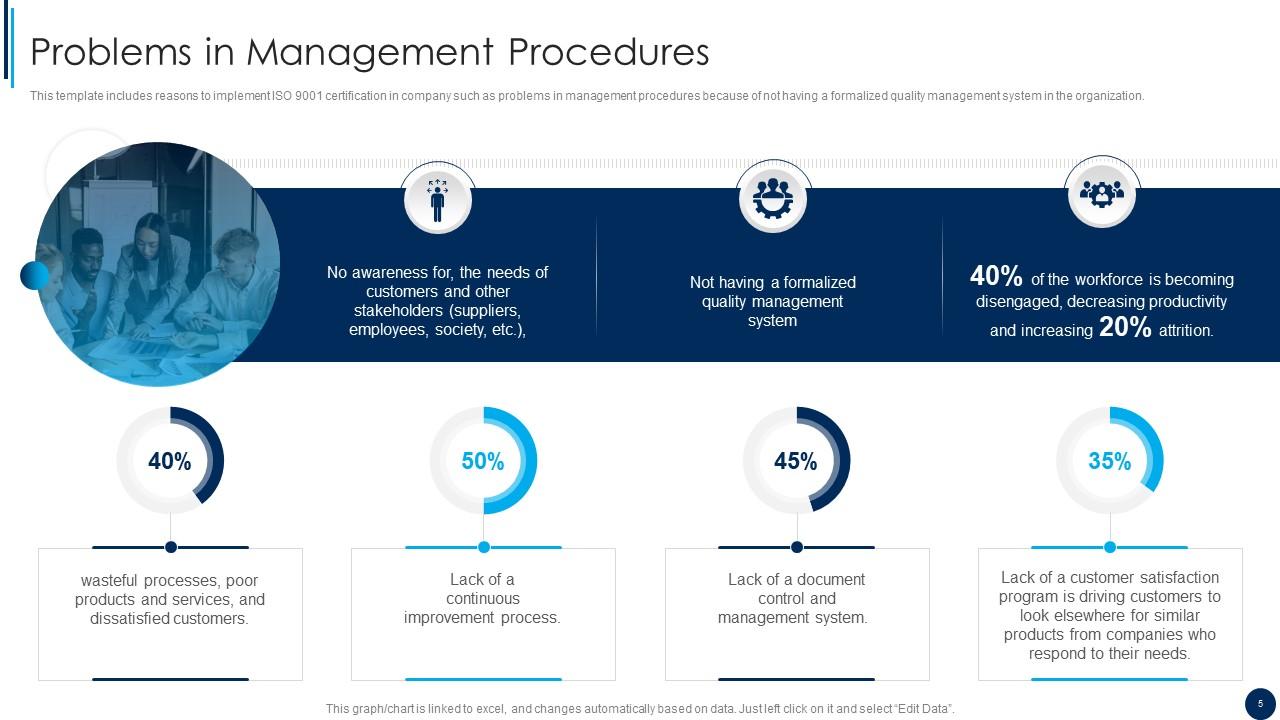
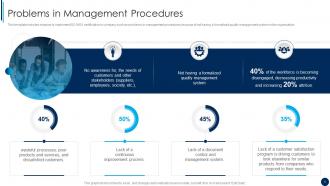
Slide 5: This slide shows reasons to implement ISO 9001 certification in company.
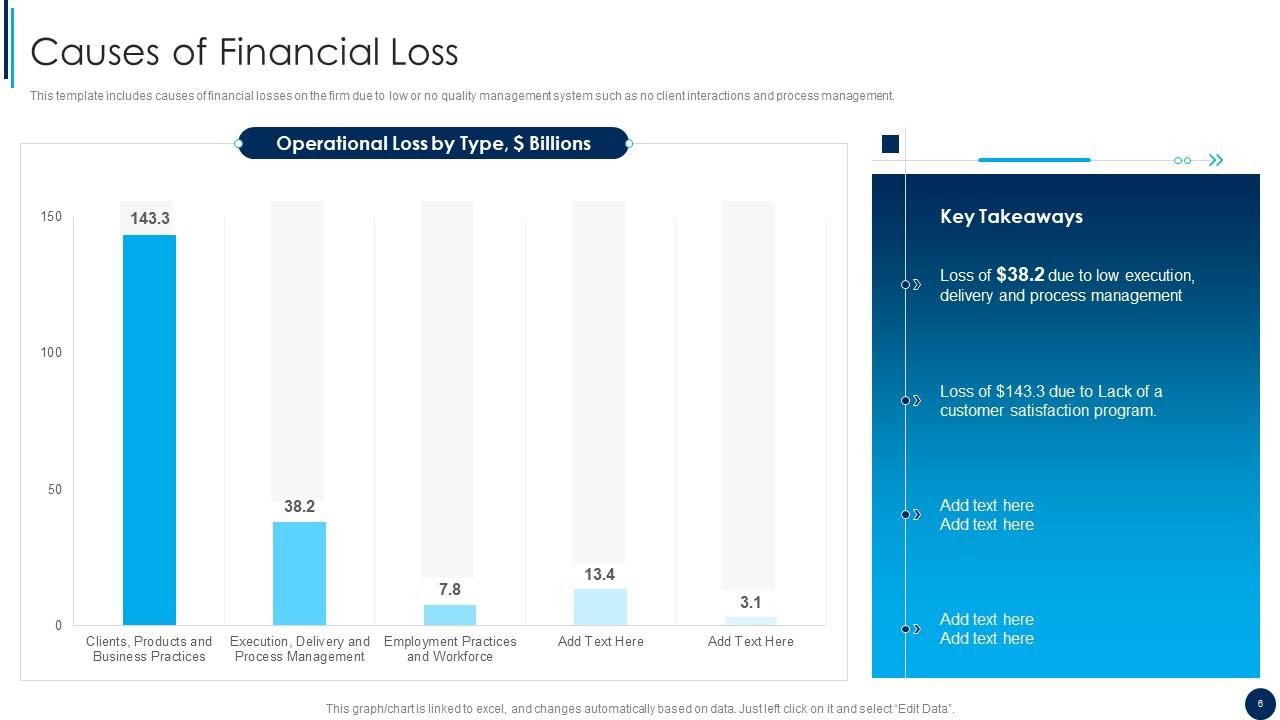
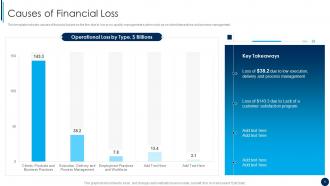
Slide 6: This slide displays causes of financial losses on the firm due to low or no quality management system such as no client interactions and process management.
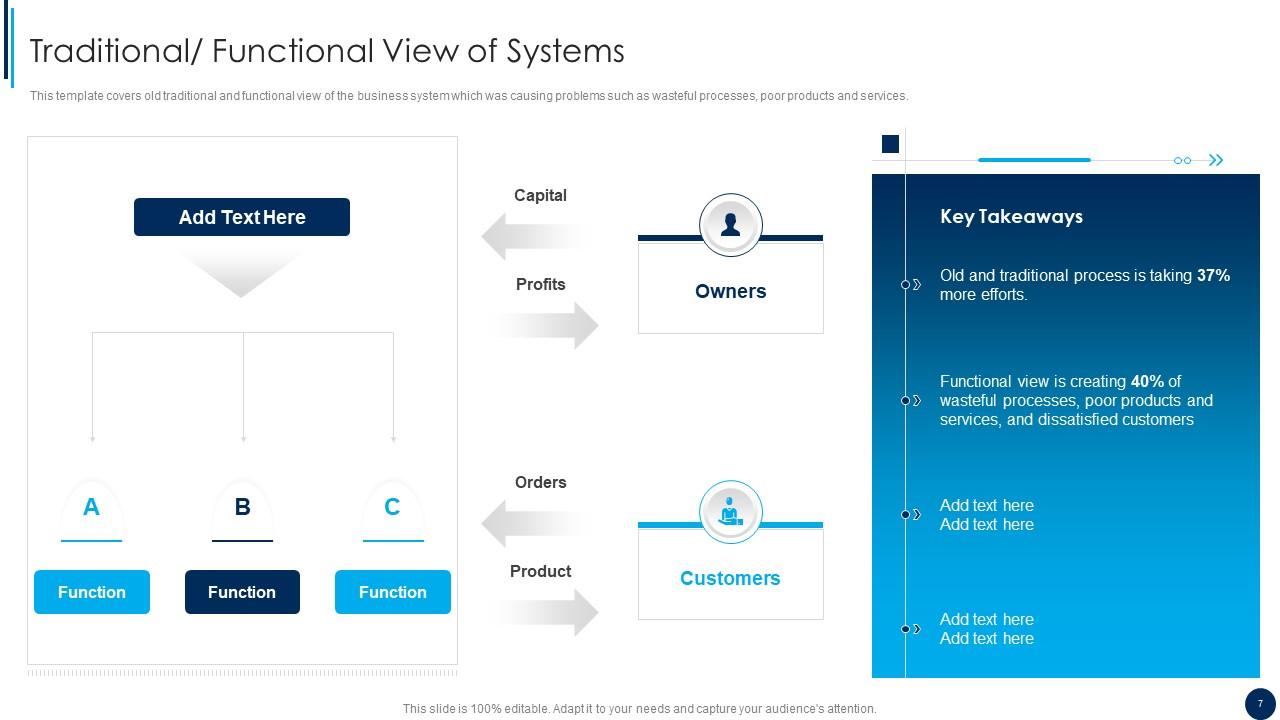
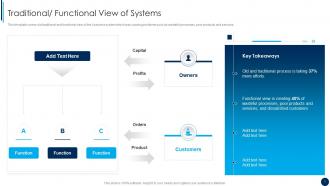
Slide 7: This slide represents old traditional and functional view of the business system which was causing problems such as wasteful processes, poor products and services.
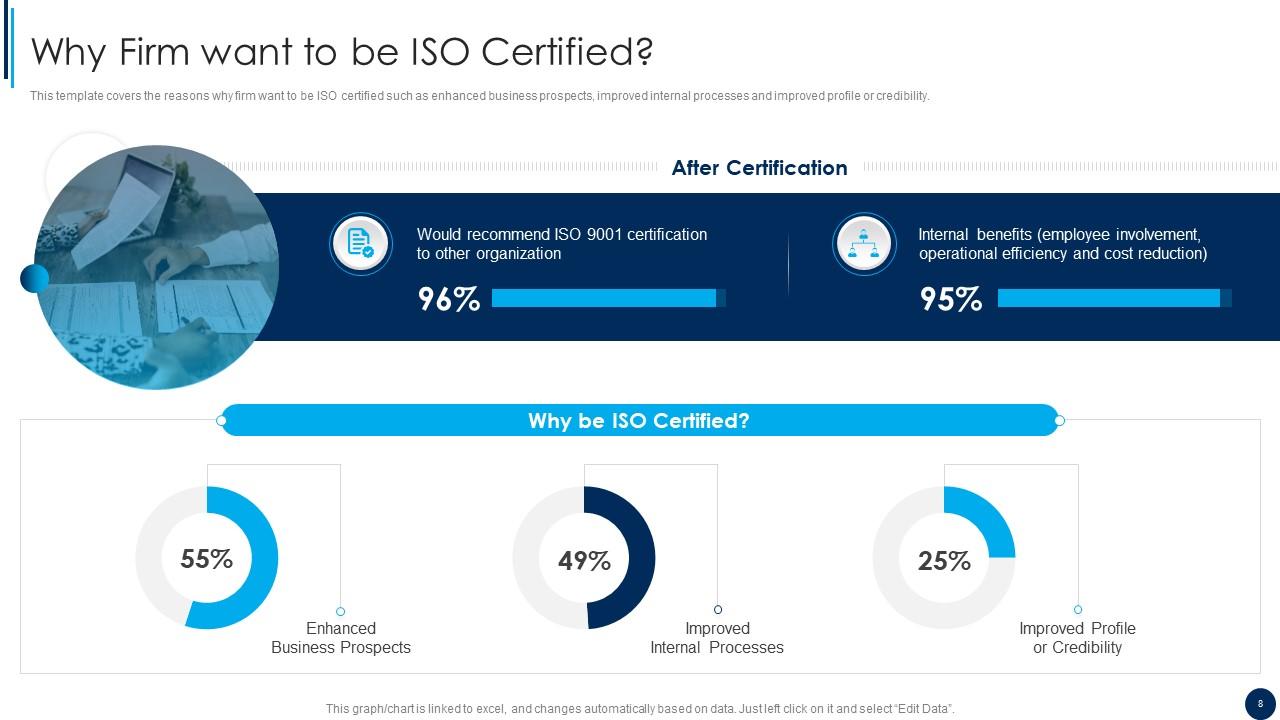
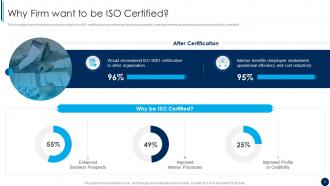
Slide 8: This slide shows reasons why firm want to be ISO certified such as enhanced business prospects, improved internal processes and improved profile or credibility.
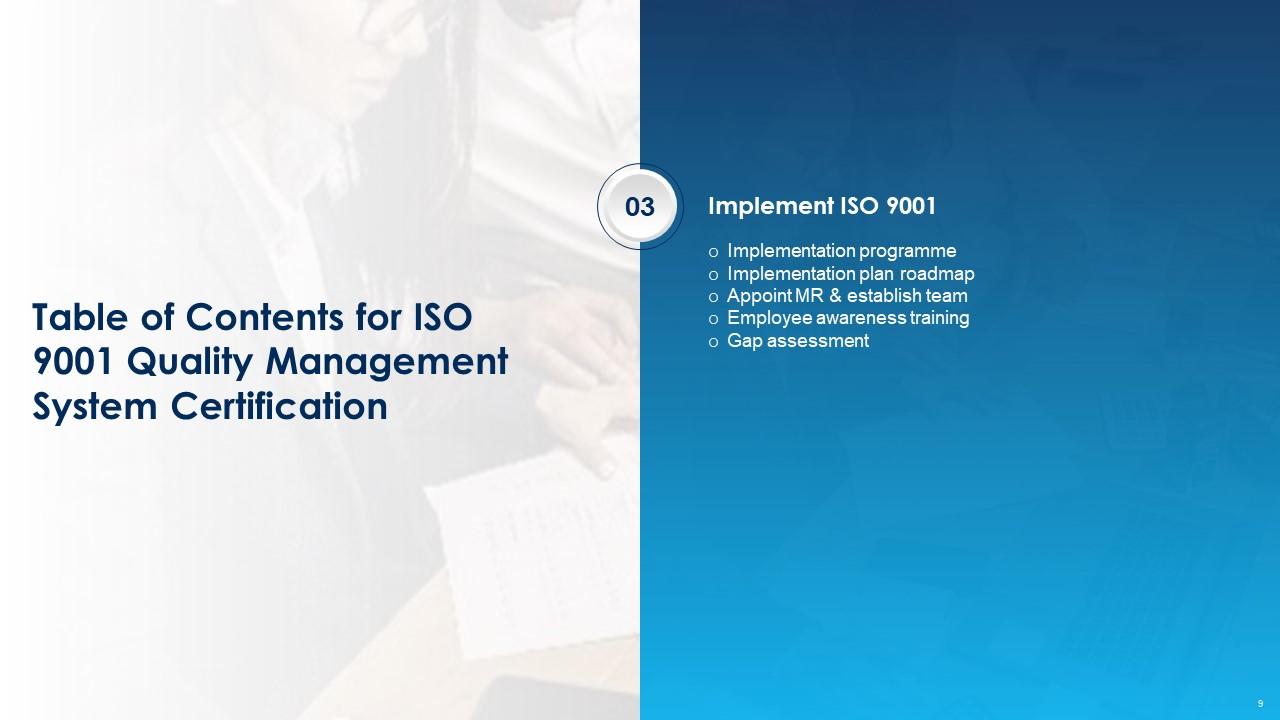
Slide 9: This slide highlights title for topics that are to be covered next in the template.
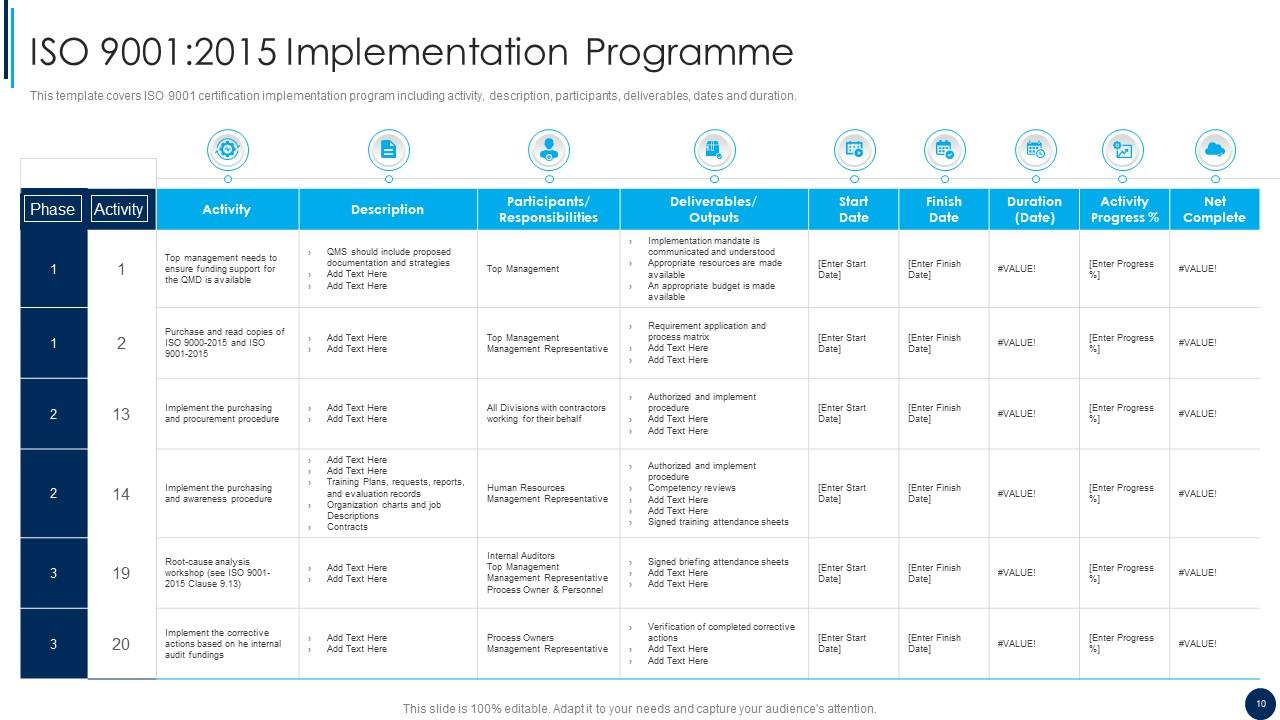
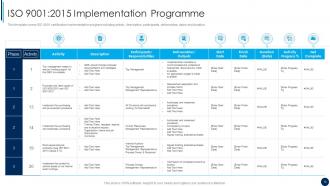
Slide 10: This slide shows ISO 9001 certification implementation program including activity, description, participants, etc.
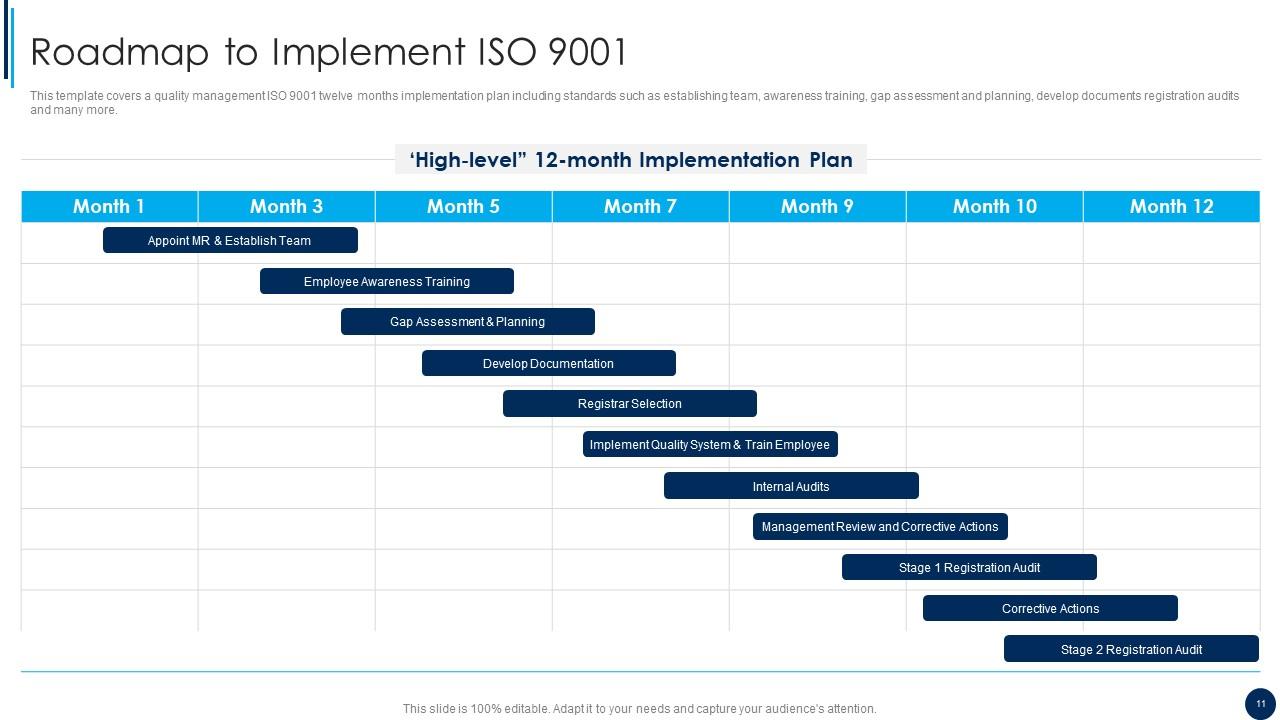
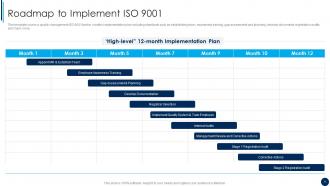
Slide 11: This slide displays quality management ISO 9001 twelve months implementation plan.
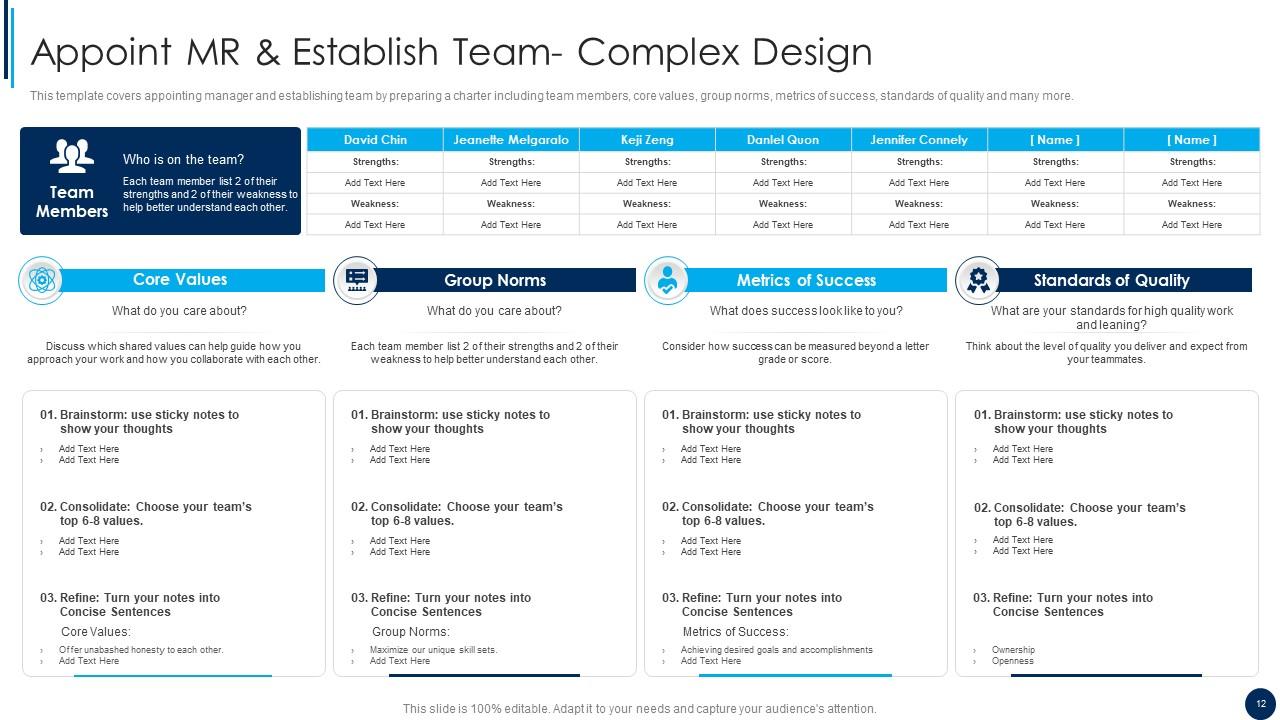
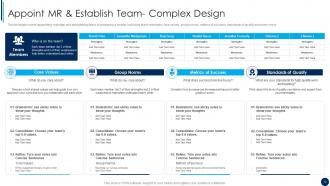
Slide 12: This slide represents appointing manager and establishing team by preparing a charter including team members, core values, etc.
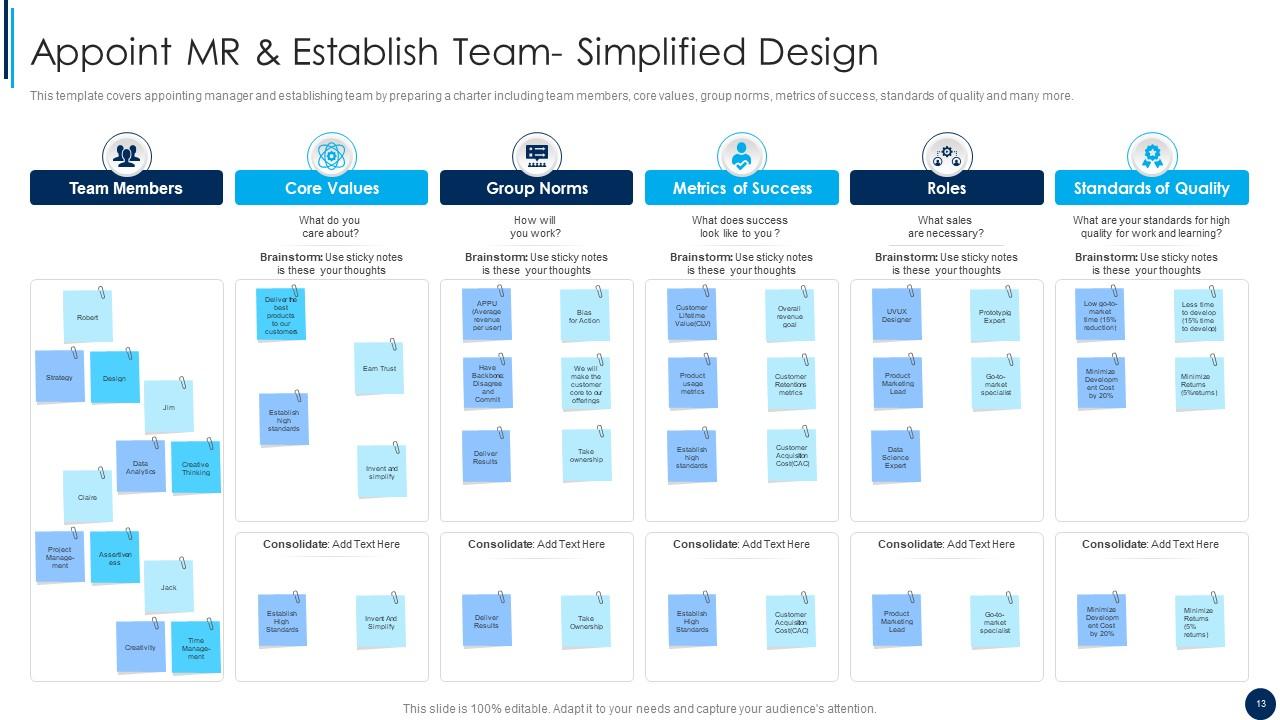
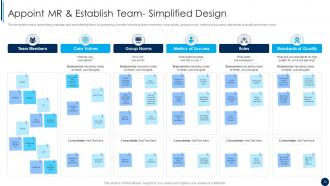
Slide 13: This slide shows appointing manager and establishing team by preparing a charter.
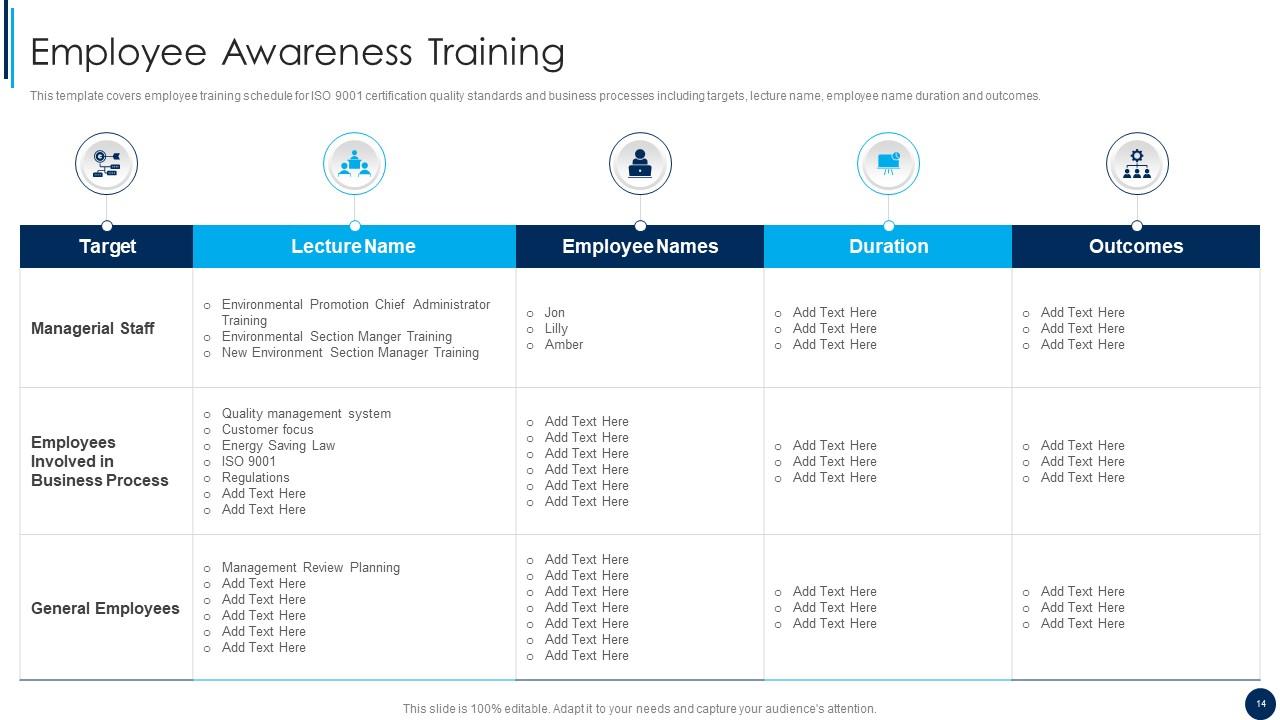
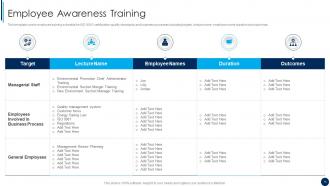
Slide 14: This slide presents employee training schedule for ISO 9001 certification quality standards and business processes.
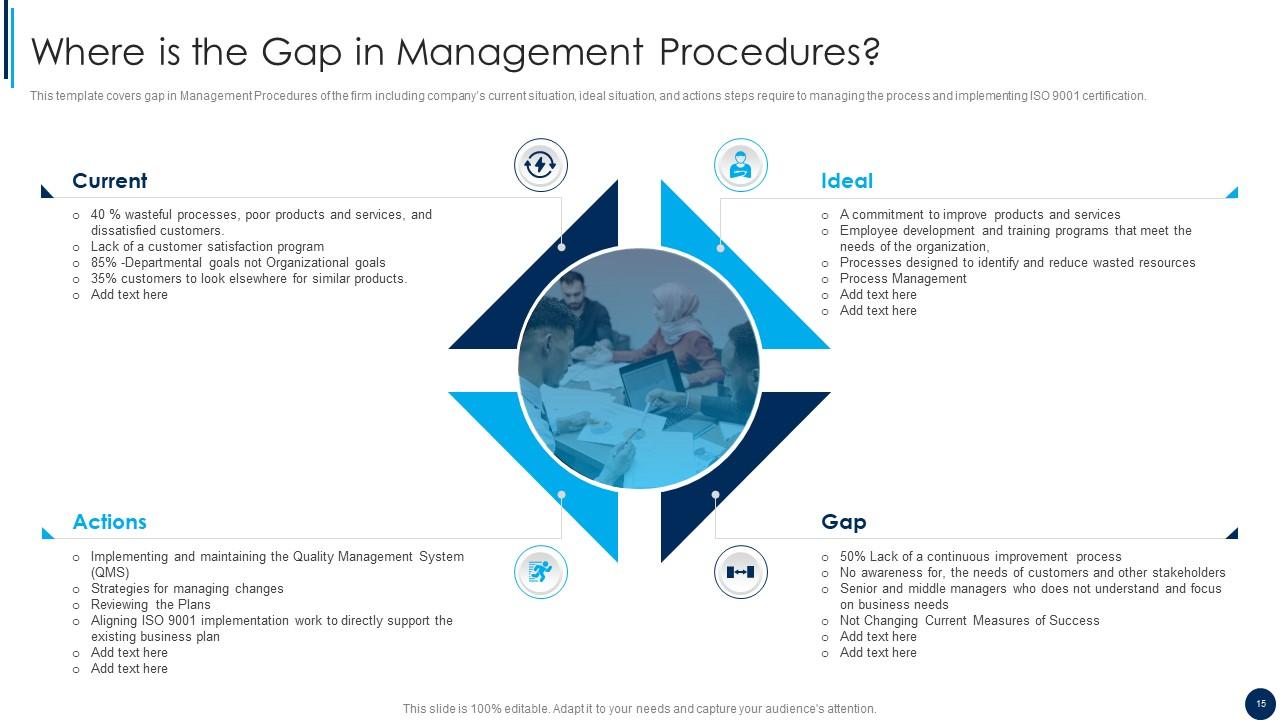
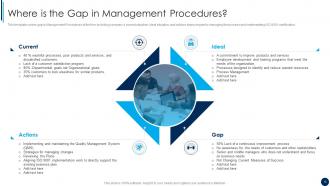
Slide 15: This slide shows gap in Management Procedures of the firm including company’s current situation, ideal situation, etc.
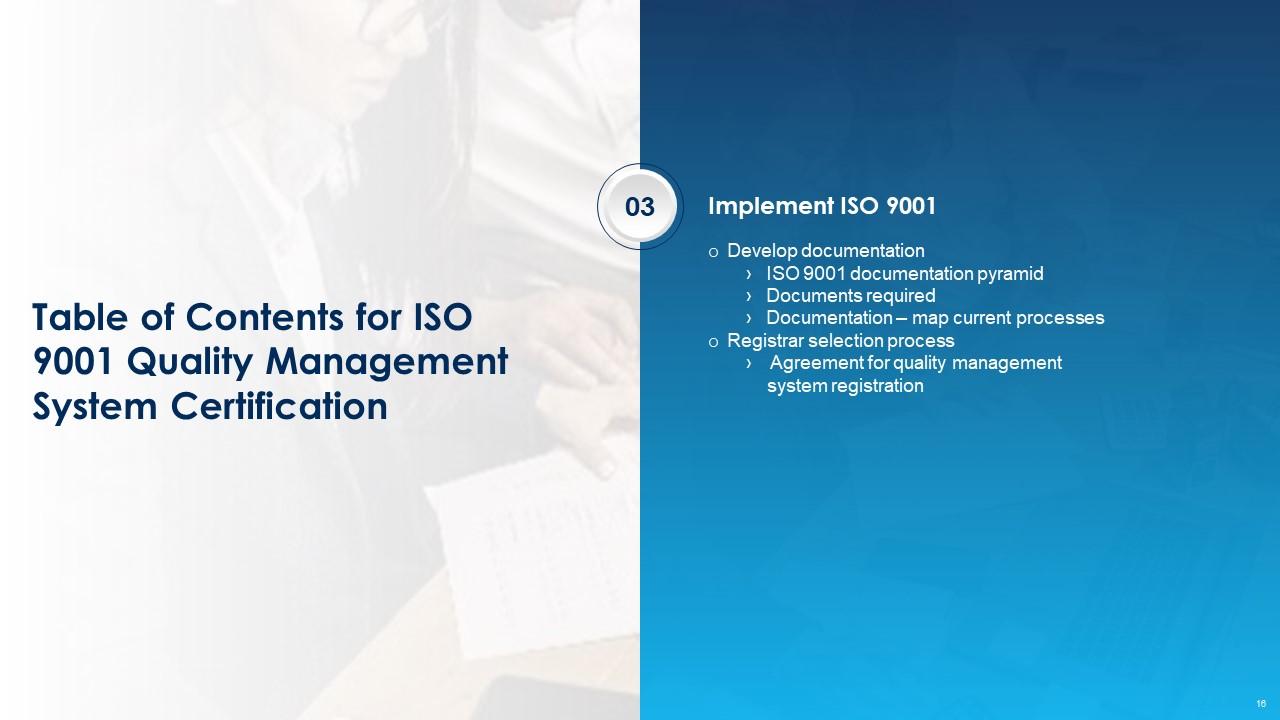
Slide 16: This slide highlights title for topics that are to be covered next in the template.
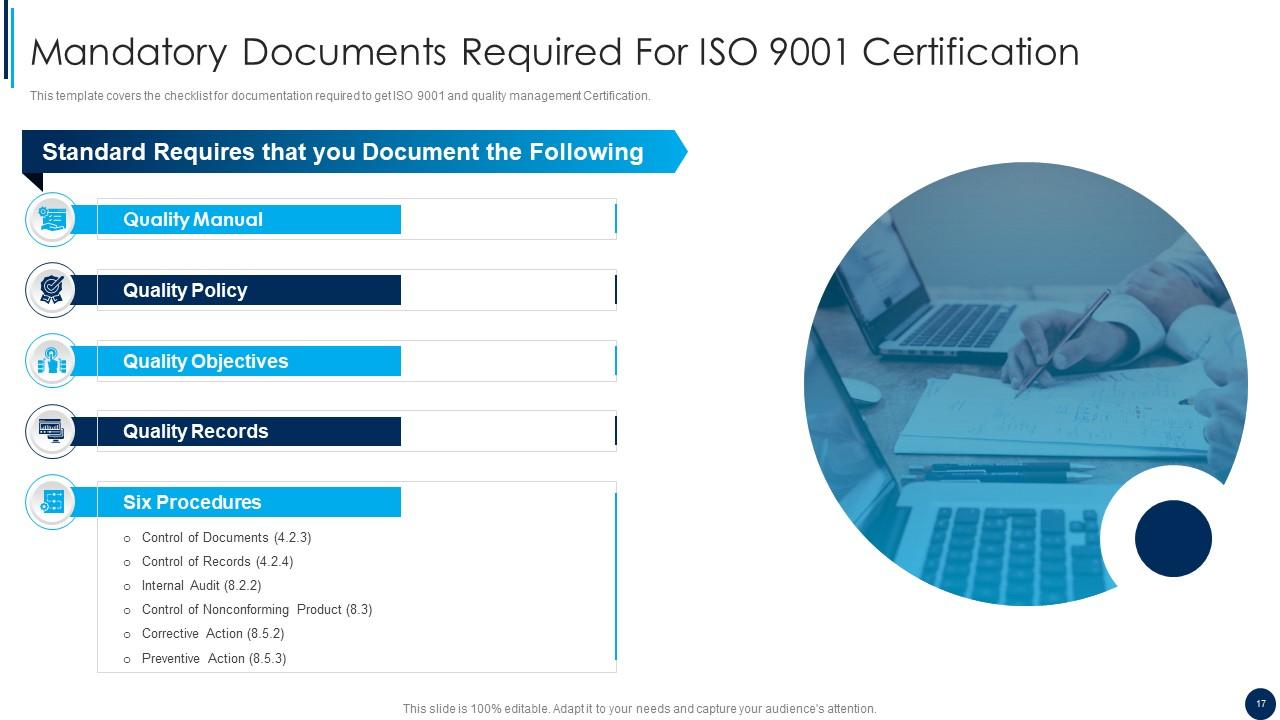
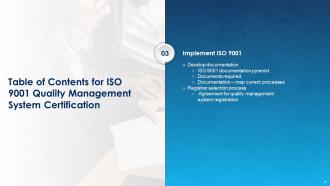
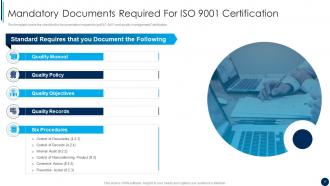
Slide 17: This slide represents checklist for documentation required to get ISO 9001 and quality management Certification.
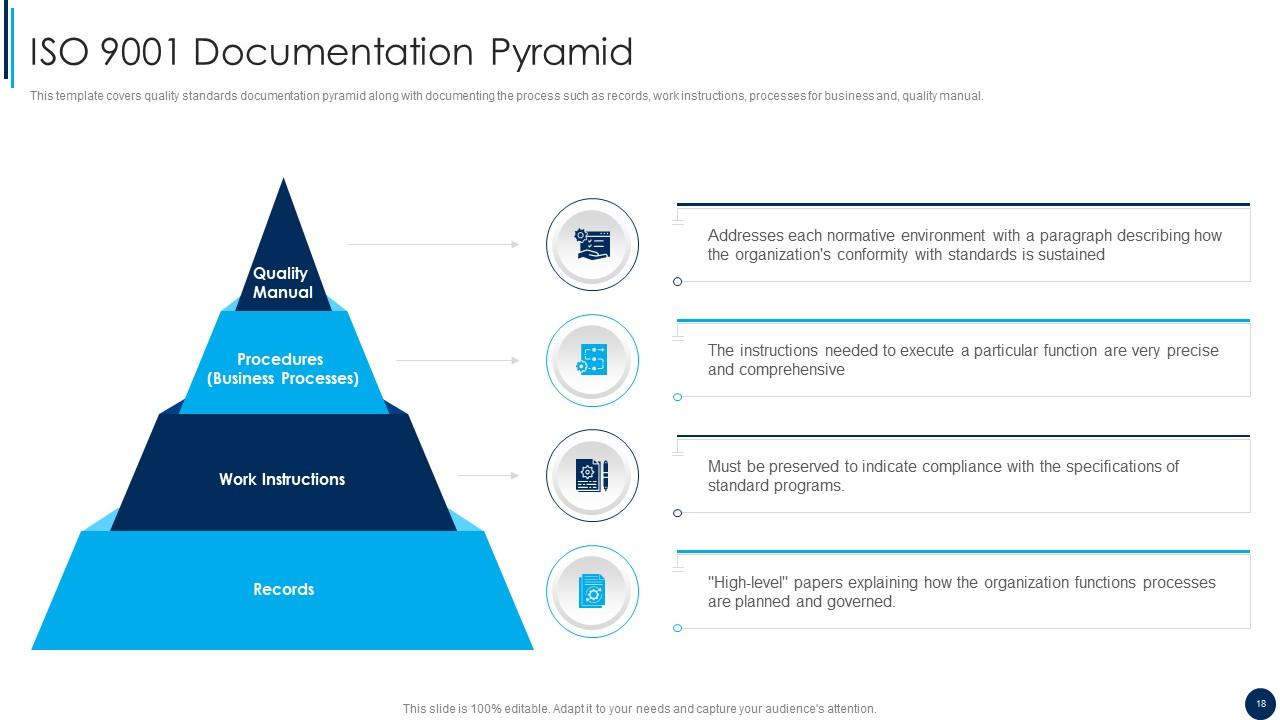
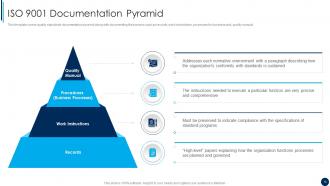
Slide 18: This slide shows quality standards documentation pyramid along with documenting the process such as records, work instructions, etc.
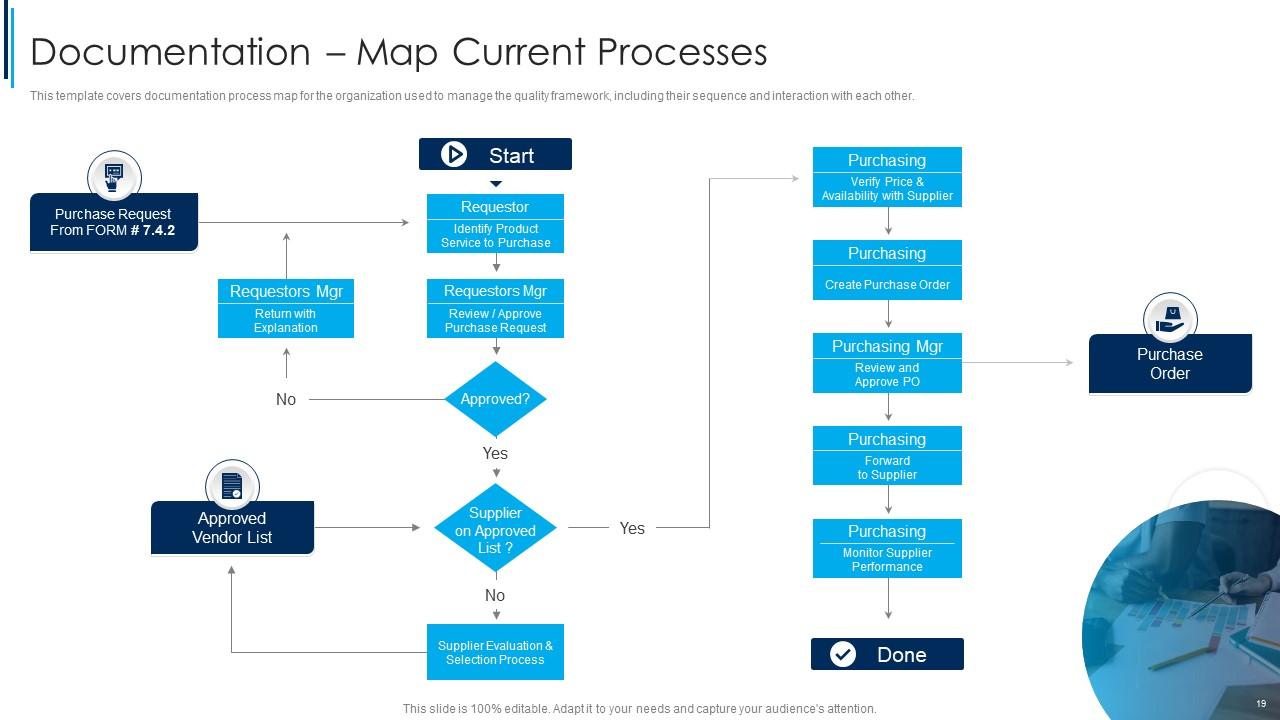
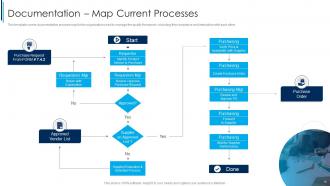
Slide 19: This slide presents documentation process map for the organization used to manage the quality framework.
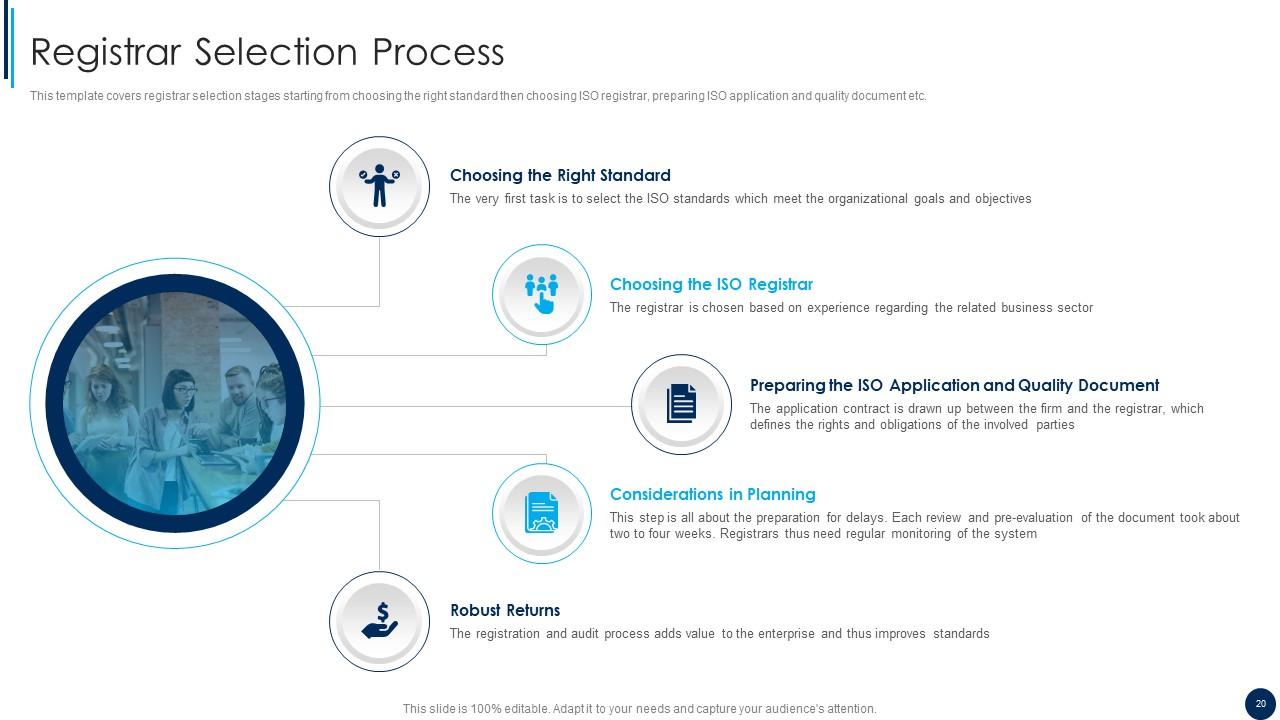
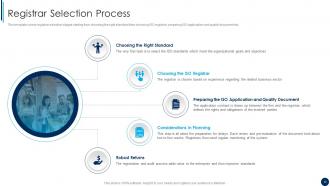
Slide 20: This slide shows Registrar Selection Process.
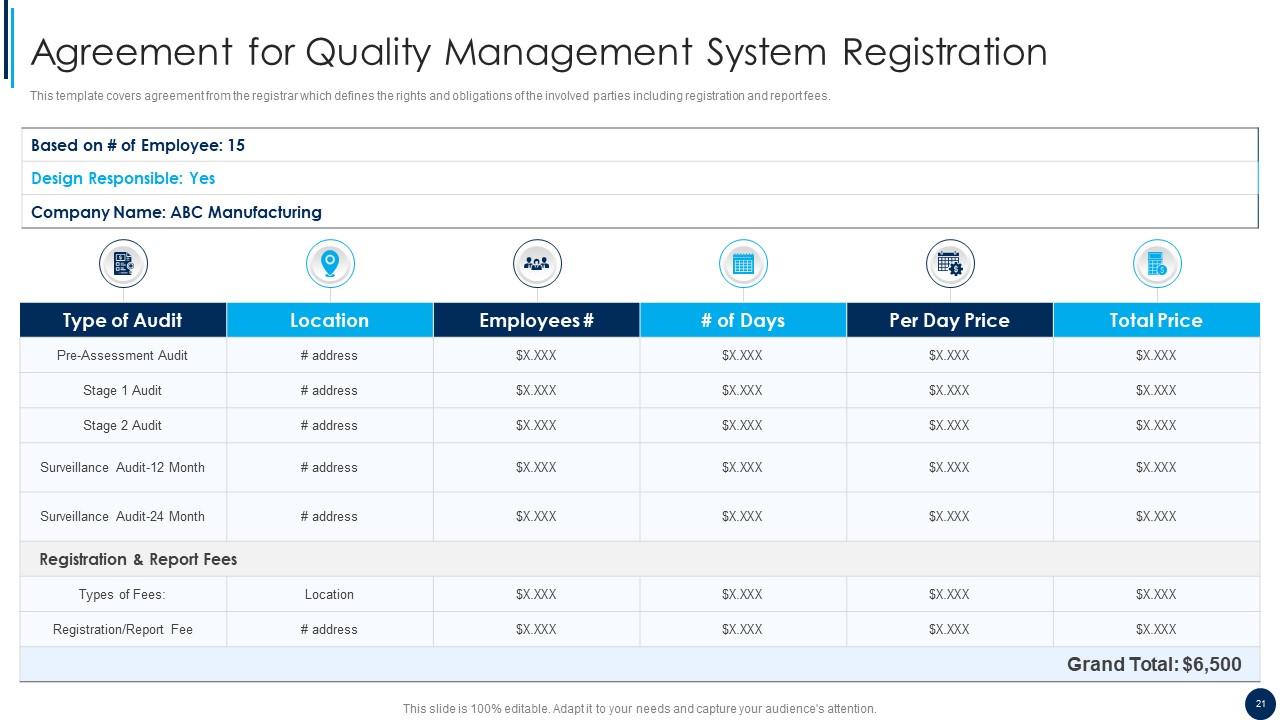
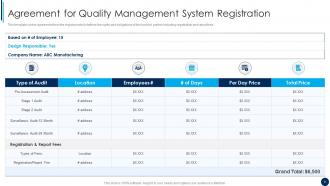
Slide 21: This slide displays agreement from the registrar which defines the rights and obligations of the involved parties.
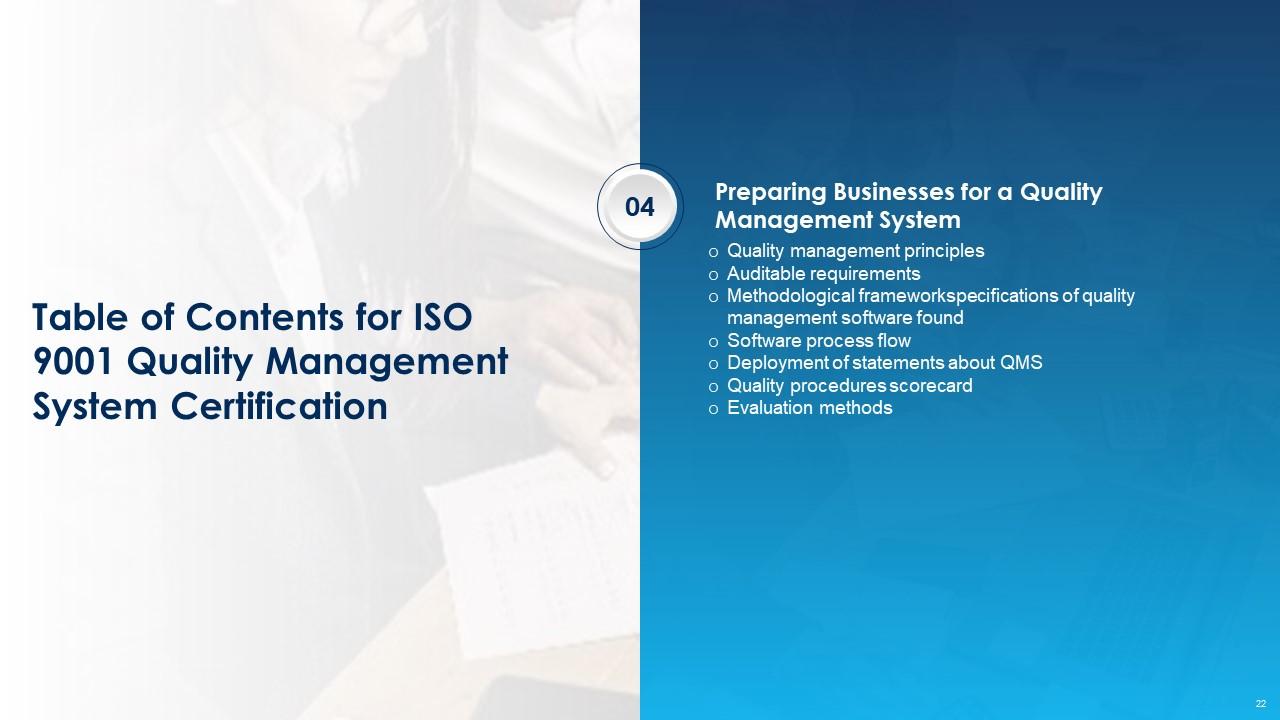
Slide 22: This slide highlights title for topics that are to be covered next in the template.
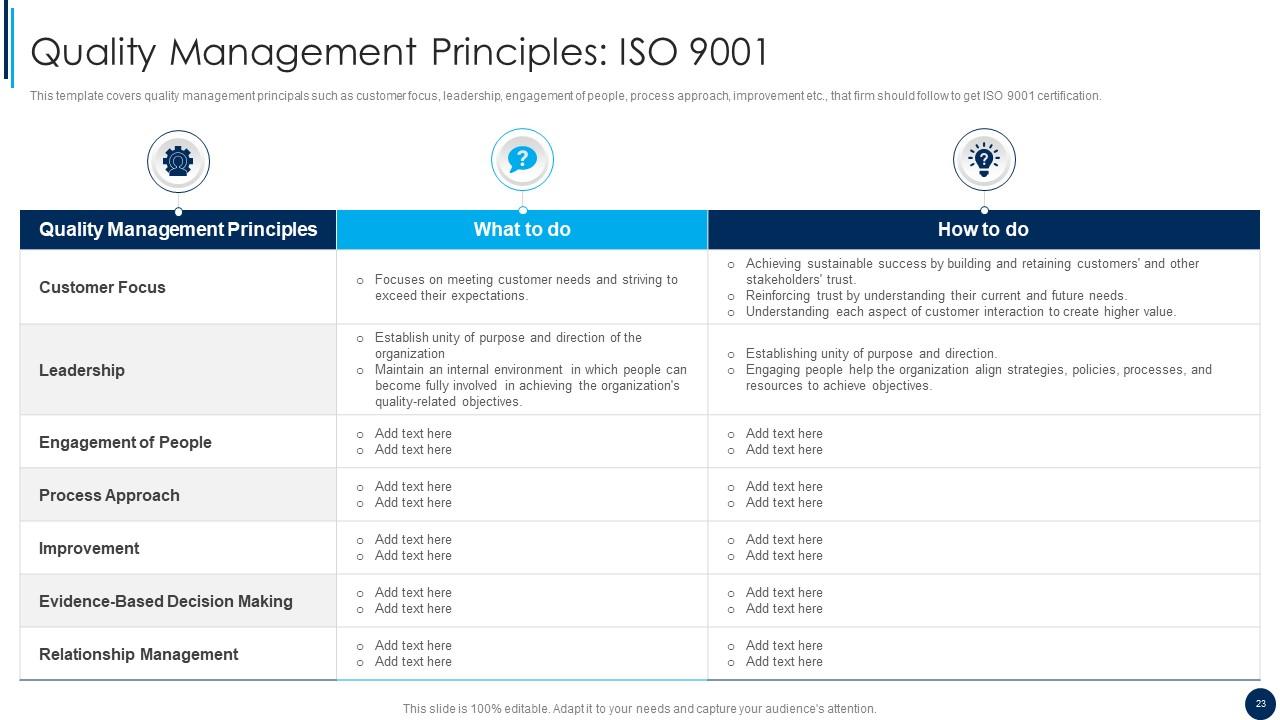
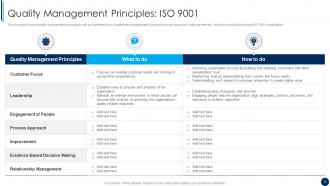
Slide 23: This slide shows quality management principals such as customer focus, leadership, engagement of people, etc.
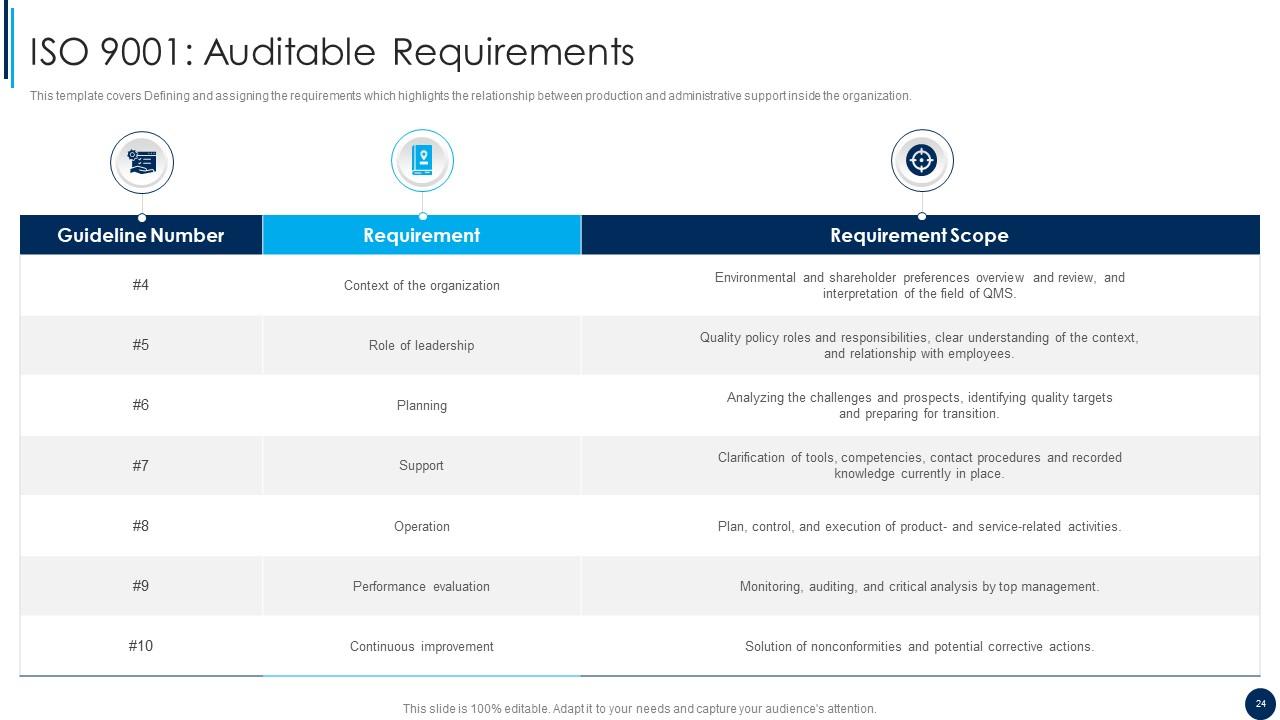
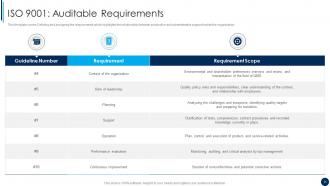
Slide 24: This slide presents Defining and assigning the requirements which highlights the relationship between production and administrative support inside the organization.
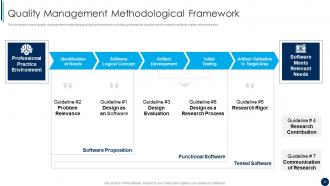
Slide 25: This slide shows quality management methodological design framework.
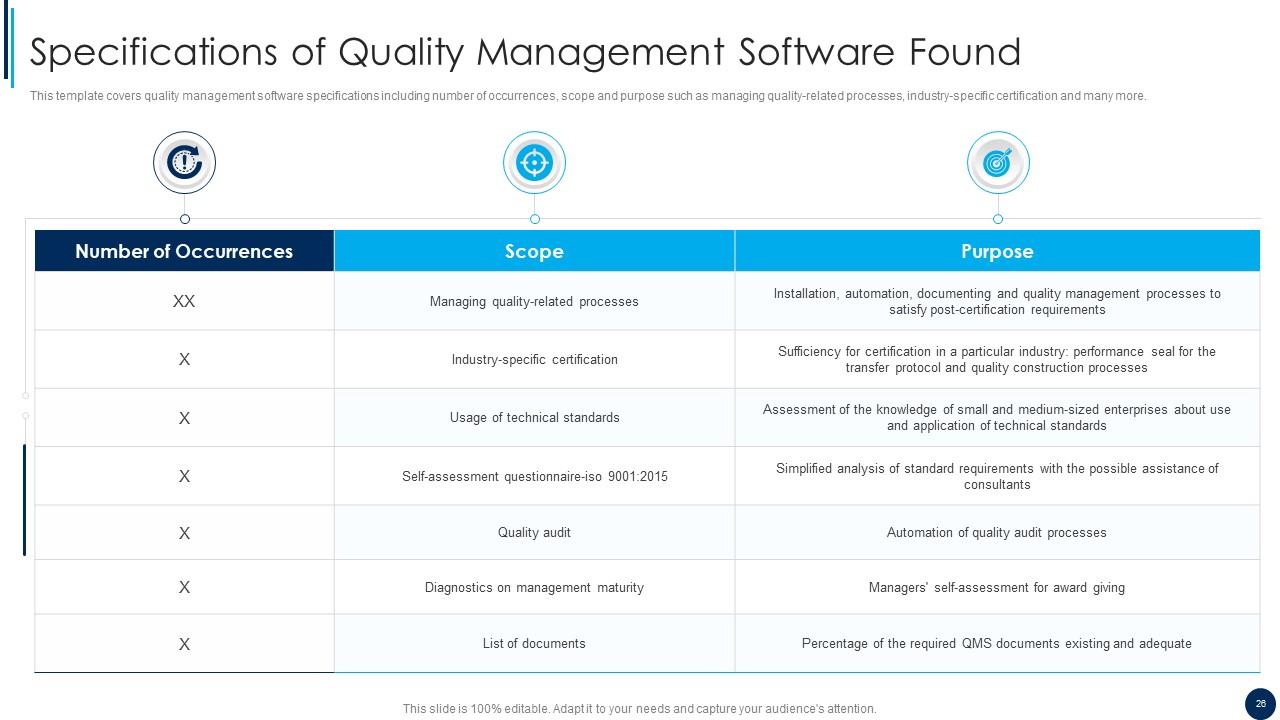
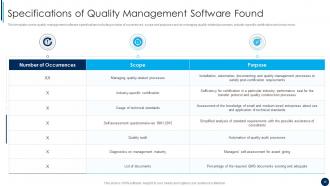
Slide 26: This slide displays quality management software specifications including number of occurrences, scope and purpose.
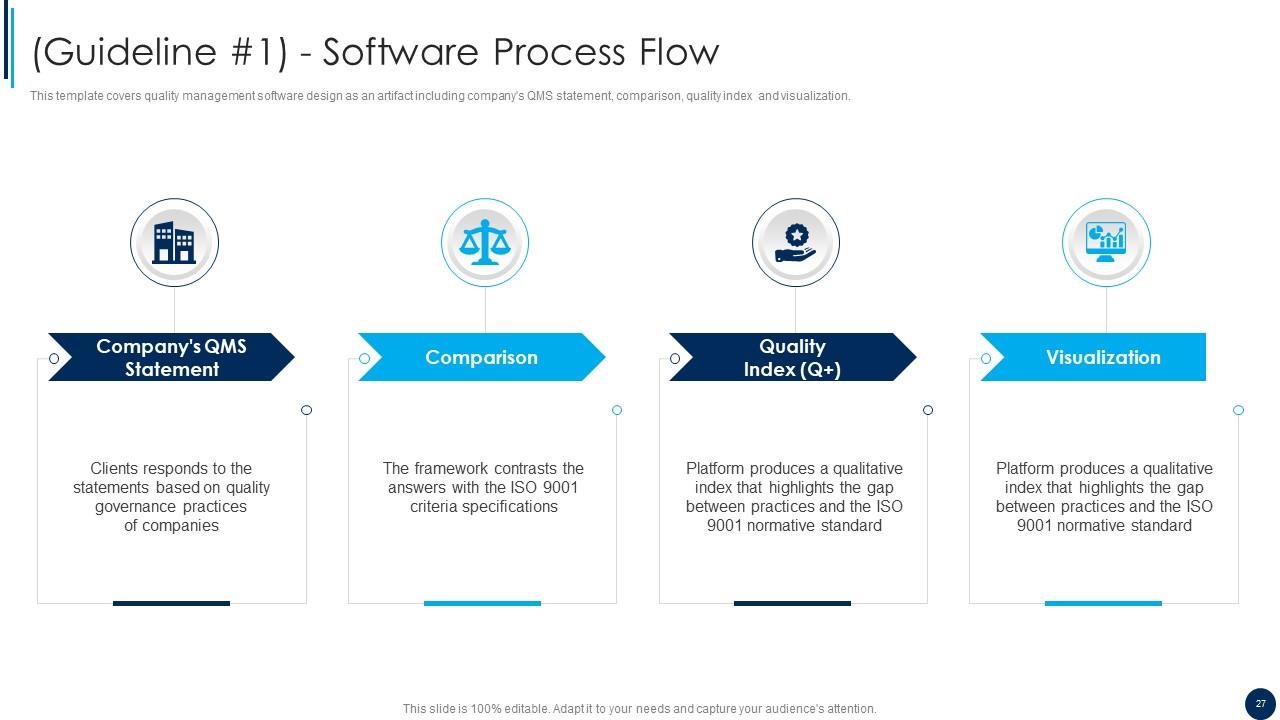
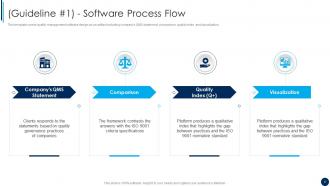
Slide 27: This slide represents quality management software design as an artifact including company's QMS statement, comparison, quality index, etc.
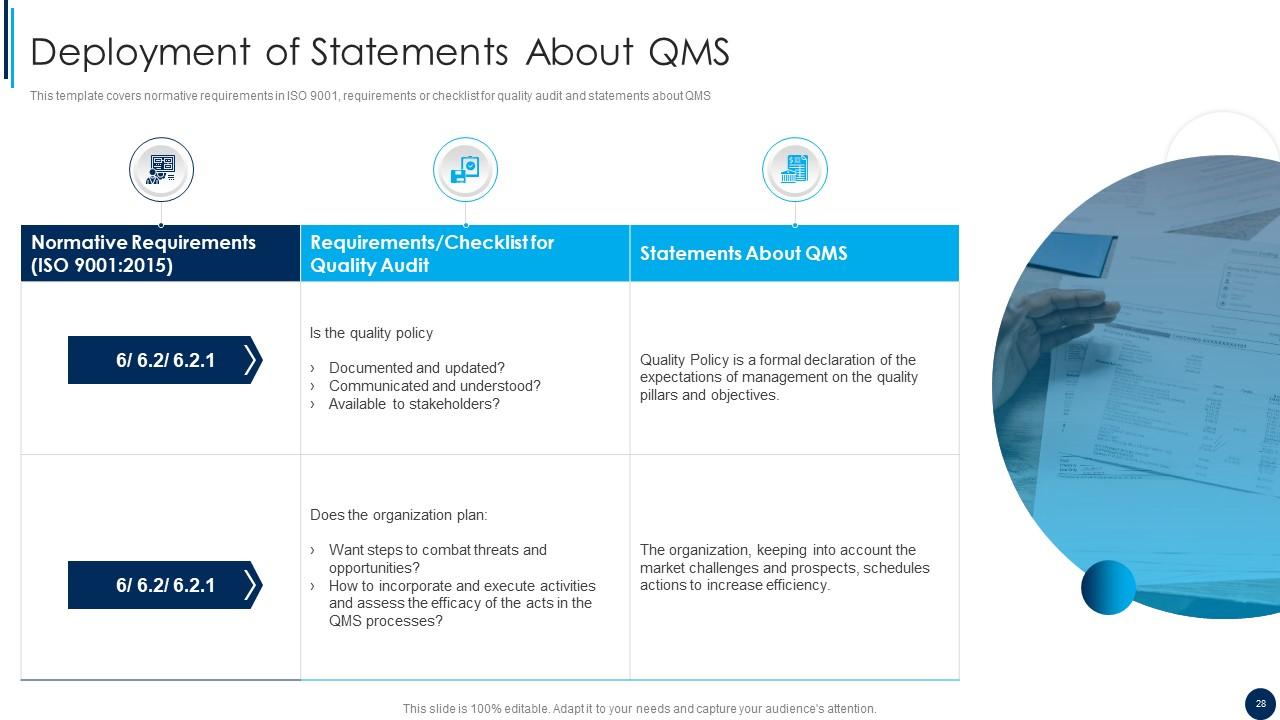
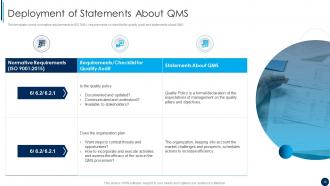
Slide 28: This slide shows normative requirements in ISO 9001, requirements or checklist for quality audit and statements about QMS.
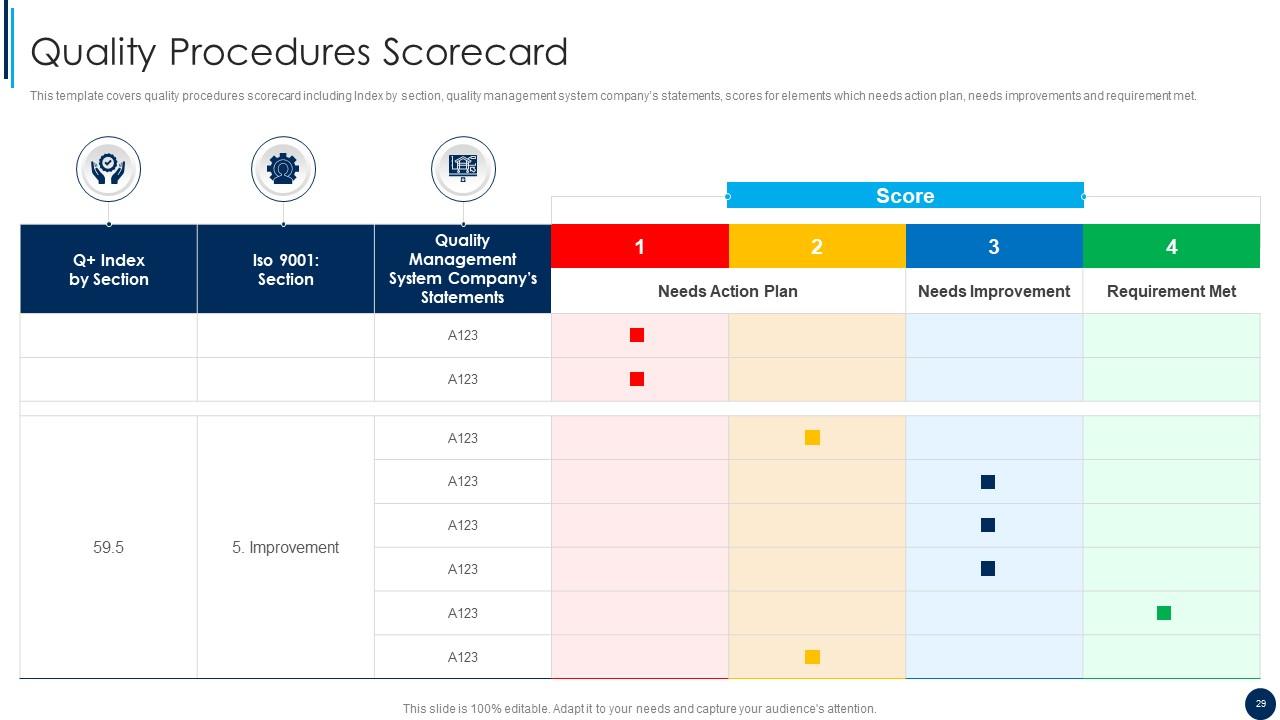
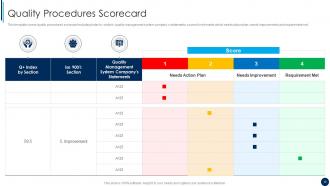
Slide 29: This slide presents quality procedures scorecard including Index by section, quality management system company’s statements, etc.
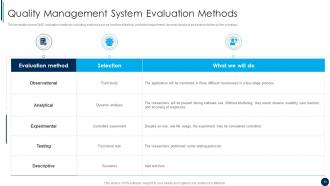
Slide 30: This slide shows QMS evaluation methods including sections such as functional testing, controlled experiment, etc.
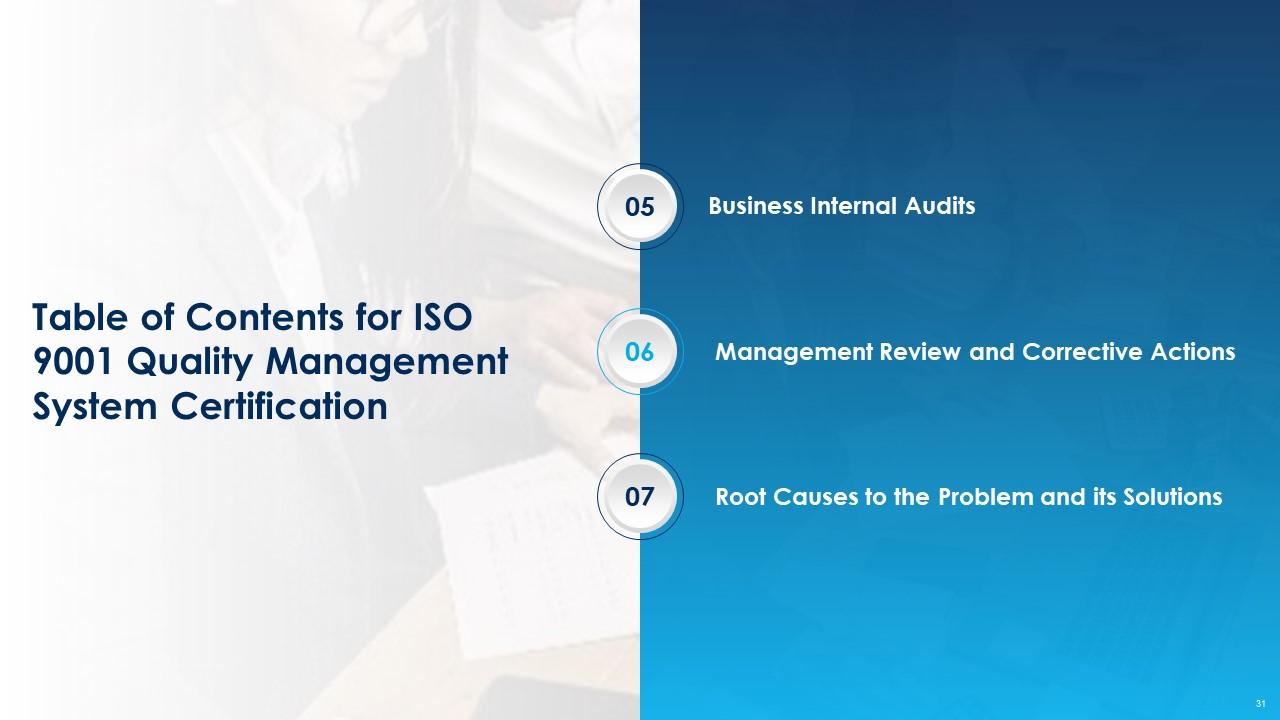
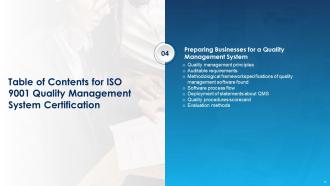
Slide 31: This slide highlights title for topics that are to be covered next in the template.
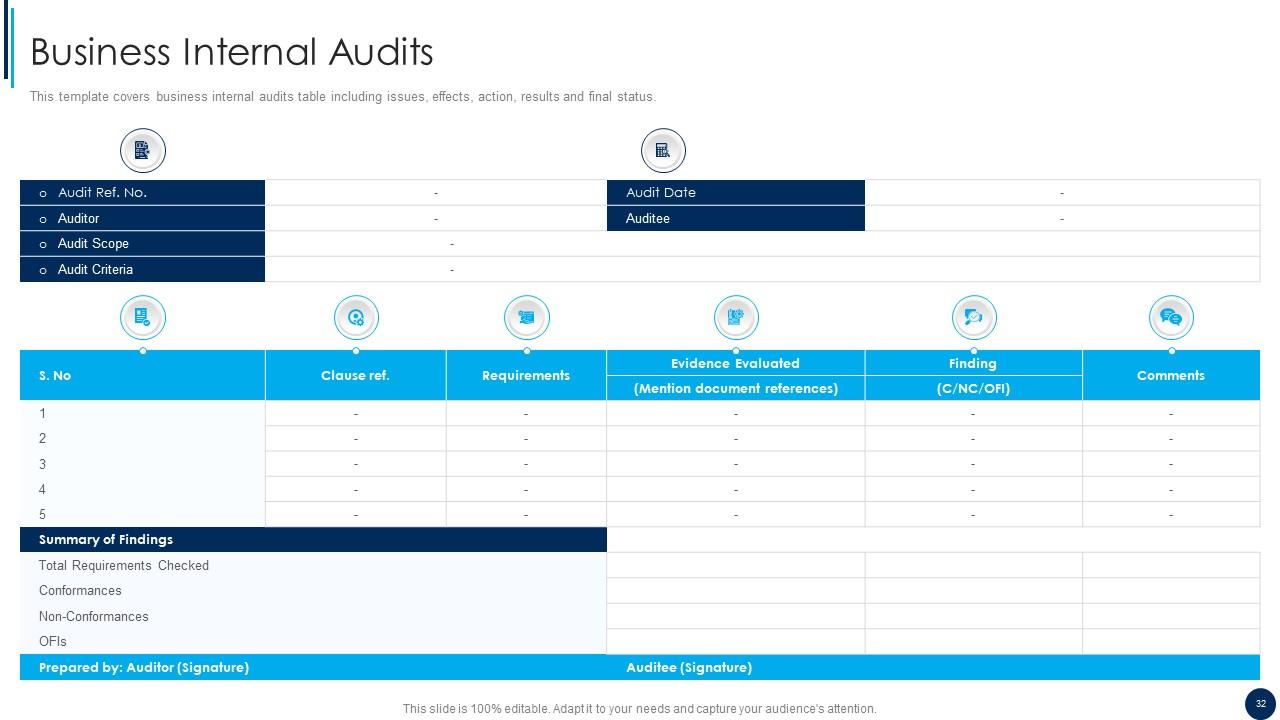
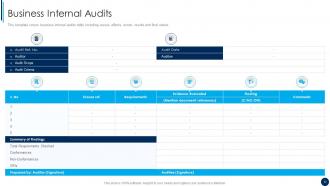
Slide 32: This template represents business internal audits table including issues, effects, action, results and final status.
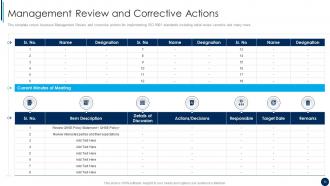
Slide 33: This slide shows business Management Review and corrective actions for implementing ISO 9001 standards.
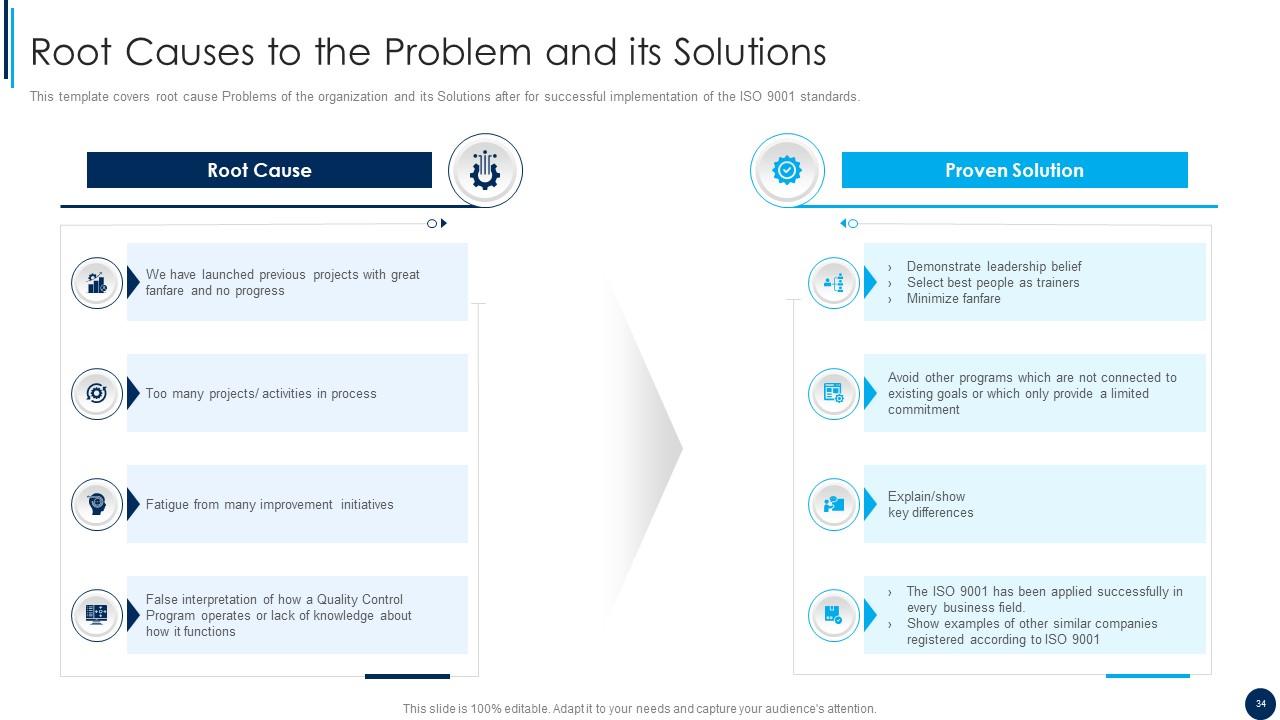
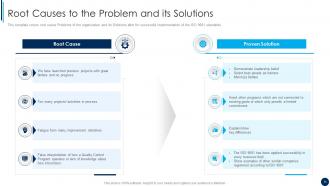
Slide 34: This slide presents root cause Problems of the organization and its Solutions after for successful implementation of the ISO 9001 standards.
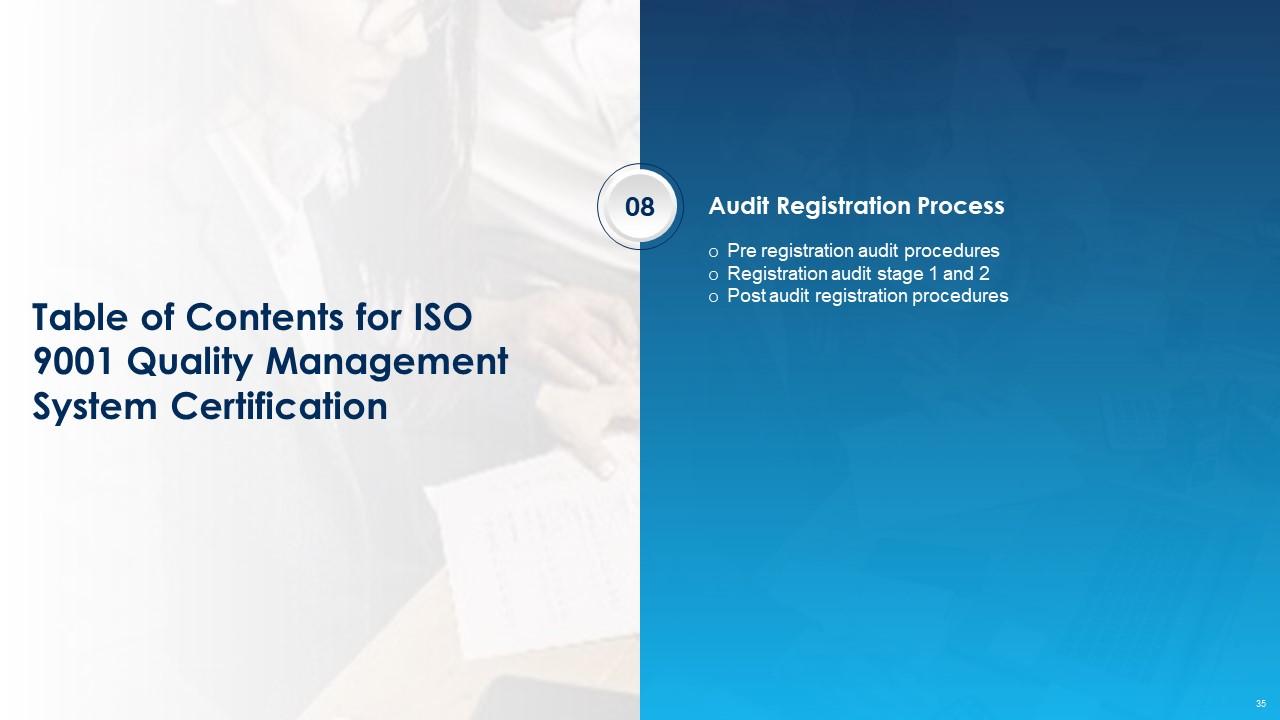
Slide 35: This slide highlights title for topics that are to be covered next in the template.
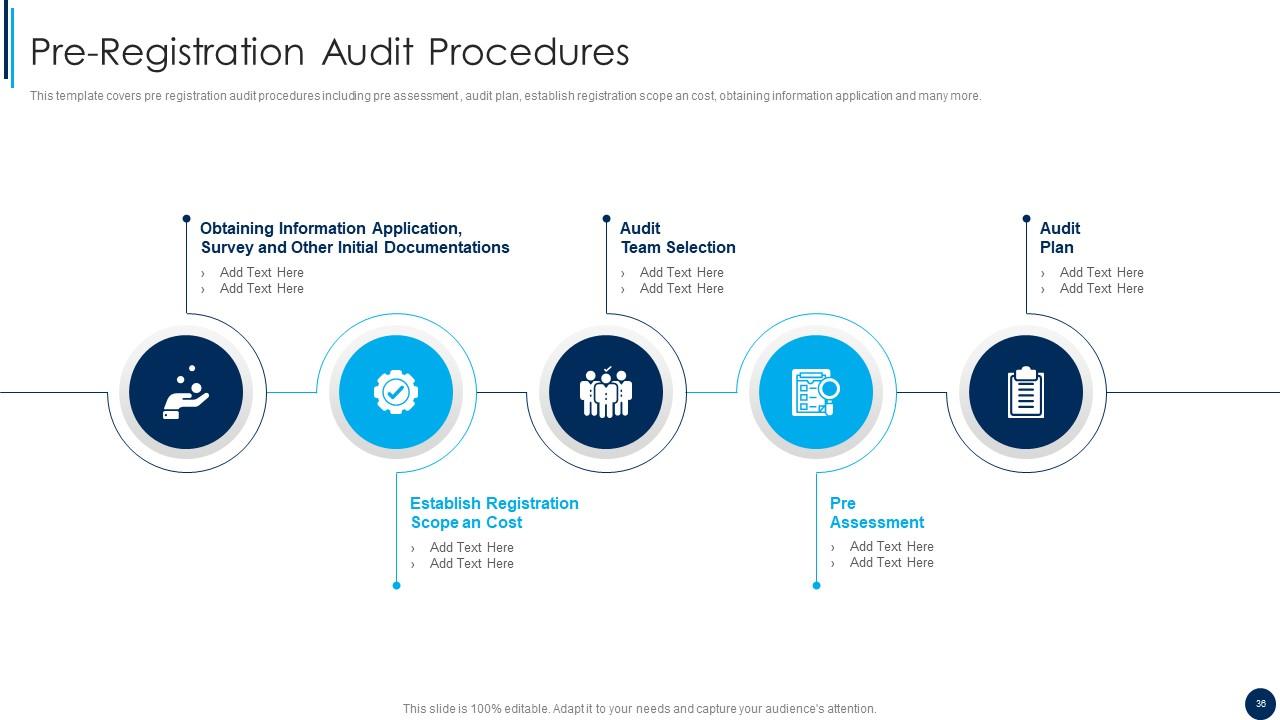
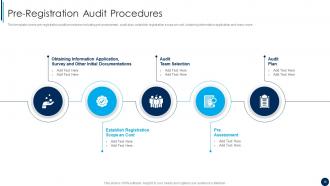
Slide 36: This slide displays pre registration audit procedures including pre assessment , audit plan, establish registration scope, etc.
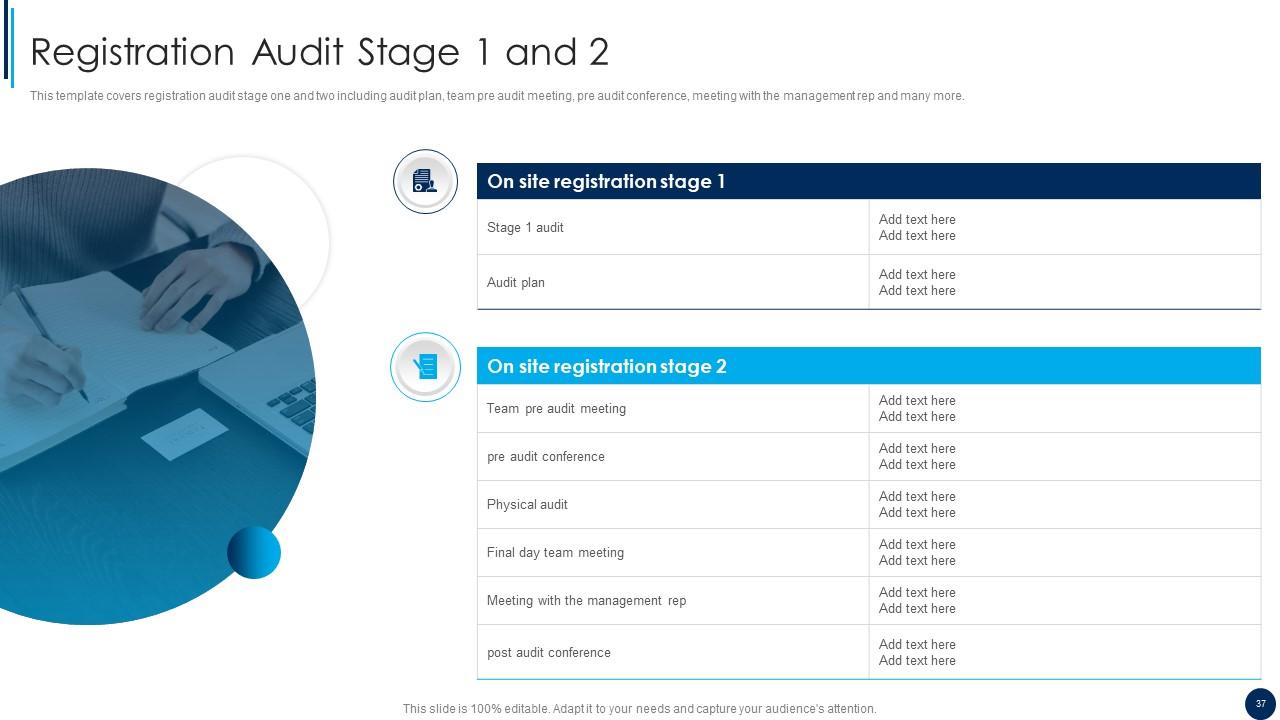
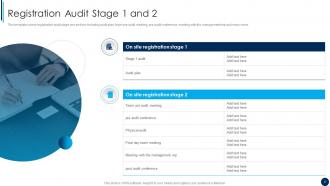
Slide 37: This slide represents registration audit stage one and two including audit plan, team pre audit meeting, etc.
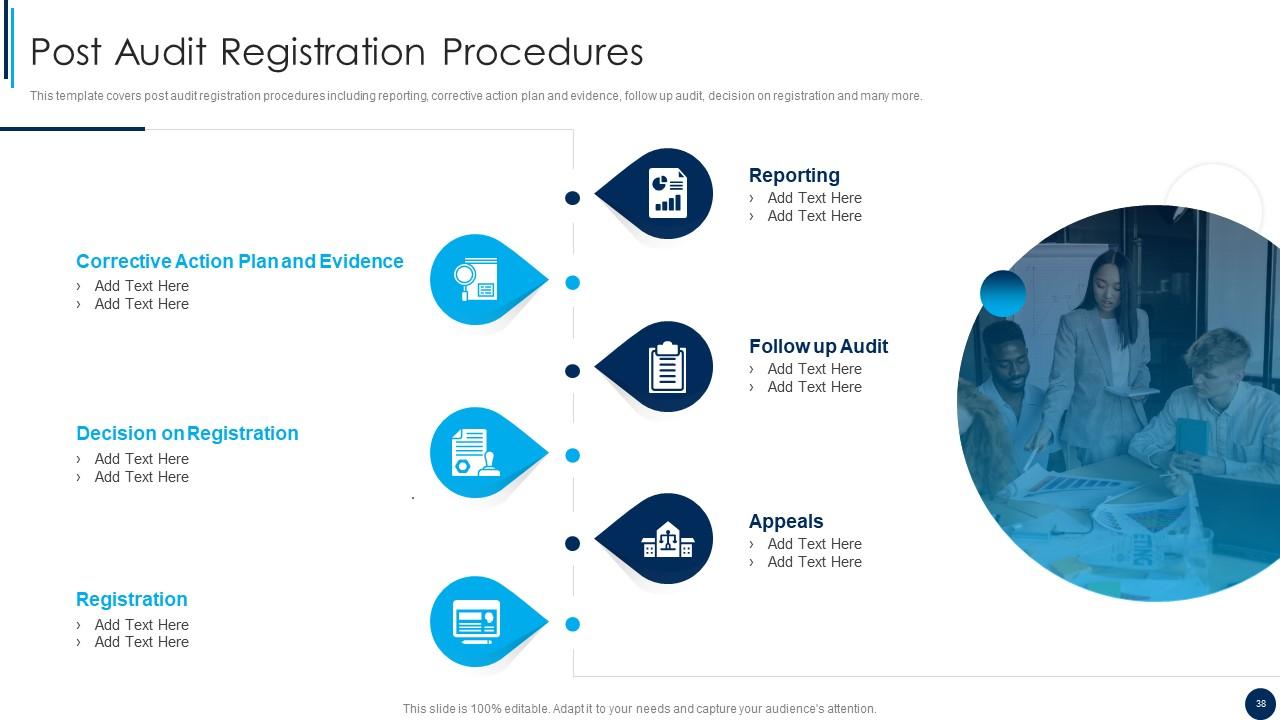
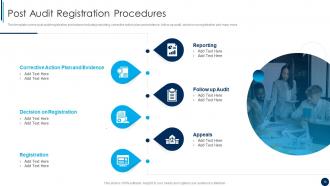
Slide 38: This slide shows post audit registration procedures including reporting, corrective action plan and evidence, etc.
Slide 39: This slide highlights title for topics that are to be covered next in the template.
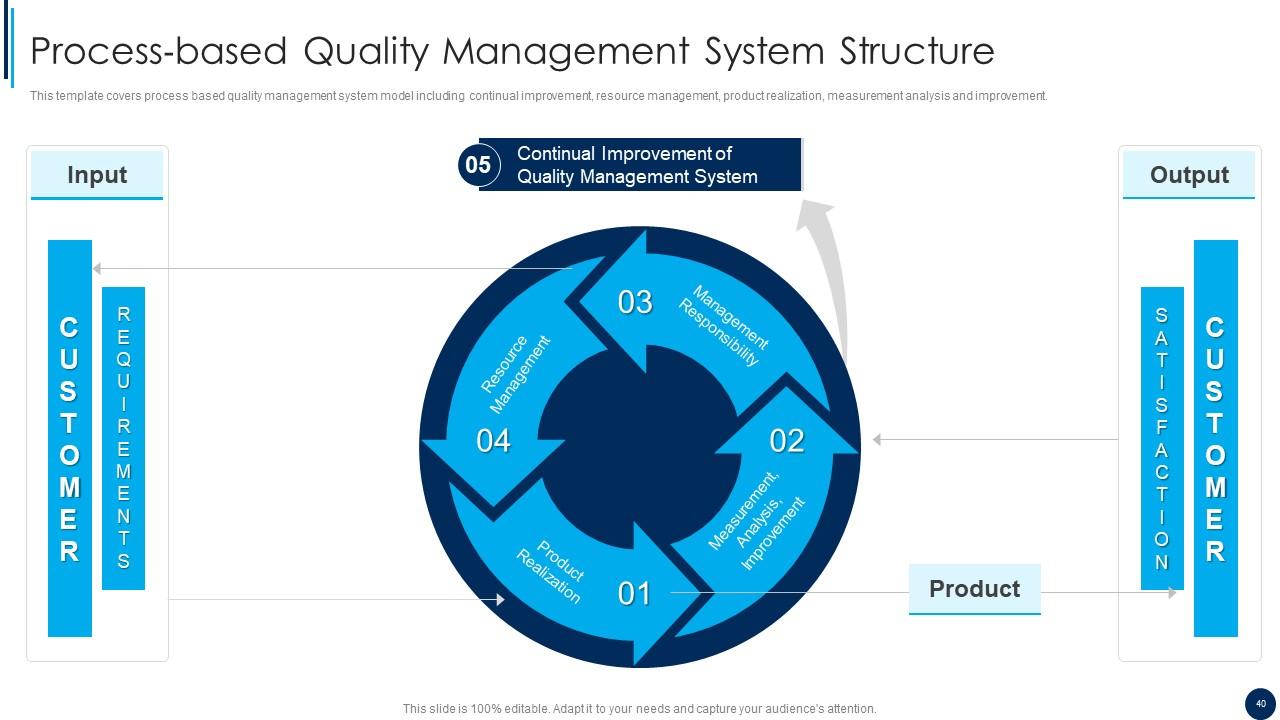
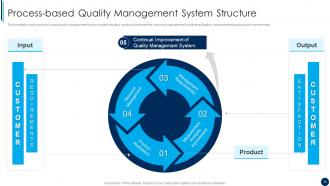
Slide 40: This slide shows process based quality management system model including continual improvement, resource management, etc.
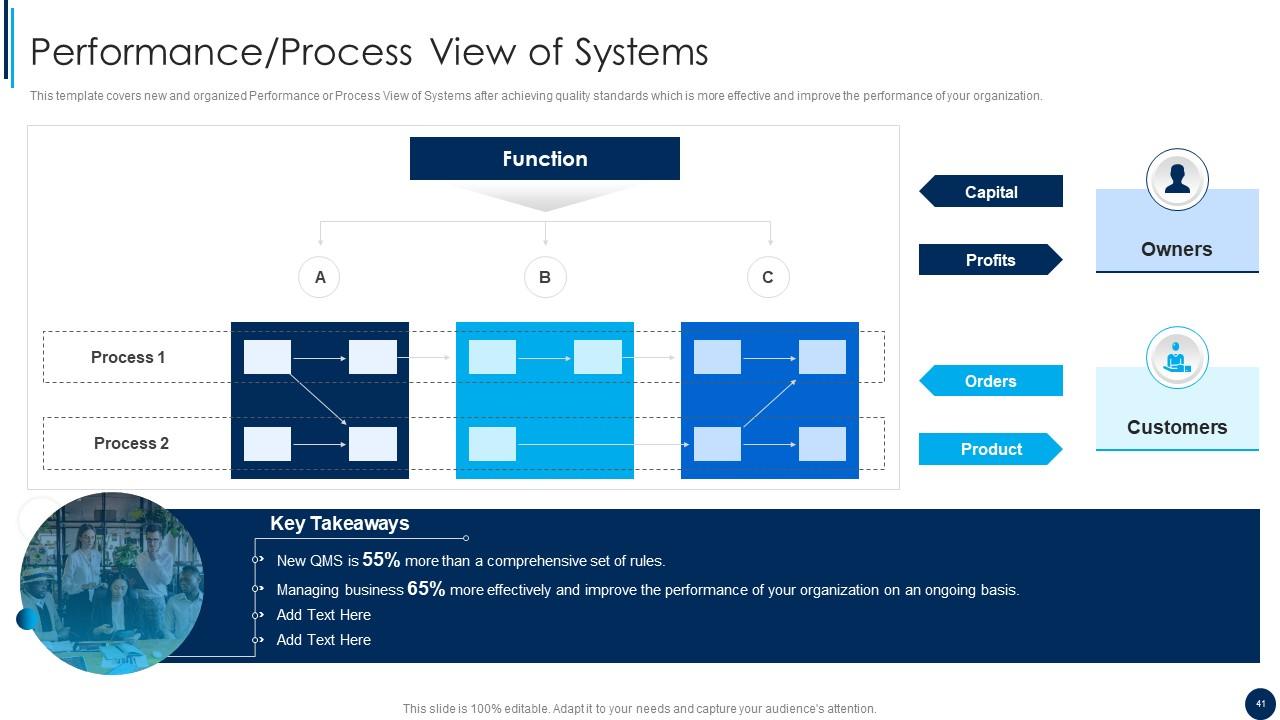
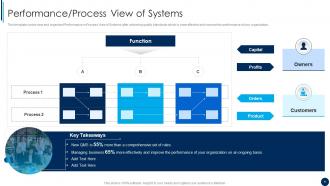
Slide 41: This slide displays new and organized Performance or Process View of Systems after achieving quality standards.
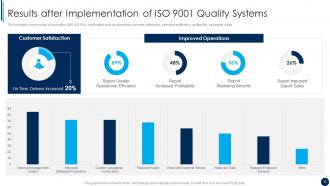
Slide 42: This slide represents results of implication QMS ISO 9001 certification such as increasing customer satisfaction, operational efficiency, etc.
Slide 43: This slide highlights title for topics that are to be covered next in the template.
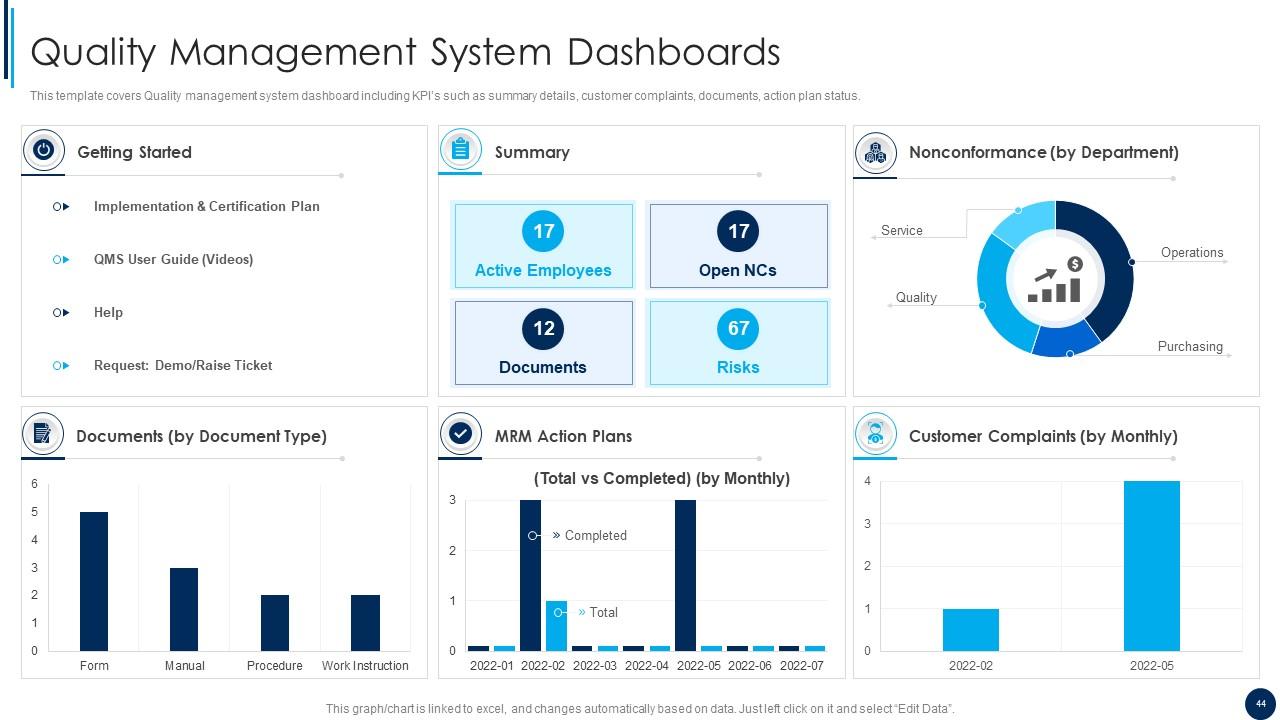
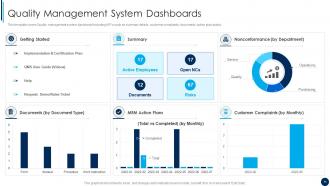
Slide 44: This slide presents Quality management system dashboard including KPI’s such as summary details, customer complaints, etc.
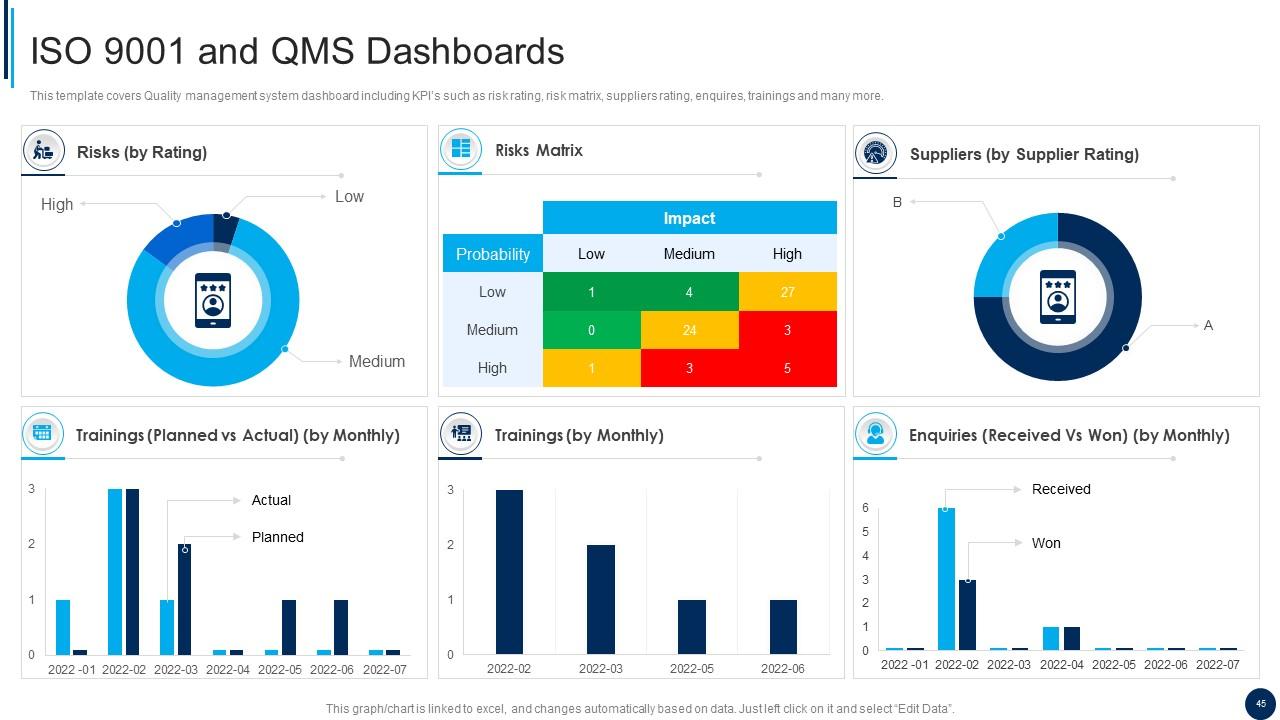
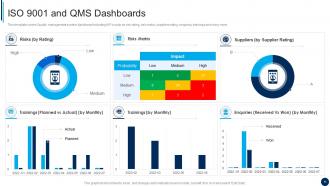
Slide 45: This slide shows Quality management system dashboard including KPI’s such as risk rating, risk matrix, suppliers rating, etc.
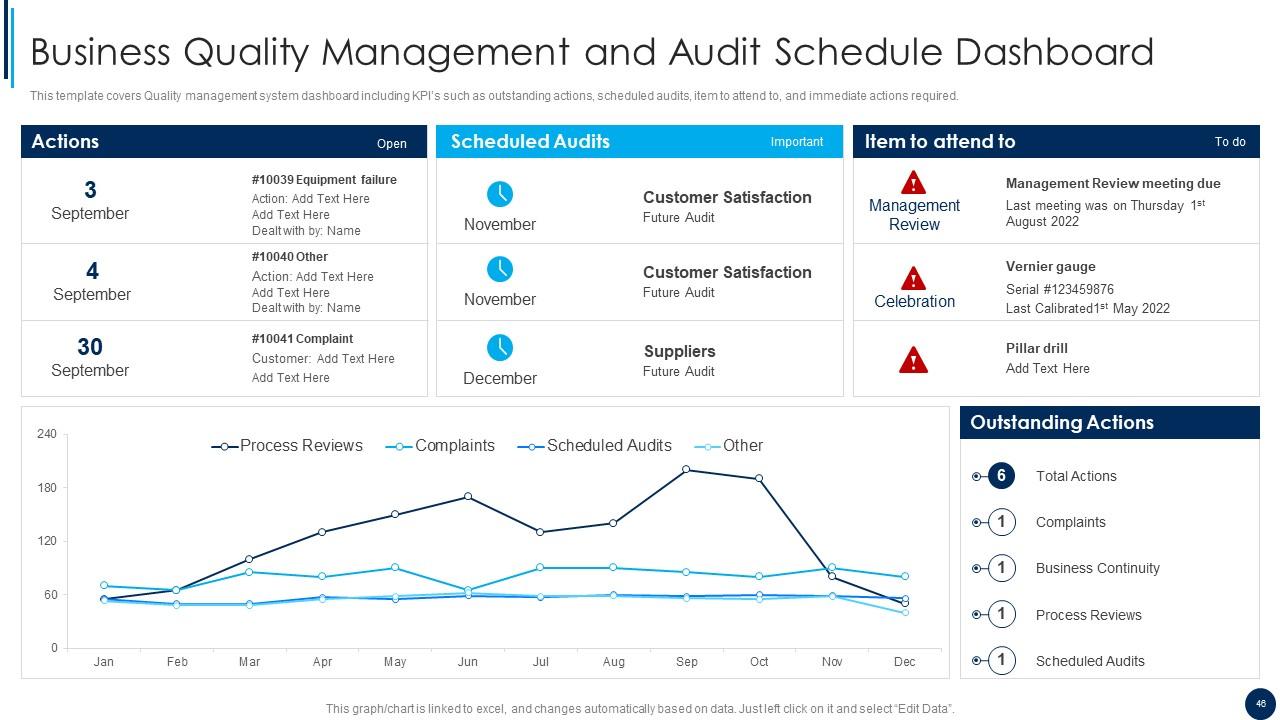
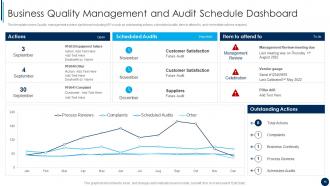
Slide 46: This slide displays Quality management system dashboard including KPI’s such as outstanding actions, scheduled audits, etc.
Slide 47: This slide showcases Icons for ISO 9001 Quality Management System Certification.
Slide 48: This slide is titled as Additional Slides for moving forward.
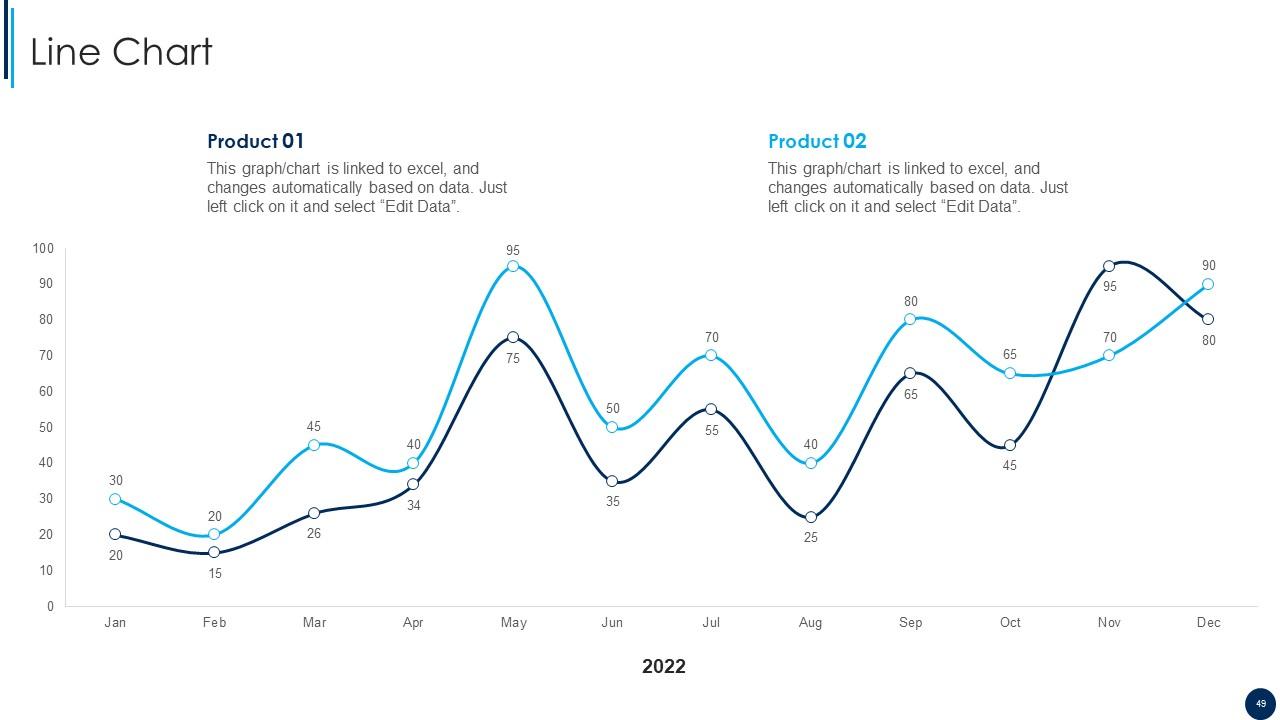
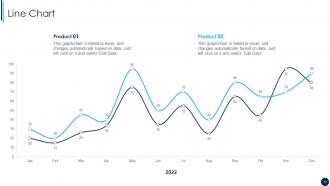
Slide 49: This slide describes Line chart with two products comparison.
Slide 50: This slide depicts Venn diagram with text boxes.
Slide 51: This is Our Goal slide. State your firm's goals here.
Slide 52: This slide shows Post It Notes. Post your important notes here.
Slide 53: This is an Idea Generation slide to state a new idea or highlight information, specifications etc.
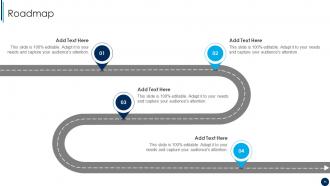
Slide 54: This slide presents Roadmap with additional textboxes.
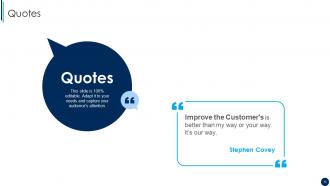
Slide 55: This is a Quotes slide to convey message, beliefs etc.
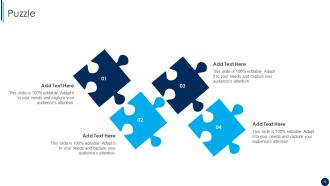
Slide 56: This slide contains Puzzle with related icons and text.
Slide 57: This is a Thank You slide with address, contact numbers and email address.
ISO 9001 Quality Management System Certification Powerpoint Presentation Slides with all 62 slides:
Use our ISO 9001 Quality Management System Certification Powerpoint Presentation Slides to effectively help you save your valuable time. They are readymade to fit into any presentation structure.
-
Eye-catching PPT designs, outstanding team, and best customer service. I’m a super satisfied customer here!
-
Good research work and creative work done on every template.
