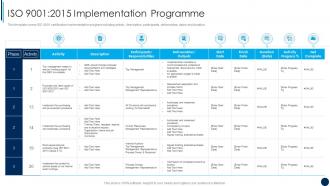
ISO 9001 2015 Implementation Programme ISO 9001 Quality Management Ppt Professional
Try Before you Buy Download Free Sample Product
Audience
Editable
of Time
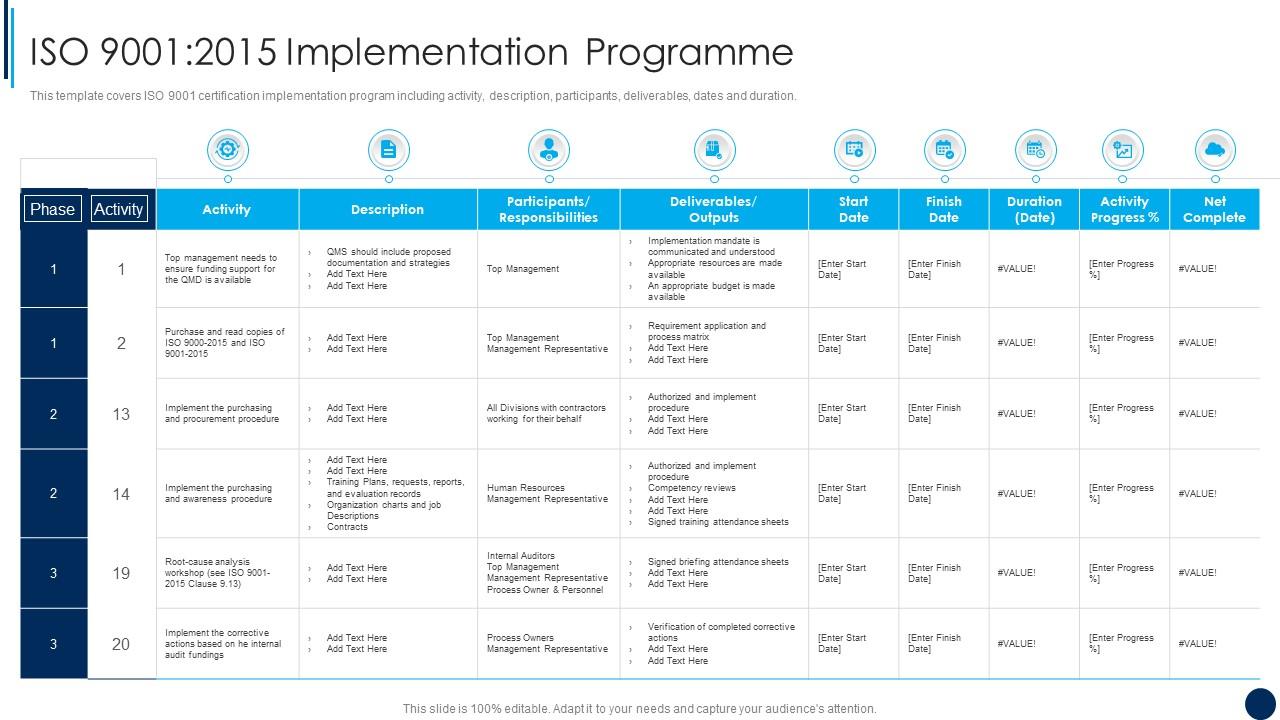
This template covers ISO 9001 certification implementation program including activity, description, participants, deliverables, dates and duration.
People who downloaded this PowerPoint presentation also viewed the following :
ISO 9001 2015 Implementation Programme ISO 9001 Quality Management Ppt Professional with all 6 slides:
Use our ISO 9001 2015 Implementation Programme ISO 9001 Quality Management Ppt Professional to effectively help you save your valuable time. They are readymade to fit into any presentation structure.
FAQs for ISO 9001 2015 Implementation Programme ISO 9001 Quality
Ok so first thing - do a gap analysis to see what you're missing. Then comes the fun part (sarcasm intended): building all your documentation and training everyone on the new processes. Honestly, the paperwork alone will make you question your life choices. Once you've got everything running smoothly for a bit, book your audit with a certified body. Whole thing usually takes 6-12 months, but don't quote me if your company's massive. Start small though - nail the basics before getting fancy with it. You'll thank me later.
Okay so first thing - figure out what each person actually cares about. Some folks worry about extra work, others stress about costs or whatever. Then hit them with the real benefits that matter to THEIR job - like fewer screw-ups or happier customers. But here's the thing (and this is where most people mess up) - don't just announce changes from above. That's annoying. Get them involved in building the processes they'll use daily. Ask what they think about procedures. When something works well, make a big deal about it. Basically make them feel like partners, not people getting ordered around. Way better results that way.
Honestly, the worst part is dealing with people who just refuse to change how they do things. Management says they're committed but then disappears when you need resources. Don't even get me started on the documentation nightmare - you'll feel like you're drowning in forms nobody reads. Here's what actually works though: pick one simple process first. Get your boss to publicly back you up from the start, or you're screwed. Instead of writing procedures yourself, have your team help create them. That way they might actually follow the damn things. Oh, and auditors want different stuff than what the standard says, which is super fun to figure out.
So basically you're comparing what you do now against what ISO 9001 actually wants. Think of it like a practice test - you'll spot missing paperwork, wonky procedures, stuff that just doesn't match up. Honestly saves you from looking clueless when the real auditors come around. You can figure out what's most broken and needs fixing first. Time-wise, it helps you plan how long this whole thing will take. Just grab the ISO standard and go through it section by section against your current setup. Kinda tedious but worth it.
Dude, your leaders have to actually care about this stuff or you're screwed. I've watched so many companies treat ISO 9001 like some boring compliance thing - spoiler alert, it never works. Get your executives properly trained first so they understand what they're signing up for. They need to put real money behind it, explain to everyone why you're doing this mess, and actually walk the walk themselves. Can't just talk about quality in meetings then ignore it the rest of the time. Your team will see right through that fake commitment. Bottom line? Leadership makes or breaks the whole thing.
Honestly, just compare what you're already doing to the ISO 9001 checklist first. Most companies are shocked to find they're already hitting like 60% of the requirements without realizing it. Don't reinvent the wheel - document your existing processes instead of creating fancy new ones. Then figure out what's missing. I'd tackle the big three first: document control, management review, and fixing problems when they come up. You're probably doing informal versions already anyway. Add some numbers to track how things are going, write it all down properly, and boom - you're way closer than you think.
Ugh, ISO 9001 docs are such a pain but here's what actually works - skip the fancy binders nobody opens. Map out what your team really does first, then write it down in normal English they'll follow. Quality manual, procedures, work instructions - yeah you need those but make them digital so people can find stuff. Honestly the worst mistake is documenting some perfect world version instead of reality. Give each doc an owner who cares about keeping it updated. Oh and I learned this the hard way - if your daily ops don't get easier with these docs, you're doing it wrong.
Look, don't let ISO 9001 become another dusty manual nobody reads. Train your people to actually use data when making decisions instead of just winging it. Leadership has to visibly care - I've seen too many places where execs ignore it and wonder why nothing changes. Build improvement talks into regular meetings and listen when employees have ideas. Oh, and celebrate wins when processes get better! The trick is tying quality goals to stuff people already do daily. Frame it as better customer service and you'll get way more buy-in than making it feel like extra work.
Honestly, start with IsoTools, MasterControl, or ETQ Reliance - they're built for ISO stuff and handle all the documentation nightmares automatically. But if money's tight? SharePoint or even Google Workspace work fine when you're starting out. Look for anything that tracks document versions and manages audit schedules. The corrective actions workflow is huge too. My old company spent like six months debating systems and got nowhere - total waste of time. Just pick something that matches your current setup. You can always switch later once you figure out what you actually need. Don't make it harder than it has to be.
Track your defect rates and customer complaints first - that's where you'll see real impact. Internal audit findings are gold too, plus customer satisfaction scores. Cycle times matter way more than people think. Honestly, rework rates will tell you if things are actually working or just look good on paper. Set your baseline before you start implementing anything, then compare month to month. Pick maybe 3-5 metrics that actually matter to your business instead of tracking everything. Management reviews help you catch problems early. The trick is being consistent with data collection - otherwise you're just guessing.
So everyone needs the basics first - document control, corrective actions, all that fun stuff. Managers should get extra training on risk management and internal auditing since they're actually running things. Honestly, ISO training is pretty boring but you can't skip it. Start with general awareness sessions, then break into role-specific stuff. Your team needs to know how to spot and report issues, plus understand their part in keeping quality standards up. Oh and don't think you're done after the first round - people forget this stuff fast so you'll need refreshers.
ISO 9001 basically forces you to actually listen to customers and deliver what they want consistently. Most companies suck at collecting feedback systematically, but this standard makes you do it properly. You'll map out clear processes that cut down errors and speed up delivery times. Plus you catch problems before they reach customers - way better than dealing with complaints later. Quality stays reliable, which builds trust. Honestly, it's pretty straightforward once you start. Just begin by looking at where you interact with customers and figure out where things usually go wrong.
Honestly, continuous improvement is a game changer - it catches problems before they blow up and keeps everything running smoother. Your customers complain less, you waste less stuff, and your team actually gets excited about fixing real issues instead of just checking boxes. The auditors eat this stuff up too, which is nice when certification time rolls around. Small changes really do add up to huge efficiency gains over time. Oh, and start simple - maybe track one or two metrics first. Don't overwhelm everyone right away or they'll hate it.
Technically you need to do a formal review once a year for management review. But honestly? Smart companies are on top of this stuff way more often. Most do internal audits quarterly or every six months - depends how risky your processes are. Thing is, you're probably already tracking quality metrics monthly anyway, right? Those weekly KPIs count too. The annual review is more like stepping back to see if everything's actually working and what needs fixing. My two cents - set up a monthly dashboard so you can spot problems before they blow up. Way less stressful than scrambling at year-end.
Look, internal audits are basically health checks for your quality system. They catch problems before the external guys show up - which honestly saves you a ton of headache later. You'll be reviewing processes, making sure people actually follow procedures, and spotting improvement opportunities. Don't let your team think it's some "gotcha" thing though. Frame it as helpful feedback instead. The findings go straight into management reviews and drive your corrective actions, so the whole system keeps getting better. Just set up a regular schedule and you're golden.
-
Making a presentation has never been this easy for me. Thank you SlideTeam for offering a splendid template library.
-
Every time I ask for something out-of-the-box from them and they never fail in delivering that. No words for their excellence!