Iso 9001 iso 9001 2015 implementation programme

Rating:
90%
Iso 9001 iso 9001 2015 implementation programme
Slide 1 of 6

or

Favourites Favourites

Try Before you Buy Download Free Sample Product

Audience Impress Your
Audience
Editable 100%
Editable
Time Save Hours
of Time
The Biggest Sale is ending soon in
0
0
:
0
0
:
0
0
Rating:
90%
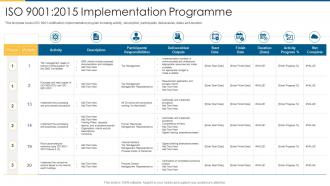
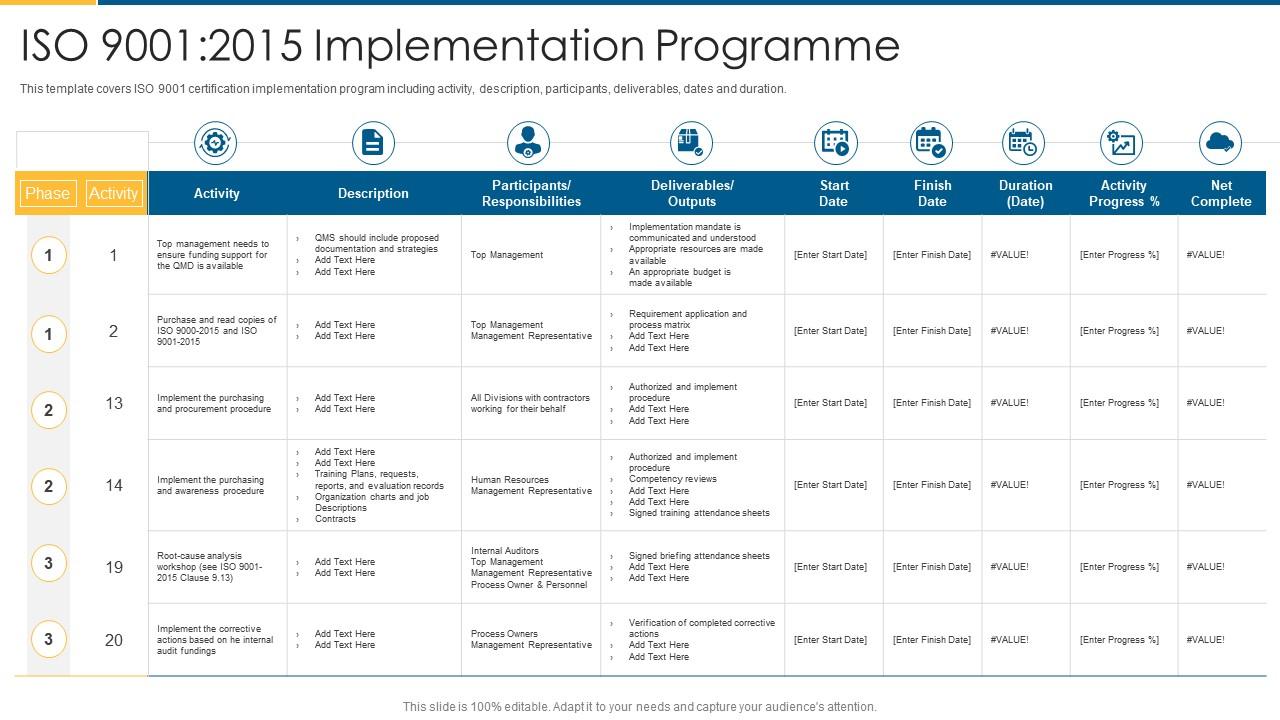
This template covers ISO 9001 certification implementation program including activity, description, participants, deliverables, dates and duration. Deliver an outstanding presentation on the topic using this Iso 9001 Iso 9001 2015 Implementation Programme. Dispense information and present a thorough explanation of Documentation, Strategies, Management using the slides given. This template can be altered and personalized to fit your needs. It is also available for immediate download. So grab it now.
FAQs for Iso 9001 iso 9001

Key steps in ISO 9001:2015 implementation include gap analysis, leadership commitment, process mapping, documentation development, employee training, and internal auditing. These phases work systematically by establishing quality management frameworks, engaging stakeholders across departments, and creating measurable improvement processes, with many organizations finding that structured implementation ultimately delivers enhanced operational efficiency, customer satisfaction, and sustainable competitive advantage.

Organizations can align their existing quality management systems with ISO 9001:2015 requirements by conducting comprehensive gap analyses, updating documentation to reflect process-based approaches, and integrating risk-based thinking throughout operations. This strategic alignment enables companies across manufacturing, healthcare, and service sectors to enhance operational efficiency, improve customer satisfaction, and demonstrate continuous improvement capabilities, ultimately delivering competitive advantage in increasingly quality-focused markets.

Common challenges include resistance to change, inadequate employee training, insufficient documentation processes, resource allocation constraints, and lack of management commitment. Organizations frequently struggle with integrating new quality management systems into existing workflows, with many companies finding that systematic planning, comprehensive staff education, and strong leadership support ultimately streamline implementation and deliver improved operational efficiency.

Leadership involvement significantly influences ISO 9001:2015 success by establishing clear quality policies, allocating necessary resources, and demonstrating visible commitment throughout the organization. Through strategic oversight and active participation, leaders in manufacturing, healthcare, and financial services streamline implementation processes, enhance employee engagement, and ensure sustainable quality management practices, ultimately delivering improved operational efficiency and competitive market positioning.

Employee training serves as the foundation for ISO 9001:2015 compliance by ensuring staff understand quality procedures, documentation requirements, process improvements, and their specific responsibilities within the quality management system. Through comprehensive training programs, organizations enhance operational consistency, reduce non-conformities, and foster a quality-focused culture, with many companies finding that well-trained employees ultimately deliver improved customer satisfaction and sustained certification success.

Risk-based thinking integrates into ISO 9001:2015 through systematic risk identification during process planning, regular risk assessments across all quality management activities, and embedding mitigation strategies into standard operating procedures. Organizations achieve this by conducting thorough risk analyses during management reviews, training employees to identify potential quality risks in their daily workflows, and establishing preventive controls that address risks before they impact customer satisfaction, ultimately delivering enhanced operational reliability and competitive advantage.

Key metrics include customer satisfaction scores, non-conformance rates, internal audit findings, corrective action completion times, and process performance indicators. These measurements enable organizations to track quality improvements, operational efficiency, and compliance effectiveness, with many manufacturing and service companies finding that consistent monitoring ultimately delivers enhanced customer retention, reduced operational costs, and sustained competitive advantage.

Organizations can effectively manage documentation and records under ISO 9001:2015 by establishing centralized document control systems, implementing version management protocols, defining clear retention schedules, and ensuring easy accessibility across departments. Through digital document management platforms, companies streamline compliance tracking, automate approval workflows, and maintain audit trails, with many organizations finding that these systematic approaches significantly reduce administrative overhead while enhancing operational transparency and regulatory readiness.

ISO 9001:2015 certification delivers enhanced customer satisfaction, improved operational efficiency, reduced costs, stronger risk management, and increased market credibility. Organizations across manufacturing, healthcare, and financial services find that this strategic quality framework streamlines processes, minimizes waste, and ultimately provides competitive advantage while opening doors to new business opportunities and partnerships.

Customer feedback enhances ISO 9001:2015 processes through systematic collection, analysis of satisfaction trends, identification of improvement opportunities, corrective action implementation, and continuous monitoring of quality metrics. Organizations across manufacturing, healthcare, and financial services leverage this feedback to streamline operations, reduce defects, and enhance service delivery, ultimately achieving greater customer satisfaction and competitive advantage.

Organizations should conduct internal audits at least annually for ISO 9001:2015 compliance, though many implement quarterly or bi-annual schedules based on risk assessments, process complexity, and operational changes. This strategic approach enables companies to identify non-conformities early, maintain continuous improvement momentum, and demonstrate ongoing commitment to quality management, ultimately delivering enhanced customer satisfaction and competitive advantage.

Non-conformances in ISO 9001:2015 systems can result in certification suspension, customer dissatisfaction, regulatory penalties, and operational inefficiencies that compromise quality outputs. While these present challenges, they also create opportunities for systematic improvement, with many organizations finding that robust non-conformance management processes ultimately strengthen their quality frameworks, enhance customer trust, and deliver competitive advantages through continuous operational excellence.

Organizations foster continuous improvement culture through regular management reviews, employee engagement initiatives, systematic data analysis, customer feedback integration, and process optimization programs. Through cross-functional teams and performance metrics, companies like manufacturing firms and healthcare organizations enhance operational efficiency, reduce waste, and improve customer satisfaction, ultimately delivering competitive advantage in increasingly quality-focused markets.

Resources for ISO 9001:2015 certification include implementation guides, template documentation, internal auditor training programs, consultant services, and online learning platforms. These resources streamline preparation by providing structured frameworks, compliance checklists, and expert guidance, with many organizations finding that combining formal training with tailored consulting delivers faster certification timelines and enhanced operational efficiency.

Technology streamlines ISO 9001:2015 implementation through automated document management systems, digital audit tracking, real-time compliance monitoring, and integrated workflow platforms. These solutions enable organizations to minimize manual documentation, accelerate certification processes, and maintain continuous compliance, with many companies finding that cloud-based quality management systems ultimately deliver faster audits and reduced administrative costs.

Ratings and Reviews

90% of 100
Review Form
Write a review
Most Relevant Reviews
  1. 100%

    by Earl Contreras

    Unique research projects to present in meeting.
  2. 80%

    by Roberts Roberts

    Great experience, I would definitely use your services further.

2 Item(s)

per page: