

How To Achieve ISO 9001 Certification Powerpoint Presentation Slides




Try Before you Buy Download Free Sample Product
 Impress Your
 Audience
 100%
100% Editable
 Save Hours
 of Time


ISO 9001 is used to determine if the Quality Control Program in place is appropriate and efficient, thus pushing the company to recognize and incorporate improvements. Here is an efficiently designed template on How to Achieve ISO 9001 Certification that is useful for the company to create and integrate a quality management system in compliance with the requirements of the new standard and allow an audit carried out by a Certification Body CB or Registrar to assess the performance of the QMS against the current ISO 9001 standard. This template covers the firms current situation, which includes problems in management procedures, causes of financial loss, etc. It also consists of the ISO 9001 implementation process, such as creating an Implementation Programme, appointing MR and establishing a team, and gap assessment. It also includes Registrar Selection Process and Agreement for Quality Management System Registration. In this template, we have also included Business Internal Audits, Management Review and corrective actions, Root Causes to the Problem, and its Solutions. It also covers Process based QMS Structure, Performance or Process View of Systems, and Results after Implementation of ISO 9001 Quality Systems along with Quality Management System Dashboards, ISO 9001 QMS Dashboards, etc. Download it now.
People who downloaded this PowerPoint presentation also viewed the following :
Content of this Powerpoint Presentation
Slide 1: This slide introduces How to Achieve ISO 9001 Certification. State Your Company Name and begin.
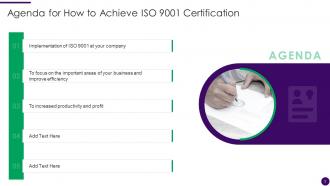
Slide 2: This is an Agenda slide. State your agendas here.
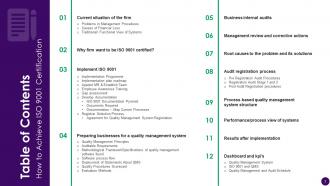
Slide 3: This slide presents Table of Content for the presentation.
Slide 4: This slide highlights title for topics that are to be covered next in the template.
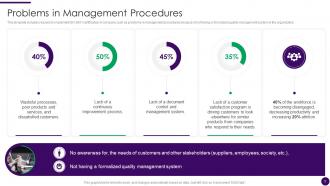
Slide 5: This slide shows reasons to implement ISO 9001 certification in company.
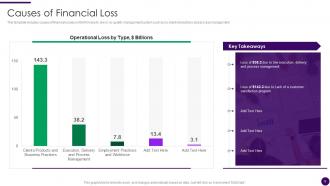
Slide 6: This slide displays causes of financial losses on the firm due to low or no quality management system such as no client interactions and process management.
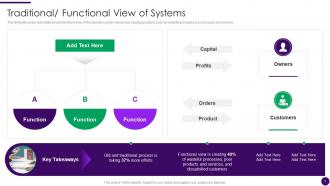
Slide 7: This slide represents old traditional and functional view of the business system which was causing problems such as wasteful processes, poor products and services.
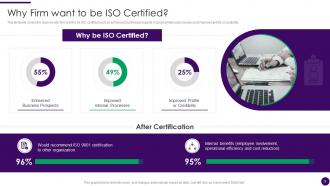
Slide 8: This slide shows reasons why firm want to be ISO certified such as enhanced business prospects, improved internal processes and improved profile or credibility.
Slide 9: This slide highlights title for topics that are to be covered next in the template.
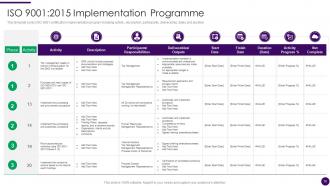
Slide 10: This slide shows ISO 9001 certification implementation program including activity, description, participants, etc.
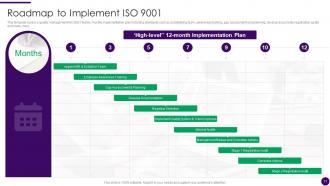
Slide 11: This slide displays quality management ISO 9001 twelve months implementation plan.
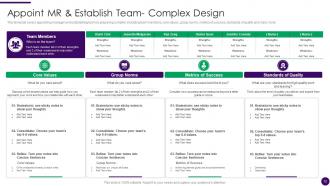
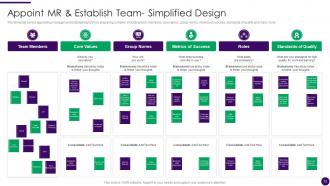
Slide 12: This slide represents appointing manager and establishing team by preparing a charter including team members, core values, etc.
Slide 13: This slide shows appointing manager and establishing team by preparing a charter.
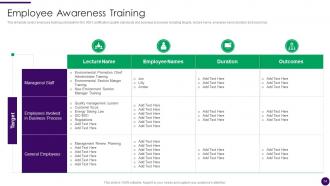
Slide 14: This slide presents employee training schedule for ISO 9001 certification quality standards and business processes.
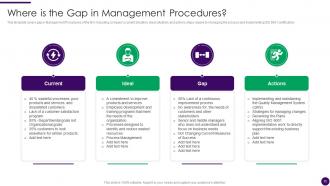
Slide 15: This slide shows gap in Management Procedures of the firm including company’s current situation, ideal situation, etc.
Slide 16: This slide highlights title for topics that are to be covered next in the template.
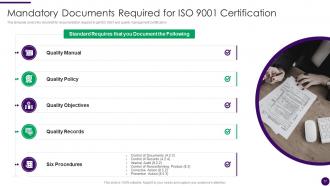
Slide 17: This slide represents checklist for documentation required to get ISO 9001 and quality management Certification.
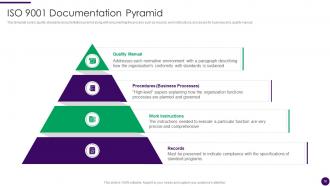
Slide 18: This slide shows quality standards documentation pyramid along with documenting the process such as records, work instructions, etc.
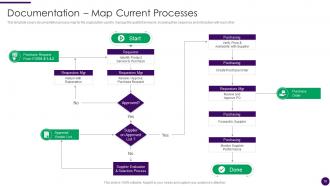
Slide 19: This slide presents documentation process map for the organization used to manage the quality framework.
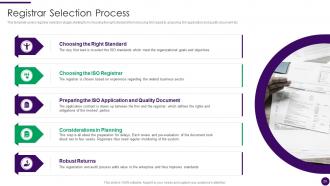
Slide 20: This slide shows Registrar Selection Process.
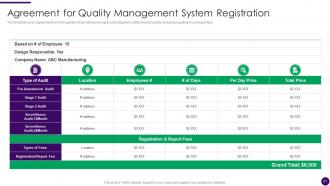
Slide 21: This slide displays agreement from the registrar which defines the rights and obligations of the involved parties.
Slide 22: This slide highlights title for topics that are to be covered next in the template.
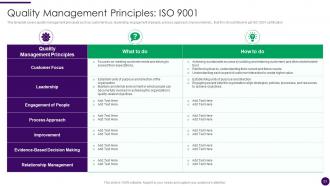
Slide 23: This slide shows quality management principals such as customer focus, leadership, engagement of people, etc.
Slide 24: This slide presents Defining and assigning the requirements which highlights the relationship between production and administrative support inside the organization.
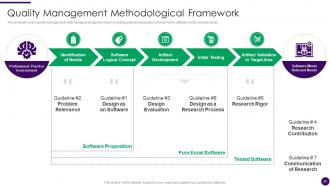
Slide 25: This slide shows quality management methodological design framework.
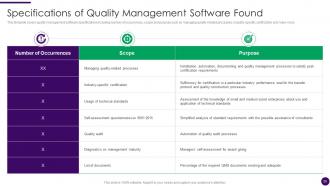
Slide 26: This slide displays quality management software specifications including number of occurrences, scope and purpose.
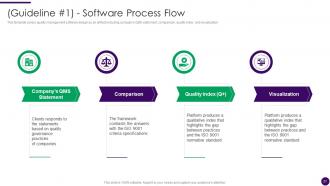
Slide 27: This slide represents quality management software design as an artifact including company's QMS statement, comparison, quality index, etc.
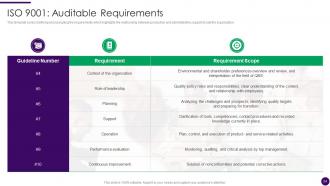
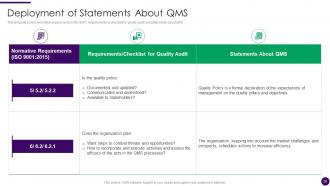
Slide 28: This slide shows normative requirements in ISO 9001, requirements or checklist for quality audit and statements about QMS.
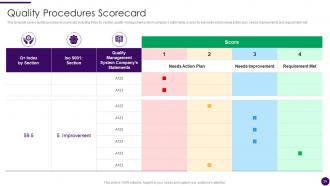
Slide 29: This slide presents quality procedures scorecard including Index by section, quality management system company’s statements, etc.
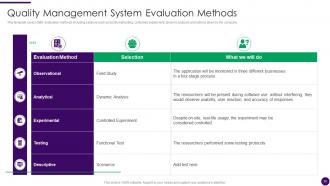
Slide 30: This slide shows QMS evaluation methods including sections such as functional testing, controlled experiment, etc.
Slide 31: This slide highlights title for topics that are to be covered next in the template.
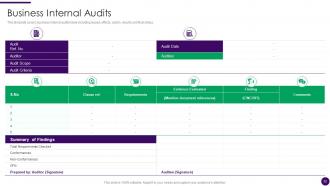
Slide 32: This template represents business internal audits table including issues, effects, action, results and final status.
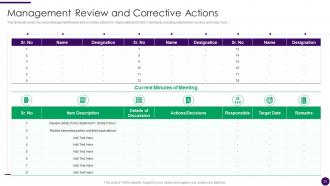
Slide 33: This slide shows business Management Review and corrective actions for implementing ISO 9001 standards.
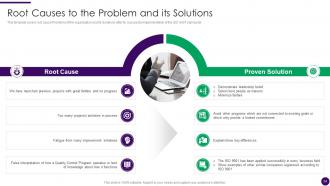
Slide 34: This slide presents root cause Problems of the organization and its Solutions after for successful implementation of the ISO 9001 standards.
Slide 35: This slide highlights title for topics that are to be covered next in the template.
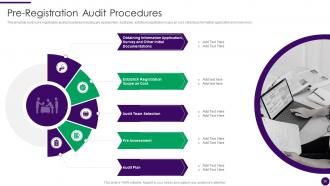
Slide 36: This slide displays pre registration audit procedures including pre assessment , audit plan, establish registration scope, etc.
Slide 37: This slide represents registration audit stage one and two including audit plan, team pre audit meeting, etc.
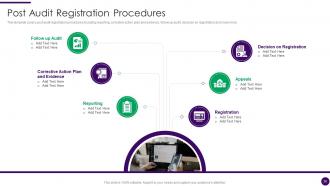
Slide 38: This slide shows post audit registration procedures including reporting, corrective action plan and evidence, etc.
Slide 39: This slide highlights title for topics that are to be covered next in the template.
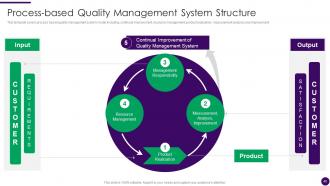
Slide 40: This slide shows process based quality management system model including continual improvement, resource management, etc.
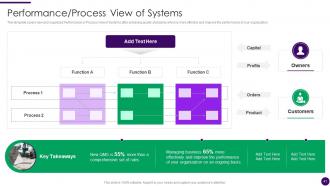
Slide 41: This slide displays new and organized Performance or Process View of Systems after achieving quality standards.
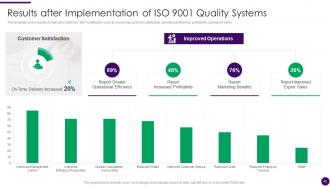
Slide 42: This slide represents results of implication QMS ISO 9001 certification such as increasing customer satisfaction, operational efficiency, etc.
Slide 43: This slide highlights title for topics that are to be covered next in the template.
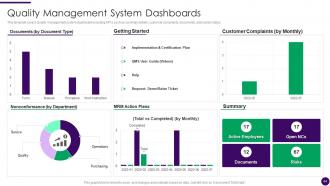
Slide 44: This slide presents Quality management system dashboard including KPI’s such as summary details, customer complaints, etc.
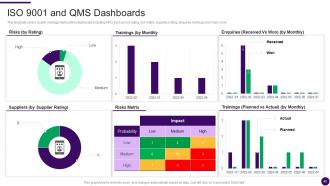
Slide 45: This slide shows Quality management system dashboard including KPI’s such as risk rating, risk matrix, suppliers rating, etc.
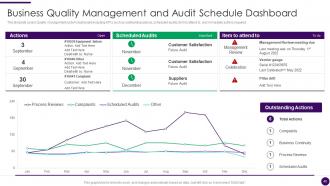
Slide 46: This slide displays Quality management system dashboard including KPI’s such as outstanding actions, scheduled audits, etc.
Slide 47: This slide showcases Icons for How to Achieve ISO 9001 Certification.
Slide 48: This slide is titled as Additional Slides for moving forward.
Slide 49: This slide provides 30 60 90 Days Plan with text boxes.
Slide 50: This slide shows Roadmap for Process Flow.
Slide 51: This slide presents Weekly Timeline with Task Name.
Slide 52: This slide shows Post It Notes. Post your important notes here.
Slide 53: This slide depicts Venn diagram with text boxes.
Slide 54: This slide contains Puzzle with related icons and text.
Slide 55: This is a Financial slide. Show your finance related stuff here.
Slide 56: This is a Timeline slide. Show data related to time intervals here.
Slide 57: This slide showcases Magnifying Glass to highlight information, specifications, etc.
Slide 58: This is an Idea Generation slide to state a new idea or highlight information, specifications etc.
Slide 59: This is a Thank You slide with address, contact numbers and email address.
How To Achieve ISO 9001 Certification Powerpoint Presentation Slides with all 64 slides:
Use our How To Achieve ISO 9001 Certification Powerpoint Presentation Slides to effectively help you save your valuable time. They are readymade to fit into any presentation structure.











FAQs for How To Achieve ISO 9001 Certification
Look, getting ISO 9001 certified is honestly a smart move. Customers take you way more seriously, and some companies flat-out won't work with you without it. Your processes become way more consistent too - less chaos, fewer fires to put out later. Yeah, the paperwork sucks at first (I won't sugarcoat that), but most places end up running smoother afterward. Your team gets better at catching issues early instead of scrambling when things blow up. I'd start by just mapping out what you're already doing - you'll probably spot some obvious fixes right away.
The certification requirements are exactly the same no matter your company size - same standards, same audit process. Small businesses actually have it easier though since there's way less stuff to document and manage. Big companies? They're stuck dealing with multiple locations, mountains of paperwork, and implementations that drag on forever. You'll probably wrap things up faster and cheaper, but here's the thing - you might need to hire outside help since you don't have a whole quality team like the big players do. Oh, and start by figuring out what processes you already have. That's your starting point.
So first things first - map out what you're already doing process-wise, then see where you're falling short of ISO 9001 requirements. Document your quality policy and set some objectives you can actually measure (not just fluffy stuff). Internal audits are mandatory, plus management has to review everything regularly. Honestly, the paperwork is brutal but unavoidable. Train your team properly and show you're hitting customer requirements consistently. The continuous improvement thing is huge with ISO - they're obsessed with it. Oh, and definitely budget extra time because this always takes longer than you think.
First thing - do a gap analysis to see what you're missing against ISO 9001. Then document literally everything (trust me, auditors are obsessed with paperwork). But here's the thing - don't just create procedures and forget about them. Your team needs to actually follow what's written down. Run some internal audits first to catch problems early. Oh, and train everyone on what the real audit will be like so they don't panic. Pick one person who really knows the standard to handle auditor questions - you'll thank me later when they start drilling down into details.
So ISO 9001 is all about continual improvement - that's literally the core of the whole thing. You can't just get certified and then forget about it (wish it worked that way though!). The standard actually requires you to constantly hunt for ways to make your processes better. Look at your performance data regularly, grab customer feedback, then actually do something with it. Short bursts work better than trying to overhaul everything at once. Set up management reviews where you genuinely talk about what's broken and what's killing it. It's like maintenance on your car - ignore it and you'll pay later.
Yeah, those two standards play nice together since they use the same basic framework. Quality management vs environmental management, but honestly? About 60-70% of the requirements overlap anyway. Both need leadership buy-in, risk management, continuous improvement - all that good stuff. You can combine your documentation, audits, management reviews instead of doing everything twice (which is a total pain). My advice? Map out where your current processes already mesh, then build from there. Way less headache than running separate systems. The integrated approach actually makes more sense once you get into it.
Honestly, the worst thing companies do is treat ISO 9001 like some giant paperwork marathon. They document everything without actually getting why they're doing it - then wonder why audits go badly. Don't rush this either, it's not a weekend project. Takes way more time than people think. Your leadership has to actually care too, otherwise you're screwed from the start. Oh and here's what actually works: figure out how stuff currently runs before you start writing procedures. People need to see this makes their jobs easier, not just some fancy certificate thing. Makes all the difference.
Oh yeah, you'll need those surveillance audits every year to keep your ISO 9001 cert active. They happen annually throughout your 3-year cycle. Honestly, they're not nearly as intense as that first audit - more like quick check-ins to see you're still doing what you said you'd do. I always thought of them as the dentist visits of quality management, if that makes sense. Anyway, just don't let your documentation get messy and keep your processes consistent. You'll be fine. Put the dates in your phone now though - trust me on this one.
Yeah, ISO 9001 is actually pretty solid for building customer trust. Basically shows you've got your processes dialed in and aren't just winging it. Customers see that certification and think "okay, these people are serious about quality." Your competitors probably can't prove their commitment the same way, which is nice. Sales get easier because prospects aren't as worried about picking you. Plus when things go wrong - and they will - you can fix problems faster since everything's documented. I've seen companies get way fewer complaints after getting certified. Retention usually goes up too.
Oh totally, it's a huge advantage. A lot of B2B companies literally won't even look at you without ISO 9001 - like you can't even get in the door to pitch. It builds instant credibility too since clients see you've got your quality processes locked down. Honestly, I think the operational benefits are underrated - it forces you to streamline everything which cuts costs and speeds up delivery. My buddy's company got certified last year and he said the sales conversations got way easier. If your competition doesn't have it, you're golden.
Dude, falling out of ISO 9001 compliance is honestly a nightmare. Your certification could get suspended or completely yanked. Customers start questioning your quality - which makes total sense when you think about it. Costs pile up fast from all the rework and waste, plus potential legal drama. Missing out on contracts hurts too since most require that certification. The regulatory mess alone will drive you crazy. My advice? Set up those internal audits now and stay ahead of issues. Way easier to catch problems early than deal with the fallout later.
Honestly, training is make-or-break for ISO 9001. Your team has to actually get the processes you've documented, otherwise they'll just wing it their usual way. That completely misses the point. Good training means people know their part in keeping quality up, they understand the procedures, and they catch problems early. ISO 9001 actually requires proof that your employees can do their jobs properly - which makes sense when you think about it. Map out what training each role needs first. Oh, and don't treat it like a one-and-done thing. Keep it rolling.
So there's actually a bunch of stuff out there to help with ISO 9001. Gap analysis tools are probably your best starting point - they'll show you what you're missing. Official ISO docs have the real info, plus you can find tons of templates for policies and procedures online. Training courses are everywhere now, mix of free and paid ones. Consulting firms will hold your hand through it but yeah, they're expensive. Oh and check if your industry group has specific templates - sometimes they're way more relevant than generic ones. Honestly just start with that gap assessment thing first.
Honestly, the biggest thing with ISO 9001:2015 is they moved away from all that heavy documentation stuff to risk-based thinking. You have to figure out what might go wrong ahead of time now. They finally got rid of that whole "management representative" thing too - thank god. Leadership has to be way more involved strategically now. Your organization's context matters more, plus understanding what stakeholders actually want. There's also this big push on managing changes properly and knowledge management. If you're still stuck on 2008, seriously consider upgrading. The risk approach actually makes your quality system useful for business instead of just being a paper nightmare.
Dude, ISO 9001 is like having a quality management passport that works everywhere. Partners and customers see it and instantly trust your processes - no need to prove yourself from scratch. Most countries actually accept it as meeting their quality standards too, which is pretty sweet. Put that certification front and center in all your international marketing stuff. Seriously, it opens doors way faster than you'd think. Oh, and it makes dealing with different regulations so much easier since everyone recognizes the standard.
-
Amazing product with appealing content and design.
-
This design is not only aesthetically pleasing but it has many uses making the cost worthwhile. The graphics look stunning, and you can edit them as per your needs.