


ISO 9001 Quality Management Roadmap To Implement ISO 9001 Ppt Diagrams




Try Before you Buy Download Free Sample Product
 Impress Your
 Audience
 100%
100% Editable
 Save Hours
 of Time


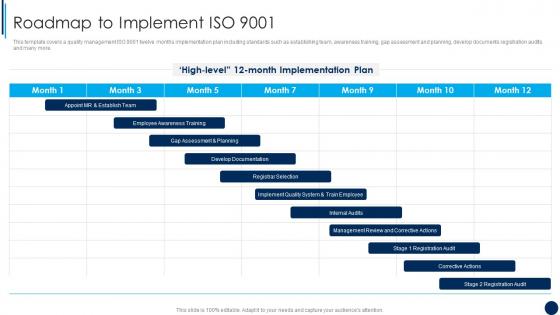
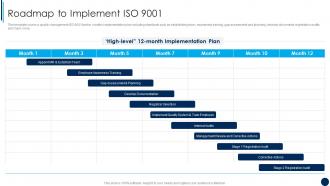
This template covers a quality management ISO 9001 twelve months implementation plan including standards such as establishing team, awareness training, gap assessment and planning, develop documents registration audits and many more.
People who downloaded this PowerPoint presentation also viewed the following :
ISO 9001 Quality Management Roadmap To Implement ISO 9001 Ppt Diagrams with all 6 slides:
Use our ISO 9001 Quality Management Roadmap To Implement ISO 9001 Ppt Diagrams to effectively help you save your valuable time. They are readymade to fit into any presentation structure.





FAQs for ISO 9001 Quality Management Roadmap To Implement ISO
First thing - get your boss on board and pick someone to run this thing. Do a gap analysis to see how far off you are from ISO 9001 requirements. Document your quality processes (policies, procedures, all that fun stuff). Train everyone on the new systems once they're ready. Internal audits come next to catch issues before the real auditors show up. Honestly, trying to document everything at once is a nightmare - start with your main processes first. The certification audit is the final step, but if you've done the groundwork right, it shouldn't be too scary.
Look, start with what actually touches your customers - core processes that affect quality and satisfaction. Map out departments, locations, and key workflows that need quality controls. Think of it like drawing a circle around the stuff that really matters (nobody cares about your break room policies, right?). Document what's included and what's not - trust me, being specific now saves headaches later when people try adding random things. Only include what you can realistically audit and manage. Otherwise you'll be drowning in scope creep before you know it.
Your leadership needs to be all-in on this, seriously. I've watched companies crash and burn when execs just dump ISO 9001 on someone's desk and walk away. They have to show up - like actually participate, give you the budget you need, and explain to everyone why this matters. Can't just be lip service either. People will see right through that fake enthusiasm thing. Get them to commit upfront before you waste months spinning your wheels. Without real buy-in from the top, you're basically trying to push water uphill and it sucks.
Get your team involved from day one - have them map out current processes since they actually know how stuff works. Listen when they complain (and oh boy, they will). Don't just say "we need this cert." Show them how ISO will cut down on the annoying rework they hate. Pick a few enthusiastic people as your champions - they'll do half the selling for you. Break requirements into small chunks with mixed teams so everyone owns a piece. Honestly, celebrating those early wins keeps momentum going way better than I expected.
Honestly, employee pushback is the worst part - nobody wants their routine messed with. Get them involved early though, and actually explain why you're doing this instead of just dropping new rules on them. Documentation is a nightmare too if you try to do everything at once. Start small, maybe just your most important stuff first. Oh, and make sure your boss is actually on board before you start or you'll be fighting an uphill battle. You need someone who can dedicate real time to this, not just squeeze it between meetings. Resource issues will definitely pop up, so prioritize what's critical.
So ISO 9001 makes you map out all your workflows, which sounds boring but actually cuts out a ton of redundant stuff. You'll spot where departments are doing the same tasks twice or find steps that literally add zero value. The documentation part is annoying (everyone complains about it), but then your team isn't constantly confused about who handles what. Everything gets standardized so people stop wasting time hunting down procedures. The best part? There's built-in continuous improvement, so you keep making tweaks. Honestly, just pick one chaotic process and try the ISO approach - you'll see results fast.
Look, you're gonna need three types of training for this whole ISO thing. Start with basic awareness training - everyone needs to get what ISO 9001 actually is and why you're doing it. Then hit the people doing the actual work with specific process training so they know how to follow and document everything properly. Internal auditor training comes third for whoever's checking compliance. Oh, and don't skip the awareness part like most companies do - people won't buy in otherwise. I'd train leadership first, then work your way down based on who does what. Makes the whole rollout way smoother.
Track your complaints, defect rates, and audit scores - they should get better over time. Employee feedback is huge since they're actually doing this stuff every day. The paperwork will feel crazy at first, that's totally normal though. Watch for smoother workflows and faster problem-solving. Internal audits and corrective actions tell you a lot too. Honestly, you'll know it's working when ISO just becomes how you operate instead of some extra thing you hate doing. Oh, and measure everything before you start so you can actually see the difference later.
Start with SharePoint for docs, or Google Drive if you're broke lol. Visio or Lucidchart are amazing for mapping out processes - seriously wish someone told me about these years ago. For ISO stuff specifically, MasterControl works great but it's pricey. Honestly? Most companies just use Word templates with good version control and do fine. Don't get fancy right away. Pick whatever your team will actually stick with instead of some complicated system that'll collect dust. You can always upgrade later once you've got the basics down.
Okay so basically don't let your ISO certification turn into that binder everyone ignores. Schedule internal audits regularly - like quarterly works well. Management reviews need to happen at least once a year to see how everything's actually working. Keep your docs updated when processes change (this is where people mess up the most honestly). Train your team on any updates too. I'd set up check-ins every few months to look at your KPIs and see what needs fixing. The whole point is keeping it alive and not scrambling when audit time comes around.
Yeah, ISO 9001 actually works pretty well for keeping customers happy. Once you get your processes locked down, people notice the consistency right away - same quality every time, way fewer screw-ups. The continuous improvement stuff isn't just corporate BS either (thought it was at first). Most companies see their satisfaction scores jump 10-15% in year one. Customers stick around longer when they know what to expect from you. Oh, and definitely start tracking complaints now so you can see the difference later. Trust me on that one.
Yeah, so ISO 9001 basically requires risk management now - you've got to spot anything that could screw up your quality goals and figure out how to deal with it. Way better than just scrambling when stuff inevitably goes sideways. Look at everything - supplier problems, process breakdowns, new regulations, whatever. Document how you assess risks and actually act on what you find (this part trips up a lot of companies tbh). I'd start by mapping your biggest quality threats first, then work down from there. Makes the whole thing less overwhelming.
Honestly, the biggest thing is training your auditors right and making checklists that actually match what you do day-to-day. Schedule everything way ahead of time - trust me on this one. Rotate auditors between departments so they don't get stale. Don't just check boxes! Actually look at whether stuff is working and adding value. I've watched so many audits completely miss real problems because everyone's obsessed with documentation. Focus on solid evidence, write up nonconformities clearly, and always circle back on previous corrective actions. The whole point should be improvement, not playing gotcha with people.
QMS software is seriously a lifesaver for document control and tracking issues. Digital workflow tools let you map out processes so everyone's on the same page. Going paperless? Total game changer - I've watched companies slash their setup time in half. Cloud platforms make team collaboration way smoother too, plus version control becomes actually manageable instead of a nightmare. Oh, and don't try to digitize everything at once (learned that the hard way). Figure out what's driving you crazy first, then find tech that tackles those specific problems.
Yeah, you'll definitely see some solid payoffs down the line. Operations get smoother, customers are happier, and you waste way less money on screwups and do-overs. Once you get the hang of that whole continuous improvement thing, it just clicks - becomes part of how you work. Bidding on contracts gets easier too since tons of clients want that ISO stamp. Oh, and here's the kicker - it basically forces you to step back and look at your processes regularly, which is something most of us forget to do otherwise. Track your quality numbers before you start so you can actually see if it's worth the headache.
-
A big thanks to SlideTeam! An incredible and diverse library of templates helped me with my business project presentation.
-
Unique and attractive product design.