

IT Service Company Introduction Powerpoint Ppt Template Bundles




Try Before you Buy Download Free Sample Product
 Impress Your
 Audience
 100%
100% Editable
 Save Hours
 of Time


Our IT Service Company Introduction Powerpoint Ppt Template Bundles are topically designed to provide an attractive backdrop to any subject. Use them to look like a presentation pro.
People who downloaded this PowerPoint presentation also viewed the following :
IT Service Company Introduction Powerpoint Ppt Template Bundles with all 17 slides:
Use our IT Service Company Introduction Powerpoint Ppt Template Bundles to effectively help you save your valuable time. They are readymade to fit into any presentation structure.
-
IT Services Company Introduction
-
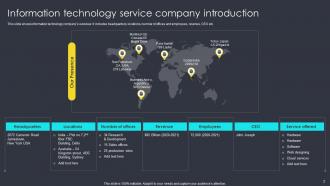
Information technology service company introduction
-
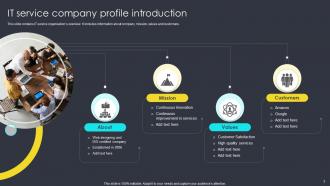
IT service company profile introduction
-
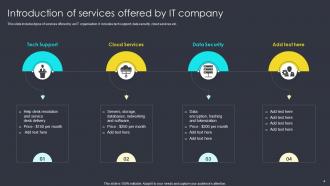
Introduction of services offered by IT company
-
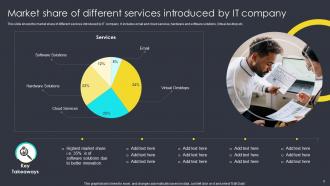
Market share of different services introduced by IT company
-
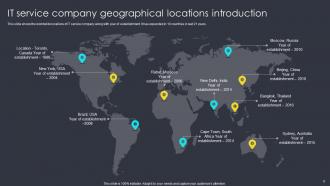
IT service company geographical locations introduction
-
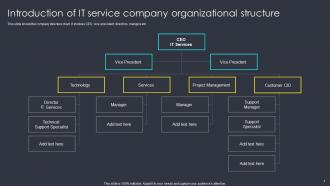
Introduction of IT service company organizational structure
-
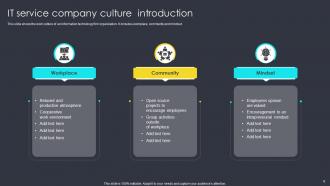
IT service company culture introduction
-
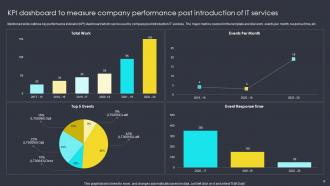
KPI dashboard to measure company performance post introduction of IT services
-
Software services introduction icon of IT company
-
New service introduction icon of IT company
-
IT Service Company Introduction
-

-

-

-

-

FAQs for IT Service Company Introduction Powerpoint
Hey! So most IT companies basically handle the usual stuff - managing your servers and networks, cybersecurity (which honestly everyone's freaking out about these days), cloud migrations, and general tech support. They'll monitor your systems 24/7, do backups, run your help desk when Karen can't remember her password again. A lot of them also help with bigger projects like software rollouts or moving everything to the cloud. Some focus on specific things like compliance, others do it all. I'd just figure out what's broken or missing in your current setup first, then find someone who actually knows that area well.
Honestly, getting an IT service company is a game-changer for cutting out all those annoying repetitive tasks. They'll take a look at your current setup and spot bottlenecks you didn't even know existed - happens more than you'd think. Your team stops wasting time on tech problems and can actually do their jobs. The best part? You get solutions built for your specific situation, not some cookie-cutter approach. I'd start with having them do a quick assessment of where you're hemorrhaging time and cash. Worth it.
Dude, customer support can literally make or break your whole IT business. When people's tech breaks down, they're already frustrated and need help NOW. Your support team? They ARE your company in those moments. I've watched companies with solid technical skills get destroyed by crappy support - it's painful to see. Quick responses matter. Clear explanations matter even more. Actually fixing the problem? That's how you turn stressed clients into people who'll recommend you to everyone they know. Don't treat support like some annoying expense you have to deal with. Make it your secret weapon.
Most IT companies go with layered security - encryption, access controls, regular audits, that sort of thing. You'll want to check if they have certifications like SOC 2 or ISO 27001. Honestly, all those compliance acronyms make my head spin, but they matter. Good companies will be upfront about their security policies and show you documentation without you having to pry it out of them. That's actually a red flag if they're dodgy about sharing their processes. Transparency is huge here.
Talent shortages are brutal right now. Tech moves so fast you can barely keep up, and clients want everything yesterday for half the price. Cybersecurity is a nightmare - feels like hackers are always one step ahead. Plus you've got all these cloud-native startups breathing down your neck because they can pivot super quick. Remote work means clients expect you available 24/7, which is honestly exhausting. My advice? Don't spread yourself too thin trying to do everything. Pick what you're actually good at and double down on training your people.
So basically, IT companies push cloud stuff because it saves clients money and makes scaling way easier. Most of the work is migrating old systems to AWS or Azure, plus building custom apps from scratch. Security's huge too - honestly that's where everyone freaks out about moving to the cloud. The cool part? No more dropping tons of cash upfront on servers. Just predictable monthly bills instead. Oh and they do all the monitoring and tweaks afterward. If you're looking at this for your clients, I'd probably start by seeing what they're already spending on keeping their current setup running.
Look, partnering with IT providers is honestly a no-brainer for small businesses. You'll get an entire tech team's knowledge for way less than hiring one full-time person. These guys stay current on security threats and updates - because let's be real, when do you have time for that? The 24/7 support is clutch too. No more "the server's down and I'm panicking" moments at 2am. Proactive monitoring catches issues before they become disasters. My advice? Figure out what's driving you crazy tech-wise first, then find someone who actually knows that stuff inside and out.
Okay so first thing - check their uptime stats, you want 99.9% minimum. Response times matter too depending on how critical your stuff is. I'd definitely ask about client retention rates because that's way more telling than whatever they promise you. Security certs like SOC 2 are pretty much non-negotiable these days. Oh and if you need round-the-clock support, make sure they actually have people working nights, not just some answering service. Customer satisfaction scores from existing clients are huge. Honestly though? Just call their references - I know it's annoying but you'll learn everything you need to know in like 10 minutes.
Good IT companies basically live in training mode - their people are constantly getting certified on new stuff. Most partner with the big players like AWS and Microsoft to get early peeks at what's coming. The smart ones? They've got these little testing labs where they mess around with new tech before clients even know it exists (honestly, it's pretty cool). You want providers who can shift gears fast when something new drops. Oh, and definitely check what certs your current company has - tells you everything about whether they actually care about staying updated or just coast on old knowledge.
Dude, you NEED a solid PM team. Trust me on this one. Projects without them turn into absolute dumpster fires - budgets explode, deadlines get missed, and everyone's blaming everyone else. Good PMs keep developers and clients actually communicating (shocking, right?). They handle all the timeline stuff and stop scope creep before it kills your project. Think of them as your safety net. Yeah, it costs money upfront, but way less than fixing the mess later when everything's gone sideways. I've seen too many companies learn this the hard way.
Honestly, you gotta pick like 2-3 industries and really dig into what they actually need. Healthcare's all about HIPAA and keeping patient data locked down. Manufacturing? They want IoT stuff and supply chain help. Finance clients are obsessed with fraud detection and regulatory reporting - totally different from retail folks who just need better inventory systems. I learned this the hard way trying to help everyone at first. Build some solid partnerships with people who know these industries inside out, get whatever certifications matter, and create killer case studies. Way better to be the expert in a few areas than mediocre everywhere.
Most IT companies focus on catching problems before they blow up - monitoring tools are clutch for that. They'll automate boring stuff and standardize how they handle updates and incidents. Documentation is boring but super important too. Cloud migration is everywhere right now, which honestly makes sense since it's way easier to scale. Regular system checkups help spot weak points early. The good companies think prevention first instead of just fixing fires. Oh, and make sure they actually have a plan for growing your setup when you need it - you don't want to be stuck later.
Honestly, cybersecurity isn't really a separate thing you sell - it just gets mixed into everything else. Network setups? Security's already there. Cloud stuff? Same deal. Your clients already expect endpoint protection and threat monitoring as part of the package, not some expensive add-on you spring on them later. I mean, nobody wants to pay extra for what feels like basic protection, right? The trick is making security feel like the foundation instead of an afterthought. Maybe start by looking at where you're already dropping the ball security-wise in your current services.
Dude, you gotta keep learning or you'll get left behind. Tech changes ridiculously fast - like your skills can be obsolete in months. New frameworks drop constantly, security stuff evolves, clients want different things. It's honestly what makes the difference between companies that crush it and ones that just... exist. When your team stays sharp, you can handle bigger projects and charge more. Oh and you actually fix problems instead of slapping temporary solutions on everything. I try to squeeze in at least 30 minutes of learning each week, even if I'm swamped.
Most IT companies track this stuff through surveys and NPS scores - you know, the "would you recommend us" question. They're also obsessing over ticket resolution times and SLA compliance rates. Honestly though, the fancy dashboards are whatever. What matters more is retention rates and how they handle when things go sideways. Ask about their escalation process - that's where you'll see their true colors. The smart ones mix hard data (uptime stats, response times) with actual conversations during quarterly reviews. Way better than just looking at numbers all day.
-
Professionally designed slides with color coordinated themes and icons. Perfect for enhancing the style of the presentations.
-
I looked at their huge selection of themes and designs. They appeared to be ideal for my profession. I'm sure I'll grab a few of them.