


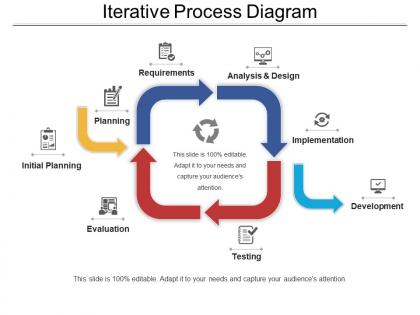
Iterative process diagram





Try Before you Buy Download Free Sample Product
 Impress Your
 Audience
 100%
100% Editable
 Save Hours
 of Time


Be full of go with our Iterative Process Diagram. Your energy levelswill never drop.
People who downloaded this PowerPoint presentation also viewed the following :
Iterative process diagram with all 5 slides:
Improve the interaction with our Iterative Process Diagram. Increase the enjoyment folks derive from it.



FAQs for
So there's 5 main steps: empathize with users, define the actual problem, ideate solutions, prototype something quick, then test it. But honestly? It's way messier than that sounds. You'll jump around constantly - like you might be testing and realize you totally misunderstood the problem. That's normal! Each round teaches you something new, so your ideas get better. I'd say start with really understanding your users first. Oh and don't fall in love with your first concept because it's definitely gonna change.
Dude, iterative processes are a game changer - you catch issues early instead of discovering your app is garbage after months of work. Release small chunks, get real feedback, then actually fix what's broken. Way better than building everything upfront and praying it works. Short sprint cycles are your friend here. Test stuff with actual users and listen to what they tell you (even the brutal feedback). It's like having ongoing conversations throughout the whole process rather than just dumping a finished product and crossing your fingers. Saves you so much headache and cash in the long run, trust me.
Honestly, feedback is what keeps you from just spinning your wheels. You'll keep making the same dumb mistakes without it - trust me on that one. Each round should give you actual data or user reactions to work with. The trick is grabbing feedback super early and then actually doing something with it instead of just collecting it to feel productive. I'd set up regular check-ins where you stop and ask "what's actually working here?" Then pivot based on what you learn. Otherwise you're just busy work disguised as progress.
Honestly, I just pick 2-3 solid metrics upfront and stick to them - otherwise you'll get lost in all the data. Mix hard numbers (like completion rates or performance stats) with feedback from actual users. The trick is making sure whatever you're measuring actually connects to your bigger goals. I've seen people optimize for totally irrelevant stuff before and it's painful to watch. After each round, just compare what happened vs. what you expected. Write down what worked and what bombed, then tweak your approach for next time. Pretty straightforward once you get the hang of it.
Honestly, iteration is a game changer for team stuff. You catch problems way earlier instead of everyone disappearing for weeks then coming back with totally different ideas. Regular check-ins keep people actually talking about real progress, not just vague plans floating around. There's something weirdly satisfying about watching things click into place together - maybe that's just me being nerdy about process stuff. When things go sideways (and they will), pivoting is so much easier because everyone's already on the same page. Set up those touchpoints early and make it clear that feedback isn't personal criticism.
Dude, agile is literally made for this stuff. You just chop everything into these short sprints - like 2 weeks usually works pretty well. Each sprint ends with something you can actually show people, then you get their feedback and tweak things for next time. The whole point is those constant feedback loops, plus your team stays on the same page with daily check-ins. Way better than spending months building something only to find out it's totally wrong at the end. Honestly beats the hell out of waterfall. Just start small and see what clicks for your team - you can always adjust the timeline later.
Honestly, the worst thing you can do is plan every single detail upfront - totally defeats the point. Keep your iterations short so you can pivot fast when needed. Most teams I've seen just jump straight into the next cycle without stopping to think about what actually worked. Big mistake there. Also, get users involved early in each round, not at the very end. Otherwise you'll waste months building something nobody wants (learned that one the hard way). Oh, and don't forget those regular check-ins with stakeholders - their feedback between cycles is gold.
Honestly, user testing is like a reality check for your assumptions. You'll be shocked how wrong you can be about what seems "obvious." I've watched entire features get scrapped after just 5 people struggled with something we thought was bulletproof. Don't wait for perfection - test messy prototypes early. Each round shows you the actual pain points, not what you imagine they are. Then you can fix those specific issues before the next iteration. Way better than building on guesswork for months. Quick, lightweight tests after major changes work best.
Keep a change log but focus on *why* you made changes, not just what. I use three columns - what changed, why we did it, what we learned. Quick retrospectives after each sprint help too, even 15 minutes works. Version control comments are fine but honestly they're too techy for most stakeholders to understand. Document everything from day one though - I learned this the hard way when I couldn't remember why we made certain early decisions. Your future self will thank you when you're neck-deep in the project later.
Honestly, flowcharts and diagrams are game-changers for iterative stuff. Text just doesn't cut it when you're trying to show how cycles build on each other. I'm super visual too, so maybe I'm biased, but seeing those feedback loops mapped out makes everything click. Your team will get it instantly when they can actually see how each sprint connects to the next one. Oh, and seriously - grab a whiteboard next time you're planning iterations. Something about sketching it out just works better than explaining it verbally. The workflow becomes so much clearer for everyone.
Honestly, start with whatever project management thing your team's already using - Jira's solid for sprints, but Trello works fine too if you're not doing anything too complex. Git is non-negotiable though, seriously. GitHub or GitLab will literally save your butt when someone breaks something (and they will). Slack keeps everyone talking between iterations without the email nightmare. Oh, and grab Notion or Confluence for writing down what went wrong each cycle - you'll forget otherwise. Don't try implementing everything at once though. One tool at a time or you'll hate your life.
Software dev teams are probably the best example - they're always pushing updates based on what users complain about. Toyota basically built their whole thing around this with lean manufacturing, constantly tweaking processes. Marketing does it too with A/B testing campaigns, seeing what works, then trying again. Honestly, once you start noticing it, you see these feedback loops everywhere. Pharma companies during drug trials, product designers, even teachers adjusting lessons based on how confused their students look. Most complex industries do this because things change so fast. You're probably already doing mini-versions of this at work without thinking about it.
Culture totally shapes how your iterations go. Some teams need way more relationship-building time before each cycle - especially in places where consensus matters more. Others just blast through feedback super fast. Here's the thing though: if your team comes from a really hierarchical background, they might hate giving honest feedback, which basically kills the whole point. Teams that freak out over failure won't experiment much either. I'd figure out how your specific group handles criticism and mistakes first, then maybe slow down or speed up your cycles based on that. Time zones are annoying but culture's the real challenge.
Honestly, iteration and innovation work together perfectly in project management. Each cycle gives your team space to find creative solutions they never saw coming. Regular feedback loops? That's where the real breakthroughs happen - you'll spot problems AND discover better ways to fix them. Real data from each iteration sparks way more creative thinking than just planning everything upfront. I mean, how can you innovate without actually testing stuff first? Don't just use iterations for delivery milestones. Turn them into your creativity engine and watch your solutions get so much better.
Honestly, start by getting everyone on the same page with your process - like actually the same page, not just pretending. Set up feedback loops and checkpoints that all teams use consistently. Otherwise you'll end up like half the companies I know where each department thinks they're being "iterative" but they're all doing completely different things. Have someone whose job it is to collect and organize all the feedback, trust me on this. Shared tools help too so teams aren't starting from scratch every time. Oh, and don't try to do everything at once - pick a few pilot teams first, figure out what works, then expand from there.
-
Easily Editable.
-
I discovered this website through a google search, the services matched my needs perfectly and the pricing was very reasonable. I was thrilled with the product and the customer service. I will definitely use their slides again for my presentations and recommend them to other colleagues.