


Knowledge transfer process powerpoint ppt template bundles





Try Before you Buy Download Free Sample Product
 Impress Your
 Audience
 100%
100% Editable
 Save Hours
 of Time


Our Knowledge Transfer Process Powerpoint Ppt Template Bundles are topically designed to provide an attractive backdrop to any subject. Use them to look like a presentation pro.
People who downloaded this PowerPoint presentation also viewed the following :
Knowledge transfer process powerpoint ppt template bundles with all 20 slides:
Use our Knowledge Transfer Process Powerpoint Ppt Template Bundles to effectively help you save your valuable time. They are readymade to fit into any presentation structure.

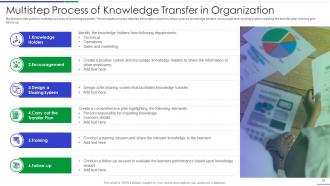
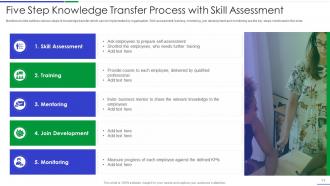
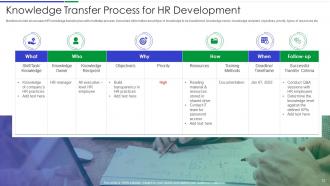






FAQs for Knowledge transfer process powerpoint
Honestly, it's rarely the tech that trips you up - it's the people stuff. Team members guard their knowledge like dragons because they think it makes them irreplaceable. Different departments live in their own bubbles too. Marketing has their secrets, engineering has theirs, but good luck getting them to actually talk. Most of what really matters just lives in someone's head and never gets documented anyway. You need people to feel safe sharing without worrying about their job security. Oh, and whatever system you build has to be dead simple - nobody wants knowledge sharing to feel like homework on top of their real work.
Honestly, just pick one tool everyone will actually use - Notion, wikis, whatever. The magic happens when people document stuff as they work instead of trying to remember later. Slack conversations are gold for this too, way better than boring training docs sometimes. I'd start small though, maybe just process videos or quick how-to's in a shared drive. Once it becomes habit, you won't lose all that knowledge when people quit. The trick is keeping it simple so nobody makes excuses about it being too complicated.
Honestly, culture makes or breaks everything when it comes to knowledge sharing. People hoard info when they feel like they're competing with each other instead of working together. I've watched some really smart systems completely bomb because nobody trusted each other enough to actually use them. Your team needs psychological safety - sounds fancy but it just means people won't get burned for admitting mistakes or asking dumb questions. Leadership has to walk the walk too, not just talk about it. Quick test: ask yourself if your coworkers feel okay saying "I have no clue" in meetings. That'll tell you everything.
Look, mentorship programs are basically just putting structure around something that should happen but usually doesn't. You pair up experienced people with newer ones for regular chats. The magic happens because mentees feel way more comfortable asking "dumb" questions in a one-on-one setting - stuff they'd never bring up in meetings. Your mentors walk them through processes, explain the reasoning behind decisions, share all that unwritten knowledge that lives in people's heads. Honestly, mentors learn too because teaching forces you to think through gaps in your own understanding. Keep it simple at first - just match people up and give them some loose guidelines to follow.
Ugh, this is such a pain point everywhere I've worked. Three things really help though - get people to document their stuff before they bail (most places are terrible at this), cross-train so one person isn't the only one who knows how X works, and set up mentorship pairs. The trick is building it into how you normally work instead of panicking when someone hands in their notice. Honestly, even if nobody's leaving right now, start putting these systems in place. You'll thank yourself later when Sarah from accounting decides to move to Bali or whatever.
Honestly, getting different departments to actually work together is huge for sharing knowledge around the office. Those silos where everyone hoards info? They're productivity killers. Set up some cross-functional projects or maybe monthly lunch sessions where people can swap stories about what's working (and what's totally not). I've seen this work really well at my last job - suddenly everyone's chatting about best practices instead of keeping everything to themselves. The trick is starting small. Don't go crazy with elaborate programs right away. Just get people in the same room talking first.
Dude, knowledge transfer is a game changer for innovation. Your teams stop wasting time redoing stuff that's already been figured out. When engineers can pull up what the last project team learned, or marketing knows what campaigns crushed it in other markets, everything moves faster. Honestly, I've seen teams get so much more creative when they're not starting from zero every time. The cool part is when different departments share their wins - that's where you get those random "wait, what if we..." ideas that actually work. Just make it easy for people to find and share what they've learned. You'll be surprised how quickly things start clicking.
Dude, your brain is basically hardwired for stories - that's why you remember every detail from random movies but forget where you put your keys. When you turn boring info into actual narratives with characters and drama, people get emotionally hooked and the stuff just sticks. I watched this happen at work when someone turned our soul-crushing safety training into real incident stories. Night and day difference! Stories give abstract concepts something concrete to hang onto. Oh, and they're way better than bullet points for explaining tricky stuff. Try starting your next presentation with a quick story that connects to your main point - works every time.
Honestly, skip documenting just *what* you did - focus on *why* you made those choices. I always dump my assumptions, dead ends, the whole messy thought process. Future you will be so grateful for that context! Use bullet points and clear headings. Makes everything way more scannable. Tag stuff consistently so it's actually searchable later. The real test? Could someone else jump in without texting you a million questions? Just start a simple wiki page today and brain-dump whatever you'd want to remember in six months. Don't overthink it.
Honestly, visuals are a game-changer for explaining complicated stuff. People absorb information differently - some need to see it, others hear it better. I always throw in charts or screenshots now because it saves me from those endless email chains where nobody gets it. One flowchart beats like 500 words of explanation, trust me. Just make sure whatever you create actually helps explain your point instead of being random eye candy. Oh, and step-by-step screenshots work amazing for processes. Your brain will thank you later when you're not repeating yourself constantly.
Honestly, start with testing people before and after training - that'll show you what actually stuck vs what went in one ear and out the other. Time-to-productivity is huge too, especially for new hires. If someone's still struggling after weeks, your knowledge transfer probably sucks. Check how much your knowledge base gets used and whether people can actually find stuff without wanting to throw their laptop. Error rates matter, and so does tracking repeat questions to your support team (super annoying when the same thing keeps coming up). Don't try to measure everything though - pick 2-3 metrics that actually align with what you're trying to accomplish.
Honestly, gamification works so well for this stuff. Points and badges might sound cheesy but people actually get into it - I've seen grown adults get competitive over "expert" status in training sessions. Kahoot quizzes are huge hits too. Team challenges where groups race to solve problems using the new info can get pretty intense. Oh, and escape rooms are cool if you have time to set them up - teams unlock clues by nailing each concept. Don't go overboard though. Pick one game element per session first and see what clicks with your people.
Honestly, communication is everything here. You've gotta be able to break down complicated stuff into bite-sized pieces people actually get. Active listening though? Way harder than you'd think - I still mess that up sometimes. Ask questions that actually pull insights out of your team instead of just nodding along. The psychological safety thing is massive. People won't share their screwups or what they learned from them if they think you'll throw them under the bus. Read the room with some emotional intelligence too - you'll know when someone's holding back good info. Oh, and share your own knowledge freely. Admit when you don't know something. Maybe start with monthly knowledge-sharing sessions?
Honestly, remote knowledge transfer is way trickier than people think. You can't just walk over and ask someone a quick question anymore. All those random "oh hey, one more thing" conversations? Gone. Now you've got to schedule everything and actually write stuff down - which sounds annoying but actually makes your documentation way better. I've noticed remote teams usually have killer wikis because they're forced to document everything. My take: overdo the communication. Record your meetings, send follow-up messages, create guides for everything. Yeah, it's more work upfront but you'll thank yourself later when you're not scrambling to remember what someone said three weeks ago.
Toyota's got this whole documentation thing down - they capture every process improvement in their "Toyota Way" system. Microsoft does internal wikis where teams share what they've learned. Google's tech talks are pretty cool too, engineers just present stuff to each other (way underrated tbh). McKinsey consultants document client solutions for future cases. Oh, and 3M actually rotates people between divisions to spread ideas around. But honestly? Start small. Maybe do team retrospectives first or just a simple shared doc for lessons learned. You don't need some massive enterprise system right away.
-
Nice and innovative design.
-
Excellent template with unique design.