

Landscape planning and management proposal powerpoint presentation slides




Try Before you Buy Download Free Sample Product
 Impress Your
 Audience
 100%
100% Editable
 Save Hours
 of Time


Beautifying a piece of land requires a lot of effort and expertise. The appearance of a piece of land, office, etc. makes an impression, and an unkempt one can give a wrong idea about the owner. If you are an organization dealing with beautifying properties, then download this Landscape Planning And Management Proposal PowerPoint Presentation Slides to propose your services with confidence. Bag new projects and new clients with this professionally designed PPT template. Since this industry is full of competition, being unique and delivering unique services is the key. Showcase your unique talent and abilities as expert landscapers with this attractive PPT slides. Use this landscape planning proposal to explain your objectives like managing fertilization, planting trees, etc. to your prospective clients. Provide a detailed overview of the services you offer like lawn care, tree care, irrigation services, etc. You can also show your recommended plan of action, stating the various stages and phases that will help in beautifying your client's property magnificently. Use this slide template to present your budget and the cost fetched by the client for every service you provide. Present a detailed budget without any hidden cost for maximum client satisfaction and trust. You can also show with this landscape management PPT slide that your knowledge and expertise is what makes you stand out of the pack. To prove this you can even add a few customer testimonials showing that your services helped in turning dreams of your clients into reality. Show how your services helped your client experience the beauty of nature on their own piece of land. Download this Landscape Planning And Management Powerpoint Presentation Slides now to create an attractive proposal.
People who downloaded this PowerPoint presentation also viewed the following :
Content of this Powerpoint Presentation
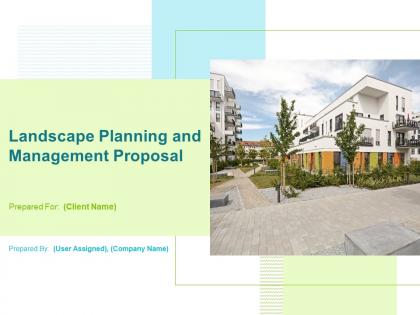
Slide 1: This slide depicts Landscape Planning and Management Proposal. Add Client Name, User Assigned and Company Name.
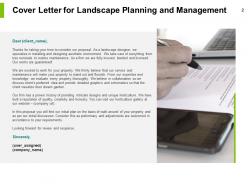
Slide 2: This slide shows Cover Letter for Landscape Planning and Management.
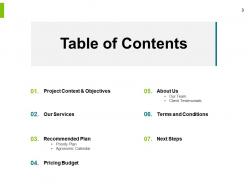
Slide 3: This slide shows Table of Contents such as Recommended Plan, Priority Plan, Agronomic Calendar, etc.
Slide 4: This slide depicts Project Context & Objectives.
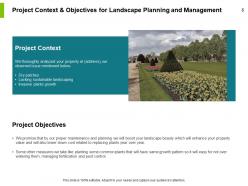
Slide 5: This slide shows the Project Context.
Slide 6: This slide shows Our Services and Table of Contents.
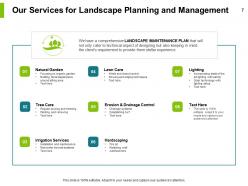
Slide 7: This slide shows information about Irrigation Services, Natural Garden, Tree Care, Hardscaping, Lawn Care, Erosion & Drainage Control and Lighting.
Slide 8: This slide contains Recommended Plan.
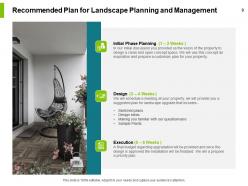
Slide 9: This slide depicts the recommended Plan for Landscape Planning and Management.
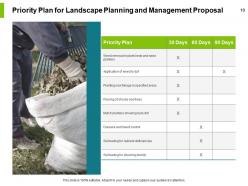
Slide 10: This slide reveals the Priority Plan for Landscape Planning and Management Proposal.
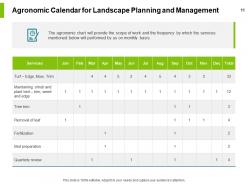
Slide 11: This slide shows the Agronomic Calendar for Landscape Planning and Management.
Slide 12: This slide unveils Pricing Budget and Table of Contents.
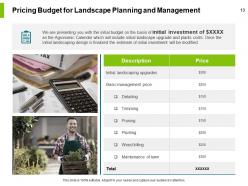
Slide 13: This slide shows the Pricing Budget for Landscape Planning and Management.
Slide 14: This slide reveals About Us- Table of Contents, Our Team, and Client Testimonials.
Slide 15: This slide depicts About Us for Landscape Planning and Management.
Slide 16: This slide shows Our Team.
Slide 17: This slide shows Our Team.
Slide 18: This slide shows Client Testimonials.
Slide 19: This slide depicts Client Testimonials.
Slide 20: This slide depicts Terms & Conditions.
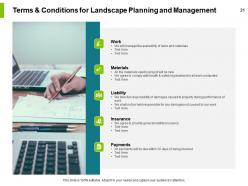
Slide 21: This slide depicts Terms & Conditions for Landscape Planning and Management such as materials, liability, insurance, payments and work.
Slide 22: This slide shows the Next Steps- Table of Contents.
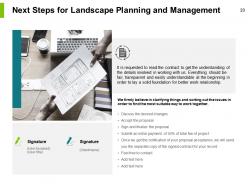
Slide 23: This slide portrays Next Steps for Landscape Planning and Management.
Slide 24: This is a thank you slide showing Contact Us, Address, Email Address and Contact numbers.
Slide 25: This slide shows Additional Slides.
Slide 26: This slide shows about Us.
Slide 27: This slide shows Our Mission-Vision, mission, goal.
Slide 28: This slide shows the 30 60 90 Days Plan.
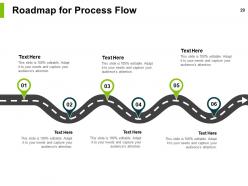
Slide 29: This slide reveals the roadmap for Process Flow.
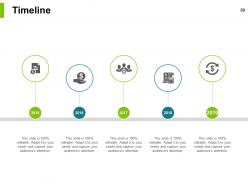
Slide 30: This slide shows Timeline.
Landscape planning and management proposal powerpoint presentation slides with all 30 slides:
Use our Landscape Planning And Management Proposal Powerpoint Presentation Slides to effectively help you save your valuable time. They are readymade to fit into any presentation structure.





FAQs for Landscape planning and management proposal
Honestly, just work WITH nature instead of fighting it - use native plants, preserve what's already there, manage stormwater naturally. Start with a solid site analysis first though, figure out your soil and drainage before you design anything. Think long-term too because maintenance costs add up fast (learned that one the hard way). Create diverse habitats, don't disturb the soil more than you have to. Climate resilience is huge now. I always tell people microclimates matter way more than they think - spend time actually observing your site first.
So basically you want to connect all the green spaces instead of having random isolated patches everywhere. Wildlife needs corridors to actually move around, you know? Mix up different habitats - native plants, maybe some wetlands, tree cover. Green roofs are pretty cool for this too. Don't do the boring single-plant thing though, that's useless. You need diverse plant communities that give animals food and shelter all year. I'd start by literally mapping out what green spaces you already have, then figure out where to build connections between them.
Dude, you absolutely have to get the community involved - I can't stress this enough. People know how they actually use spaces and what's broken. Without their input, you'll end up with some gorgeous plan that nobody wants to hang out in. Seriously, I've walked through so many empty "award-winning" parks that clearly missed the mark. Start with surveys and workshops, maybe even informal coffee chats. Keep asking for feedback as you go. Yeah, it takes longer upfront, but you won't have to redo everything later when people hate it.
Dude, GIS is a total game-changer for landscape planning. You get all these data layers - soil types, elevation, water patterns, vegetation - that you can stack and analyze together. Instead of doing everything manually (which was honestly brutal), you can run scenarios super fast. The coolest part? You'll spot conflicts and patterns that would be impossible to catch otherwise. Cost estimates become way more accurate too. Oh, and if money's tight, start with QGIS - it's free and surprisingly solid. Trust me, once you use it you'll feel like you were planning blind before.
Rain gardens and bioswales are honestly game-changers for stormwater issues. Native plants handle local rainfall way better than anything else you could plant. Permeable paving lets water soak right through instead of creating runoff problems. For bigger areas, detention ponds work really well too. That new office park on Fifth Street? They totally solved their drainage nightmare using these methods - pretty impressive actually. Oh, and constructed wetlands are another solid option. Basically you're creating natural "sponges" everywhere that'll capture and filter water instead of overwhelming your storm drains.
So basically you're future-proofing outdoor spaces against crazy weather. Start with figuring out what climate risks your area actually faces - flooding, drought, heat waves, whatever. Then design around that. Native plants that don't need tons of water, bioswales to handle flooding, trees placed where they'll actually cool things down. It's honestly pretty boring work but it saves lives. The trick is working with nature instead of fighting it - like my neighbor who keeps replanting grass in a flood zone, makes no sense. You'll want solutions that tackle multiple problems at once.
So accessibility is huge - people need to actually walk to these spaces, you know? Connected green corridors beat random scattered parks any day, for wildlife and humans. Balance is key too: active stuff like playgrounds plus quiet spots for just chilling. The boring practical things matter though - maintenance budgets, what infrastructure's already there, soil conditions. Stormwater management is becoming a big deal lately (honestly didn't think about that much before). I'd start by mapping what green space you've got now and see where the gaps are. Don't forget some areas need sports facilities while others just need trees.
Honestly, good landscape design is like therapy you don't have to pay for. Water features and walking paths naturally drop your stress levels - something about flowing water just hits different, you know? I'd focus on mixing quiet spots for when you need to decompress with busier areas where people actually want to hang out. Different textures and green spaces literally lower cortisol (science backs this up). The trick isn't cramming everything in though. Figure out what vibe you're going for first, then pick plants that'll actually create that feeling. Don't overthink it.
Rain gardens and native plants are everywhere now - climate stuff is driving everything. VR tools let clients actually see designs before building, which is pretty cool. Drones make site analysis way less of a pain too. Social equity in public spaces is big, plus all that biophilic design connecting people to nature. Smart irrigation isn't fancy anymore, it's just expected. Oh, and green infrastructure is basically standard now. Honestly? Learn your local climate data inside out. That's what's behind most decisions these days. Makes you look way more professional when you can actually back up plant choices with real numbers.
So basically, you can't just roll up and start planning without understanding what locals actually care about. Their history, traditions, how they've used the land for decades - all that matters way more than you'd think. Talk to the old-timers first, seriously. They know which spots are sacred, what works, what doesn't. Historical landmarks, cultural stuff, even the way people are used to things looking - ignore any of it and your project's toast. I learned this the hard way on my first big project. Community leaders and historians should be your first calls, not your last.
Honestly, good landscape planning is like an investment that keeps paying you back. Property values can jump 15-20% when you've got nice green spaces and walkable areas nearby. Trees and parks naturally handle stormwater stuff, so you're saving on infrastructure costs down the road. Local shops get way more foot traffic too - people actually want to walk around when it doesn't suck. Even small changes work well. Tree-lined streets or little pocket parks don't cost a fortune but they make neighborhoods way more appealing. It's kind of a no-brainer economically.
So basically, cities can grow way more food than you'd think by working it into the actual planning. Community gardens, rooftop farms, even food forests in neighborhoods - it puts fresh stuff right where people live. I'm always amazed how much you can squeeze into random urban spots tbh. The trick is connecting everything with green corridors so food actually gets to people efficiently. Plus it creates jobs and makes communities less dependent on outside supply chains (which, let's be real, aren't super reliable anymore). Look for unused spaces in your area and push for zoning that allows urban farming.
Dude, coastal planning is such a nightmare honestly. Salt spray kills half your plant options right off the bat. Then you've got erosion constantly changing everything, plus sea levels rising and storms that just wreck stuff. The permitting alone will make you want to cry - so many agencies all wanting different things. I learned the hard way that maintenance costs are absolutely brutal once the weather starts beating up your work. Oh, and you're usually dealing with protected habitats and public access rules too. My biggest tip? Design everything super flexible from the start and triple your maintenance budget. Trust me on that last part.
Oh man, zoning laws are such a pain but they totally control what you can do. Like, you'll sketch out this perfect mixed-use area with shops and houses flowing together, then realize the zoning won't allow it. Different zones have different rules - residential here, commercial there, industrial somewhere else. Each one changes what plants you can use and how you design everything. Honestly the worst part of any project. My advice? Always check the zoning maps before you even start brainstorming. Trust me, redesigning everything halfway through sucks way more than doing homework upfront.
Okay so first thing - figure out what actually messed up the land to begin with. Check the soil, water flow, what's already growing there. Native plants are your best bet since they won't fight the local conditions. I've watched so many people skip the groundwork and then wonder why nothing takes. Fix whatever caused the damage first, then tackle restoration bit by bit instead of going crazy all at once. Oh and definitely test a small section before you commit to the whole area - learned that one the hard way. Plan for upkeep too.
-
Awesome use of colors and designs in product templates.
-
Amazing product with appealing content and design.
-
Wonderful templates design to use in business meetings.
-
The content is very helpful from business point of view.
-
Best Representation of topics, really appreciable.