

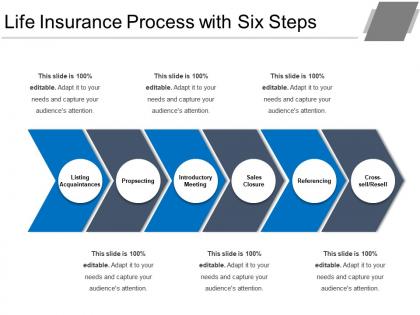
Life insurance process with six steps




Try Before you Buy Download Free Sample Product
 Impress Your
 Audience
 100%
100% Editable
 Save Hours
 of Time


Guide your customers about term insurance with the assistance of the Life Insurance Process With Six Steps. If you are a life policy insurer, then this general insurance PPT slide can be of great use. Using the investment policy PPT template, you can inform your policyholders and people regarding the life insurance scheme. Explain life insurance benefits to your to-be policyholders and persuade them to buy using our investment policy PPT template. Utilize term assurance policy PPT theme to illuminate types of life insurance and which one will be suitable for them. Explain the points involved in insurance policy using bullet points present in this PowerPoint presentation template. Term life insurance PPT template is incredibly amazing and lets you jot down all the important information. Your presentation technique will surely work and turn your prospects into your customers. Download this amazingly-designed insurance policy PowerPoint template and have the best experience.
People who downloaded this PowerPoint presentation also viewed the following :
Life insurance process with six steps with all 5 slides:
Make sure your team reaches the peak. Climb along with our Life Insurance Process With Six Steps.




FAQs for Life insurance process
So you basically fill out this application with all your personal stuff and health history. Then they'll send someone to your place for a medical exam - it's free which is nice. The waiting part sucks honestly, usually takes like 4-6 weeks while they dig through everything. Sometimes they'll even request records from your doctor. Most people get approved at the rate they wanted, but they might counter with different terms or occasionally say no. Once you're good to go, just sign and pay. Oh and seriously - don't lie about anything health-related on the application. That'll bite you later.
So underwriting is where they decide if you're worth the risk and what you'll pay. They'll dig into your medical history, maybe make you do a physical, check how you drive - the whole nine yards. Your income gets reviewed too. Low-risk people sometimes get approved instantly, but if you've got health issues or complications, expect to wait weeks. I learned this the hard way when I had to get additional tests done. They can approve you, change the terms, or just say no. Don't lie on the application though - they always find out and it just makes everything take longer.
You'll need the usual stuff - driver's license, Social Security card, recent pay stubs or tax returns. Bank statements too. They always want to see your income situation. Oh and if you already have other life insurance, bring those policy details. Your doctor's contact info is super important since they'll definitely pull medical records. Honestly the medical part takes the longest. For bigger policies they might ask for more financial paperwork but that's pretty normal. Just grab everything beforehand so you're not digging through files later when they start calling.
So basically, insurance companies are trying to figure out how likely you are to die while they're covering you - morbid but true. Age and health matter most, obviously. Younger, healthier people get way better rates. Smoking absolutely destroys your premiums (seriously, quit if you can). They'll dig into your job, family history, hobbies too. Rock climbing? Yeah, that'll cost you. Oh, and how much coverage you want affects it. The silver lining is you can shop around since different companies weigh this stuff differently, and improving your health actually helps your wallet.
Yeah so most people say 10-12 times your salary as a baseline. But honestly? That's kinda generic. Think about what you actually need to cover - your mortgage, the kids' college stuff, replacing your paycheck for however long. Oh and don't forget random debts and funeral costs (morbid but real). Young kids definitely means you'll want more than if they're already out of the house. I'd just sit down and crunch the actual numbers for your situation. Then shop around because wow, the price differences between companies are insane.
So term life is temporary - like 10-30 years - and super cheap, but then it's gone. Whole life sticks around forever and builds up cash you can actually borrow against, which is kinda cool. But man, it's expensive. Like, way more expensive. Honestly, most people probably just need term while they've got a mortgage or kids at home. Whole life makes sense if you want permanent coverage and have money to burn. My cousin went with term and just invests the difference she saves each month. First thing though - figure out how long you actually need this coverage for.
So riders are just extra features you can tack onto your life insurance policy. They let you customize things without buying a bunch of separate policies - pretty convenient honestly. Like waiver of premium means if you become disabled, you don't have to keep paying your premiums. Accelerated death benefits let you access money early if you're terminally ill. There's also accidental death coverage, disability stuff, long-term care benefits. Each one costs more though, so don't go crazy adding everything. Only get what actually makes sense for your situation and what you can afford.
Oh the medical exam? Yeah you'll probably need one if you're getting a big policy or you're over like 50 or whatever. They actually send a nurse right to your house which is pretty cool - saves you a trip. Basic stuff really - they'll weigh you, check your blood pressure, take some blood and pee samples. Takes maybe half an hour tops. Honestly don't worry about being in perfect shape beforehand. They're checking for serious health problems, not judging your weekend habits lol. Just don't lie about anything medical since they'll find out anyway. Oh and book it for morning - your numbers always look better then.
Usually takes 2-6 weeks depending on what you're applying for. Young and healthy with basic coverage? Could be just a few days - some companies do instant approval now which is pretty cool. Medical exams or requesting records from your doctor though? That's where it gets annoying, easily 4-6 weeks. Doctor's offices are honestly the worst at sending stuff over quickly. Pro tip: call them first and let them know the insurance company will be asking for your files. Otherwise you'll be waiting forever. The medical records thing is what kills most timelines, not the actual underwriting part.
Honestly, most people think life insurance costs way more than it actually does - like 3x the real price. Term life is pretty straightforward too, not the complicated mess everyone assumes. You don't even need perfect health to qualify for decent rates. Here's what changed my perspective: your coverage needs shrink over time. Once your mortgage is paid off and the kids are grown, you won't need as much. I'd just get a quote to see actual numbers instead of guessing. The myths around it are worse than the reality.
Okay so basically life insurance gives your family money when you die, which sounds morbid but it's actually smart planning. Some policies also build cash value that you can borrow against while you're alive - like for college tuition or whatever. Term life is way cheaper if you just want the death benefit. Whole life costs more but has that savings thing built in, and it grows tax-free which is nice I guess. The tricky part is figuring out how much you actually need without going broke on premiums. My dad always said treat it like your electric bill - just another thing you gotta pay.
Good news - your beneficiaries won't pay federal income tax on life insurance payouts. It's basically free money when you die, which is pretty sweet. There are a few catches though. If you sold your policy or if they take payments over time instead of a lump sum, those parts might get taxed. Large policies can also hit your estate with taxes (not the beneficiaries, but still). Oh, and I'm pretty sure this stuff changes sometimes, so definitely run it by a tax person before making any big decisions. Better safe than sorry with the IRS.
Just call your insurance company or hop on their website to get started. Simple stuff like changing your address? Super easy. But if you're trying to boost your coverage or switch policy types, prepare for some paperwork drama. Adding beneficiaries isn't too bad usually. The bigger changes though - like increasing your death benefit - might mean another medical exam, which honestly sucks but whatever. Your agent can walk you through what exactly you'll need based on what you want to change. Different updates need different levels of approval and underwriting stuff.
Don't stress - having health issues doesn't automatically lock you out. Simplified issue policies barely ask health questions, and guaranteed acceptance ones ask zero. Yeah, you'll pay more upfront and get less coverage initially, but it's something. There are companies that basically make their living insuring high-risk people - they're surprisingly good at it. Graded benefit plans are another route where full coverage starts after a waiting period. Honestly, shop around because every insurer weighs risk differently. A broker might save you time since they know which companies won't run screaming from your condition.
Don't just buy the policy and forget about it - you've gotta actually tell your family it exists! Give them the policy number, company name, and your agent's contact info. Seriously, I've heard so many horror stories of families having no clue there was even a policy. Keep all the paperwork somewhere obvious and let them know where. Your executor should probably have copies too. Oh, and if you change beneficiaries or anything major, loop them in. Maybe write down all the key stuff on one sheet - makes it way easier when emotions are running high and nobody's thinking straight.
-
The content is very helpful from business point of view.
-
It saves your time and decrease your efforts in half.