


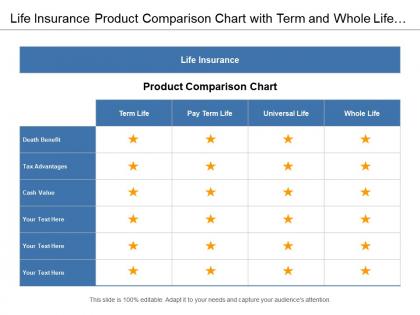
Life insurance product comparison chart with term and whole life plan




Try Before you Buy Download Free Sample Product
 Impress Your
 Audience
 100%
100% Editable
 Save Hours
 of Time


Be blunt but cordial with our Life Insurance Product Comparison Chart With Term And Whole Life Plan. Hammer home the facts in an acceptable fashion.
People who downloaded this PowerPoint presentation also viewed the following :
Life insurance product comparison chart with term and whole life plan with all 5 slides:
Elaborate on joint accounts with our Life Insurance Product Comparison Chart With Term And Whole Life Plan. Advise folks about intelligent banking.

FAQs for Life insurance product comparison chart with term and
Start with how much coverage you actually need - like, really think about your family's expenses if you're gone. Term life is crazy cheap compared to whole life, but whole life builds cash value while term just disappears after the term ends. Honestly, most people probably need term unless they're doing estate planning stuff. Check the company's financial ratings so they don't collapse in 15 years. Premium costs matter too - some stay fixed, others can jump up. Get quotes from multiple companies because prices vary wildly. Don't skip reading about exclusions either.
Okay so basically a life insurance comparison chart saves you from going insane trying to remember which company said what. You throw all your quotes into one place and can actually see the differences in premiums, coverage, and features without your brain melting. Trust me, without it you're just staring at a pile of paperwork wondering why insurance has to be so confusing. I'd make a simple spreadsheet with your top 5 picks - maybe rank them by whatever matters most to you. Way easier than juggling ten different quotes in your head. Plus you'll spot the best deals way faster.
So most charts show the main four types: term, whole, universal, and variable life insurance. Term's just temporary coverage but honestly? Start there - it's what like 90% of people actually need. Whole life sticks around forever and builds cash value. Universal's more flexible with your premiums and death benefit amounts. Variable lets you invest the cash value yourself, which is riskier but could pay off better. Some charts add weird stuff like final expense policies too. I'd say figure out if you want temporary or permanent first, then worry about the details later.
Term life is way cheaper - like $20-50/month when you're young versus whole life which costs like 10-20x more. Whole life stays the same price forever though, which is nice I guess. Term rates can get crazy expensive when you hit 50 and need to renew. The whole life thing includes some savings component that builds cash value, which is why it costs so much more upfront. Honestly depends on your age and what you can afford right now. I'd just get quotes for both and see what the actual numbers look like.
Look, you gotta nail down your coverage amount before you even start comparing policies. A $100k policy will obviously be way cheaper than $500k - that's just math. First figure out what your family would actually need if something happened to you. Debts, replacing your income, maybe college funds for the kids? Once you have that number, then you can actually compare policies that make sense. Otherwise you're just wasting time looking at random stuff that doesn't fit your situation anyway. Oh, and don't lowball it - I've seen people regret that.
Riders can boost your policy's value by adding coverage you actually need. But yeah, they'll increase your premiums too. It's like insurance à la carte - maybe you add a disability waiver so your policy stays active if you can't work, or long-term care coverage that lets you access your death benefit early. Pretty smart moves honestly. Don't go crazy though. Unnecessary ones just waste money without real protection. Oh, and definitely compare rider costs against buying separate standalone policies first - sometimes that route's actually cheaper and gives you way more flexibility down the road.
So basically insurance companies want to figure out if you're gonna cost them money. They dig into your medical history, check if you smoke or do crazy stuff, and sometimes make you do blood tests or physicals. Better health = cheaper premiums, which honestly makes sense from their end. Got diabetes or love skydiving? Yeah, you'll pay more. But here's the thing - different companies are way pickier than others about this stuff. I'd definitely get quotes from like 3-4 places because their rules are all over the map. One might reject you while another gives decent rates.
Ugh, policy exclusions are the worst - they're basically loopholes where insurers can refuse to pay out even though you've been faithfully paying premiums. The usual suspects are suicide in the first two years, deaths from illegal stuff, or risky hobbies like skydiving. Some policies won't cover certain health conditions or dangerous jobs either. I learned this the hard way when my cousin got denied over some obscure clause. Nobody reads that fine print until it bites them. When you're shopping around, actually dig into those exclusion lists. Pick the policy with fewer restrictions that won't screw you over based on how you actually live.
So here's the deal with cash value - it totally depends on what type of policy you get. Whole life is super predictable, builds cash steadily with guaranteed rates. Universal life is trickier since returns bounce around with the market. You might do great or... yeah, not so much. Term life has zero cash value though - just straight insurance. Variable life lets you pick your own investments, which honestly sounds exciting but also kinda terrifying? Higher returns possible but way more risk. My take: if you hate surprises, go whole life. If you're okay gambling a bit for better gains, universal or variable might work.
Dude, those online comparison tools are a game changer. Way better than spending your afternoon calling different companies. You punch in your details once and boom - quotes from like 10+ insurers right there. I love that you can filter by price, coverage amount, whatever you need. No pushy sales guy breathing down your neck either. The reviews are clutch too - you'll see which companies actually pay out claims fast vs the ones that give you the runaround. Just double-check any quote directly with the company before you commit. Some of those comparison sites can be a little off on the final numbers.
Honestly, you really need to check out their claims process before signing anything. Some companies have decent online systems and pay out fast. Others? Total paperwork nightmare that drags on forever. Your family shouldn't have to fight bureaucracy while they're grieving, you know? Ask about average processing times upfront - like actually get numbers. Also find out what documents they usually want. Quick tip: check their customer service ratings too since that's who your beneficiaries will deal with when the time comes.
Look, insurer ratings are like checking Yelp before trying a sketchy restaurant - you need to know if they'll actually be there when you need them. Check A.M. Best, Moody's, or S&P and go with companies rated A- or higher. Sure, lower-rated ones might be cheaper, but what's the point if they fold? I learned this the hard way with my uncle's policy mess. Don't just check one rating agency either - they don't always agree. Financial strength beats saving a few bucks every time.
Honestly, I check mine every 6 months but once a year is probably fine for most people. Rates change all the time though - like, I was shocked how much my quote dropped last spring just because I switched carriers. Big life stuff should definitely trigger a review too. Got married? New baby? Time to update that chart. Oh, and set an actual calendar reminder or you'll totally forget (trust me on this one). Insurance companies are always tweaking their products and pricing, so what looked good last year might not be your best option anymore.
Honestly just add a column for ratings and pull some actual quotes about claims and customer service stuff. Skip the company website testimonials though - they're basically useless. Stick with Trustpilot or Google reviews instead. Way more legit that way. You could do little boxes next to each insurer showing their average score plus common complaints. I'd probably throw in some recent feedback too since these companies change so much. Oh and make sure you're comparing similar time periods - like don't mix 2019 reviews with 2024 ones, that'll mess things up.
Good news - your beneficiaries won't pay taxes on the death benefit. That's probably the main thing you're worried about, right? Now, if you've got permanent life insurance, borrowing against the cash value is tax-free. But surrender the policy and take out more than you paid in? Yeah, you'll owe taxes on that difference. Term life's way simpler since there's no cash value nonsense to deal with. One thing that might bite you though - estate taxes if your policy makes your total estate too big. Honestly, talk to a tax person if it's a substantial policy amount.
-
Topic best represented with attractive design.
-
Top Quality presentations that are easily editable.