

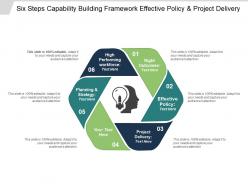
Six steps capability building framework effective policy and project delivery





Try Before you Buy Download Free Sample Product
 Impress Your
Audience
 100%
Editable
 Save Hours
of Time


Closely examine all the data with our Six Steps Capability Building Framework Effective Policy And Project Delivery. It helps derive accurate inferences.
People who downloaded this PowerPoint presentation also viewed the following :
Six steps capability building framework effective policy and project delivery with all 5 slides:
Instantly answer any doubts with our Six Steps Capability Building Framework Effective Policy And Project Delivery. Explain it in a jiffy.


FAQs for Six steps capability building framework effective policy
Honestly, I'd zero in on strategic thinking and learning agility first - people need to adapt fast these days. Digital literacy is obvious but collaboration skills? That's where most teams are still completely lost, which is wild since we've been doing remote work for years now. Problem-solving and emotional intelligence matter too since they carry over to everything else. Don't bite off more than you can chew though. Pick maybe 2-3 areas max and really focus there instead of trying to fix everything at once. Figure out your biggest gaps first, then build some actual programs around those specific skills.
So you want your team thinking differently? Give them new tools to work with - different skills, methods, maybe knowledge from other departments. I've watched design thinking workshops totally flip how people approach stuff. Mix technical training with creative problem-solving and that's usually where the good ideas start popping up. Rotating folks through different workshops works great, or bring someone from outside to shake things up. Honestly, the cross-functional training hits different - people suddenly see connections they missed before. Just don't make it boring corporate training, you know?
Honestly, your managers have to walk the talk first - I mean actually admitting when they're clueless about something. Can't just throw around buzzwords in meetings and expect magic to happen. The best teams I've worked with? Leaders celebrated the smart failures, not just wins. People need to feel safe saying "I have no idea how to do this" without getting side-eyed. Oh, and carve out real time for learning - like actual hours, not just "squeeze it in when you can." Try having your managers share something they recently learned at the next team standup.
Honestly, start with baseline measurements before you do anything else - otherwise you're just guessing. Track things like skill scores, productivity numbers, engagement surveys, and how many people actually stick around. I always tell people to focus on 3-4 key metrics max because data overload is real. Check progress at 30, 60, and 90 days. Hard numbers don't lie, even though feedback forms are still useful. Different training methods? Compare them side by side. Dashboards help you spot trends over time instead of just hoping things are working.
Tech makes learning way easier and more personal for teams. AI platforms can spot where your people need help, then you roll out targeted stuff like VR training or those bite-sized learning apps. Real-time data shows what's actually working - which honestly saves so much time compared to guessing. Your team can also connect with experts anywhere, anytime through collaboration tools. I'd pick one tool that hits your biggest problem area first. Once you see it's working, then expand. Don't try to do everything at once or you'll just overwhelm everyone.
Honestly, resistance to change is the biggest pain - people hate switching up their routine even when it sucks. Leadership buy-in is crucial too, and don't get me started on budget issues. Everyone wants results yesterday, but building capabilities actually takes forever (executives never want to hear this). Communication usually falls apart somewhere along the way. Plus half the time nobody's properly tracking if anything's actually working. Oh, and measurement systems are often garbage. Start with a solid business case that shows how capability gaps are screwing up performance, then get leadership visibly on board before doing anything else.
Honestly, measuring ROI on capability building is kinda tricky because you're dealing with both hard numbers and softer stuff. Track things like productivity gains and revenue bumps, but also employee retention and how fast people pick up new skills. The annoying part? You can't always tell what's from your program vs everything else happening at work. Set your baselines first - that's crucial. Then check progress every 6 months or so. Focus on metrics that actually matter to the business, like faster project completion or fewer mistakes. Oh, and don't go overboard - pick 2-3 key things to track instead of measuring everything under the sun.
Mix things up based on how people actually learn best. Some need hands-on workshops, others prefer watching videos or looking at infographics. Audio learners love podcasts and group discussions. Self-paced online stuff works for people who process slowly - honestly, that's me half the time. Team exercises are great too. Don't sleep on the reading/writing crowd either; they're all about detailed guides and journals. I'd do a quick assessment first to see what your group needs, then try maybe 2-3 different approaches. No point going crazy with options right away.
Dude, engaged employees are literally everything for skill building. They'll actually show up to training and use what they learn. Disengaged ones? Total waste of money - they just phone it in. Here's what actually works: ask your team what skills they want before you plan anything. I learned this the hard way when we rolled out Excel training nobody wanted (awkward). Survey them first, get their input on gaps they see. Buy-in from day one makes all the difference. When people help choose their development path, they're way more invested in the outcome.
Don't treat this stuff like one-time training events - build it into how people actually work. Mentoring programs, cross-functional projects, regular check-ins where they practice skills. The programs that crash and burn? They measure course completions instead of whether people actually changed how they do things. Leadership support is huge too, honestly can't stress that enough. I'd start with a small pilot group first, get some wins under your belt, then expand from there. Oh and connect it directly to business results somehow - otherwise it just becomes another "nice to have" that gets dropped when budgets tighten.
Honestly, cross-functional teams are like knowledge-sharing goldmines. People from different departments start swapping skills and perspectives naturally. It builds up your whole organization's capabilities way faster than when everyone's stuck in their own silos. Your marketing person suddenly gets how operations actually works - mind-blowing stuff, trust me. Sales learns what engineering is really dealing with. Just make sure you're capturing all this good stuff that gets shared. Regular retrospectives help teams spot what new skills emerged and figure out how to spread them around. Otherwise you'll lose half the insights when people move on to other projects.
So there's this huge shift happening with AI-powered learning that actually personalizes stuff for each person. Microlearning is everywhere now - like bite-sized training that doesn't kill your day. Companies are finally ditching those weird corporate hierarchies for skills-based frameworks (thank god). Teams are starting to teach each other through these capability exchanges, which is pretty cool. VR training isn't just for fancy tech companies anymore either. Oh, and real-time support tools help you learn while you're actually working instead of in some boring classroom. I'd probably start with microlearning and skills mapping - they're quick wins that'll get people excited about the bigger stuff later.
Honestly, external partnerships are a game-changer for building capabilities fast. You're basically borrowing someone else's expertise while your team gets up to speed. Consultants, other companies, universities - they all bring specialized knowledge and proven methods that would take you forever to figure out on your own. Your people learn way faster working next to external experts than just reading about stuff online. Just don't make the mistake of outsourcing everything and disappearing. Get your team involved in the actual work. That's how the knowledge sticks - I've seen too many companies waste money by not doing this part right.
Oh man, feedback is like your north star for this stuff - you're totally lost without it. Get input from everyone: participants, managers, whoever's involved. Don't wait until the end either! Quick surveys, casual check-ins, tracking actual results... whatever works. I've watched so many training programs just keep chugging along for months when they should've pivoted way earlier. It's honestly painful to see. Use that feedback to switch things up - tweak content, redesign whole sections if you need to. The data's only useful if you actually act on it, you know?
Start with your business goals for the next couple years, then figure out what skills your teams actually need to hit those targets. Honestly, I've watched so many companies just dump random training on people without connecting the dots - total waste of money. Map everything back to real metrics that matter, like revenue or customer satisfaction scores. Focus your budget on the capability gaps that'll hurt most if you ignore them. Oh, and make this a standing topic in your leadership meetings so it doesn't get forgotten. The backwards approach really works.
-
Editable templates with innovative design and color combination.
-
Great designs, Easily Editable.