


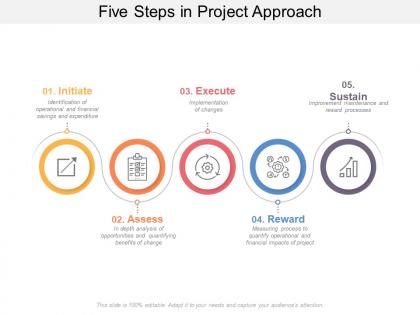
Five steps in project approach




Try Before you Buy Download Free Sample Product
 Impress Your
 Audience
 100%
100% Editable
 Save Hours
 of Time


Charge up your audience with our Five Steps In Project Approach. They will get completely energised.
People who downloaded this PowerPoint presentation also viewed the following :
Five steps in project approach with all 5 slides:
Our Five Steps In Project Approach cause energy to flow. Create an electrifying effect on the audience.




FAQs for Five steps
So there's five main phases: initiation, planning, execution, monitoring/controlling, and closure. First you define the project and get approval. Then comes planning - mapping out timelines, resources, deliverables. Execution is actually doing the work. Monitoring keeps you on track with budgets and deadlines. Closure wraps it all up and captures lessons learned. Honestly? Planning can make or break everything, but stakeholders always want to skip ahead to the "real work." Don't let them rush you through it. I learned this the hard way on my last project - that upfront planning investment saves you so many headaches later.
Dude, agile is basically the opposite of those endless waterfall projects. Instead of planning everything upfront, you work in short 2-week sprints. Daily standups keep everyone talking instead of working in silos for months. The best part? When requirements change (spoiler: they will), you can pivot without losing your mind. You'll get feedback constantly rather than finding out at the end that you built the wrong thing. Honestly, the collaboration alone makes it worth it. Try running one project this way and you'll see how much faster you can respond to what people actually want.
Dude, stakeholder communication can literally make or break your project. I've seen too many good ideas die because nobody talked to each other properly. Set up regular check-ins early - don't wait for things to go sideways. Poor communication = scope creep and those lovely last-minute "oh by the way" requirements that'll ruin your timeline. Always get decisions in writing though, seriously. That paper trail will save your butt when people conveniently "forget" what they agreed to. Oh, and be proactive with updates instead of just putting out fires.
Ugh, scope changes are the worst - they almost always mess up your timeline and budget. You're basically asking your team to do more work with the same resources, so something's gotta break. One "quick change" can snowball into delays you never saw coming. I swear I've watched tiny requests turn into month-long nightmares! The trick is documenting everything upfront. Make sure stakeholders actually understand what their changes will cost in time and money before you say yes. Otherwise you'll be explaining why everything's late and over budget.
Honestly, start with a basic 2x2 grid - plot risks by how likely they are vs. how much they'd screw up your timeline/budget. SWOT analysis sounds super corporate but it actually catches blind spots you'd miss otherwise. Risk registers are basically just organized spreadsheets where you track everything and assign who's responsible. The trick is doing this stuff early, then actually coming back to it regularly instead of just doing it once to check a box. I always forget to revisit mine tbh. Probability/impact matrices work best for most projects - you can get fancy later but that simple grid covers like 80% of what you need.
Honestly, you gotta overcommunicate like crazy - that's what actually works. Daily 15-minute video calls help tons, not just for updates but real face time. Miro and Figma are clutch for working together in real-time. Oh, and document everything in shared spaces like Notion (I'm probably obsessed with this but whatever). Set clear rules about response times so nobody's left hanging. One thing that really moves the needle? Weekly team social calls where you're not talking work. Makes such a difference. Remote doesn't have to feel isolating if you're intentional about it.
Track the obvious stuff first - budget, timeline, scope. Did you hit your marks? But honestly, that's just scratching the surface. Stakeholder happiness matters way more than people think. Team morale too - burned out teams don't deliver quality work. I'd also look at how well you handled curveballs and risks that popped up. Don't go crazy tracking everything though, that gets messy fast. Pick maybe 3-4 metrics that actually matter for your specific project. Simple weekly dashboard works great for staying on top of things.
Dude, project management software is a lifesaver. It puts everything in one place - tasks, deadlines, files, all that chaos. No more digging through endless email threads wondering what's happening. Asana and Monday are solid choices that'll automatically ping everyone with updates and reminders. The tricky part? Getting your whole team to actually stick with it instead of falling back into their messy old ways. Once everyone's committed though, you'll wonder how you ever survived without it. Real-time progress tracking alone makes it worth the switch.
Oh man, timeline disasters and scope creep for sure. Clients always want to throw in "just one tiny thing" when you're halfway done - drives me crazy. Build buffer time into everything, and actually get your team to agree on estimates instead of just telling them what to do. Document the scope upfront like your life depends on it, then make people fill out change requests for additions. Also - and I learned this the hard way - nail down what everyone expects before you start. Misaligned stakeholders will absolutely wreck your project later. Spend way more time planning than feels normal.
Oh man, cultural stuff will absolutely derail your timeline if you're not careful. Different communication styles are brutal - some people are crazy direct, others dance around problems for ages. Time zones suck obviously, but what really gets you is how people handle deadlines and decisions differently. Half your team might need three approval levels while the other half just wants to move fast. I learned this the hard way on a project last year. Best thing you can do is talk through everyone's work style right at the start and write everything down so nobody's confused later.
Think of the project charter as your official permission slip - it authorizes everything and gives you actual power to make things happen. Include the why, what you're building, who's involved, success metrics, and what resources you need. Honestly, I've seen too many projects crash because people skipped this step. Get everyone to sign off before you start any real work. When stakeholders inevitably try changing everything later (and they will), you can point back to what they agreed on. It's basically your insurance policy against scope creep and endless debates.
Ugh, deal with it ASAP before it gets messier. Get everyone together and let each person say their piece without anyone jumping in - honestly, half the time people just need to vent and feel heard. Focus on what you're all trying to accomplish instead of who said what to whom. Most conflicts I've seen? Usually comes down to nobody knowing who's supposed to do what or mixed signals about deadlines. Write down whatever you decide and check back in a few days. Trust me, those uncomfortable conversations don't magically fix themselves.
Honestly, mix up how you recognize people - some public shoutouts, some private appreciation. One-on-ones are way better than hoping group meetings catch everything, trust me on that. Give everyone ownership of real stuff, not just busywork. People need to see how their work actually matters in the bigger picture or they'll mentally check out. Listen when they bring up ideas or problems (like, actually listen). Oh and be flexible with deadlines when you can - rigid timelines kill morale. Most crucial thing though? Fight for your team when they need resources or backup from higher-ups.
Dude, time management literally makes or breaks projects. I've watched so many crash because nobody tracked timelines properly - it's painful. Break your project into smaller pieces with real deadlines, then check progress every week. Figure out your critical path first (that's the stuff that'll delay everything if it's late), and always build in buffer time. Trust me on this one. When you nail the timing, you hit deadlines, stay in budget, and everyone stays happy. Plus you're not scrambling when weird stuff inevitably pops up. The weekly check-ins are key though - that's where most people mess up.
Look, do these evaluations right after you wrap up - memories fade fast. Get everyone involved, not just the project managers. Document what went well and what was a disaster. There's always some random thing that blindsides you (Murphy's Law is real). The whole point is learning from mistakes so you don't repeat them next time. Better estimates, smoother processes, all that good stuff. But honestly? Most teams skip this step and wonder why they keep hitting the same problems. Don't be those people.
No Reviews