

Insurance sales steps as a agent





Try Before you Buy Download Free Sample Product
 Impress Your
Audience
 100%
Editable
 Save Hours
of Time


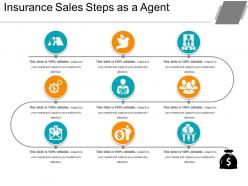
Build a strong sales process with the help of Insurance Sales Steps As A Agent. Step by step explain your insurance product and how will this benefit them using our selling life insurance PPT template. Cover the five key phases prospecting, preparation, outreach & presentation, address objections, close, in your sales process. Graphically explain their significance. Elucidate effective sales strategies to achieve set targets. Enhance your sales performance using our life insurance sales process PPT template. Understand your customer's situation first and then suggest the ideal insurance policy that will benefit them in the long run. Try to make your presentation creative by incorporating our professionally-designed general insurance sales tips PPT template. Take help of various icons and graphics. Write short texts and explain those points while delivering a presentation. Term assurance sales workflow PPT template will have a good impact on your sales performance and will generate more leads. Download this life insurance sales process PPT template and see the magic yourself.
People who downloaded this PowerPoint presentation also viewed the following :
Insurance sales steps as a agent with all 5 slides:
Give due credit to the departed with our Insurance Sales Steps As A Agent. It helps hold events in memoriam.


FAQs for Insurance sales steps
So basically you've got six main steps to work through. First up is finding prospects, then making that initial contact to get a meeting set up. The needs assessment part is honestly where the magic happens - you're digging deep into their coverage gaps and figuring out what's actually worrying them. Present your proposal after that, handle whatever pushback comes your way, then close it out. Oh, and don't sleep on the follow-up calls afterward. That's usually when people finally pull the trigger and sign, even if they seemed ready during the meeting.
Dude, good leads are a game changer - you'll actually fill your pipeline with people who want to buy insurance instead of wasting hours on dead-end calls. Referrals and social media targeting work way better than cold calling (which honestly sucks the life out of you). These prospects already trust you more since they found you while searching or got a warm intro. Your conversion rates will jump because you're talking to people who are actually ready to make a decision. Oh, and community events are solid too if you can swing it. Just focus on relationships first - I know it sounds cheesy but the sales really do follow.
Dude, you absolutely have to do your homework on customers first. Don't just ask the basic "how much coverage do you want" stuff - dig deeper into their actual life situation. What's their family like? Financial goals? Some people hate risk, others don't mind it. Once you really get their story, you can suggest stuff that actually makes sense for them. Like maybe they need cheap term insurance now but will want the permanent stuff down the road. Or their business has weird seasonal money flow that affects when they can pay premiums. That research phase is honestly where you separate yourself from all the other agents just trying to sell whatever. Write it all down too.
Listen first, pitch later - that's honestly the biggest thing. Ask about their actual concerns instead of diving into your spiel right away. People can smell that pushy energy from miles away. Share stories about similar clients you've helped, but be real about costs too. Follow through on everything you say you'll do. Oh and here's something weird - admitting when you don't know something off the top of your head actually builds trust. Don't try to BS your way through it. Focus on solving their problem, not just closing a deal. Next time you talk to someone, start by asking what's keeping them up at night insurance-wise.
Warm referrals are gold - "Sarah mentioned you were exploring life insurance options." For cold calls though, lead with value instead of your product. Ask stuff like "What's your biggest worry about your family's financial protection?" Ditch the scripts completely. People see right through that fake stuff. Be actually curious about their situation and listen way more than you talk - I know, easier said than done sometimes. Your first conversation isn't about selling anything. It's about understanding what they're dealing with so you can earn another conversation later. Build that connection first, then figure out if you can actually help them.
Start with "what coverage do you have right now?" then dig into the gaps. Life changes are gold mines - new baby, mortgage, job switch. Listen for what they're *not* saying too. When someone mentions their spouse worries about money, that's your opening. Don't just run down some boring checklist though. I always probe deeper on anything that makes them hesitate or seem uncomfortable. Figure out their actual budget and risk tolerance first - nobody wants to be oversold. Oh, and always repeat back what you heard before pitching anything. Shows you actually listened.
Listen first, then actually acknowledge what they're saying before jumping in. Ask questions to dig deeper - "too expensive" usually means they don't see the value yet. I love the feel-felt-found thing: "I get how you feel, other clients felt the same way, here's what they discovered..." Honestly? Don't try crushing every objection right away. Sometimes backing off works way better than pushing. Have client stories ready for common concerns. Oh, and your goal isn't winning an argument - you're educating them while building trust. When you really understand their perspective first, everything else gets easier.
Honestly, tech can cut your sales cycle way down. CRM systems track leads without you babysitting them constantly. Digital quote tools pump out proposals super fast - we're talking minutes, not the usual hours of back-and-forth. E-signatures are a game changer too since nobody wants to deal with printing stuff anymore (who even has a printer these days?). AI helps spot your hottest prospects, though I still think trusting your instincts matters. Automated follow-ups are clutch - they'll nurture leads while you're busy closing other deals. Don't try implementing everything at once though. Pick one tool first.
Put your client's real needs first, not your commission. Disclose everything important and be upfront about what the policy won't cover. Don't push expensive stuff they don't actually need - I've watched too many agents do that and it always backfires. Get properly licensed for whatever you're selling, obviously. Document everything and skip the pushy sales tactics. Oh, and never oversell just to hit your numbers. Building trust beats quick cash every time. Your reputation's basically all you have in insurance, so protect it by being straight with people from day one.
Underwriting controls your whole sales process, so prep clients early about timelines and paperwork. Some carriers move fast, others... not so much - pick accordingly. I always mention medical exams and financial docs upfront because nobody likes surprises. Get everything complete before submitting or you'll just be waiting around forever. Oh, and actually talk to your underwriters! They'll tip you off on tricky cases and help you frame apps the right way. Honestly, that relationship makes such a difference when you're dealing with borderline approvals.
Dude, hit them back within 24 hours - seriously, fast beats perfect in this game. Mix it up with calls, texts, emails since everyone's got their thing. I do like 5-7 touches over 2-3 weeks, then longer nurture if they're not biting. Here's what works though - don't just "check in" (ugh). Actually give them something useful each time. Market update, article, whatever makes sense for their situation. Oh and track everything in your CRM or you'll lose your mind trying to remember who you called when. Trust me on that one. Just pick a system and stick to it religiously.
Stories work way better than rattling off policy details. I always keep 3-4 good client examples ready - like this family whose disability coverage paid their mortgage when dad got hurt, or the business owner who avoided bankruptcy because liability insurance covered a lawsuit. Honestly, people's eyes glaze over when you start talking deductibles and coverage limits. But tell them about real situations? They actually listen. Match your story to whatever they're worried about. Sometimes I'll even embellish tiny details to make it stick better - nothing major, just stuff that helps them picture it happening to them.
Focus on your funnel conversion rates first - leads to appointments, appointments to quotes, quotes to closed deals. Track your average deal size too. Time from first contact to close is painful to look at sometimes, but you need it. Activity stuff matters - calls made, follow-ups sent, that kind of thing drives the rest. Oh, and retention rate if you can swing it. Way cheaper to keep clients than chase new ones constantly. Honestly though? Pick maybe 3-4 metrics max or you'll never actually check them. Better to religiously track a few than ignore a dozen.
Honestly, don't just spam people with policy info - that's the fastest way to get unfollowed. Share stuff that actually helps, like insurance basics or client wins (get permission first obviously). LinkedIn's solid for networking and getting referrals. Facebook works if you're targeting local groups. Instagram's weirdly good with younger people, but please skip the cheesy stock photos of business handshakes - nobody wants that. Pick one platform first instead of trying to be everywhere at once. Oh, and actually respond to comments. Sounds obvious but most agents just post and ghost.
Dude, customer service is everything in insurance - seriously makes or breaks whether people stick with you. Claims are already stressful enough, right? So when clients feel supported during those moments, they'll stay loyal and refer friends. Mess it up though, and they're gone before renewal hits. Insurance feels super complicated to most people anyway, so good service makes your company actually feel human. Quick responses help a ton. Clear communication without the jargon. Actually do what you say you will - sounds basic but you'd be surprised how many companies fail at this stuff. Those fundamentals alone will keep your retention solid.
-
Great quality slides in rapid time.
-
Easily Editable.