

Insurance Company Profile Powerpoint Presentation Slides




Try Before you Buy Download Free Sample Product
 Impress Your
 Audience
 100%
100% Editable
 Save Hours
 of Time


An insurance company profile is a professional introduction to the organization, allowing diverse groups of people to get an idea about the companys products and services along with strengths and business operations. It also summarizes all the relevant information about insurance companies for existing and potential clients. The profile covers an executive summary with company details, brand value, market share, and key statistics. Moreover, it presents specialty and organization information in the form of a company overview, along with mission and vision, core values, products offered, life insurance services, health insurance services, Insurance networks, underwriting process, and property and casualty insurance. Furthermore, it showcases the business model, company history, international presence, management team, organization chart, workforce diversity, ownership structure, company clients, and client reviews. Additionally, the profile captures financial details of the company by highlighting revenue, sources of revenue, business expense, combined split ratio, underwriting profit, operating profit, and net profit. Finally, it compares insurance firms with global competitors based on market share, revenue, and policy growth rate. It further shows SWOT analysis, expansion strategies, future plan, CSR activities and spend, and case study. Download our 100 percent editable and customizable company profile ppt to know more in detail.
People who downloaded this PowerPoint presentation also viewed the following :
Content of this Powerpoint Presentation
Slide 1: This slide introduces Insurance Company Profile. State Your Company Name and begin.
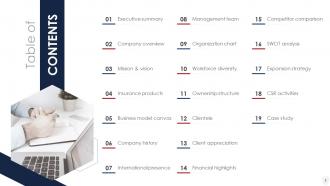
Slide 2: This slide presents Table of Content for the presentation.
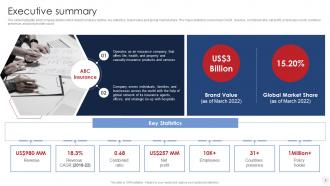
Slide 3: The slide highlights brief company details which depict company outline, key statistics, brand value, etc.
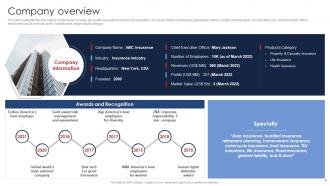
Slide 4: This slide displays the information of insurance company along with specialty and awards.
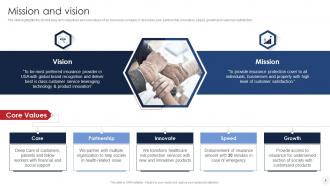
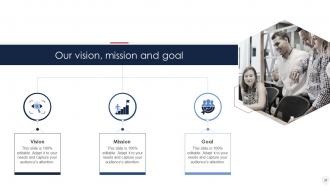
Slide 5: This slide represents the short & long-term objectives and core values of an insurance company.
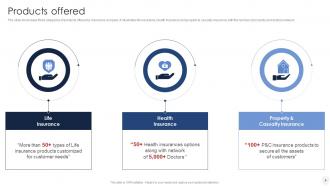
Slide 6: The slide showcases three categories of products offered by insurance company.
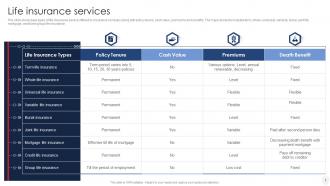
Slide 7: The slide showcases types of life insurance service offered by insurance company.
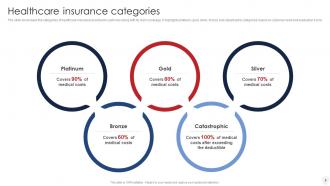
Slide 8: This slide shows five categories of healthcare insurance provided to customer.
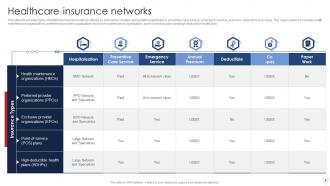
Slide 9: This slide presents types of healthcare insurance service offered by insurance company.
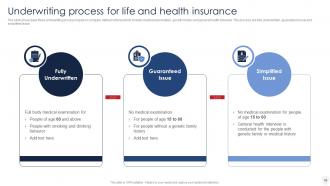
Slide 10: This slide displays Underwriting process for life and health insurance.
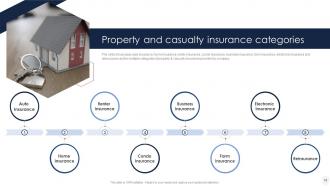
Slide 11: This slide represents Property and casualty insurance categories.
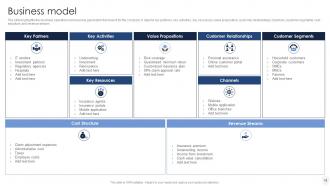
Slide 12: The slide highlights the business operations and revenue generation framework for the company.
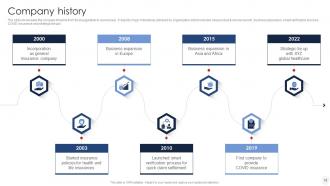
Slide 13: The slide showcases the company timeline from its inauguration to current year.
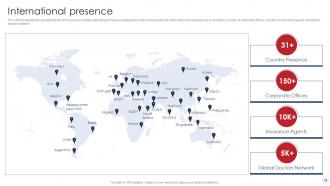
Slide 14: The slide illustrates the global footprint of insurance company depicting company headquarters.
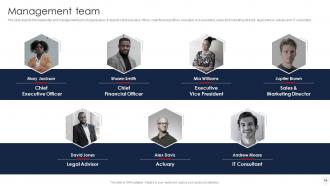
Slide 15: The slide depicts the leadership and management team of organization.
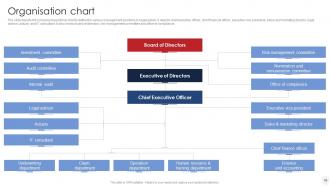
Slide 16: The slide depicts the company hierarchical chart to define the various management positions.
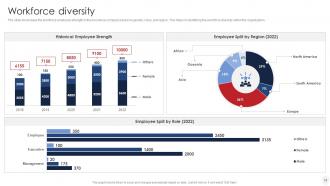
Slide 17: The slide showcases the workforce employee strength in the insurance company.
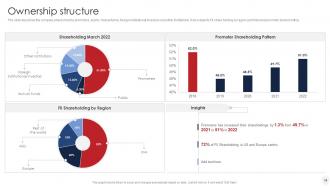
Slide 18: The slide describes the company shares held by promoters, public, mutual funds, etc.
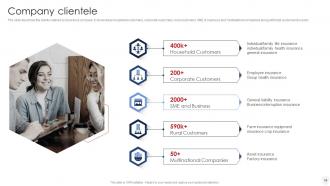
Slide 19: This slide shows the clients catered by insurance company.
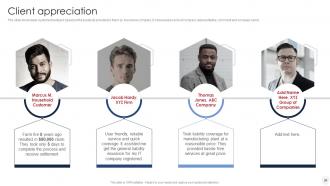
Slide 20: The slide showcases customer feedback based on the products provided to them.
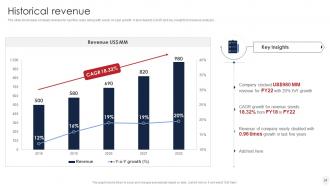
Slide 21: This slide presents company revenue for last five years along with yearly on year growth.
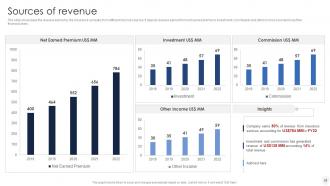
Slide 22: This slide displays the revenue earned by the insurance company from different income sources.
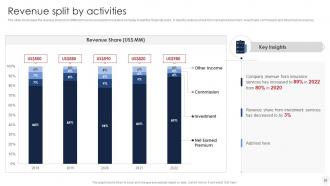
Slide 23: This slide represents the revenue share from different income sources for insurance company.
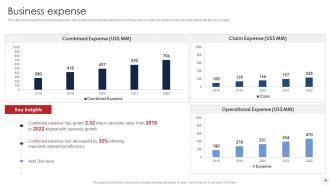
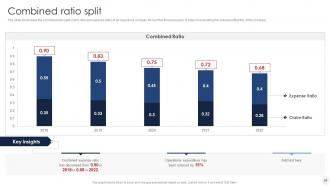
Slide 24: The slide showcases the combined expense, claim expense and operational expense.
Slide 25: This slide shows combined ratio split (claim ratio and expense ratio) of an insurance company.
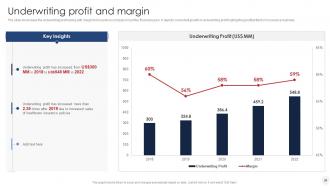
Slide 26: The slide showcases the underwriting profit along with margin for insurance company.
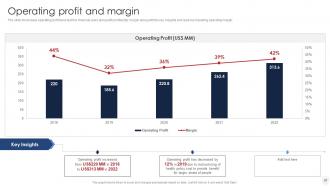
Slide 27: This slide presents operating profit trend last five financial years along with profitability.
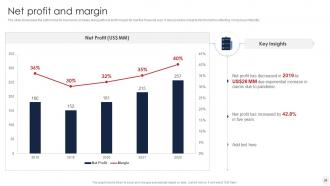
Slide 28: This slide shows the bottom line for insurance company along with net profit margin.
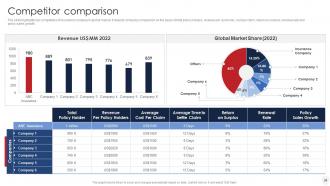
Slide 29: The slide highlights top competitors of insurance company in global market.
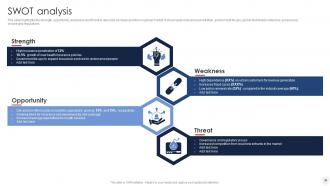
Slide 30: This slide displays the strength, opportunity, weakness and threat.
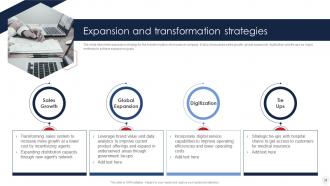
Slide 31: This slide represents Expansion and transformation strategies.
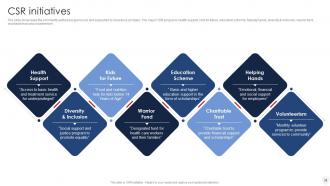
Slide 32: The slide showcases the community welfare programs run and supported by insurance company.
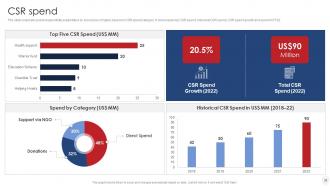
Slide 33: This slide shows social responsibility expenditure by insurance company.
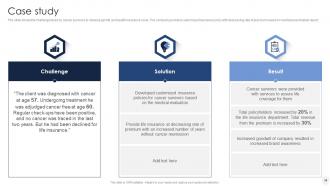
Slide 34: This slide presents the challenge faced by cancer survivors to get life and health insurance cover.
Slide 35: This slide displays Icons for Insurance company profile.
Slide 36: This slide is titled as Additional Slides for moving forward.
Slide 37: This is Our Mission slide with related imagery and text.
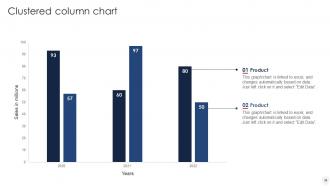
Slide 38: This slide provides Clustered Column chart with two products comparison.
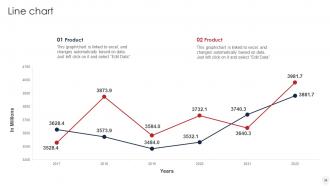
Slide 39: This slide describes Line chart with two products comparison.
Slide 40: This slide shows Post It Notes. Post your important notes here.
Slide 41: This is Our Goal slide. State your firm's goals here.
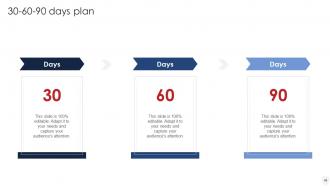
Slide 42: This slide provides 30 60 90 Days Plan with text boxes.
Slide 43: This slide depicts Venn diagram with text boxes.
Slide 44: This slide contains Puzzle with related icons and text.
Slide 45: This is a Thank You slide with address, contact numbers and email address.
Insurance Company Profile Powerpoint Presentation Slides with all 50 slides:
Use our Insurance Company Profile Powerpoint Presentation Slides to effectively help you save your valuable time. They are readymade to fit into any presentation structure.









FAQs for Insurance Company Profile
So you've got two main pieces - mission and vision. Mission is the "why do we exist" thing, like protecting families from going broke when life hits hard or giving people actual peace of mind with coverage that works. Vision is where you want to end up in maybe 5-10 years. Could be becoming the go-to insurer everyone trusts in your area, or maybe you're all about revolutionizing how claims get handled digitally. Both need to scream "insurance company" though - not some vague corporate nonsense that any random business could slap on their website. They should actually connect to what your team does every single day, otherwise honestly they're just expensive wall art.
So each type of insurance basically forces companies to run totally different playbooks. Life insurance? You get steady premiums but need crazy reserves for payouts that might not happen for like 30 years. Health is the complete opposite - constant claims, regulatory chaos (seriously, what a mess). Auto falls somewhere between those two. The cash flows don't match up at all, which is why most insurers pick a lane or split into separate divisions. When you're looking at any insurance company, check their policy mix first - it'll tell you everything about how they actually make money.
Honestly, insurance companies are way more tuned into customer feedback than most people realize. They're constantly checking surveys, reviews, complaints - all that stuff. When everyone keeps whining about those impossible-to-read policy documents (and rightfully so), companies actually respond by cleaning up their language or building better apps. Short complaints work too. The ones who ignore feedback? They usually get left behind pretty fast. I'd definitely speak up next time something bugs you about your insurer - there's a decent chance someone's actually tracking those issues and might fix them.
Analytics will seriously change your underwriting game. You can crunch huge datasets and catch risk patterns that humans totally miss. Honestly, the predictive models are where it gets interesting - they'll flag sketchy applicants before you waste time digging into their files. Plus you can automate the boring stuff and speed everything up. Real-time data means you can shift your risk appetite when markets get weird. My advice? Figure out what's driving you crazy in underwriting right now and tackle those spots first with analytics.
Ugh, regulatory stuff is such a pain depending on where you're operating. EU hits you with Solvency II - super strict on capital reserves and risk management. The US? Total mess since every state has different rules. Try managing compliance across like 15 states... nightmare fuel. Singapore and Hong Kong are obsessed with consumer protection and digital standards, which actually makes sense. Oh, and emerging markets? Their regulations change constantly so good luck keeping up. Honestly, just build flexible compliance systems and stay on top of regulatory news. Maybe hire local experts if you can afford it.
Look, claims can totally make or break customer loyalty. People are already stressed when filing, so dragging them through endless paperwork just pisses them off. They'll switch companies in a heartbeat. But handle things quickly and fairly? That's how you get customers who actually tell their friends about you - which honestly doesn't happen much in insurance. Bad experiences spread crazy fast on social media too. Speed matters most, then clear communication. Oh, and don't be robots about it. Show some empathy and you'll see retention rates improve big time.
Dude, the insurance world is crazy right now. AI lets you get quotes instantly instead of waiting forever for some underwriter to review your stuff. Blockchain's making fraud way harder to pull off since everything gets recorded transparently. Basic customer service is mostly chatbots now - honestly pretty convenient for simple questions. The coolest part? They're pricing policies based on how you actually behave, not just your age and zip code. Oh, and claims processing is so much faster. You should totally look at what manual stuff you could automate with these tools.
Insurance companies are basically obsessed with personalization right now. They're using AI chatbots and analyzing your behavior to suggest policies that actually make sense for you. Those cringe 90s TV ads? Mostly replaced by targeted social media stuff. Mobile apps are huge too - they want everything simplified, especially claims. What's interesting is they've shifted from just trying to sell you things to actually educating customers about coverage. Makes sense I guess, since nobody really understands insurance anyway. The whole game now is about using your data to create experiences that feel tailored to you specifically. If you're curious about this, just look at what the big companies are doing with customer data.
Distribution channels basically control your scaling speed and profit margins. Direct sales = better margins since no agent cuts, plus you own the whole customer journey. Way harder to build that infrastructure though - like, seriously difficult. Going through agents means faster expansion because they've got the relationships and local know-how already. People trust them in their neighborhoods, which is huge. You'll make less per policy and lose some control over messaging though. Most companies that actually work do both now, so I'd think about what split works for your customers. Really depends on who you're targeting.
So basically insurance companies are getting crazy good at catching fraud now. They've got AI systems that can spot weird patterns in claims data way faster than people can. Plus they're doing stuff like checking your social media and using those little car tracking devices to verify accident details. Companies are also asking for more paperwork these days and doing random inspections - kind of annoying but whatever. They even cross-check with police databases now. Honestly though? It's probably good for the rest of us since it keeps premiums from going up. Just expect more hoops to jump through when you file a claim.
Oh man, CSR is absolutely critical for insurance companies. Your customers are trusting you with their house, car, health - basically everything that matters to them. So when they see you actually giving back to communities or supporting disaster relief, it shows you're not just another soulless corporation trying to take their money. Insurance already has this sketchy reputation anyway (probably deserved tbh). But here's the thing - it has to feel real. Like if you're selling flood insurance, maybe partner with environmental groups? Don't just throw money at random charities for the Instagram post. People can smell fake CSR from a mile away.
So basically, location is everything when it comes to insurance pricing. Crime rates, natural disasters, local healthcare costs - they all bump up premiums differently depending on where you are. The competition in each area matters too, obviously. Some places have way more insurers fighting for business than others. Oh, and don't get me started on regulations - they're all over the map state by state. Workers' comp especially gets hit hard by regional healthcare pricing. It's honestly wild how much rates can swing just from one zip code to another. You've really gotta dig into local market stuff before setting any prices.
So M&A basically makes fewer, bigger players with deeper pockets and wider product lines. Competition drops short-term since you've got less companies fighting for business. But here's the thing - these massive mergers usually create tons of inefficiencies that smaller, quicker companies can jump on. Regulators also start paying way more attention when things get too concentrated. What you really want to watch is whether they can actually pull off those synergies they promised, or if they just get stuck in integration hell. That's honestly where the best opportunities pop up for everyone else.
Honestly, you'll want to hit three angles here. Partner with churches or community groups first - they've already got the trust you need to build from scratch. Then simplify your products big time. Lower coverage, flexible payments, maybe a solid mobile app since tons of people in underserved areas live on their phones anyway. Oh, and ditch the credit score obsession for underwriting. Use other data instead because credit scores can really screw over communities that deserve better coverage. I'd pick one specific neighborhood and really get to know their actual problems before trying to scale up everywhere.
Most insurance companies build education right into everything - onboarding, policy docs, claims help, you name it. They'll hit you with webinars, apps, customer portals, all that stuff to explain coverage and help you manage risk. Some go really overboard with content (though tbh insurance IS pretty confusing so I get it). The smart ones aren't just trying to sell you something anymore - they actually want you to understand what you're buying and hopefully avoid filing claims. When you're shopping around, look for companies with solid educational resources. Usually means they care more about keeping you long-term than making a quick buck.
-
Thrilled to see several customizable templates catering various verticals and industries.
-
Nothing beats the well-formatted and professionally designed templates offered. Kudos to SlideTeam for their amazing collection of PPT slides.