


Logistics management optimization powerpoint presentation slides




Try Before you Buy Download Free Sample Product
 Impress Your
 Audience
 100%
100% Editable
 Save Hours
 of Time


Present an informative demonstration with our logistics management optimization PowerPoint presentation slides. This administration governance PPT deck controls different subjects such as current situation analysis, inbound and outbound logistics process, overcoming challenges, and impact of improving logistic process. Providing a clear image of challenges in this PowerPoint design will assist you in making informed decisions to ensure improvement in the business. The graphical representation of all the data in this engineering control creative PPT set leaves a positive impact as it gives clarity regarding the ongoing subject matters. Making it much easier for you, this systematization guide PowerPoint set showcases the order entries, adds, changes, and deletions for future growth. This coordination handling PPT template assists you with a special slide solely committed to icons and symbols for evaluation and focusing on the key players of the logistic industry for improved functioning. Incorporate it right now to make your presentation standout.
People who downloaded this PowerPoint presentation also viewed the following :
Content of this Powerpoint Presentation
Slide 1: This slide introduces Logistics Management Optimization. State Your Company Name and begin.
Slide 2: This is an Agenda slide. State your agendas here.
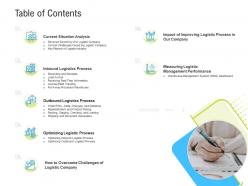
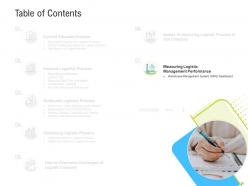
Slide 3: This slide shows Table of Content for the presentation.
Slide 4: This slide shows Table of Content highlighting Current Situation Analysis.
Slide 5: This slide shows Table of Content highlighting Current Situation Analysis.
Slide 6: This slide covers the revenue earned by our logistic company in year 2021 & 2020 along with gross profit, return on equity, EPS, etc.
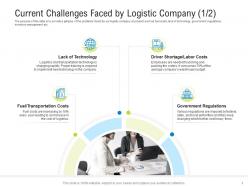
Slide 7: This slide displays Current Challenges Faced by Logistic Company.
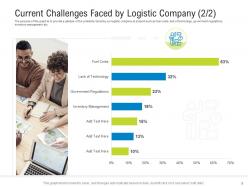
Slide 8: This slide represents problems faced by our logistic company at present such as fuel costs, lack of technology, government regulations, inventory management etc.
Slide 9: This slide covers the key players of logistic industry along with their rank in 2021 & 2020, net revenues, gross revenues and number of employees.
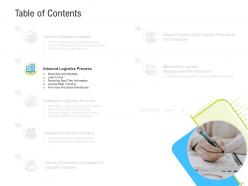
Slide 10: This slide presents Table of Content highlighting Inbound Logistics Process.
Slide 11: This slide presents Table of Content highlighting Inbound Logistics Process.
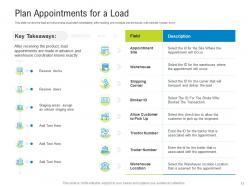
Slide 12: This slide shows Recording and Receipts Drive the Inbound Process.
Slide 13: This slide displays the load arrival process must start immediately after loading pre-receipts into the books with minimal human error.
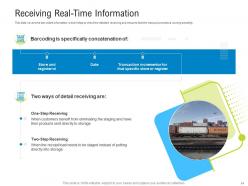
Slide 14: This slide represents the bar coded information which helps to check the detailed receiving and ensures that the inbound process is running smoothly.
Slide 15: This slide includes tracking of license plates of the trucks, which is an important step in managing entire inbound process.
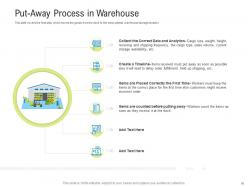
Slide 16: This slide presents the final step which moves the goods from the dock to the most optimal warehouse storage location.
Slide 17: This slide shows Table of Content highlighting Outbound Logistics Process.
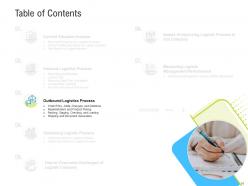
Slide 18: This slide shows Table of Content highlighting Outbound Logistics Process.
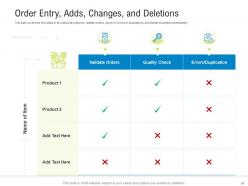
Slide 19: This slide displays the first steps of an outbound system to validate orders, check for errors or duplications, and handle exceptions immediately.
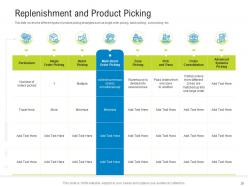
Slide 20: This slide represents the different types of product picking strategies such as single order picking, batch picking, zone picking, etc.
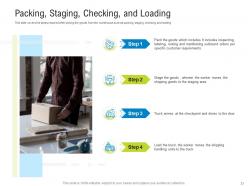
Slide 21: This slide covers the steps required after picking the goods from the warehouse such as packing, staging, checking and loading
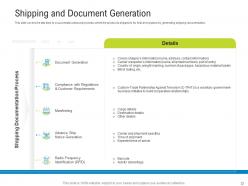
Slide 22: This slide presents the last step to a successful outbound process where the product is shipped to its final arrival place by generating shipping documentation.
Slide 23: This slide shows Table of Content highlighting Optimizing Logistic Process.
Slide 24: This slide shows Table of Content highlighting Optimizing Logistic Process.
Slide 25: This slide displays the ways of optimizing inbound logistic processes such as introducing WMS system, GPS tracker, automated conveyor system, RF devices, etc.
Slide 26: This slide represents the ways of optimizing outbound logistic processes such as introducing mobile robots, voice picking equipment, electronic weight scales, barcode scanners, etc.
Slide 27: This slide shows Table of Content highlighting How to Overcome Challenges of Logistic Company.
Slide 28: This slide shows Table of Content highlighting How to Overcome Challenges of Logistic Company.
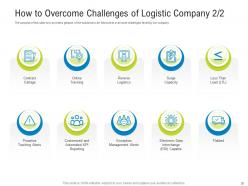
Slide 29: This slide presents How to Overcome Challenges of Logistic Company.
Slide 30: This slide shows solutions to be followed to overcome challenges faced by our company.
Slide 31: This slide displays Table of Content highlighting Impact of Improving Logistic Process in Our Company.
Slide 32: This slide displays Table of Content highlighting Impact of Improving Logistic Process in Our Company.
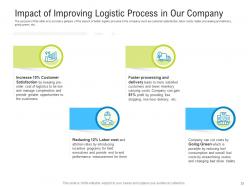
Slide 33: This slide represents impact of better logistic process in the company such as customer satisfaction, labor costs, faster processing and delivery, going green, etc.
Slide 34: This slide shows Table of Content highlighting Warehouse Management System (WMS) Dashboard.
Slide 35: This slide shows Table of Content highlighting Warehouse Management System (WMS) Dashboard.
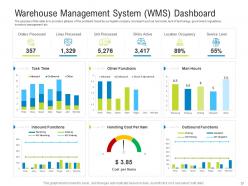
Slide 36: This slide presents problems faced by our logistic company at present such as fuel costs, lack of technology, government regulations, inventory management etc.
Slide 37: This slide shows Warehouse Management System (WMS) Dashboard.
Slide 38: This slide displays Icons Slide for Logistics Management Optimization.
Slide 39: This slide is titled as Additional Slides for moving forward.
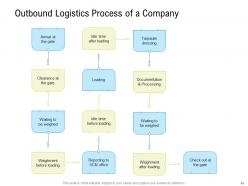
Slide 40: This slide shows Outbound Logistics Process of a Company.
Slide 41: This slide covers the first steps of an outbound system to validate orders, check for errors or duplications.
Slide 42: This is Our Team slide with names and designation.
Slide 43: This is About Us slide to show company specifications etc.
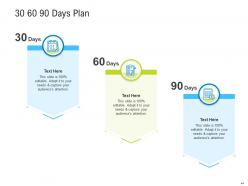
Slide 44: This slide shows 30 60 90 Days Plan with text boxes.
Slide 45: This is Our Mission slide with related imagery and text.
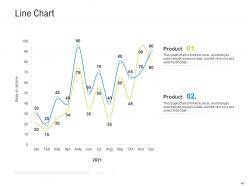
Slide 46: This slide displays Line chart with two products comparison.
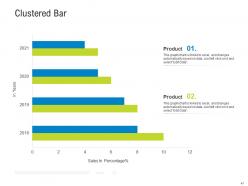
Slide 47: This slide displays Clustered Bar chart with two products comparison.
Slide 48: This slide shows Puzzle with related icons and text.
Slide 49: This slide shows Post It Notes. Post your important notes here.
Slide 50: This slide shows Roadmap with additional textboxes.
Slide 51: This is a Thank You slide with address, contact numbers and email address.
Logistics management optimization powerpoint presentation slides with all 51 slides:
Use our Logistics Management Optimization Powerpoint Presentation Slides to effectively help you save your valuable time. They are readymade to fit into any presentation structure.

















FAQs for Logistics management optimization
Honestly, start with the basics - cost per shipment and on-time delivery rates. Those two will tell you a ton right away. Inventory turnover is huge too, plus order accuracy because nobody wants to deal with returns (speaking from experience lol). Transportation costs? Yeah, don't sleep on those. Warehouse utilization can totally destroy your budget if it gets out of hand. Customer satisfaction scores matter obviously, but I'd focus on maybe 3-4 metrics that match your biggest headaches first. You can always add more once you've got some solid data to work with.
So basically, AI can predict what you'll need before you run out of stuff, which is pretty sweet. Route optimization happens in real-time too - adjusts for traffic jams, weather, whatever. Your warehouse operations get way more automated. The algorithms catch inefficiencies that would take humans forever to spot, if at all. Plus predictive maintenance means fewer surprise breakdowns with your trucks and equipment. Honestly, I'd start with just route optimization first - see how that goes before diving into the whole thing. Once you get comfortable with it, then expand to inventory management and other areas.
Honestly, data analytics is a game changer for catching inefficiencies you'd never spot otherwise. Track your delivery times, inventory, routes - all that stuff. Historical data shows you when demand's gonna spike so you're not scrambling last minute. I've seen companies cut massive waste just by actually looking at their numbers instead of winging it. Bottlenecks become obvious before they wreck everything. Even basic tracking will surprise you - suddenly you'll see optimization chances everywhere. Way better than making decisions on hunches, and your budget will thank you for it.
Honestly, figure out what you're doing now before changing anything - sounds obvious but so many people skip this step. Pick just one thing to fix first, maybe routes or inventory stuff. Don't go crazy trying to remake everything at once, that's a disaster waiting to happen. Your team knows where the real problems are way better than you do, so ask them. Test small before going big - pilot programs save your ass. Oh and track actual numbers on whatever you change, otherwise you're just guessing if it worked.
First thing - get your data clean. Addresses, delivery windows, vehicle capacity, all that stuff needs to be spot on. Ditch the spreadsheets and grab some route optimization software that handles traffic, driver hours, fuel costs. Trust me, it's worth it. Group nearby deliveries together obviously, but here's the thing - don't obsess over the "perfect" route if it means pissing off good customers. Road closures happen, drivers get stuck in traffic. Plan for that mess. Oh and definitely test with a few pilot routes first before you commit to anything big. No point screwing up everything at once, right?
Honestly, demand forecasting is a game-changer for inventory management. You'll stock exactly what you need when you need it - no more cash tied up in junk that won't sell. Plus you won't run out of the stuff people actually want. The benefits cascade everywhere too: fewer emergency orders, better warehouse organization, less expired inventory eating your profits. Transportation gets way smoother when you can plan ahead. I'd start by digging into your past sales data and figuring out seasonal trends - that's where the magic happens. It's not perfect but it beats guessing every time.
Yeah, sustainable logistics definitely complicates things - you're suddenly optimizing for carbon emissions, fuel efficiency, packaging waste AND routes all at once instead of just cost or speed. It's honestly like doing a jigsaw puzzle blindfolded sometimes. But here's the thing - those complex solutions often end up being cheaper in the long run anyway, which is wild. I'd say just pick one sustainability metric first and add it to whatever model you're using now. See how it shifts things. Don't try to tackle everything at once or you'll lose your mind.
Honestly, working closely with your suppliers is a game changer for logistics. Share your demand forecasts and inventory data with them - they'll plan production better and you'll see fewer stockouts. Joint planning sessions are clutch for spotting problems early (learned that one the hard way lol). You can even team up on consolidated shipments to cut costs. Start small though - grab your top 3-5 suppliers and set up monthly meetings to sync on priorities and share data. Makes everything run smoother.
Honestly, data quality is gonna be your worst nightmare - everything's scattered everywhere and half of it's probably garbage. People hate change too, especially the "we've always done it this way" crowd. Integration with your current systems? Yeah, that'll take twice as long as you think. My advice: pick one area that'll actually move the needle and start there. Clean up your data first (boring but crucial), then run a small pilot to show results. Get someone important to back you up because you'll need it. Oh, and don't try to fix everything at once - learned that one the hard way.
Trade regulations will completely mess with your supply chain plans. Speed and cost used to be everything, but now compliance is just as critical. Tariffs force you to find new suppliers. Customs paperwork slows down your best shipping routes. Though trade deals can randomly create amazing new opportunities - that part's actually pretty cool. Your models need to account for regulatory fees, processing delays, all that documentation stuff for different markets. My advice? Build flexibility into your network so you can adapt fast when rules change. Because they will.
So for warehouse stuff, Manhattan Associates and Blue Yonder are pretty solid if you've got the budget. SAP EWM too, but honestly their pricing can be nuts. Oracle's decent, though JDA's interface still feels like it's from 2015 or something. Smaller operations? Fishbowl and infoplus won't break the bank and they actually work well. Don't overthink it - match what you pick to what you actually need. I'd definitely test it in just one section first before going all-in. Learned that the hard way at my last job when we rolled out everything at once and it was chaos for like two weeks.
Oh man, last-mile delivery is where everything either clicks or falls apart. That final stretch from warehouse to someone's door? It eats up like 30-50% of your total shipping costs, which is honestly insane. But here's what's cool - it's also where customers really judge your service. Smart companies are doing route optimization and setting up those micro-fulfillment centers closer to customers. Oh, and those Amazon lockers you see everywhere? Yeah, that's not just convenience, it's cutting costs while speeding things up. It's basically your best shot at standing out from everyone else.
Don't treat reverse logistics like some separate headache you'll deal with later. Build return processing right into your current facilities - way more efficient than running separate operations. Your trucks can grab returns on the way back instead of driving empty (which honestly seems like common sense but tons of companies miss this). You need visibility across both directions with shared inventory systems that actually account for returns in your forecasting. Design packaging that can survive multiple trips from day one. Really though, think about the whole product lifecycle as one big loop and optimize all of it, not just shipping stuff out.
Look, customer feedback is your best reality check on whether your logistics game is actually working. You can plan perfect delivery routes all day, but if people are still mad about late packages or stuff showing up broken, then something's off. Their complaints literally show you where your "optimized" plan falls apart in real life. Honestly, I think companies overthink this - just listen to what customers hate most and fix that first. They're living through whatever mess (or success) your logistics creates, so their feedback tells you exactly what needs attention. Start there.
Honestly, IoT stuff is pretty cool for tracking shipments. GPS sensors on trucks, temperature monitors in warehouses - you get real-time updates instead of calling drivers constantly asking "where are you now?" The data goes into dashboards that show delivery times and catch delays before they mess things up. Customers get better ETAs too. I'd start with just GPS tracking your most important shipments first. Once you see how much easier it makes things, you can add RFID tags and expand. It's way less overwhelming that way.
-
Understandable and informative presentation.
-
Very well designed and informative templates.
-
Top Quality presentations that are easily editable.
-
Excellent products for quick understanding.
-
Awesome presentation, really professional and easy to edit.
-
Excellent work done on template design and graphics.
-
Graphics are very appealing to eyes.
-
Presentation Design is very nice, good work with the content as well.
-
Great experience, I would definitely use your services further.
-
Easily Editable.
-
Page:
- You're currently reading page 1
- Page 2
-
