

M and a synergy powerpoint presentation slides





Try Before you Buy Download Free Sample Product
 Impress Your
Audience
 100%
Editable
 Save Hours
of Time


Our M And A Synergy Powerpoint Presentation Slides are topically designed to provide an attractive backdrop to any subject. Use them to look like a presentation pro.
People who downloaded this PowerPoint presentation also viewed the following :
Content of this Powerpoint Presentation
Slide 1: This slide introduces M&A Synergy. State Your Company Name and begin.
Slide 2: This slide shows Table of Content for the presentation.
Slide 3: This slide presents Table of Content for the presentation.
Slide 4: This slide shows Introduction describing- Key Management, Company Overview, etc.
Slide 5: This slide displays Business Financial Overview in different service areas with a more stable and long term growth-oriented revenue
Slide 6: This slide represents Financial Projections – P&L with related imagery and text.
Slide 7: This slide shows Financial Projections – P&L Income Statement.
Slide 8: This slide presents P&L Trend Analysis between revenue ,cost and net income in a specific year.
Slide 9: This slide shows Key Financial Ratios with the current financial condition of company.
Slide 10: This slide displays Discounted Free Cash Flow (DCF) Technique – Data Set.
Slide 11: This slide will help in determining the Equity value & Value per share of the company.
Slide 12: This slide shows Table of Content highlighting Diligence and Plan.
Slide 13: This slide presents M&A Synergy Target based on review of company P & L’s.
Slide 14: This slide shows M&A Synergy Framework to explain the functional baseline based on different areas.
Slide 15: This slide displays Plan Process for M&A Synergy with a top-down approach of capturing cost synergies.
Slide 16: This slide represents Segment and Prioritize Synergy Opportunities.
Slide 17: This slide gives a clear understanding of opportunities for revenue synergy, divided in three dimension.
Slide 18: This slide presents the cost baseline of specific functional areas, based on P & L financial data.
Slide 19: This slide shows the action plan for the deal of M& A synergy assessment.
Slide 20: This slide displays Table of Content highlighting Post Deal Synergy Assessment.
Slide 21: This slide represents M&A Synergy Calculation with related icons and text.
Slide 22: This slide shows M&A Synergy Valuation with related imagery.
Slide 23: This slide presents the percentage of total synergy target captured in end of each year.
Slide 24: This slide shows Cost Reduction Synergy to project the increased value of cost performance.
Slide 25: This slide displays M&A Synergy Performance Tracker to Monitor the synergy achievement.
Slide 26: This slide represents Icons for M&A Synergy.
Slide 27: This slide is titled as Additional Slides for moving forward.
Slide 28: This is Our Mission slide with related imagery and text.
Slide 29: This is About Us slide to show company specifications etc.
Slide 30: This is a Comparison slide to state comparison between commodities, entities etc.
Slide 31: This slide represents Dashboard with additional text boxes to show information.
Slide 32: This is a Financial slide. Show your finance related stuff here.
Slide 33: This is a Quotes slide to convey message, beliefs etc.
Slide 34: This slide shows Puzzle with related icons and text.
Slide 35: This is Our Target slide. State your targets here.
Slide 36: This is a Location slide with maps to show data related with different locations.
Slide 37: This slide shows Silhouettes with additional textboxes.
Slide 38: This slide presents Circular with related icons and text.
Slide 39: This slide shows Venn diagram with text boxes.
Slide 40: This slide displays Mind Map with related imagery.
Slide 41: This slide represents Magnifying Glass to highlight information, specifications etc
Slide 42: This is an Idea Generation slide to state a new idea or highlight information, specifications etc.
Slide 43: This is Our Goal slide. State your firm's goals here.
Slide 44: This is a Thank You slide with address, contact numbers and email address.
M and a synergy powerpoint presentation slides with all 44 slides:
Use our M And A Synergy Powerpoint Presentation Slides to effectively help you save your valuable time. They are readymade to fit into any presentation structure.
-

M A Synergy
-

Table of Content
-

Table of Content
-

Company Overview
-

Business Financial Overview
-

Financial Projections P L
-

Financial Projections P L
-

P L Trend Analysis
-

Key Financial Ratios
-

Discounted Free Cash Flow DCF Technique Data Set
-
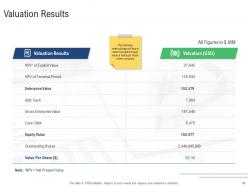
Valuation Results
-

Table of Content
-

M A Synergy Target
-

M A Synergy Framework
-

Plan Process for M A Synergy
-

Segment and Prioritize Synergy Opportunities
-

Segment and Prioritize Revenue Synergy Opportunities
-
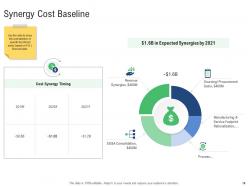
Synergy Cost Baseline
-

Synergy Capture Enterprise Acquisition Timeline
-

Table of Content
-

M A Synergy Calculation
-
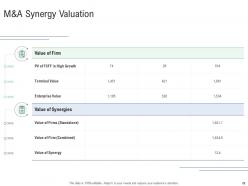
M A Synergy Valuation
-
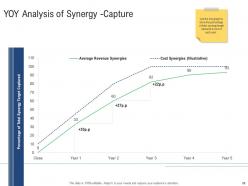
YOY Analysis of Synergy Capture
-

Cost Reduction Synergy
-

M A Synergy Performance Tracker
-

Icons Slide for M A Synergy
-

Additional Slides
-

Our Mission
-

About Us
-

Comparison
-

Dashboard
-

Financial
-

Quotes
-

Puzzle
-

Target
-

Location
-

Silhouettes
-

Circular
-

Venn
-

Mind Map
-

Magnifying Glass
-

Bulb or Idea
-

Our Goal
-

Thank You
FAQs for M and a synergy
So basically you've got revenue synergies and cost synergies. Revenue ones are like cross-selling to each other's customers or hitting new markets together. Cost synergies though? That's where the real money is - cutting duplicate jobs, closing overlapping offices, buying stuff in bulk. Way easier to actually pull off too. Financial synergies exist (better financing, tax stuff) but honestly they're kind of overrated. My old boss used to obsess over those and they never really materialized. Focus on the cost savings first since you can actually count on those happening.
Honestly, you can't just wing this with ballpark numbers. Map out the real cost savings first - overlapping jobs, duplicate offices, stuff you can actually put dollar signs on. Revenue synergies sound sexy but companies usually way overshoot those (learned that the hard way). Try multiple valuation approaches and run worst-case scenarios. Here's the thing though - get your ops people involved early. They'll call BS on projections that sound good in PowerPoint but won't work in reality. Cross-selling existing customers is usually your safest bet for revenue upside.
Honestly, culture stuff will make or break your M&A way more than people think. I've watched deals that looked amazing on spreadsheets completely tank because teams couldn't work together. Different communication styles, clashing processes - it gets messy fast. Your projected savings? Gone while everyone's fighting over how to run meetings. The smart move is figuring out cultural gaps during due diligence, not after. You need a real plan for blending teams and getting everyone on the same page. Oh, and start working on this before you close - don't wait until day one when it's chaos.
Track both your financials and operations to see the real impact. Cost synergies are the easy wins - headcount cuts, procurement deals, cutting duplicate stuff. Revenue side gets trickier but watch cross-selling numbers, market share, customer retention. EBITDA improvement should be your main focus. System integration milestones matter too, plus employee retention and customer satisfaction since those directly hit your financial goals. Honestly, I'd build a dashboard in the first 90 days and do monthly leadership reviews - way easier to fix problems when you catch them early instead of scrambling later.
Operational synergies are about combining day-to-day stuff - cutting costs by axing duplicate departments, boosting revenue through cross-selling, streamlining supply chains. Financial ones focus on the money mechanics: cheaper debt, better cash flow, tax advantages. Most deals I see pitch the operational angle hard. Everyone talks about "eliminating redundancies" and maximizing combined capabilities. Financial synergies sound sexier but they're trickier to pull off unless the companies have really different capital structures. Start with quantifying the operational savings first - that's honestly where the real meat is for justifying your valuation anyway.
Honestly, most people totally underestimate how long integration takes and overestimate the savings. Companies think they'll slash 20% of costs right away, but then cultural differences mess everything up for months. IT integration is the worst - I've seen "6-month" projects drag on for a year and a half. Plus you lose your best people during all the chaos, which is ironic since their expertise was probably half the reason for buying the company in the first place. Budget way more time and money than you think. And yeah, focus on keeping the key talent happy from day one or you're screwed.
Tech integration can totally make or break your M&A deal. Done right, you'll see massive cost savings from consolidating systems and ditching duplicate software licenses. But mess it up? Your employees will hate you, data gets trapped everywhere, and costs actually go UP instead of down. I've seen this kill deals so many times. Timeline's critical too - drag it out and you miss your targets completely. Do a thorough tech audit during due diligence (like, really thorough), then hit customer-facing systems first so you don't screw up revenue streams.
Look, you've gotta be super clear and consistent everywhere you communicate. Build a detailed playbook first - who's doing what, when, all that stuff. Then push it through town halls, updates, dashboards, whatever. Honestly? People will be skeptical no matter what, so overcommunicate like crazy. Skip the fluffy promises - give concrete examples instead. Oh, and tailor your message: investors want hard numbers, employees need to know their jobs are safe, customers just want things to keep working smoothly. Set up progress reports every two weeks because things will get weird fast and you'll need to pivot.
Don't wait until later to hunt for synergies - bake it right into your due diligence from the start. Give each DD team specific checklists: IT maps system overlaps, commercial compares customer bases and pricing, HR spots redundancies early on. Too many deals I've seen treat this like an afterthought during integration planning, which is honestly way too late. Run actual synergy workshops with both companies' operational teams while you're still in DD - not just the C-suite folks. Your synergy business case should grow alongside your investment thesis. Makes the whole process way smoother.
Yeah, size matters but not how you'd think. Bigger deals usually mean more synergy dollars - you've got way more duplicate stuff to cut like overlapping offices, redundant systems, whole departments doing the same thing. Problem is, those massive companies are nightmares to integrate. You might identify $500M in synergies but good luck actually capturing half of it. Smaller deals? Way easier to execute. You'll probably hit your synergy targets more often, even if the total savings are smaller. Honestly, I'd focus on synergies as a percentage of deal value rather than chasing the biggest absolute number.
Your employees know way more than you think about where things are broken or duplicated. Mix people from both companies into teams - frontline staff usually spot the waste better than executives anyway. Run some workshops where they can actually talk about what's messed up without getting in trouble for it. Give them reasons to share ideas, maybe small bonuses for good suggestions. Quick wins first to get people excited. Oh, and don't just do the obvious department matches - sometimes accounting talks to customer service and finds something brilliant. Start there, build momentum.
Get both leadership teams aligned on synergy targets and timeline right from the start - this is huge. Set up joint steering committees with clear governance, then assign specific people to own each synergy bucket. They should report weekly progress, no exceptions. Here's what kills most deals: everyone thinks they're measuring the same thing but they're not. Sounds stupid, right? But it happens constantly. Build shared dashboards so there's full transparency when someone's missing targets. Oh, and tie exec comp to synergy delivery across both companies. Map this whole structure out before you close - don't wait.
Honestly, speed wins here. You've got 12-18 months max before everyone gets burnt out and stops caring - I've watched this play out so many times. While you're sitting there perfecting your integration plan, competitors are stealing your customers and good people are bailing. Go after the easy wins first. Procurement savings, cutting duplicate roles - that stuff pays off fast without much risk. Save the messy system integrations for later when you've got some momentum. Set brutal 100-day deadlines for your biggest opportunities and don't shut up about progress updates. Keeps people honest.
Honestly, most M&As crash because synergies are way trickier than anyone admits upfront. Companies always think they'll save more money and integrate smoother than reality allows. Cultural differences wreck operations, IT systems become a nightmare to merge, and your best people just... leave. Taking all their knowledge with them, obviously. Revenue synergies? Even worse - customers hate when things change. My buddy went through one of these disasters and said the projections were laughably optimistic. Be super conservative with your numbers and map out integration details before you even think about signing anything.
Oh man, external stuff can absolutely wreck your synergy numbers. Market crashes tank demand for your products. Regulatory changes? They'll block those cost savings you were banking on. Interest rates mess with your financing costs too. Competitors respond way faster than you think - honestly, they're probably already plotting. Supply chain chaos (thanks, pandemic years) derails operations. Plus economic shifts change how customers spend, which kills your cross-selling plans. My advice? Stress-test those assumptions against different scenarios before you sign anything. Don't just cross your fingers and hope.
-
Professional and unique presentations.
-
Appreciate the research and its presentable format.
-
Excellent template with unique design.
-
Perfect template with attractive color combination.
-
Content of slide is easy to understand and edit.
-
Very well designed and informative templates.
-
Excellent design and quick turnaround.
-
Great product with highly impressive and engaging designs.
-
Awesomely designed templates, Easy to understand.
-
Great quality slides in rapid time.