

M And A Playbook Powerpoint Presentation Slides





Try Before you Buy Download Free Sample Product
 Impress Your
 Audience
 100%
100% Editable
 Save Hours
 of Time


Mergers and acquisitions are an essential strategy for companies looking to gain a competitive advantage. Check out our efficiently designed presentation on M and A Playbook, which explains how companies can successfully navigate the M and A path by leveraging M and A Playbook, ensuring deal success. This playbook will guide the organization to keep the integration team focused on adding value to the business. At first, companies can use slide merger and acquisition lifecycle to address various deal phases such as pre deal, transaction, integration, and operation. Post managing the lifecycle phases, organizations can educate their integration team members on the five stage process, including pre deal, due diligence and validation, transaction and preparation, integration, and operations optimization. These stages will assist businesses in informing the integration team on how to set M and A goals, different dimensions of transactions, operating models, integration scenarios, and tactics to mitigate risk factors identified during the integration. Book a free demo with our expert team and grab this 100 percent editable presentation.
People who downloaded this PowerPoint presentation also viewed the following :
Content of this Powerpoint Presentation
Slide 1: This slide introduces M&A Playbook. State Your Company Name and begin.
Slide 2: This slide shows Synopsis of Merger and Acquisition Playbook.
Slide 3: This slide presents Table of Content for the presentation.
Slide 4: This is another slide continuing Table of Content for the presentation.
Slide 5: This slide highlights title for topics that are to be covered next in the template.
Slide 6: This slide presents Addressing the Merger and Acquisition Lifecycle.
Slide 7: This slide highlights title for topics that are to be covered next in the template.
Slide 8: This slide displays Defining the Merger and Acquisition Objectives.
Slide 9: This slide represents M&A Strategy Considerations to Increase the Chances of Success.
Slide 10: This slide portrays a table covering information about the screened potential targets for M&A.
Slide 11: This slide showcases Evaluating and Prioritizing Growth Options.
Slide 12: This slide highlights title for topics that are to be covered next in the template.
Slide 13: Mentioned slide showcases information about the objectives, general activities and outputs of due diligence.
Slide 14: This slide shows Financial Due Diligence Checklist for Merger and Acquisition.
Slide 15: This slide presents Information Technology Due Diligence Checklist.
Slide 16: This slide displays Defining the Team Structure for Conducting Due Diligence.
Slide 17: This slide highlights title for topics that are to be covered next in the template.
Slide 18: This slide represents Addressing the Dimensions of Transactions in M&A.
Slide 19: This slide showcases Operating Model for Sustainable Functional Transformation - Technology.
Slide 20: This slide depicts an HR operating model that businesses can use to stay competitive.
Slide 21: The following slide depicts an operating model that businesses can use to improve the efficiency of their legal departments.
Slide 22: This slide presents Steering Committee and IMO for Merger and Acquisition.
Slide 23: This slide displays Readiness Checklist for Merger and Acquisition.
Slide 24: This slide highlights title for topics that are to be covered next in the template.
Slide 25: This slide represents Identifying and Selecting the Suitable Integration Scenario for Business.
Slide 26: This slide highlights the post merger and acquisition integration workplan of operations department.
Slide 27: Purpose of this slide is to address the post merger and acquisition integration workplan of technology department.
Slide 28: Mentioned slide showcases the post merger and acquisition integration workplan of HR department.
Slide 29: This slide highlights title for topics that are to be covered next in the template.
Slide 30: This slide shows Business Performance Monitoring KPI Dashboard.
Slide 31: This slide presents Post Merger and Acquisition Performance Gap Assessment.
Slide 32: This slide displays Action Plan to Bridge Business Performance Gaps.
Slide 33: This slide represents Tactics to Mitigate Risk Factors Identified during Integration.
Slide 34: This slide showcases Icons for M&A Playbook.
Slide 35: This slide is titled as Additional Slides for moving forward.
Slide 36: This slide shows Target Company Overview describing Mission, Vision and Accomplishments.
Slide 37: This slide presents Major Key Clients Catered by the Target Company.
Slide 38: This slide displays Business Integration Model for Merger and Acquisition.
Slide 39: This slide represents First 100 Days Plan for Merger and Acquisition.
Slide 40: This slide showcases Talent Assessment Pyramid for HR Department.
Slide 41: This slide provides Clustered Bar Chart with two products comparison.
Slide 42: This is About Us slide to show company specifications etc.
Slide 43: This is Our Mission slide with related imagery and text.
Slide 44: This slide contains Puzzle with related icons and text.
Slide 45: This is Our Target slide. State your targets here.
Slide 46: This slide shows Post It Notes. Post your important notes here.
Slide 47: This is a Thank You slide with address, contact numbers and email address.
M And A Playbook Powerpoint Presentation Slides with all 52 slides:
Use our M And A Playbook Powerpoint Presentation Slides to effectively help you save your valuable time. They are readymade to fit into any presentation structure.
-

M A Playbook
-
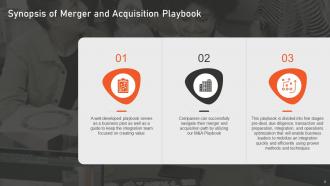
Synopsis of Merger and Acquisition Playbook
-

Table of Contents for M A Playbook Contd
-

Table of Contents for M A Playbook
-
Table of Contents for M A Playbook
-
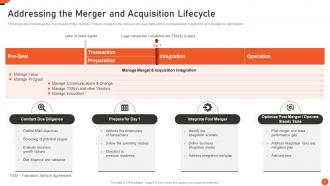
Addressing the Merger and Acquisition Lifecycle
-
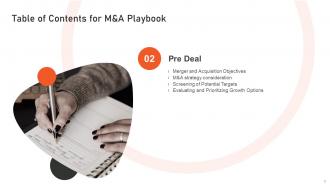
Table of Contents for M A Playbook
-
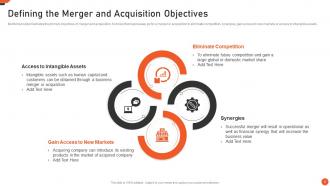
Defining the Merger and Acquisition Objectives
-
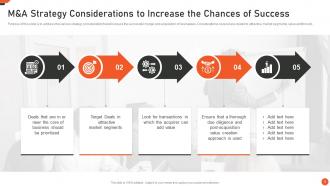
M A Strategy Considerations to Increase the Chances of Success
-
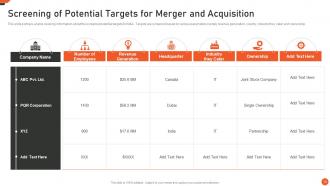
Screening of Potential Targets for Merger and Acquisition
-
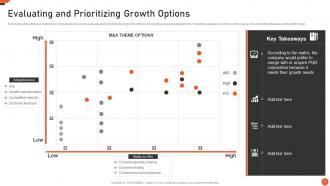
Evaluating and Prioritizing Growth Options
-
Table of Contents for M A Playbook
-
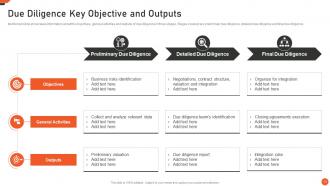
Due Diligence Key Objective and Outputs
-
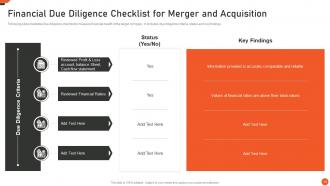
Financial Due Diligence Checklist for Merger and Acquisition
-
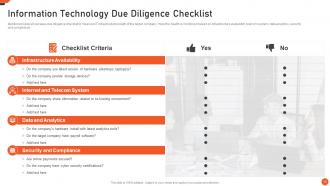
Information Technology Due Diligence Checklist
-
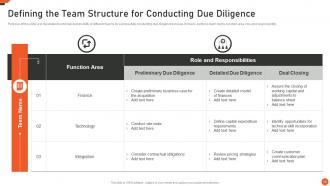
Defining the Team Structure for Conducting Due Diligence
-
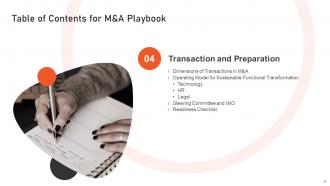
Table of Contents for M A Playbook
-
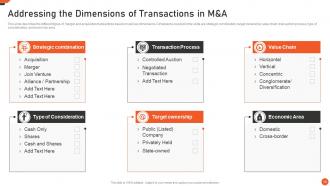
Addressing the Dimensions of Transactions in M A
-
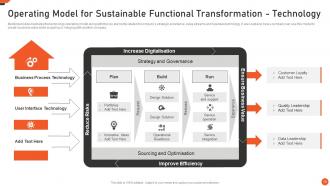
Operating Model for Sustainable Functional Transformation Technology
-
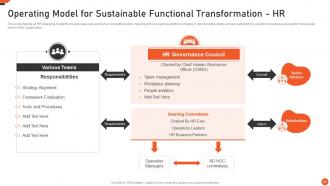
Operating Model for Sustainable Functional Transformation HR
-
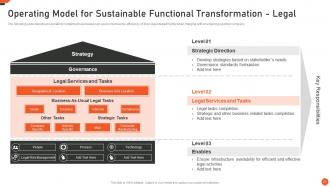
Operating Model for Sustainable Functional Transformation Legal
-
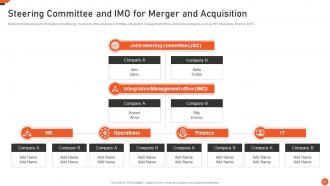
Steering Committee and IMO for Merger and Acquisition
-
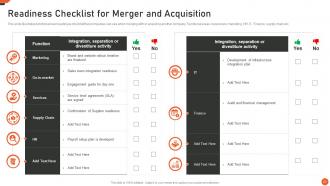
Readiness Checklist for Merger and Acquisition
-
Table of Contents for M A Playbook
-
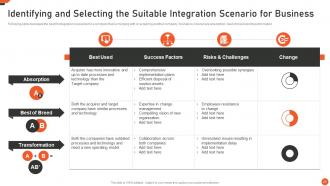
Identifying and Selecting the Suitable Integration Scenario for Business
-
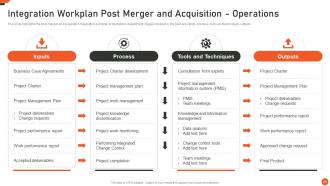
Integration Workplan Post Merger and Acquisition Operations
-
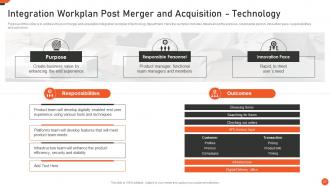
Integration Workplan Post Merger and Acquisition Technology
-
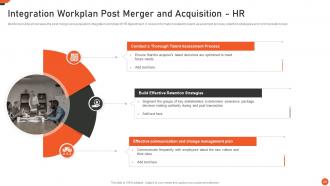
Integration Workplan Post Merger and Acquisition HR
-
Table of Contents for M A Playbook
-
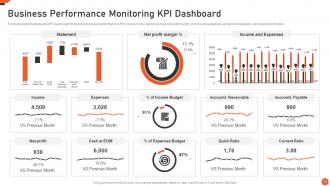
Business Performance Monitoring KPI Dashboard
-
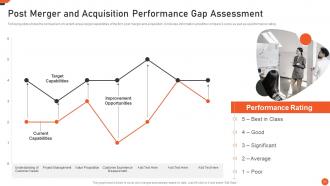
Post Merger and Acquisition Performance Gap Assessment
-
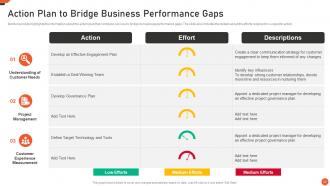
Action Plan to Bridge Business Performance Gaps
-
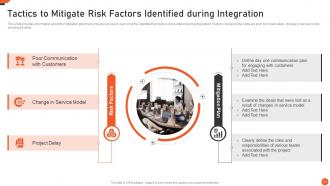
Tactics to Mitigate Risk Factors Identified during Integration
-

Icons Slide for M A Playbook
-

Additional Slides
-
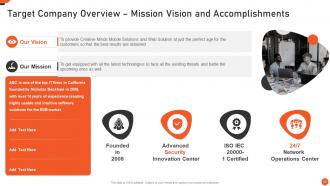
Target Company Overview Mission Vision and Accomplishments
-
Major Key Clients Catered by the Target Company
-
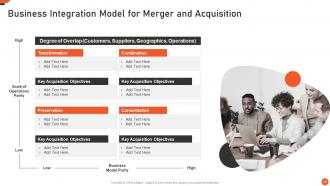
Business Integration Model for Merger and Acquisition
-
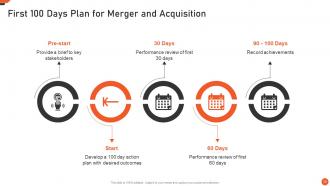
First 100 Days Plan for Merger and Acquisition
-
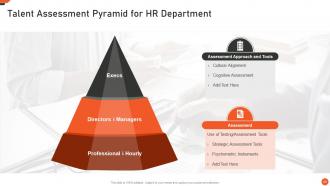
Talent Assessment Pyramid for HR Department
-
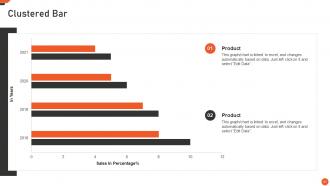
Clustered Bar
-

About Us
-

Our Vision Mission Goal
-
Puzzle
-
Our Target
-
Post it Notes
-
Thanks for Watching
-

-

-

-

-

FAQs for M And A Playbook
So M&A basically breaks down into five stages. First you're hunting for targets, then comes due diligence - which is honestly make-or-break time because that's when all the nasty surprises surface. After that it's valuation, negotiation, and getting all the legal docs sorted. Final stage is integration after closing. Each part can drag on for weeks or months depending on how messy things get. Oh and here's the thing - most companies totally blow the integration phase. They think closing the deal is the hard part, but that's where you actually find out if you just bought yourself a goldmine or a money pit.
Due diligence is your safety net against getting screwed later. Dig into their financials, legal mess, operations - the whole thing. I've watched deals blow up when people rushed this step, and honestly it's brutal. Be systematic: double-check revenue numbers, hunt for hidden debts, understand their customer base. Their tech stack matters too - outdated systems can drain your budget fast. Cultural fit? Yeah, that's real. Don't skip it. Once you sign those papers, their headaches become yours. Worth doing right the first time.
Honestly, the culture stuff is what kills most deals - way more than the financial side. I've watched companies nail every number on paper but then completely fall apart because nobody thought about how different teams actually work together. People quit, targets get missed, the whole thing becomes a mess. You really want to start figuring out the cultural gaps during due diligence, not after you've already closed. Simple things matter too - like how they run meetings or make decisions. Sounds boring but it's not. Trust me, map out those differences early or you'll regret it later.
Dude, don't rush the due diligence part - that's where people screw up most. Dig into their finances and legal stuff yourself instead of trusting what they tell you. Those synergy projections? Half of them are total BS and way harder to pull off than anyone admits. Cultural fit matters more than you think too - I've watched deals implode because the teams couldn't stand each other. Oh and definitely have your integration plan ready before you close, not scrambling after. Trust me on that one.
Definitely check out their last 3-5 years of financials first. Revenue trends, margins, cash flow - the usual suspects. Debt-to-equity ratios matter way more than people think, and you'll want to see if they can actually pay their bills. Working capital stuff too. I get weird about companies losing margin over time, but maybe that's just me being paranoid again. Look for red flags like earnings all over the place or being super dependent on one big customer. Oh, and watch out for any sketchy accounting - that's always fun to discover later. Have your finance people run some scenarios before you get too invested in this.
Dude, regulatory stuff will totally kill your deal if you're not careful. Map out every approval you need upfront - antitrust, industry regs, foreign investment, all of it. Bigger market share means way more headaches, obviously. Some deals literally just die waiting for approvals (seen it happen too many times). Build those timelines into your structure from the start, and definitely figure out who's on the hook for breakup fees if regulators say no. Oh, and get your regulatory lawyers involved before you even touch that LOI. Trust me on this one.
Dude, start with digitizing your due diligence checklist - that alone saves tons of time. Virtual data rooms are honestly incredible for document sharing and keeping everything secure. AI can scan through contracts way faster than humans and catch risks you'd miss. Project management tools help coordinate all those different teams (finance, legal, operations - they're all over the place otherwise). Analytics software lets you model different integration scenarios too. Just make sure whatever tools you pick actually integrate with each other. Nothing worse than having five platforms that don't talk. Oh, and create digital roadmaps so you can track milestones in real-time instead of guessing where things stand.
Start talking to people immediately - don't wait around. Break everyone into groups (employees, customers, investors) since they all worry about different stuff. Honestly, you can't communicate too much during these things. Radio silence is the kiss of death. Mix up how you reach them - town halls, emails, grab coffee with key people. Oh and skip the corporate BS about "synergies" - just tell them what it actually means for their day-to-day. I've seen so many deals go sideways because leadership waited weeks to say anything. Get your communication plan ready before you even announce.
Yeah, valuation totally depends on the industry. Tech companies? They're all about revenue multiples since profits don't matter yet - it's all growth, growth, growth. Manufacturing uses EBITDA multiples because their numbers are way more predictable with all those assets. Healthcare gets weird though - pipeline value, regulatory stuff, honestly kind of a mess to figure out. Financial services stick to book value ratios. Retail cares about same-store sales growth. My advice? Find 3-5 recent deals in whatever industry you're looking at and see what metrics those buyers actually focused on. That'll tell you everything.
Honestly, the regulatory stuff is where deals get messy fast. You've got antitrust hurdles - Hart-Scott-Rodino if you're in the US, EU merger regs if you hit their thresholds. Securities laws matter for public companies. Then there's all the industry-specific nonsense like banking or healthcare rules. Employment law gets weird too, especially cross-border where every country has different labor protections. Don't even get me started on corporate governance and all those approval hoops. My advice? Map this out with your lawyers ASAP because waiting on regulatory clearances will absolutely wreck your timeline.
Start your integration planning during due diligence - seriously, don't wait until after closing. Map out critical processes and figure out which employees you absolutely can't lose. Those first 100 days? They'll make or break everything. Most deals crash because people just wing it (learned that the hard way). Quick wins are great, but you've also got to tackle system integration and culture stuff simultaneously. Get someone dedicated to run this full-time - can't be a side project. Oh, and whatever timeline you're thinking? Double it. You'll probably still be rushing.
Look, you'll want to track the obvious financial stuff - revenue synergies, cost savings, EBITDA improvements, ROI. But here's what people miss: the human metrics are equally critical. Employee retention, customer churn, how well you're sticking to integration timelines. I've watched deals that crushed it financially still blow up because leadership totally ignored culture fit. Monthly tracking for two years minimum after close. Oh, and set up your baseline measurements during due diligence - way easier than scrambling later when you can't remember what normal looked like.
Honestly, just talk to people - constantly. Figure out who you absolutely can't afford to lose and have those awkward "please don't leave" conversations ASAP. Rumors spread crazy fast during mergers, so get ahead of it. Throw some retention bonuses around, speed up their stock vesting, whatever keeps them happy. Your team's probably freaking out about job security, so tell them what's actually happening and when. I swear uncertainty destroys morale way faster than bad news does. Find some easy wins early on - keep their WFH setup, don't shuffle teams immediately. And yeah, check in with your stars regularly.
Three things matter most: price structure, risk allocation, and deal protections. Bridge valuation gaps with earnouts or escrows - pretty standard stuff. Make sure reps and warranties spell out who's on the hook for what problems. Your lawyers will dive deep into indemnification caps and survival periods (let them do their thing), but stay plugged into the business side. No-shop clauses and breakup fees are huge - negotiate those early so they can't shop your offer around. Oh, and don't forget proper due diligence periods. You'll want financing contingencies too, gives you wiggle room if things go sideways.
Yeah, definitely get external advisors - but be smart about it. Investment bankers know sectors inside out and can spot buyers you'd never think of. M&A lawyers catch problems before they blow up deals. Their networks are gold too - counterparties actually take calls from known players. Honestly? Having a big-name advisor makes everyone think you're serious, which speeds things up weirdly. Just don't go with some generic firm - you want someone who's done recent deals in your space. I learned that the hard way on my last transaction. Fresh industry experience beats fancy credentials every time.
-
“I required a slide for a board meeting and was so satisfied with the final result !! So much went into designing the slide and the communication was amazing! Can’t wait to have my next slide!”
-
My presentations were a bit amateur before I found SlideTeam’s designs. I’ve been able to find slides for nearly every topic I’ve had to present. Thanks, Slideteam!