


Sales best practices playbook powerpoint presentation slides




Try Before you Buy Download Free Sample Product
 Impress Your
 Audience
 100%
100% Editable
 Save Hours
 of Time


Sales playbook is considered an essential document that helps the sales team deploy best practices, tactics, and strategies along the various stages of the selling process. It ensures the consistent engagement of sales and marketing professionals. Check out our efficiently designed Sales Best Practices Playbook template that caters to details about the firms offerings and sales performance. It covers guidelines to progress through sales process journey including key activities across sales process, sales meeting plan, product positioning and messaging, ideal customer profile development, aligning buyers journey with the sales process, customer experience journey mapping, etc. The playbook covers different sales methodologies in MEDDIC, SNAP selling, gap selling for deal closure. It covers details about sales pitching through content with sales content management, content planning worksheet, prospects nurturing content program, potential buyer leads nurturing plan. Moreover, it caters to initiatives to manage sales team productivity through effective communication, sales enhancement checklist, productivity enhancement management system. Sales workforce is managed through developing sales team reporting structure, identifying key people involved, etc. Sales performances and activities are tracked through essential metrics and dashboards. Download the 100 percent editable template now.
People who downloaded this PowerPoint presentation also viewed the following :
Content of this Powerpoint Presentation
Slide 1: This slide introduces Sales Best Practices Playbook. State Your Company Name and begin.
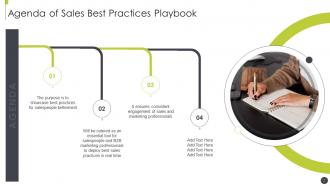
Slide 2: This slide shows Agenda of Sales Best Practices Playbook.
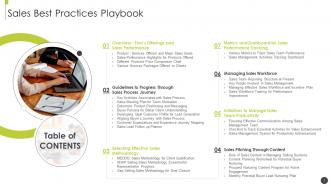
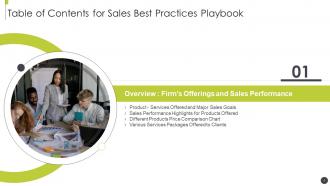
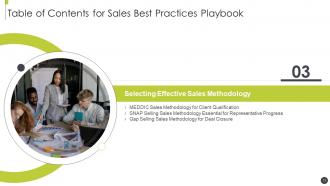
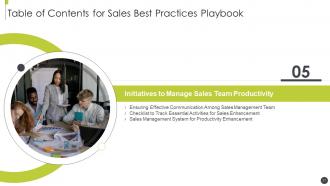
Slide 3: This slide presents Table of Content for the presentation.
Slide 4: This slide highlights title for topics that are to be covered next in the template.
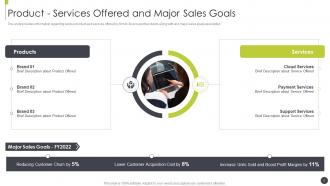
Slide 5: This slide displays various product and services offered by firm to its prospective clients.
Slide 6: This slide represents sales performance highlights in terms of net sales by business segment, geographic location, etc.
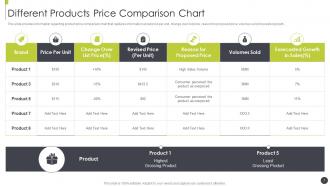
Slide 7: This slide shows product price comparison chart that captures information about price per unit, change over list price, etc.
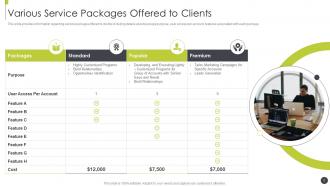
Slide 8: This slide presents Various Service Packages Offered to Clients.
Slide 9: This slide highlights title for topics that are to be covered next in the template.
Slide 10: This slide displays key activities involved in sales process such as prospecting, preparation, qualification, etc.
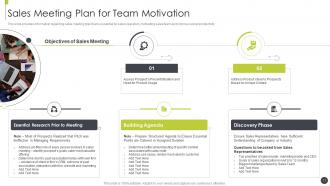
Slide 11: This slide represents sales meeting plan that is essential for sales operation, motivating sales team and improve overall productivity.
Slide 12: This slide shows product positioning and messaging in order to depict the value delivered to customers.
Slide 13: This slide presents buyer persona which depicts detailed description about potential customer.
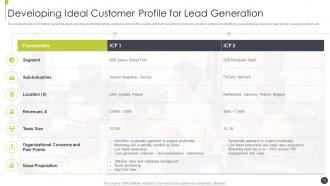
Slide 14: This slide shows Developing Ideal Customer Profile for Lead Generation.
Slide 15: This slide displays alignment of buyer’s journey with sales process through management of content, core messages, influencers, etc.
Slide 16: This slide represents Customer Expectations and Experience Journey Mapping.
Slide 17: This slide shows sales lead follow up planner to aid salespeople in maximizing output from leads and tracking follow-up schedule.
Slide 18: This slide highlights title for topics that are to be covered next in the template.
Slide 19: This slide shows guidelines that assist sales representatives in closing deal with clients.
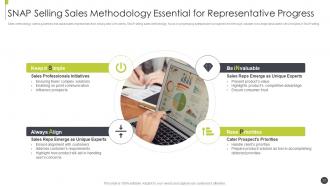
Slide 20: This slide displays SNAP Selling Sales Methodology Essential for Representative Progress.
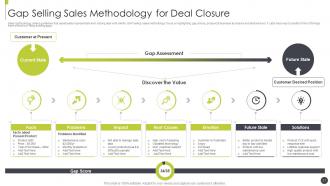
Slide 21: This slide represents Gap Selling Sales Methodology for Deal Closure.
Slide 22: This slide highlights title for topics that are to be covered next in the template.
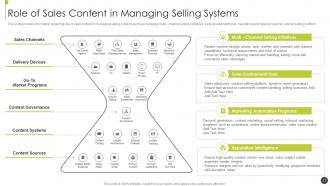
Slide 23: This slide presents Role of Sales Content in Managing Selling Systems.
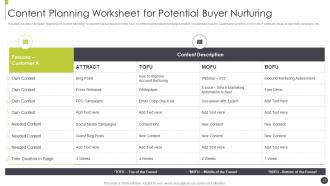
Slide 24: This slide shows content marketing worksheet that is prepared to keep track on different personalized campaigns.
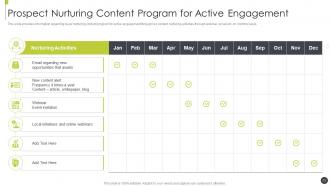
Slide 25: This slide displays Prospect Nurturing Content Program for Active Engagement.
Slide 26: This slide represents regarding monthly buyer lead nurturing plan for active engagement through various activities.
Slide 27: This slide highlights title for topics that are to be covered next in the template.
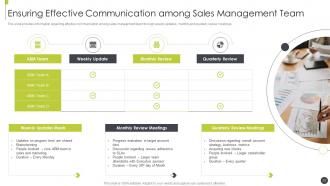
Slide 28: This slide presents effective communication among sales management team through weekly updates, monthly and quarterly review.
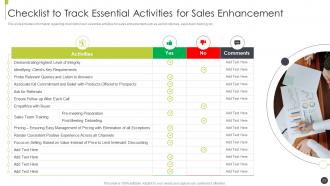
Slide 29: This slide shows Checklist to Track Essential Activities for Sales Enhancement.
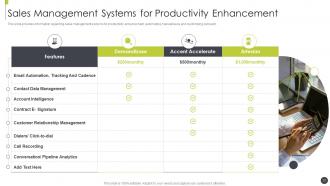
Slide 30: This slide displays Sales Management Systems for Productivity Enhancement.
Slide 31: This slide highlights title for topics that are to be covered next in the template.
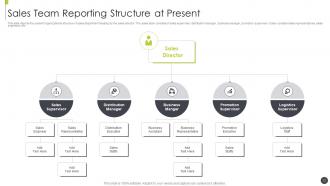
Slide 32: This slide depicts the present organizational structure of sales department heading by the sales director.
Slide 33: This slide presents key people in sales management such as customer success managers, account manager, etc.
Slide 34: This slide shows sales workforce and incentive plan to manage future staffing requirement, present workforce, etc.
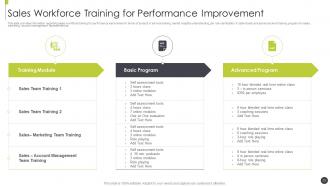
Slide 35: This slide displays Sales Workforce Training for Performance Improvement.
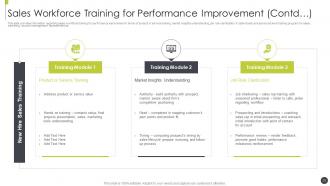
Slide 36: This slide represents sales workforce training for performance improvement in terms of product or service training.
Slide 37: This slide highlights title for topics that are to be covered next in the template.
Slide 38: This slide presents Various Metrics to Track Sales Team Performance.
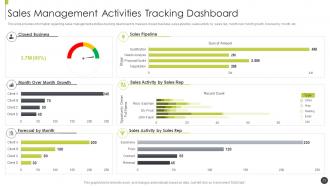
Slide 39: This slide displays Sales Management Activities Tracking Dashboard.
Slide 40: This slide showcases Icons for Sales Best Practices Playbook.
Slide 41: This slide is titled as Additional Slides for moving forward.
Slide 42: This slide presents Weekly Timeline with Task Name.
Slide 43: This slide presents Bar chart with two products comparison.
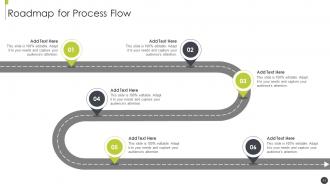
Slide 44: This slide represents Roadmap for Process Flow.
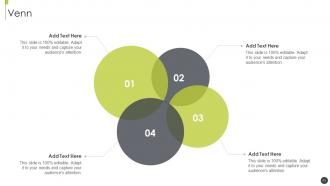
Slide 45: This slide depicts Venn diagram with text boxes.
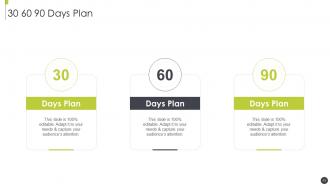
Slide 46: This slide provides 30 60 90 Days Plan with text boxes.
Slide 47: This is Our Goal slide. State your firm's goals here.
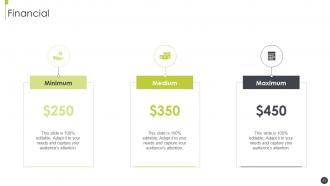
Slide 48: This is a Financial slide. Show your finance related stuff here.
Slide 49: This slide contains Puzzle with related icons and text.
Slide 50: This is a Thank You slide with address, contact numbers and email address.
Sales best practices playbook powerpoint presentation slides with all 55 slides:
Use our Sales Best Practices Playbook Powerpoint Presentation Slides to effectively help you save your valuable time. They are readymade to fit into any presentation structure.























FAQs for Sales best practices playbook
Honestly, start with conversion rates at each funnel stage and your average deal size - those two will tell you a lot. Sales cycle length matters too, plus basic activity stuff like daily calls and emails. Revenue per rep is what your boss cares about most, obviously. But pipeline velocity is probably the best metric nobody talks about enough - shows how fast you're actually moving deals. Oh, and track win rates by competitor and deal source. You'll start seeing patterns pretty quick. Don't go crazy tracking everything though, pick like 3-4 to start.
Dude, stories are everything in pitches. People's brains just aren't wired to remember feature lists - but tell them about how you helped another customer solve the exact same nightmare they're dealing with? Now they're picturing themselves winning. It's honestly night and day compared to rattling off specs. Plus stories don't feel like you're trying to sell them something. My move is keeping 2-3 short, specific examples ready that hit different pain points. Practice them until they sound natural, not rehearsed. Trust me on this one.
Dude, emotional intelligence is what makes or breaks salespeople. You've gotta read the room - pick up on whether someone's stressed about budget, frustrated with their current setup, whatever. Then adapt. If they're worried about cost, talk ROI instead of fancy features they won't care about. Also helps you stay cool when people say no (which happens... a lot). Try focusing on tone and body language during your next calls - I swear you'll catch so much more than just listening to words. It's honestly the difference between being good at this job versus crushing it.
Okay so here's what I learned the hard way - don't jump straight into defending yourself when someone objects. I used to do that and it always made things worse! Just listen first, then say something like "I get your concern about timing." Ask them what's really going on behind their objection because honestly? It's usually not what they first tell you. Once you figure out their actual worry, hit them with specific examples or data that speaks to that exact issue. Then check if you actually solved it for them. Oh, and treat objections like they're interested, not like they're trying to escape. Something like "what would need to change for the timing to work better?"
Start with figuring out your ideal customer - everything flows from there. Score your leads using budget, authority, need, and timeline (BANT's old school but it works). Stop pitching so fast! Ask actual qualifying questions first since most sales reps just ramble on discovery calls. Hit people across different channels because some hate phone calls while others ignore emails completely. Oh, and this is huge - dump bad leads quickly. I know it feels wrong walking away from potential deals, but your time's limited. Focus on prospects who can realistically close within your typical sales cycle instead of chasing pipe dreams.
Think of your CRM as mission control for sales. Track every single interaction and set those follow-up reminders - trust me, you'll forget otherwise. Look for patterns in your deals and figure out which lead sources actually bring in customers (some that look great are total duds). Segment people based on what they're doing, not just demographics. Automate your follow-up sequences so prospects don't slip through cracks. Here's the thing though - none of this works if you're not logging everything consistently. Pipeline data shows you exactly where deals get stuck. Clean data first, fancy features second.
Hit them back within a day or two while you're still on their radar. Here's the thing though - don't just send a "checking in" email (those are the worst). Bring something useful every time. Maybe it's a case study that fits their situation, or answers to questions they asked during your chat. Keep it short and tie everything back to their specific problems. I usually mix it up - email first, then maybe LinkedIn, sometimes a quick call if it makes sense. Just don't bombard them all at once. Oh, and always tell them what you want them to do next. Makes it way easier for everyone.
Dude, you HAVE to personalize everything now. Generic pitches? Dead on arrival. I've literally seen prospects check out the second a rep starts their cookie-cutter spiel. Spend like 5 minutes researching each company beforehand - their latest product launch, industry drama, whatever. Even dropping a mutual connection's name works wonders. Buyers won't even take meetings unless they feel like you actually get their situation. This one change will boost your response rates more than anything else, I swear. Worth the extra time.
Honestly, just stay in touch when you're NOT trying to sell them something. Check in regularly - share cool industry stuff you found, introduce them to people they'd actually want to meet. Remember their kid's name or whatever they mentioned last time. Sounds basic but most salespeople suck at this. When you say you'll send something, actually do it. Those little promises matter way more than the big ones. Set up quarterly reviews to talk about their goals, not your quota. And start doing this stuff now before you get swamped with new leads.
You've gotta create regular check-ins where you actually share intel both ways. Loop marketing into your customer feedback - what objections you're hearing, which prospects engage, content that moves deals. Push them to share lead scoring and campaign data with you instead of just throwing leads over the wall. Most teams barely communicate, which is honestly insane when you think about it. Monthly alignment meetings work great - review wins and losses together, plan what's coming up. When marketing gets your reality and you understand their strategy, your close rates jump. It's like magic but not really lol.
Dude, the worst thing you can do is just talk at them nonstop. I see people do this ALL the time - they go into full pitch mode without figuring out what the person actually needs. Also? Learn when someone's checked out. If their eyes are glazing over, pivot or wrap up. Ask questions throughout instead of assuming you know their problems. And honestly, so many people forget to actually close - like they do this whole presentation then just... end it awkwardly. Oh, and don't forget to connect features to their specific pain points, not just rattle off a feature list.
Look, data-driven insights basically mean you stop throwing stuff at the wall and hoping it sticks. Check your past sales to see what's actually working - which customers buy, what messages hit different, timing that converts. Your gut isn't always right (learned that the hard way!). The numbers show you exactly where deals die in your funnel too. Honestly, just pick 2-3 metrics that actually move the needle revenue-wise. Then build everything around what those are telling you. Way better than guessing your way through every quarter.
Honestly, the biggest mistake is treating sales training like a one-and-done thing. Keep it rolling with regular refreshers and role-playing sessions - those work way better than most people think. Record actual calls for review (get permission first, obviously). Your top performers? Have newbies shadow them. Mix it up with microlearning, guest speakers who've closed big deals, peer learning circles. Oh, and here's what really matters - survey your team about their current pain points first. Don't just throw generic sales techniques at them. Build training around what they're actually struggling with right now. That's how you'll see real improvement.
Dude, personas are a game changer. You stop pitching the same stuff to everyone and actually speak their language. A CEO? Hit them with ROI right away - they don't have time for fluff. Tech people want all the nitty-gritty details about integrations and specs. Plus you'll know exactly what objections are coming before they even say them. I'd start with your top 3 customer types and build specific scripts for each. Makes such a difference once you get the hang of it.
Honestly, sales coaching is a game changer if you stick with it. I've watched teams hit 20-30% better quota numbers just from consistent coaching. Your reps get way better at listening, handling pushback, and actually closing deals. The retention piece is massive too - keeps your best people from jumping ship. One team I know completely flipped their pipeline conversion in like 3 months, which was wild to see. Don't do those big training sessions though. Weekly 30-minute one-on-ones work better. Focus on actual skills, not just going over their numbers again.
-
Awesome presentation, really professional and easy to edit.
-
Good research work and creative work done on every template.