


Medical apps on mobile for health care professional flat powerpoint design




Try Before you Buy Download Free Sample Product
 Impress Your
 Audience
 100%
100% Editable
 Save Hours
 of Time


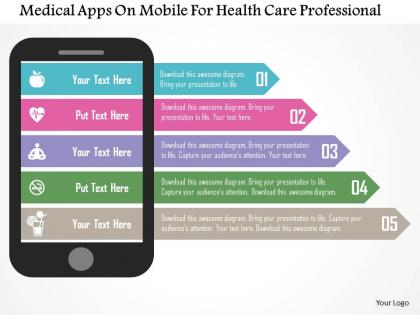
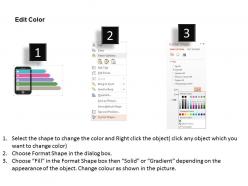
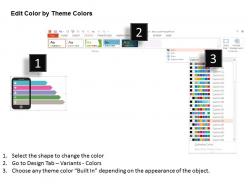
You have arrived at the right point if you are looking for an extra boost for your PowerPoint presentation. Medical apps on mobile for health care professional flat PowerPoint design. Graphic of a smartphone displaying, numerous health application is shown here. Relatable icons are shown here. We have included reliable icons here to justify the topic from numerous options available. Our creatively designed PPT slide is an excellent pick for you. The Text area used here below each stage can be used to write a short about relating to the topic of concern. This PPT displays the concept of medial apps. Use this PPT for your mobile apps related presentations. Whether you are a company owner or a team leader or a manager of a project team, everyone will benefit from this PPT design. Earn their devotion with our Medical Apps On Mobile For Health Care Professional Flat Powerpoint Design. Convince them of your deep faith.
People who downloaded this PowerPoint presentation also viewed the following :
Medical apps on mobile for health care professional flat powerpoint design with all 5 slides:
Get your audience singing from the same sheet. Our Medical Apps On Mobile For Health Care Professional Flat Powerpoint Design can create harmony.
FAQs for Medical apps on mobile for health care professional
Popular medical apps used by healthcare professionals include Epocrates for drug reference and interaction checking, UpToDate for evidence-based clinical decision support, Medscape for medical news and reference, Figure 1 for medical case sharing, and MDCalc for clinical calculators. These applications streamline diagnostic processes, enhance patient care accuracy, and facilitate knowledge sharing among medical teams, with many hospitals and clinics finding that integrated digital tools significantly reduce consultation times while improving treatment outcomes.
Medical apps improve patient care by enabling real-time monitoring, streamlining diagnostic processes, and enhancing communication between healthcare teams and patients. These technologies deliver faster treatment decisions, reduce medical errors, and increase patient engagement, with hospitals and clinics finding that integrated mobile solutions ultimately enhance operational efficiency while delivering more personalized, responsive care experiences.
Healthcare professionals should prioritize apps offering clinical decision support, drug interaction checkers, medical calculators, secure patient communication tools, and evidence-based reference materials. These features streamline diagnostic processes, enhance patient safety, and improve care coordination, with many hospitals and clinics finding that integrated platforms ultimately deliver faster clinical workflows and better patient outcomes.
Medical apps facilitate communication among healthcare teams through secure messaging systems, real-time patient data sharing, and integrated care coordination platforms. These technologies streamline workflows by enabling instant consultation requests, automated alerts for critical changes, and seamless handoff protocols, with many hospitals finding that digital communication reduces response times significantly while enhancing patient safety and care continuity.
Medical apps present security and privacy concerns including data breaches, unauthorized access, insufficient encryption, regulatory compliance gaps, and vulnerable cloud storage systems. These challenges particularly affect hospitals, clinics, and telemedicine providers, with many healthcare organizations finding that implementing robust authentication protocols, end-to-end encryption, and regular security audits ultimately delivers enhanced patient trust and regulatory compliance.
Medical apps assist in diagnostics and treatment planning by providing real-time access to clinical decision support tools, medical databases, diagnostic imaging analysis, drug interaction checkers, and symptom assessment algorithms. These technologies streamline clinical workflows by reducing diagnostic errors, accelerating treatment decisions, and enhancing patient safety protocols, with many hospitals and clinics finding that integrated app systems ultimately deliver faster patient outcomes and improved care coordination.
Medical apps integrate with EHR systems through APIs, HL7 FHIR standards, cloud-based platforms, and direct database connections, enabling seamless data exchange between applications and patient records. These integrations streamline clinical workflows by allowing real-time access to patient information, automated documentation, and synchronized updates across multiple platforms, ultimately delivering enhanced care coordination and reduced administrative burden for healthcare professionals.
Medical apps serve as the technological backbone for telemedicine and remote patient monitoring by enabling secure video consultations, real-time vital sign tracking, prescription management, and seamless data transmission between patients and providers. These applications revolutionize healthcare delivery by reducing hospital visits, enhancing patient engagement, and improving care accessibility, with many healthcare institutions finding that remote monitoring significantly decreases readmission rates while delivering faster interventions and better patient outcomes.
Medical apps enhance continuing education by delivering interactive modules, virtual simulations, case studies, and real-time updates on medical advances directly to healthcare professionals' devices. Through platforms offering CME credits, microlearning sessions, and peer collaboration tools, hospitals and clinics streamline professional development while reducing training costs, ultimately enabling practitioners to stay current with evolving medical standards and improve patient care outcomes.
Medical app effectiveness metrics include user engagement rates, clinical outcome improvements, diagnostic accuracy measures, workflow efficiency gains, and patient satisfaction scores. Healthcare institutions typically evaluate these through time-to-diagnosis reductions, error rate decreases, and cost-per-patient analysis, with many hospitals finding that comprehensive metric tracking enables better resource allocation and ultimately delivers enhanced patient care while streamlining operational efficiency.
Medical specialties leverage apps differently based on their unique workflows, with cardiologists using ECG analysis tools, radiologists employing imaging apps, surgeons utilizing procedure planning software, and emergency physicians accessing drug reference guides. These specialized applications streamline diagnosis, enhance patient monitoring, and accelerate decision-making processes, ultimately delivering faster patient care and improved clinical outcomes across healthcare institutions.
Healthcare professionals face challenges including integration complexity with existing systems, learning curve concerns, data security requirements, cost considerations, and workflow disruption during implementation. While these obstacles can initially slow adoption, many hospitals and clinics find that strategic app selection with proper training ultimately streamlines patient care, enhances diagnostic accuracy, and delivers improved operational efficiency across medical practices.
HIPAA and other healthcare regulations significantly impact medical app development by requiring robust data encryption, secure authentication protocols, comprehensive audit trails, and strict access controls throughout the design process. These compliance requirements, while adding complexity and development costs, ultimately enhance patient trust and market credibility, with many healthcare institutions finding that regulation-compliant apps deliver stronger adoption rates and competitive advantages.
Emerging trends include AI-powered diagnostic tools, telemedicine platforms, wearable device integration, voice-activated clinical assistants, and blockchain-based patient records. These technologies streamline workflows by automating documentation, enabling remote consultations, and enhancing diagnostic accuracy, with many hospitals and clinics finding that strategic adoption ultimately delivers faster patient care and significant operational efficiency gains.
Hospitals and clinics can support medical app implementation through comprehensive staff training programs, establishing clear usage protocols, ensuring robust IT infrastructure, and providing ongoing technical support. These institutions streamline adoption by creating dedicated implementation teams, integrating apps with existing electronic health records, and demonstrating measurable improvements in patient care efficiency, ultimately enhancing clinical workflows and care delivery outcomes.
-
Informative presentations that are easily editable.
-
Content of slide is easy to understand and edit.