


Merge of two different companies




Try Before you Buy Download Free Sample Product
 Impress Your
 Audience
 100%
100% Editable
 Save Hours
 of Time


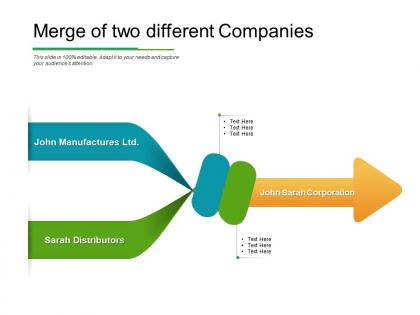
Introducing Merge Of Two Different Companies PPT slideshow. Introduce better cultural beliefs, and behaviors in the company after the merger by using this easy-to-use company merger PowerPoint slideshow. Describe the assimilation strategy and its features by using this visually appealing PowerPoint presentation. Provide information on integration strategies and the top-down approach of the company by using this visually appealing acquisition PowerPoint slide deck. Take the assistance of our ready-to-use PowerPoint infographic, and discuss cultural issues in the company due to mergers and acquisitions. Analyze the current flaws in the company’s culture by taking the assistance of the organization environment PPT layout. The presentation allows you to develop a culture change plan and roadmap for the cultural integration strategy. Showcase the impact of developing a new culture plan by downloading our visually-attention-grabbing merging culture PPT presentation.
People who downloaded this PowerPoint presentation also viewed the following :
Merge of two different companies with all 2 slides:
Give your audience a fulfilling experience. They will find our Merge Of Two Different Companies elevating.

FAQs for Merge of
So companies merge for a bunch of reasons. Cost savings are huge - they'll dump duplicate departments, get better deals from suppliers, that kind of thing. Market expansion is another one, or sometimes they just want the competition gone. Oh, and acquiring talent or new tech. Honestly though? Half the time it's just CEOs wanting bigger empires. When you see merger news, check out their synergy projections and timelines. Those numbers don't lie - they'll tell you if this actually makes sense or if management's just burning cash on their egos.
Oh man, cultural differences will absolutely torpedo your merger if you're not careful. Communication styles, decision-making, work schedules - all that stuff matters way more than people think. I watched this German engineering company try to merge with a Silicon Valley startup once... total disaster. Nobody bothered checking if their cultures would even work together, and spoiler alert: they didn't. You really need to do a cultural deep-dive early on and actually plan for how you'll handle the clashes. Don't just cross your fingers and hope everyone plays nice - that never works out.
So due diligence is basically when you dig into everything before signing on the dotted line. You're checking if their financials are legit, looking for sketchy legal stuff, going through customer contracts - all of it. It's like house hunting but way more boring and with spreadsheets everywhere. The whole point? Catch any nasty surprises that could bite you later. What you find gives you ammunition to negotiate a better price or add protection clauses. Honestly, if the red flags are bad enough, just bail completely. Better to walk away than get burned.
Dude, you've gotta get out in front of this before the rumor mill goes crazy - and trust me, it always does. Figure out who needs what info first: employees want to know if they're keeping their jobs, customers need to hear services won't get disrupted, investors want the money stuff. Don't just send one email and call it done. Mix it up with town halls, direct messages, face-to-face convos. Skip the corporate BS speak too - people see right through that. Oh, and whatever you promise to share later? Actually follow through. Consistency is everything here.
Look, the biggest mistakes are pretty predictable - companies pay way too much upfront and then get blindsided by integration costs. Cultural clashes are brutal too. Everyone talks about synergies but half the time they're total BS. Those "economies of scale" sound great in PowerPoint but good luck making them happen in real life. Due diligence misses stuff constantly - lawsuits, regulatory headaches, you name it. Cash flow gets messy when you're trying to merge operations. Honestly? Budget like 50% more for integration than your initial estimate. And get someone external to value the target so you don't fall in love with a bad deal.
So regulatory bodies are like bouncers for mergers - they check if you're creating a monopoly or screwing over competition. The FTC and DOJ (plus their international cousins) can kill your deal, approve it, or make you jump through hoops. They actually dig pretty deep into market share stuff, which honestly surprises some people. Run your antitrust analysis early because nobody wants to get hit with regulatory drama halfway through. Trust me, it's messy and expensive when that happens.
Honestly, you need to watch both the money stuff and operational metrics. Revenue synergies and cost savings are obvious ones, but they take forever to actually show up. Employee retention is huge - if everyone's jumping ship, that's a red flag. Track customer churn too, plus how you're hitting integration milestones. Market share growth matters long-term. EBITDA improvements and return on invested capital are solid indicators. Set up monthly tracking for at least two years because - and this is key - you can't judge success after just one quarter. That's way too early. Maybe throw together a simple dashboard so you're not scrambling for data every month.
Talk to your key people immediately - like, week one. Be totally upfront about what you know and what you don't know yet. Uncertainty kills retention faster than anything else. Make retention offers before they start looking elsewhere (trust me on this one). Your best managers need to stay visible during all the chaos since honestly, most people quit their boss anyway, not the company. Map out what career growth looks like in the new structure so it feels like opportunity instead of just... well, a mess. Don't wait three months to have these conversations.
Oh man, tech integration can totally tank your whole merger. Systems that don't play nice together, data migration from hell, employees freaking out about new software they've never touched. Plus security gets messy fast when you're smashing two IT setups together. The budget? Always explodes way past what finance planned - those steering committee meetings get real awkward real quick. Honestly, I'd start the tech assessment super early and triple whatever timeline you think makes sense. Maybe quadruple the budget too if you can swing it.
Honestly, I'd start with customer research before doing anything else - figure out what actually resonates with people instead of getting caught up in office politics. You could go the Disney-Pixar route and create one unified brand that pulls the best from both. Or keep them separate but make sure each one targets different market segments clearly. The hardest part is gonna be dealing with your teams though, everyone gets weirdly protective of "their" brand. Maybe do some focus groups first? That way you've got real data to back up whatever direction you pick instead of just arguing about logos in conference rooms.
Cheap money and bull markets basically fuel merger frenzies - look at all the tech deals when valuations were insane. But when recession hits? Suddenly it's survival mode with fire sales, especially retail and manufacturing getting hammered. Healthcare and utilities are weird though - they actually heat up during downturns since investors think they're "safe." Interest rates matter most since these deals run on debt. I learned this the hard way watching my portfolio last year. Watch sector-specific stuff too when you're eyeing targets.
Honestly, transparency is everything here. Don't sugarcoat stuff with employees or shareholders - they'll figure it out anyway and then you're screwed. Fair treatment matters too, especially when you're thinking about layoffs and how they'll hit local communities. The regulatory stuff is non-negotiable, even when you're rushed. Here's the thing though - balancing what investors want versus protecting employees and customers gets messy fast. Cultural integration issues? Be upfront about those risks from day one. My advice is document why you made each decision so you can prove later that ethics factored in, not just profit margins.
Honestly, mergers can be pretty amazing for innovation if you do them right. You're basically pooling all this talent, tech, and research money that would've taken forever to build on your own. The cool part? When different teams start working together, all that clash of ideas usually creates something way better than what either company had before. I've seen it happen - suddenly you can afford those crazy ambitious projects neither side could swing alone. But here's the thing - you actually have to mix the teams up, not just keep everyone in their old corners doing the same stuff.
Yeah, mergers freak customers out big time - they start panicking about price hikes, crappy service, or their go-to products disappearing. Can't really blame them since that stuff happens all the time. Communication is everything though. Be upfront about what's actually changing instead of being all vague and corporate about it. I swear, companies always mess this part up. Keep reassuring your existing customers because replacing them costs way more than you'd think. Short, frequent updates work better than one massive announcement that nobody reads anyway.
Honestly, international mergers are a total nightmare compared to domestic ones. You're juggling regulators from multiple countries instead of just one. Currency risks alone can mess up your projections. Then there's the cultural stuff - good luck getting German and Brazilian teams on the same page. Due diligence drags on forever because you need local lawyers everywhere both companies operate. Different accounting standards, tax codes, political drama... it adds up fast. My advice? Start the regulatory process way earlier than you think and budget like 2x what you'd spend domestically. Oh, and hire those local legal experts before you even announce anything.
No Reviews