


Nestle Sales Distribution Channel Stages




Try Before you Buy Download Free Sample Product
 Impress Your
 Audience
 100%
100% Editable
 Save Hours
 of Time


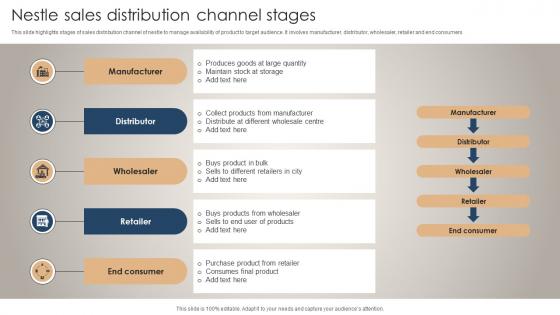
This slide highlights stages of sales distribution channel of nestle to manage availability of product to target audience. It involves manufacturer, distributor, wholesaler, retailer and end consumers.
People who downloaded this PowerPoint presentation also viewed the following :
Nestle Sales Distribution Channel Stages with all 9 slides:
Use our Nestle Sales Distribution Channel Stages to effectively help you save your valuable time. They are readymade to fit into any presentation structure.








FAQs for Nestle Sales
So Nestle basically goes: factory → regional warehouses → wholesalers/distributors → stores → you. Pretty standard stuff honestly, most food companies do it this way. They'll go direct to big retailers like Walmart but use independent distributors for smaller shops. Different products might take slightly different routes depending on where you are geographically - like I think their coffee distribution works a bit differently than their candy bars, but don't quote me on that. Anyway, for your project just figure out which specific path your product follows.
Nestlé's pretty smart about this - they completely change their distribution game depending where they're selling. Modern retail and online platforms work great in developed countries. Emerging markets? Totally different story. They go through tiny local shops and distributors who actually know their neighborhoods. Makes sense when you think about it. Product sizes and pricing get tweaked based on what people can afford too. Honestly, that's the move - figure out how retail actually works in your specific market first, then build around that instead of copying what worked elsewhere.
Wholesalers are basically middlemen who buy Nestle stuff in huge quantities, then sell it to smaller retailers. Most corner stores and independent shops can't order directly from Nestle - they're too small. So wholesalers fill that gap perfectly. They handle all the storage and regional shipping, which honestly sounds like a nightmare to manage otherwise. Nestle gets to reach thousands of small retailers without dealing with each relationship individually. It's genius, really - way less complexity for them. Oh, and wholesalers help you penetrate markets you'd never touch on your own. Much easier than trying to coordinate with every tiny shop yourself.
So Nestle basically hits retail from multiple angles - they go straight to the big players like Walmart and Target, but then use regional distributors for smaller shops. Smart move honestly, since it means their stuff is literally everywhere you look. They switch up pricing and package sizes depending on the store type too. Corner shops get different deals than big box stores, different delivery schedules, the whole thing. I always think it's wild how they've built these relationships over like decades. Point is, don't put everything through one channel - spread it out so you're not screwed if one pathway fails.
So Nestle uses a bunch of tech to make their distribution crazy efficient. IoT sensors and RFID tags track everything in real-time - from warehouse straight to store shelves. AI predicts demand before stores even realize they're running low (which honestly blows my mind). Robots handle the warehouse picking/packing, while route optimization cuts delivery times and saves on gas. Drivers can update delivery status through mobile apps instantly. My advice? Focus on tech that gives you visibility into everything and automates the tedious tasks. That's where you'll see the biggest wins.
Oh yeah, Nestle's got this down pretty well. They do regular distributor surveys and quarterly reviews to see what's actually moving. Field sales teams are always talking to distributors about inventory turns and what customers want. Plus they run these advisory panels - basically focus groups but for their business partners, which is smart honestly. All that feedback goes straight into their demand planning decisions. The key thing is documenting everything systematically. I know it sounds boring, but that distributor input actually shapes way more corporate strategy than most people realize. So definitely track those conversations if you're dealing with distributors.
So Nestle's basically juggling this crazy global operation while trying to stay relevant locally. Supply chain issues are hitting them hard - manufacturing delays, shipping costs going through the roof. They've got thousands of products to coordinate across different countries, each with their own rules and what people actually want to buy. The digital shift is tricky too since they can't piss off their retail partners but also need that direct-to-consumer money. Honestly, it's kind of impressive they manage it at all. Bottom line - they'll only succeed if they can nail local adaptation without completely losing efficiency. That's a tough balance.
So Nestle basically picks their battles - they go direct with the big players like Walmart and Target since those accounts are massive enough to warrant their own sales teams. Makes total sense, right? But then for all the smaller stores and regional stuff, they just use distributors because honestly, who has time to manage thousands of tiny accounts? That would be insane. The whole strategy comes down to volume - if a retailer's big enough to justify the direct relationship costs, they'll do it. Otherwise, they let partners handle the smaller fish and fill in the gaps.
So Nestle basically has to flip their whole distribution game seasonally. Summer hits and they're all about ramping up cold chains for ice cream, pushing hard into convenience stores for drinks. Winter rolls around? Total shift to grocery partnerships for hot cocoa and soup stuff. Their inventory timing is wild too - they're constantly tweaking promotional schedules to match what people actually want. I mean, think about it, nobody's buying popsicles in January. The whole system just adapts on the fly based on how consumer habits change with the weather.
So Nestle's got dedicated account managers for each distributor - pretty standard stuff. They do quarterly reviews and joint planning sessions to keep everyone on the same page. What's actually smart is their data sharing setup - partners get real-time access to sales numbers and promo schedules. They also throw in training programs and marketing help since, obviously, if distributors fail then Nestle's screwed too. Oh and there's usually co-investment opportunities if you want to expand into new markets. Honestly sounds like they've figured out the partnership thing better than most companies.
So Nestle basically watches how fast stuff moves through different channels - retail, online, foodservice. They're super into inventory turnover rates and market penetration. Cost-per-serve matters too, obviously. The "perfect store" thing is huge for them - making sure retailers actually display and price everything right. Honestly, that's probably the trickiest part to control. They also track reach, like how many customers you're actually getting to vs could potentially reach. Oh and profit margins per channel, because duh. If you're looking at your own stuff, I'd start with turnover rates first, then worry about customer reach after.
So Nestle's basically flipping their whole distribution thing around because of sustainability. They want shorter supply chains and local sourcing now. Regional partnerships are huge - cuts down on those crazy long shipping routes that burn tons of fuel. Electric delivery trucks are coming too, which honestly makes sense cost-wise once you get past the upfront investment. Oh, and if you're dealing with any Nestle distribution stuff, heads up - they're making their partners hit environmental benchmarks now. Some companies are having to switch suppliers or upgrade warehouses because of it. Your performance reviews will probably include sustainability metrics going forward. It's not just greenwashing anymore, they're actually restructuring operations around this stuff.
Yeah so Nestle's basically cutting out the middleman now - they're selling straight to customers through Amazon, their own websites, grocery apps, all that stuff. Smart honestly, because they control pricing and get way better customer data. You'll see exclusive products online that aren't in regular stores. Coffee, pet food, whatever. Oh and here's the cool part - they use it as like a testing lab before launching stuff in actual retail stores. Makes total sense when you think about it. Why give Target or whoever all that margin when you can just ship direct?
So Nestle's actually pretty thorough with distributor training - they do online modules plus in-person workshops covering brand guidelines, product positioning, all that stuff. Merchandising is massive for them because nobody wants their Kit-Kat displays looking like trash next to fancy competitors, you know? They'll give distributors marketing materials and point-of-sale tools so people aren't just winging it with new campaigns. Oh and they do regular support calls to keep everyone on the same page. If you're dealing with their distributors, definitely ask to see those brand guidelines - it'll save you headaches later.
So Nestle's doing some interesting stuff with their distribution. They use AI to predict what stores need before the retailers even realize it - pretty clever honestly. Their warehouses are mostly automated now, plus they track inventory in real time across everything. What's smart is how they cut out middlemen with direct deliveries to stores. Oh, and they work with local distributors in developing countries to hit those smaller shops. The whole thing balances tech with actual people really well. Worth looking at if you're thinking about distribution strategies - they've figured out how to scale without losing the personal touch.
-
I'm happy to discover your PowerPoint presentations and templates. They met my expectations precisely. Very innovative!
-
Really like the color and design of the presentation.